
How to Get a Custom Sunglasses Sample in 30 Days
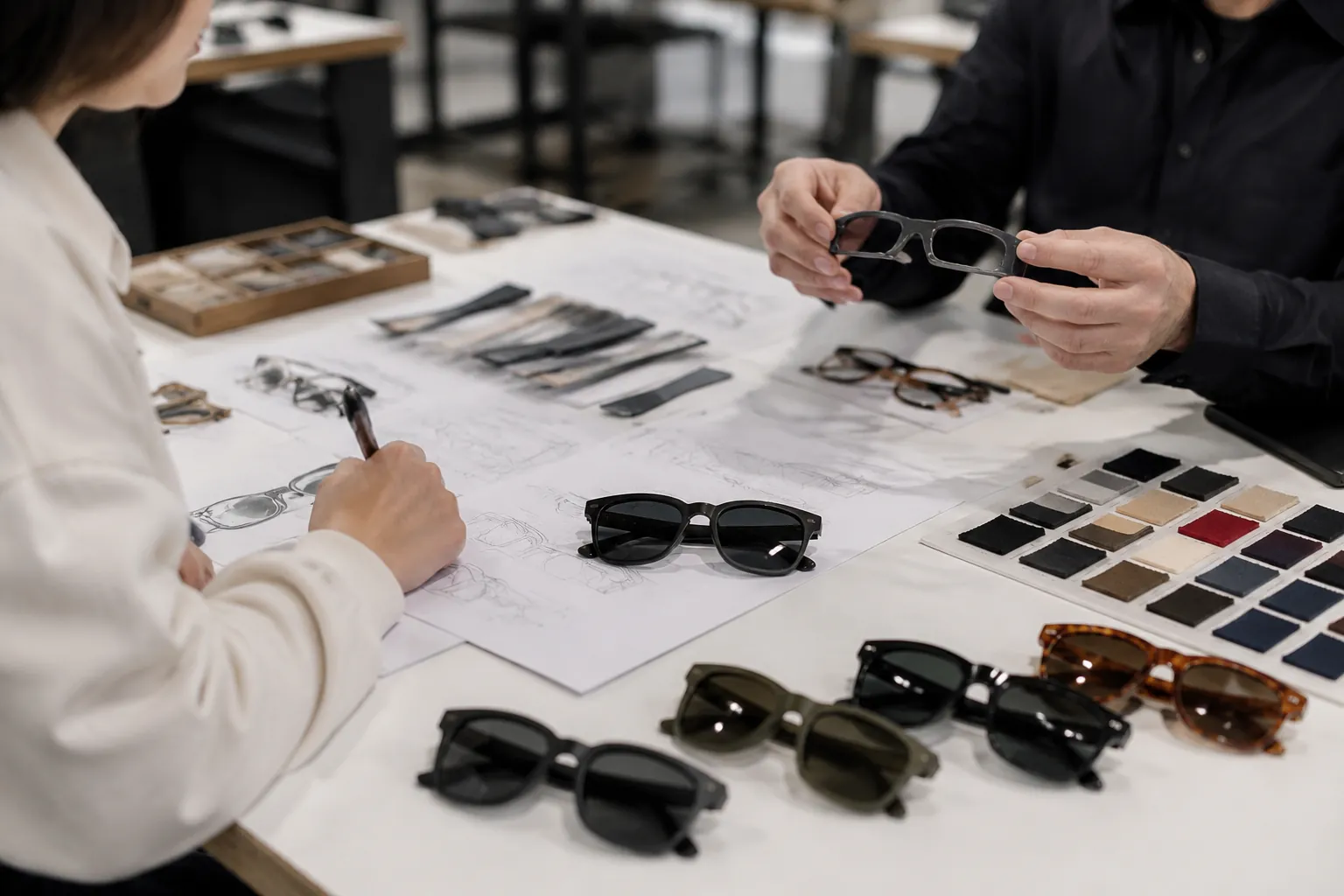
This guide is for brand owners, importers, distributors, and retail buyers who need custom sunglasses developed fast without creating avoidable remake risk. The point is not to rush the factory. It is to remove uncertainty before frame processing, lens work, decoration, packaging, and approvals begin. A 30-day sample window is realistic when the brief is complete, the material route fits the schedule, compliance targets are declared early, and the buyer gives one consolidated set of decisions instead of reopening points one by one.
Start with a locked brief, not a mood board
Fast sampling starts with a technical brief that answers the supplier's first production questions before they have to ask them. A mood board can show direction. It cannot define whether the front width is 146 mm, whether the lens base is 6C, whether the temple logo is a recessed metal plate, or whether the lens program is being developed to align with CE EN ISO 12312-1, ANSI Z80.3, or AS/NZS 1067. Every missing point creates back-and-forth. Every clarification pushes the next step.
For custom sunglasses, send one complete file pack at project start. That pack should include front and side artwork, target dimensions, color references, logo positions, packaging scope, intended market, and sample deadline. If the product is intended for the US market, state whether ANSI Z80.3 alignment is required and whether FDA registration considerations apply to the product program and supplier setup. For Europe, define CE and EN ISO 12312-1 requirements. For Australia and New Zealand, state AS/NZS 1067 expectations. If paints, coatings, soft-touch finishes, adhesives, or metal trims are involved, confirm that material declarations must support REACH where relevant.
- Frame construction: injection plastic or acetate, hinge type, metal trim, nose pad style if applicable
- Core dimensions: eye size, bridge, temple length, front width, lens height, pantoscopic angle, base curve if known
- Lens specification: solid or gradient tint, mirror or flash coating, polarized or not, target visible light transmission range if defined
- Branding method: pad print, laser engraving, hot foil, embedded logo plate, or molded logo
- Packaging scope: polybag, pouch, fold box, barcode label, warning label, carton mark, insert card
- Commercial deadline: sample due date, target order quantity, launch date, and destination market
A simple rule helps: if the detail matters at goods receipt, put it in the brief. That includes left-right symmetry, gloss or matte finish, and whether dimensions are nominal CAD values or finished-part targets. On a fast project, the brief is not admin. It is schedule control.
Choose materials that fit the calendar
Material choice sets the pace. Injection styles usually move faster than acetate because the route is shorter once construction is approved. Acetate can deliver more depth, layered color, and a more premium feel, but it also adds sheet selection, cutting, CNC shaping, polishing, hinge slotting, and more fit checks around the lens groove. That added work can be worth it. It still takes time.
| Option | Typical sample impact | Good use case | Main risk if rushed |
|---|---|---|---|
| Injection frame | Usually the simplest route once drawing and construction are frozen | Promotional programs, chain retail, value-driven private label | Late width, curve, or hinge changes may require tooling adjustment or a new sample cycle |
| Acetate frame | Often needs more processing and fit correction than injection | Fashion collections, thicker profiles, higher perceived value | Color, thickness, or polishing variation if the acetate route is not locked early |
| Solid tint lens | Generally easier to control across sample rounds | Core commercial styles and faster-turn launches | Transmission mismatch if no approved lens master is defined |
| Gradient or mirror lens | Adds color judgment and coating approval steps | Trend-driven assortments and premium visual styling | Visible variation between sample appearance and later production lots |
If the target is a 30-day sample calendar, do not customize every variable at once. Keep the first round focused on launch-critical decisions: structure, fit, lens direction, and branding method. A standard hinge with a custom temple silhouette is manageable. A new hinge geometry, a heavy-shape acetate front, a mirror lens, an inset metal badge, and fully custom packaging introduced together is where the schedule starts to slip.
Think about material behavior, not just appearance. Injection materials can shrink differently depending on wall thickness and rib design. Acetate can vary visually from sheet lot to sheet lot, especially in transparent or laminated colors. Mirror coatings change appearance depending on the base tint underneath. None of this is unusual. But it must be planned for early.
Build drawings with manufacturing tolerances in mind
Many sample delays start in the drawing pack. A rendering is not enough. The sample team needs dimensions that can actually be made, assembled, and repeated. If a temple tip is too thin for the selected material, or the lens groove does not give reliable lens retention, the factory will either pause for clarification or make assumptions. Neither helps a fast project.
Use a measurement sheet with tolerances. For most sunglasses programs, buyers should lock eye size, bridge, temple length, front width, lens height, logo position, and key thickness points. Tolerances should be agreed with the supplier based on the construction, material, and process used. A metal logo plate, for example, usually needs tighter pocket control than a print because small angle or position errors are easier to see on a tapered temple.
- Mark critical dimensions that affect fit, lens retention, hinge function, and symmetry.
- State whether dimensions are finished-part measurements or CAD nominal values before polishing and assembly.
- Approve one frame color master and one lens master before decoration starts.
- Call out surface finish, edge break, and left-right symmetry if they are not visually obvious.
Decoration details need the same discipline as frame dimensions. Pad printing needs a printable area with controlled curvature and a defined color target. Laser engraving needs enough stable surface area to keep detail sharp. Metal logo plates need pocket depth, fixation method, and edge clearance so the plate does not lift during wear or packing. Leave those items open until after the body sample and you are effectively running more than one sample cycle.
Use a three-gate approval system
Fast development does not mean fewer controls. It means cleaner controls. A three-gate approval system works because it separates structure, appearance, and shipment detail. Buyers who try to approve everything at once often miss structural issues, then reopen a sample after color and branding have already been added.
Gate 1: drawing and construction approval. Confirm material, dimensions, base curve, hinge type, logo method, lens specification, packaging level, and target compliance pathway. At this stage, the priority is buildability, not cosmetics.
Gate 2: white sample or body sample approval. Check shape, fit, thickness, temple opening feel, nose fit, lens seating, and usable branding area. If the body sample is wrong, stop there. Moving into decoration before structure is approved usually adds time, not speed.
Gate 3: final color and decoration approval. Approve actual frame color, lens tint, mirror effect, print, engraving, logo plates, labels, and shipping marks. This sample should represent intended bulk appearance as closely as possible.
This system matters because the cost of change rises at every stage. A print color correction after Gate 3 may be manageable. A front curvature change after lens work, temple branding, and packaging setup wastes labor across several processes. On many custom programs, the delay comes less from factory capability and more from approvals being reopened after work has already moved forward.
Short rule: never use a decorated sample to approve structure. Approve structure first. Then spend time and money on color, lens work, and branding.
Control color and lens decisions early to avoid second samples
Color drives remake risk. Frame color can shift with resin batch, acetate sheet lot, surface finish, and lighting conditions during approval. Lens color is even easier to misread because photos flatten transmission, gradient depth, and mirror intensity. If speed matters, color approval has to be controlled. No guessing.
For frames, provide a physical reference whenever possible. If only Pantone guidance is available, define whether it applies to a gloss, matte, transparent, translucent, or opaque result. A transparent amber in acetate will not look identical to a transparent amber in injection material because thickness, polish, and substrate behavior change the final effect. Buyers should also state whether minor lot-to-lot variation is acceptable for transparent materials.
For lenses, define the commercial use clearly. A fashion lens, outdoor retail lens, and promotional lens may look similar in a photo but carry different performance and labeling expectations. Solid smoke is usually easier to approve than a gradient or mirror program. If the destination market requires alignment with CE EN ISO 12312-1, ANSI Z80.3, or AS/NZS 1067, say so at RFQ stage so the lens program is built around the correct target from the start.
- Approve frame color under controlled lighting and record the viewing condition used
- Do not approve lens tint or mirror effect from compressed phone images alone
- Use one dated master sample for frame color and one for lens color
- Record acceptable variation notes for transparent materials and coated lenses
One practical point gets missed often: buyers spend too much time debating small frame color differences while leaving lens decisions open. That is backwards. In fast sampling, an unclear lens brief is often more disruptive than an unclear frame brief because tint, transmission, coating, compliance, and labeling can all be tied together.
Know how MOQ and price shape development choices
Speed, complexity, MOQ, and target price are linked. Buyers often ask for rapid custom development on a highly detailed style, then expect it to work at a very low starting quantity. That is where the commercial logic pushes back. Low MOQ can work. It works best when the construction stays close to proven methods and the decoration plan stays disciplined.
At lower quantities, customization is usually most practical in color, lens tint, print, engraving, or a small logo plate that uses an existing process. As volume increases, the factory generally has more room to plan materials, optimize decoration setup, and hold tighter visual standards across the run. Exact price levels depend on frame construction, lens type, branding complexity, packaging scope, and the supplier's process capability, so unit-price promises should always be checked against the actual specification.
| Order level | Development approach | What to avoid | Pricing logic |
|---|---|---|---|
| 50 pairs | Keep construction standard and customize color, print, or lens tint | Multiple trim parts, repeated revisions, custom packaging tooling | Setup cost is spread over very few units, so price per pair typically stays high |
| 300 pairs | Practical level for stronger branding and more distinct color control | Late material switches after sample approval | Decoration setup and material planning usually spread more efficiently than at very low MOQ |
| 1000 pairs | Often supports fuller branded presentation and tighter specification control | Unapproved packaging changes near production start | Lens batching, trim sourcing, and labor planning generally become more economical |
| 5000 pairs+ | Best suited to cost-focused programs on proven construction | Underestimating QC checkpoints, carton planning, and booking lead time | Higher volumes can improve unit economics when the specification is stable and pack-out is simple |
If the objective is fast approval with lower risk, build the first order around what the MOQ can support cleanly. Save major trim experiments and structural changes for a later run, after the frame itself is proven.
Work backward from the ship date and protect the sample calendar
The easiest way to miss a launch is to think only in forward steps. Work backward from the required ship date. If bulk production needs several weeks after final approval, the sample cycle must finish early enough to allow for PO release, deposit, raw material booking, compliance document review, and pre-production setup. If the buyer delays approvals but still insists on the original ship date, the pressure usually falls on the wrong stages: assembly, inspection, and packing.
A practical 30-day sample plan often looks like this:
- Days 1 to 3: brief review, drawing clarification, construction lock, compliance target confirmation
- Days 4 to 10: body sample or first prototype build
- Days 11 to 14: buyer review with one consolidated comment sheet
- Days 15 to 21: color, lens, and branding revision sample
- Days 22 to 24: final approval and master sample signoff
- Days 25 to 30: PO issue, deposit, material booking, and bulk pre-production preparation
The key phrase is consolidated comments. One decision owner should collect input from design, sales, sourcing, and compliance, then issue one clear instruction set to the supplier. Multiple uncoordinated email threads create conflicting directions and waste time the factory cannot recover later.
Timeline discipline has to come from both sides. A capable factory can move quickly. It still cannot protect the launch date if the buyer restarts decisions after signoff or adds new packaging, branding, or compliance requirements halfway through the process.
Treat QC and compliance as development tasks, not end-stage checks
Strong buyers do not leave QC and compliance until mass production. They build those checkpoints into development. That is how you avoid finding out too late that the declared market does not match the lens program, or that the chosen decoration process does not meet the durability expectations of the project.
During sampling, ask what will be checked in-house before bulk. At minimum, that should include dimensional verification, hinge function, lens fit, cosmetic review, logo appearance, and packaging accuracy. For compliance-sensitive programs, confirm that the product intent, lens category, warnings, and supporting documents match the destination market. Relevant frameworks may include CE EN ISO 12312-1, ANSI Z80.3, AS/NZS 1067, FDA registration considerations, and REACH-related material declarations. Supplier system credentials such as ISO 9001 or BSCI may support onboarding, but they do not replace product-level control.
One blunt truth is worth stating: a passable sample photo is not a quality plan. Buyers should request one approved master sample tied to one production specification sheet, with the critical dimensions, color standards, lens callout, logo method, and packing details recorded in writing. If the requirement matters at incoming inspection, it needs to appear on the approval record. If it is not recorded, expect debate later.
If a requirement matters at goods receipt, it must appear on the sample approval record. If it is missing from that record, it is not fully controlled.
Have a custom sunglasses project in mind?
Send us your styles, target market and quantities and we will return a detailed quote with MOQ, lead time and a sample plan.
Get a QuoteWhy source this from Wenzhou with LumiShades
Wenzhou in Zhejiang Province is widely regarded as China’s eyewear manufacturing capital, producing a large share of the world’s sunglasses. That concentration matters to buyers: a deep local supply chain for acetate sheet, hinges, lens blanks, plating and packaging means shorter component lead times, easier color and material matching, and a workforce with decades of eyewear-specific skill. LumiShades has manufactured in this ecosystem since 2009, and our vertical integration — in-house injection molding, acetate cutting, CNC milling, lens tinting, decoration and quality control — means no part of your order is quietly subcontracted to a workshop you cannot audit.
For international buyers, that vertical control translates into accountability. When a single factory owns every step, defects are traced and fixed at source rather than bounced between vendors, and your specifications survive intact from first sample to bulk. For procurement review, buyers can request process records, approved samples, quality checkpoints and project-specific compliance files before placing a bulk order. Required testing and documentation are confirmed against the destination market and product specification rather than assumed from a generic certificate list. Explore our manufacturing capabilities and quality control process to see how this works in practice.
Frequently asked questions
Can I really get a custom sunglasses sample in 30 days if I start from a sketch? Yes, but only if the sketch is converted into a production brief quickly. To keep a 30-day target realistic, prepare front and side artwork, target dimensions, material choice, lens direction, logo method, packaging scope, destination market, and compliance target before the supplier starts. Then appoint one decision owner on your side and return one consolidated comment sheet at each approval gate. Most delays come from unresolved buyer decisions, not from the first sample build itself.
What is the safest material choice for a fast first sample? Injection plastic is usually the safest choice when speed is the priority because the process is typically shorter and easier to repeat once construction is approved. Acetate can produce a more premium result, but it usually adds more processing and fit-correction steps. If your deadline is tight, ask the supplier to compare both routes against the same drawing and confirm which one fits the sample calendar without compromising the intended look.
At MOQ 50 pairs, how much customization is realistic? At 50 pairs, visual customization is usually more realistic than structural customization. Focus on frame color, standard lens tint, pad print, laser engraving, or a small logo plate using an existing process. Avoid new hinge construction, multiple trim parts, or packaging that needs new tooling unless the supplier confirms it can support those at that quantity. The right question is not only 'Can this be made?' It is 'Can this be made cleanly, repeatedly, and at an acceptable unit cost at my MOQ?'
Which compliance points should I mention at RFQ stage? State the destination market and the intended compliance pathway at the start. For example, specify whether the program is being developed to align with CE EN ISO 12312-1, ANSI Z80.3, or AS/NZS 1067, and whether FDA registration considerations apply. If materials, coatings, paints, adhesives, or trims require declaration support, mention REACH expectations early as well. Ask the supplier to confirm what documents, test planning, labels, and warnings will be needed for your market before sample work begins.
How do I reduce second-sample risk on color? Approve one physical frame color master and one physical lens master whenever possible, and record the lighting condition used for the approval. Do not approve transparent frame color, lens tint, gradient depth, or mirror effect from phone images alone. Ask the supplier to note acceptable variation for transparent materials and coated lenses on the approval record. A dated master sample with written notes is far more reliable than an email comment such as 'looks close.'
Ready to start?
Explore our aviator sunglasses or request a quote — our sales team replies within 12 hours.
Request a Quote