
Low Sunglasses Quotes: What Buyers Must Verify
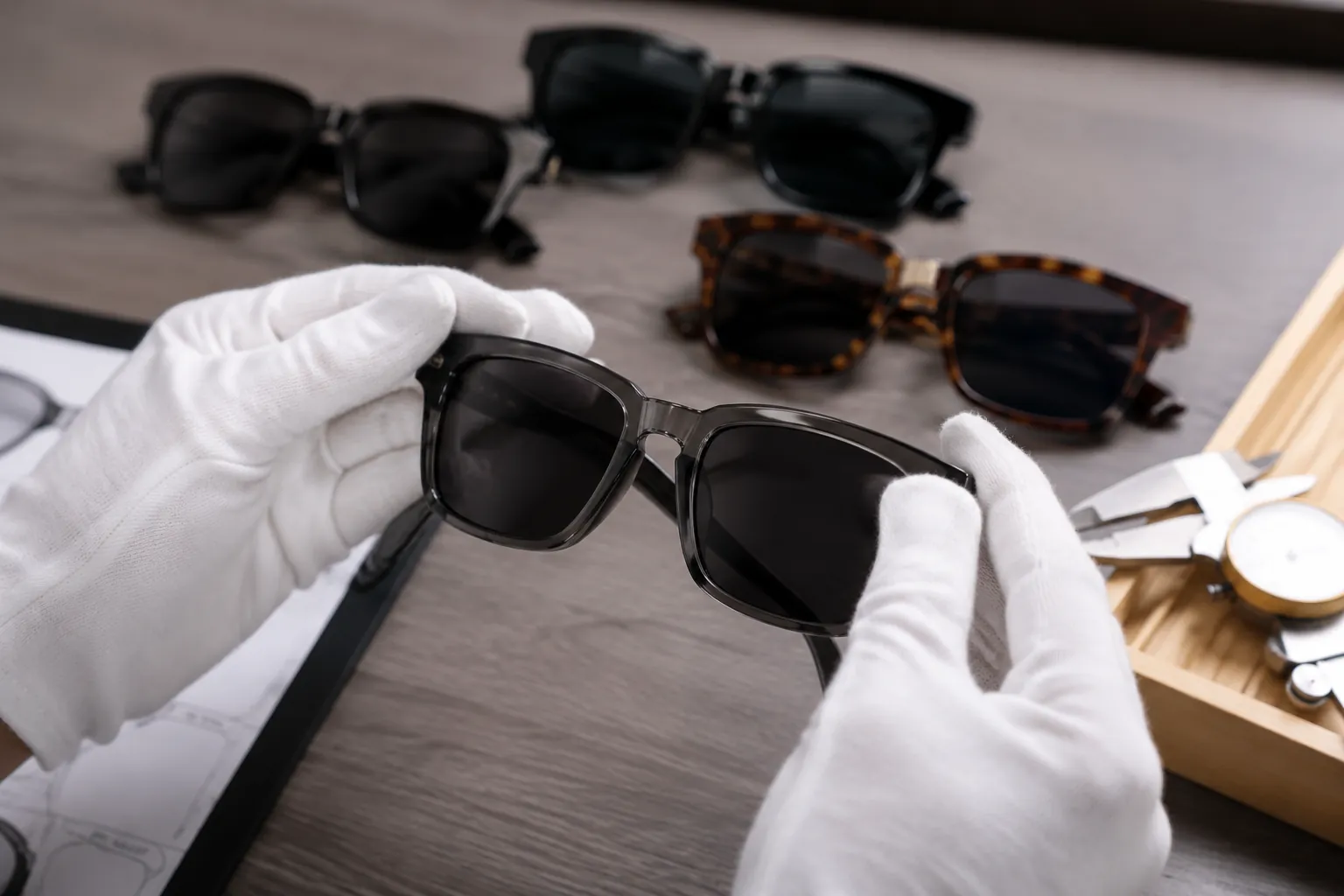
This article is for brand owners, importers, distributors, and retail buyers comparing bulk sunglasses quotes from overseas factories. A low unit price can look good on a spreadsheet and still become the most expensive option later. Claims, rework, delays, compliance failures, and weak sell-through erase the savings fast. Cheap quotes are not always bad. But many quotes do not cover the same product scope. Before approving samples or paying a deposit, buyers need to confirm exactly what materials, tolerances, QC steps, packaging, and compliance work are included.
Why the lowest quote often is not the lowest landed cost
Many buyers start with three numbers: unit price, tooling, and freight. In sunglasses sourcing, that is not enough. A lower quote often cuts cost in less visible areas such as resin grade, acetate thickness, lens thickness, hinge quality, decoration method, packaging protection, inspection scope, or compliance support.
The gap usually shows up after production starts or after goods arrive. A frame can look fine in sample photos and still fail in bulk if the material grade, wall thickness, or assembly control is weaker than expected. A logo can survive packing and still detach in use if the fixing method was never defined. A lens can match the color reference by eye and still create trouble later if coating, thickness, or optical consistency is loose.
Small defect rates matter. On a bulk order, even a modest failure rate creates sorting labor, replacement shipments, markdowns, and customer claims. That cost belongs next to the quoted unit price, especially when the program depends on consistent sell-through and on-time delivery.
A serious quote should spell out frame material, lens material, nominal thickness, hinge type, decoration method, packaging scope, QC basis, and compliance basis. If those lines are vague, assume the supplier still has room to change them unless they are written into the quote or purchase order.
Buyer rule: if one quote sits well below a tight cluster of comparable offers, do not ask only why it is cheaper. Ask what was removed, simplified, downgraded, or left undefined.
Where factories usually cut cost first
Cheap quotes rarely come from one big saving. They usually come from several smaller cuts across materials, labor, and inspection. Buyers should know where those cuts tend to show up first.
- Frame resin: a supplier may switch resin grade or use a higher recycled-content blend without stating it clearly. That can affect finish consistency, color stability, odor, or durability.
- Acetate thickness: a front specified at one thickness may be processed too aggressively before polishing, reducing rigidity and changing the hand feel.
- Lens grade: weaker optical consistency, lower coating performance, or wider tint variation increases complaint risk.
- Hinges and screws: lighter hinge leaves, weaker screws, or poor riveting can lead to loose temples or unstable opening balance.
- Decoration: pad print adhesion, foil quality, engraving depth, and metal logo fixing are common downgrade points.
- QC labor: in-process checks may be reduced or removed, so defects are found too late.
- Packaging: thinner pouches, weaker inner boxes, or less carton protection lower quoted cost but raise transit damage risk.
Review these areas line by line. Do not rely on one sample or a headline unit price. In eyewear, many production problems come from details that were assumed instead of specified.
| Cost-cut area | Typical cheap-quote change | Likely result in bulk |
|---|---|---|
| Frame material | Lower-grade resin or an undefined material blend | More color shift, surface inconsistency, brittleness, or cosmetic defects |
| Lens construction | Thinner lens or lower-grade coating | Higher scratch risk, fit issues, or performance inconsistency |
| Hinge assembly | Lighter hinge leaves or lower screw quality | Loose opening feel, alignment drift, and earlier wear |
| Decoration | Simplified print system or weaker logo fixing | Peeling print, detached logos, or weaker cosmetic durability |
| QC process | Final inspection only, with limited in-process checking | Defects found too late, more sorting, and more rework |
Material and construction details that must be in the quote
If a material detail is not written into the quote, it is not controlled. Even at RFQ stage, buyers should ask suppliers to quote against a defined specification, not a photo and a broad description.
| Quote item | What to specify | Why it matters |
|---|---|---|
| Frame material | PC, TR90, acetate, or metal alloy; note blended or recycled content if relevant to the program | Changes durability, finish quality, heat resistance, and weight |
| Lens material | TAC, PC, nylon, or acrylic; include base curve and target thickness | Affects clarity, impact behavior, tint consistency, and cost |
| Hinge construction | Standard hinge or spring hinge; include assembly method where possible | Influences opening feel and long-term failure risk |
| Decoration | Pad print, laser engraving, hot foil, or metal logo plate | Different methods carry different adhesion and wear risks |
| Surface finish | Gloss, matte, rubberized, hand-polished acetate, or plating color | Drives labor content, appearance consistency, and scrap risk |
| Packaging | Polybag, pouch, barcode label, care card, inner box, and carton pack-out | Prevents hidden extras and damage disputes |
Ask for tolerances, not just nominal dimensions. A capable supplier should be able to discuss measurable control points such as front width tolerance, temple length tolerance, lens fitting tension, bridge symmetry, and left-right opening balance. On transparent or pastel colors, ask how lot matching is controlled because small shifts show easily. On plated or metal trim parts, ask for the process basis and expected appearance standard. Cosmetic complaints often start there.
For acetate programs, ask what thickness exists before CNC work and before polishing, not only the final target. For molded PC or TR90, ask how visible surfaces are protected during assembly and how cosmetic consistency is monitored. These are basic sourcing questions. Not overkill.
Compliance gaps that surface after production starts
This is where low quotes become risky. Some factories quote as if compliance is already covered but have not aligned the exact lens category, labeling language, or material set to the destination market. Others assume the buyer will handle testing later, which can force changes after tooling or sample approval.
For sunglasses sold into export markets, buyers should confirm which standards the product is intended to meet and whether the quoted frame and lens construction support that claim. The standards and systems most often referenced in this category include CE EN ISO 12312-1, ANSI Z80.3, AS/NZS 1067, REACH, FDA registration, ISO 9001, and BSCI. These terms are not interchangeable. Product performance standards, chemical compliance requirements, factory management systems, social audit frameworks, and registration status cover different issues.
- CE EN ISO 12312-1: applies to non-prescription sunglasses and related eyewear sold into markets that require conformity to this standard.
- ANSI Z80.3: commonly referenced for non-prescription sun eyewear performance in the US market.
- AS/NZS 1067: relevant when supplying Australia or New Zealand.
- REACH: addresses restricted substances in applicable materials and components supplied to the EU market.
- FDA registration: may come up in US sourcing discussions, but it does not replace style-specific review of product requirements and documentation.
- ISO 9001: relates to the supplier's quality management system, not automatic product compliance.
- BSCI: relates to social compliance auditing, not product safety or optical performance.
Do not accept broad wording such as "compliance available" or "test can pass." Ask which exact standard applies to your style and market, what lens category or transmittance target is being built, what markings and labels will be used, and whether the quote includes testing support, document preparation, and label application. A low quote that excludes those items may be incomplete, not competitive.
The process steps that disappear from cheap production plans
A proper sunglasses production plan has checkpoints. Low-cost offers often compress them or remove them. That saves labor and handling time. It also raises the chance that process drift will be found too late.
- Material incoming check: resin, acetate sheets, lenses, hinges, screws, and logo parts are checked before release to production.
- First article confirmation: the first assembled units are measured against approved dimensions, color references, and logo position standards.
- In-process inspection: molding, CNC shaping, polishing, tinting, printing, hinge mounting, and assembly are reviewed before full output continues.
- Assembly control: lens fitting tension, screw tightness, temple alignment, opening balance, and cosmetic appearance are verified.
- Final AQL or agreed sampling: packed goods are checked by lot before shipment release.
Ask what is inspected at each step and how results are recorded. For example, ask whether print adhesion is tested after curing, whether tint lots are compared against approved standards under controlled lighting, and whether alignment and opening balance are checked during assembly or only at final inspection. The point is not to dictate the factory's internal method. The point is to confirm that control exists before defects reach packed goods.
If a supplier promises very fast sampling or bulk delivery, ask how many approval gates are built into that schedule. Fast can be credible when construction is standard and materials are available. It should not mean inspection or approval steps were skipped.
How MOQ, price breaks, and lead times should really work
Some factories use a low opening quote to win the project, then recover margin through mold changes, logo charges, packaging extras, testing support, or a price revision once quantity, color count, or decoration is confirmed. Buyers need a price ladder and a scope ladder, not one headline number.
In practice, sunglasses pricing should change with quantity because setup, material purchasing, decoration handling, and packing efficiency change with scale. That does not mean every supplier uses the same MOQ or the same breakpoints. It means the supplier should state clearly what quantity each price applies to and what is included at each level.
| Order size | Typical pricing logic | Buyer check |
|---|---|---|
| Low MOQ run | Highest unit cost because setup and handling are spread across fewer pieces | Confirm whether logos, pouches, barcode labels, and standard QC are still included |
| Mid-size run | Better efficiency in molding, cutting, assembly, and packing | Ask whether QC scope, packaging, or sample charges change at this level |
| Higher-volume run | Setup, labor, and material purchasing are spread more efficiently | Request written price validity, remake policy, and lead-time commitment |
| Large continuous run | Lowest unit cost if materials and specs remain stable through the run | Verify that the same material, lens, hinge, and packaging standards remain in use |
Lead time should follow the same logic. Development samples may move quickly when construction is based on an existing platform and artwork is confirmed. New acetate shapes, custom logo plates, or special lens treatments usually add time. Bulk timing also depends on material availability, approvals, and inspection planning.
If a supplier promises unusually fast delivery without clarifying those points, the quote may be missing process steps rather than showing real production strength. And if the quote is extremely low at a very small quantity, check whether decoration, packaging, testing support, or inspection work has simply been left out.
Questions to ask before sample approval or deposit
Most sourcing problems can be reduced early. Ask better questions before approval, then write the answers into the PI, tech pack, or approved sample record. Keep the questions specific enough that a supplier cannot answer with generic sales language.
- What exact frame and lens materials are included? Ask for the material type, grade description, target thickness, and any blended-content detail that matters to the program.
- What is the approved color standard and finish reference? Confirm whether approval is based on a physical sample, Pantone reference, signed chip, or a combination.
- Which decoration method is quoted, and how is adhesion checked? Pad print, foil, laser, and metal plate attachment all require different controls.
- What compliance basis applies to this style and market? Ask which standard, label set, and document package are expected for the destination market.
- What are the critical dimensions and allowed tolerances? Front width, temple length, logo position, and lens fit should not be left open.
- What is the QC sampling method before shipment? Confirm whether the supplier uses final AQL, in-process checks, or both.
- What defects trigger rework, sorting, or remake? Define the threshold before bulk starts.
- What is excluded from the quote? This often exposes omitted packaging, testing support, tooling assumptions, or freight terms.
Do not approve sunglasses on appearance alone. A sample can look acceptable in photos and still be built on the wrong material stack, wrong lens basis, or an under-controlled process that will not repeat in bulk.
A practical approval standard for serious buyers
Before placing the order, tie the quote to a simple approval pack. It does not need to be complex. It does need to be complete enough that the buyer and supplier are approving the same product.
A solid approval pack should include the confirmed tech sheet, material list, lens specification, decoration artwork and method, packaging layout, compliance target by market, approved sample reference, production lead time, and final inspection standard. If multiple colorways are ordered, approve each high-risk colorway separately, especially crystal, transparent, white, beige, and pastel tones where color drift is more visible. If the frame uses metal trim or logo plates, record the exact position, attachment method, and approved appearance standard.
Experienced buyers track repeat issues by supplier because many expensive failures are not random. They come from details that were left unspecified or never tied back to the production order. When a quote is tied to a real approval pack, buyers can compare offers on equal terms and see whether a lower price comes from better efficiency or from missing scope.
Good sourcing discipline is simple: define the build, define the checks, define the compliance target, then compare prices.
That approach may not produce the lowest quoted number. It does improve the odds of getting a repeatable product, a clearer liability trail, and a more reliable margin result.
Have a custom sunglasses project in mind?
Send us your styles, target market and quantities and we will return a detailed quote with MOQ, lead time and a sample plan.
Get a QuoteWhy source this from Wenzhou with LumiShades
Wenzhou in Zhejiang Province is widely regarded as China’s eyewear manufacturing capital, producing a large share of the world’s sunglasses. That concentration matters to buyers: a deep local supply chain for acetate sheet, hinges, lens blanks, plating and packaging means shorter component lead times, easier color and material matching, and a workforce with decades of eyewear-specific skill. LumiShades has manufactured in this ecosystem since 2009, and our vertical integration — in-house injection molding, acetate cutting, CNC milling, lens tinting, decoration and quality control — means no part of your order is quietly subcontracted to a workshop you cannot audit.
For international buyers, that vertical control translates into accountability. When a single factory owns every step, defects are traced and fixed at source rather than bounced between vendors, and your specifications survive intact from first sample to bulk. For procurement review, buyers can request process records, approved samples, quality checkpoints and project-specific compliance files before placing a bulk order. Required testing and documentation are confirmed against the destination market and product specification rather than assumed from a generic certificate list. Explore our manufacturing capabilities and quality control process to see how this works in practice.
Frequently asked questions
How much cheaper should a quote be before I worry? There is no fixed percentage that automatically makes a quote unsafe. The real trigger is a quote that sits clearly below a group of otherwise comparable offers. When that happens, ask for a line-by-line scope confirmation covering frame material, lens material, thickness, hinge type, decoration method, packaging, QC basis, compliance support, and Incoterms. If any line is vague or missing, treat the comparison as incomplete until the scope is aligned.
Can I rely on a sample to judge bulk quality? Only partly. A sample helps you judge appearance, fit, and overall concept, but it does not prove that bulk production will use the same material grade, coating, tolerances, decoration process, or inspection controls. Before approving the sample, link it to a written specification and require the supplier to confirm that the production order will match that approved build. If possible, keep a sealed approval sample and reference it in the purchase documents.
What compliance point do buyers miss most often? Many buyers accept a general statement such as "CE available" or "FDA registered" without checking what that means for the exact style they are buying. Ask four things in writing: which standard applies to the destination market, what lens category or performance basis the style is built to, what labeling and markings will be applied, and what documents or test support are included in the quote. That separates real scope from broad sales language.
Is a low MOQ realistic for custom sunglasses? Yes, a low MOQ can be realistic, especially when the design is based on an existing construction platform. The key issue is not whether the MOQ is possible. It is whether the quoted scope stays complete at that volume. Ask whether decoration, packaging, barcode labeling, standard inspection, and any compliance-related support are still included. Also check whether the supplier is using existing tooling, modified tooling, or fully new tooling, because that affects both cost and repeatability.
What lead time should I expect for custom development and bulk? Lead time depends on construction, materials, decoration, and the approval path, so there is no single number that fits every project. The useful step is to request a milestone schedule showing sample preparation, artwork approval, sample revision if needed, material booking, production start, final inspection, and shipment release. That schedule tells you more than a headline promise because it shows whether the supplier has allowed time for actual approvals and controls rather than simply quoting a fast date.
Ready to start?
Explore our shield & oversized sunglasses or request a quote — our sales team replies within 12 hours.
Request a Quote