
Wenzhou vs Shenzhen for Sunglasses Sourcing
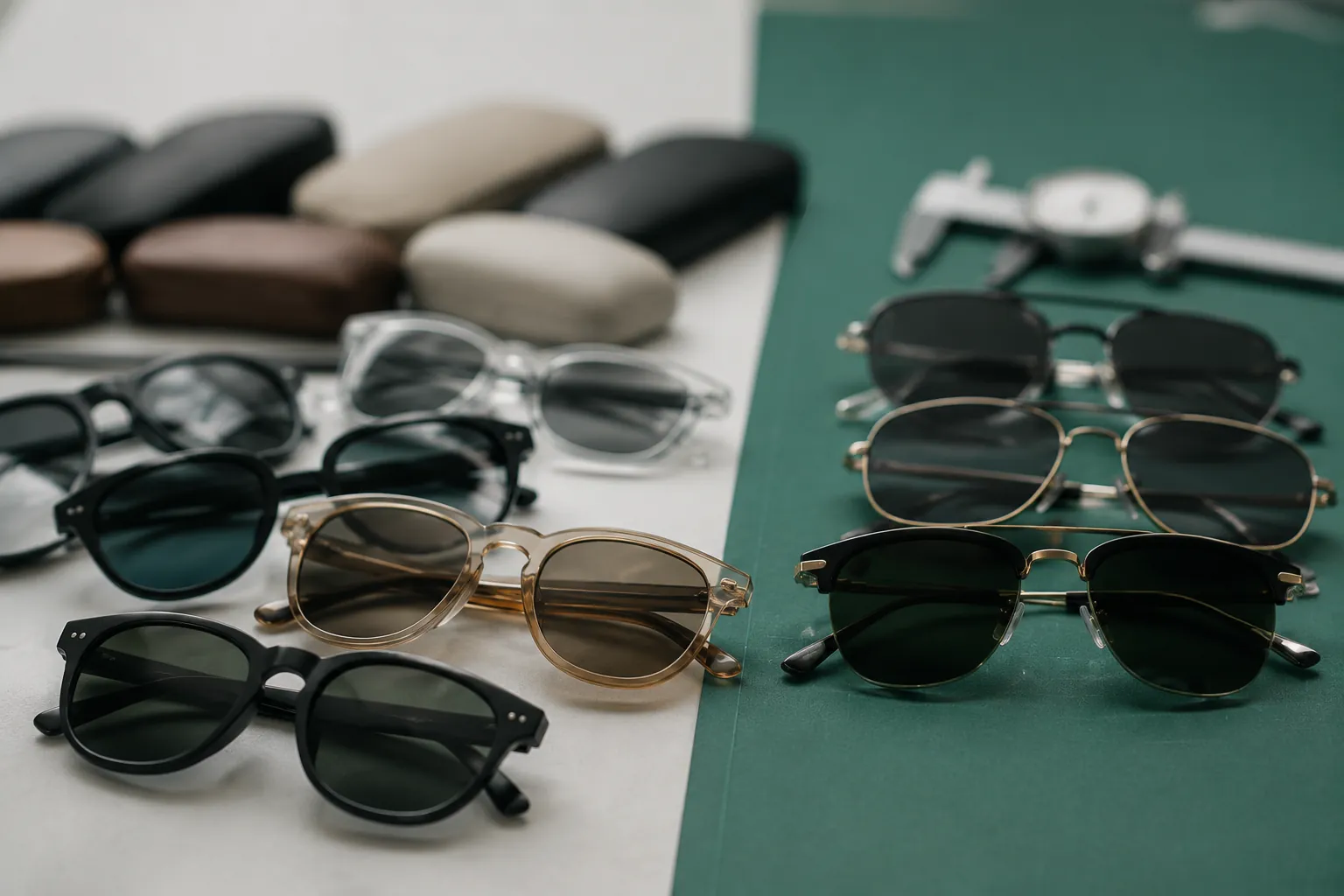
This guide is for brand owners, importers, distributors, and retail buyers weighing China's two main eyewear sourcing bases. The choice is not about the lowest quote alone. It is about which region can hit your target cost, hold acceptable quality, and support repeat production without constant firefighting. Wenzhou and Shenzhen both make sunglasses at scale, but they differ in supply-chain concentration, MOQ flexibility, process control, and coordination load. Those differences shape tooling risk, lead times, compliance planning, and gross margin.
Why the supply base matters before you ask for a quote
Many buyers send the same tech pack to factories in both cities, collect a few FOB prices, and think the comparison is done. It is not. Price is only the entry point. The useful comparison is operational: which supply base fits your frame material, order size, decoration method, packaging level, and replenishment plan.
Wenzhou is known for its dense eyewear manufacturing cluster. It is often a practical fit for injection sunglasses, acetate frames, private label programs, and repeat orders where buyers want the same style rerun through a stable process. In a concentrated eyewear base, hinges, wire cores, acetate sheets, lenses, screws, cases, pouches, and logo parts are often sourced through nearby specialist vendors. That can cut coordination time. Still, buyers should confirm which steps are actually done in-house and which are subcontracted.
Shenzhen is often considered for projects that involve broader component sourcing, more design iteration, or packaging and accessory coordination beyond the eyewear itself. If a sunglass program includes premium gift packaging, mixed-material presentation, or non-eyewear accessories, Shenzhen suppliers may be more used to managing cross-category work. But a standard plastic or acetate sunglass frame may cost more there if key eyewear processes are outsourced.
Set the order logic before you request quotations. Is this a market test, a private label launch, or a larger replenishment program? Is the frame basic polycarbonate, TR90, acetate, or a mixed-material design with metal temples? Are you using a simple printed logo or a custom metal badge with complex packaging inserts? Those details decide the right city. Reputation does not.
Cost, MOQ, and production rhythm
For straightforward sunglass programs, Wenzhou is often more competitive on standard eyewear because the local supply chain is heavily specialized in eyewear production. Shenzhen can still make sense, especially if the project includes packaging, accessories, or broader sourcing needs that add value beyond the frame.
MOQ flexibility varies by factory, material, logo method, and packaging. Some Wenzhou factories accept lower trial runs. Others do not. Buyers should never treat a stated MOQ as a fixed rule. Ask for MOQ by style, by color, and by decoration method. Then confirm whether packaging components carry separate minimums.
Low-volume orders are rarely cheap on a per-unit basis. Setup labor, logo preparation, color matching, line changeovers, and packing prep are spread across fewer units. As volume rises, factories usually gain efficiency through steadier scheduling, better material usage, and simpler packing flow. That is why sampling prices and production prices often look far apart.
Production rhythm matters as much as price. A supplier that relies on outside vendors for molding, painting, lens work, or logo application may still quote an acceptable lead time. But schedule control weakens when one stage slips. Ask for the real process route. Ask where the handoffs are. Then ask how each outsourced step affects lead time.
| Factor | Wenzhou | Shenzhen |
|---|---|---|
| Typical project fit | Volume sunglasses, private label, repeat replenishment | Design-led, mixed-supply, packaging-heavy projects |
| MOQ flexibility | Often stronger on eyewear-focused programs, but factory-specific | Varies widely; depends heavily on supplier model |
| Cost at 300+ pairs | Often competitive on standard frames and common lens builds | Can be higher if core eyewear steps are outsourced |
| In-house eyewear process depth | Often strong in molding, acetate work, decoration, and QC | Can be strong, but depends more on the individual factory structure |
| Repeat-order stability | Often better when the same style is rerun through a stable local chain | Can be good, but coordination risk rises when more vendors are involved |
Use this as a sourcing framework, not a rule. Good factories can outperform the regional pattern. Due diligence still decides the outcome.
Material and process strengths by region
Material choice should drive factory selection. A basic polycarbonate sunglass and a thick laminated acetate frame do not stress the same process controls. Poor factory fit usually shows up fast: warpage, color inconsistency, hinge problems, or lens fit issues.
For injection-molded polycarbonate and TR90 styles, process control starts with mold quality, material handling, and temperature discipline. Polycarbonate can offer good optical clarity and impact performance, but assembly stress or poor handling can create whitening or fit problems. TR90 is lightweight and flexible, but dimensional control still matters around hinge insertion, front shape, and temple alignment. Buyers should ask how the factory controls bridge width, lens groove dimensions, and left-right symmetry during production.
For acetate, the process chain is longer and less forgiving. The factory needs stable board sourcing, accurate cutting, CNC shaping, polishing, metal core insertion where needed, hinge slotting, and final heat adjustment. Small dimensional drift can affect lens retention, rim stress, or temple movement. Repeatability matters as much as finish.
Wenzhou factories with real eyewear experience often perform well on these standard routes because the supporting vendors and processes are concentrated locally. That helps. It does not guarantee quality. Buyers still need to verify process capability and inspection controls at the factory level.
- Injection molding for polycarbonate or TR90 frames, including mold maintenance and color control
- Acetate cutting, CNC milling, polishing, and hinge setting
- Lens sourcing or fitting for standard sunglass constructions
- Decoration such as pad printing, silk screening, laser engraving, hot stamping, and metal logo assembly
- In-line inspection, alignment correction, final cosmetic QC, and packing control
Ask for exact quality checkpoints. A capable supplier should be able to explain how it checks hinge alignment, temple spread, lens seating, cosmetic defects, logo placement, and color consistency against the approved sample. If the answer is vague, that is the warning sign.
Lead time is a chain, not a promise
Lead time is a sequence, not a single number. A realistic sunglass schedule usually includes design confirmation, sample making, sample approval, raw material booking, production scheduling, assembly, inspection, packing approval, and shipment release. A quoted delivery window means little unless you know which stages are internal and which depend on outside vendors.
Sample timing and bulk timing vary by construction, tooling status, and packaging complexity. A style based on an existing mold platform can move faster than a fully new acetate development. A standard program with approved artwork, confirmed color reference, fixed lens specification, and finalized packaging will usually run more predictably than a project that keeps changing after sampling.
Most delays do not start on the production line. They start in the spec. Common causes include:
- Changing logo size or location after sample sign-off
- Approving frame color from phone images instead of physical references or retained samples
- Leaving lens category, UV claim, or coating choice undefined
- Confirming barcodes, warning labels, or legal marks late in the process
- Adding pouches, cleaning cloths, stickers, or hangtags after the packing plan is already set
Wenzhou may have an edge on repeat programs when the eyewear process chain is concentrated and fewer handoffs are needed. Shenzhen can still move quickly in development. But ask one blunt question before placing the order: which steps are outsourced, and what does each outsourced step do to the schedule?
Compliance and testing: set the target early
This is where avoidable mistakes get expensive. Sunglasses are not just fashion items. Lens performance, frame materials, labeling, and product claims need to match the target market and sales channel. If the compliance target stays vague until pre-shipment, the factory may already have used a lens build, coating, or material mix that does not support the required testing path.
Relevant standards and registrations commonly requested by buyers include CE EN ISO 12312-1, ANSI Z80.3, AS/NZS 1067, REACH, and FDA registration where applicable. At the factory-system level, buyers may also request ISO 9001 and BSCI. These references matter in sunglasses sourcing. Buyers should verify the scope and validity of every document provided.
What matters most is early definition. If the lens category, UV claim, or chemical restriction requirements are unclear, the wrong material can enter sampling and carry through to production. A dark fashion lens is not automatically suitable for every market. Tinted lenses may require controlled visible light transmission, and paints, coatings, metal trims, and plastic resins may need chemical review depending on the destination market.
- CE EN ISO 12312-1: commonly relevant for sunglasses sold with sun-glare protection claims in applicable markets
- ANSI Z80.3: frequently referenced for US sunglass programs
- AS/NZS 1067: relevant for Australia and New Zealand requirements
- REACH: important where chemical substance compliance applies
- FDA registration: sometimes requested for US imports, but buyers should confirm classification and document needs independently
Ask for test reports that match the actual style, lens construction, and material set you plan to buy, or a clearly representative build with equivalent specifications. Also confirm product, packaging, and carton labeling before artwork is finalized.
How MOQ, tooling, and price breaks affect margin
Margin is shaped by more than unit cost. MOQ policy, tooling exposure, defect risk, packaging complexity, and rerun stability all matter. The wrong sourcing base can trap buyers between high trial costs and weak scale-up economics.
A low MOQ can help test shape acceptance, branding, and early sell-through without overcommitting stock. But lower volumes usually mean higher unit costs because setup labor, decoration waste, and packing prep are spread across fewer pairs. If the program also includes a custom metal logo, special lens color, or premium insert, short-run costs climb fast even when the frame itself is simple.
As order size increases, the economics usually improve. Material purchasing gets more efficient. Machine scheduling stabilizes. Assembly flow gets smoother. Packaging can be standardized. That is why buyers should request a clear quantity ladder instead of one headline price.
Tooling logic matters too. Buyers should ask whether a style uses a fully new mold, a modified existing tool, or only cosmetic changes to a carryover design. They should also clarify who owns the tooling, whether maintenance is included, whether repairs are billable, and whether the factory can keep the same tool route for repeat orders. For standard private label sunglasses, Wenzhou is often a practical choice when the goal is to test at smaller scale and move into more efficient bulk production later.
Questions to ask before choosing Wenzhou or Shenzhen
Do not ask only for a best price. Ask questions that show how the order will really run and where the risk sits.
- Which steps are completed in-house, and which are outsourced?
- What is the MOQ by color and by logo method, not only by style?
- How does pricing change at different quantity breaks?
- Is the quoted frame based on polycarbonate, TR90, acetate, or another material?
- How many days are needed for samples after artwork and color confirmation?
- What are the in-line and final inspection points before packing?
- Which exact standards can this model be tested to with its current lens build?
- Can repeat orders keep the same lens, hinge, and decoration sources?
A serious factory should also explain the process order clearly: material booking, molding or acetate cutting, machining, polishing, painting or color work, logo application, lens fitting, alignment adjustment, cleaning, packing, and final QC. If the supplier answers vaguely, expect trouble later. Buyers do not need polished sales talk. They need predictability, traceability, and stable rerun performance.
Which region fits which buyer profile
There is no universal winner. The better choice depends on product fit and sourcing logic.
Choose Wenzhou first if your priority is repeatable sunglass production, an eyewear-focused vendor network, and a sourcing model built around standard frame development and replenishment. That often fits private label collections, importer programs, promotional sunwear with controlled specifications, and retailer repeat orders where process consistency and margin control matter.
Choose Shenzhen first if the project depends on broader cross-category sourcing, more experimental packaging, accessory bundling, or a development path that extends beyond conventional eyewear manufacturing. In those cases, supplier coordination may matter more than having the deepest eyewear-only cluster.
For many overseas buyers, the practical rule is simple: develop where the product can scale without changing the sourcing model later. If the product is standard sunglasses and the business case depends on process stability and cost control, Wenzhou often offers a cleaner route from sample to bulk. If the concept depends on wider vendor coordination, Shenzhen may be the better fit.
Pick the region that fits the product, the process, and the order logic. Not the city name that sounds better in a meeting.
Have a custom sunglasses project in mind?
Send us your styles, target market and quantities and we will return a detailed quote with MOQ, lead time and a sample plan.
Get a QuoteWhy source this from Wenzhou with LumiShades
Wenzhou in Zhejiang Province is widely regarded as China’s eyewear manufacturing capital, producing a large share of the world’s sunglasses. That concentration matters to buyers: a deep local supply chain for acetate sheet, hinges, lens blanks, plating and packaging means shorter component lead times, easier color and material matching, and a workforce with decades of eyewear-specific skill. LumiShades has manufactured in this ecosystem since 2009, and our vertical integration — in-house injection molding, acetate cutting, CNC milling, lens tinting, decoration and quality control — means no part of your order is quietly subcontracted to a workshop you cannot audit.
For international buyers, that vertical control translates into accountability. When a single factory owns every step, defects are traced and fixed at source rather than bounced between vendors, and your specifications survive intact from first sample to bulk. For procurement review, buyers can request process records, approved samples, quality checkpoints and project-specific compliance files before placing a bulk order. Required testing and documentation are confirmed against the destination market and product specification rather than assumed from a generic certificate list. Explore our manufacturing capabilities and quality control process to see how this works in practice.
Frequently asked questions
Is Wenzhou usually cheaper than Shenzhen for custom sunglasses? Often for standard sunglasses, yes, but buyers should check it style by style. Wenzhou often benefits from an eyewear-focused supply chain, which can reduce handoff costs on common frame constructions. For a real comparison, request quotes on the same specification, then ask each supplier to separate frame cost, lens cost, logo cost, packaging cost, tooling charges, and any outsourced process fees.
What MOQ should I expect from a serious factory? There is no single correct MOQ. It depends on frame material, logo method, lens build, packaging, and whether the style uses stock tooling or new development. Ask for MOQ in four layers: by style, by color, by logo method, and by packaging component. Also request the quantity price ladder so you can see where the economics improve and decide whether a trial order or a larger first run makes more sense.
How fast can I get from sample to bulk shipment? Timing depends on tooling status, material availability, sampling revisions, compliance requirements, and packaging complexity. Do not accept one headline lead time. Ask for a stage-by-stage schedule covering sample development, sample approval, material booking, production, inspection, and shipment release. Also ask which steps are outsourced, because that is often where delays start.
Which compliance documents should I ask for on sunglasses? Start with the documents tied to your destination market and sales claim: CE EN ISO 12312-1, ANSI Z80.3, AS/NZS 1067, REACH, and FDA registration where relevant. If your sourcing policy also requires factory-system review, ask about ISO 9001 and BSCI. Most importantly, confirm that any test report is linked to the same style or a clearly equivalent construction, and lock labeling requirements before production artwork is finalized.
Should I prioritize factories with more in-house processes? Usually yes, especially for repeat programs. More in-house control can reduce scheduling risk, simplify communication, and speed up defect analysis if issues appear in molding, decoration, lens fitting, or packing. When evaluating suppliers, ask them to map the full process route and identify every outsourced step so you can judge whether the quoted lead time and QC plan are realistic.
Ready to start?
Explore our round sunglasses or request a quote — our sales team replies within 12 hours.
Request a Quote