
OEM Sunglasses Samples: Counter, PP, and Sealed
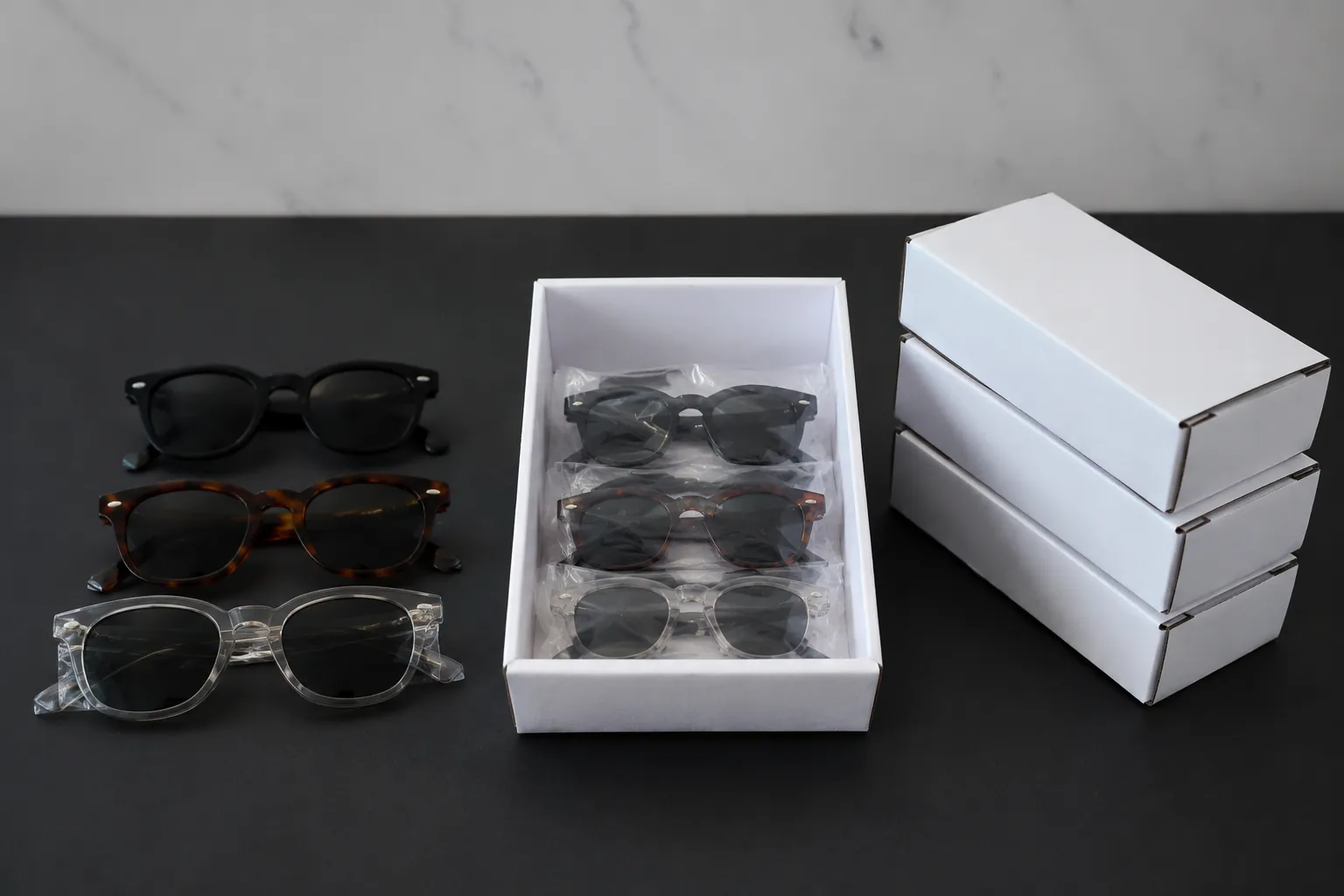
This article is for brand owners, importers, distributors, and retail buyers sourcing custom sunglasses from overseas factories. A structured sampling process helps catch problems before bulk production starts, while changes are still manageable and approval records are easier to control. In sunglasses, reliable approval depends on clear references, written tolerances, process-matched samples, and revision control. The goal is simple: reduce confusion, avoid disputes over what was approved, and keep production consistent from sampling through final inspection.
Why sampling stages fail in eyewear projects
Many sampling problems start with one basic mistake: treating every sample as if it has the same job. It does not. A counter sample, a pre-production sample, and a sealed reference answer different questions. A counter sample checks whether the factory understood the design direction. A PP sample checks whether the product can be made with the intended materials and processes. A sealed reference becomes the control standard for production, inspection, and claim review.
That distinction matters in eyewear because small deviations are easy to see and can be commercially important. A slight logo shift, a small color change in the frame or lens, or a minor imbalance at the temples may pass a casual review and still fail buyer standards. Process also changes outcomes. Molded plastics vary with tooling and machine settings. Acetate can look different after polishing. Coatings and decoration can behave differently across surface finishes.
When sample roles are vague, both sides fill the gaps with assumptions. One side thinks the design is approved in principle. The other thinks bulk details are fully locked. Then the loop gets longer. Disputes get harder to settle. A disciplined sample structure fixes that by tying each stage to a specific decision and a documented record.
Use counter samples to confirm design intent
A counter sample is used to turn a target product into a manufacturable sunglass concept. The reference might be a benchmark sample, a technical drawing, CAD data, or a marked photo set. At this stage, the goal is to confirm the overall look, proportions, and basic construction logic.
Counter samples are useful for checking whether the front shape, lens shape, bridge, temple profile, and visible style direction match the intended market position. They also help expose obvious structural issues early, such as an unrealistic hinge choice, an impractical temple thickness, or a bridge shape that needs revision for fit or support.
What a counter sample should not do is stand in for final approval of production material, exact frame or lens color, decoration durability, packaging, or compliance-related construction details. Counter samples are often made with substitute materials, simplified finishing, or temporary decoration methods. They can show design intent clearly. They are not reliable proof of bulk output.
- Approve overall geometry: eye size, bridge width, temple length, front shape, profile thickness, and general balance on face.
- Mark revisions directly on drawings or annotated photos: bevel depth, temple taper, lens outline, logo scale, and edge finish target.
- Record dimensions in millimeters rather than relying on subjective wording.
- List open items clearly: material, lens specification, color reference, decoration method, packaging, labeling, and compliance requirements.
If a counter sample is approved without a dated specification sheet, revision code, and written comments, the project relies too much on memory and message history. That is avoidable.
When a PP sample is mandatory
The pre-production sample, or PP sample, is the first sample that should reflect the intended production method, production material, decoration process, and packaging setup. This is where design approval turns into manufacturing confirmation. If bulk production will use a specific frame material, lens construction, logo application method, and retail pack-out, the PP sample should follow that same route as closely as possible.
A PP sample becomes especially important when process risk is high. That includes new tooling, tooling modification, material changes, new decoration, updated lens requirements, or programs with little time left for correction before shipment. In these cases, PP review is where the buyer checks whether the approved design can be repeated under real production conditions.
- You opened a new mold or changed an existing cavity, texture, logo recess, or other tooling feature.
- You changed frame material or lens construction and need to confirm appearance, assembly, and performance.
- You added decoration such as pad printing, hot foil, laser marking, or inserted logo hardware.
- You need the shipped product to align with a defined market standard such as CE EN ISO 12312-1, ANSI Z80.3, or AS/NZS 1067.
- You require specific labeling, packaging, or documentation that must match the approved production version.
Why does PP approval matter? Because fixing a sample is cheaper than fixing finished goods after assembly, packing, or booking. A weak PP review creates delay, remake cost, and inspection risk. A strong one gives both buyer and factory a clear baseline before mass production starts.
How counter, PP, and sealed samples differ
Buyers and factories often use sample terms loosely. That creates confusion across design, production, and QA teams. Each stage should answer a different operational question and carry a different approval status.
| Sample stage | Main purpose | What should be finalized | What can still change |
|---|---|---|---|
| Counter sample | Confirm design direction and key dimensions | Frame shape, lens shape, eye size, bridge, temple length, overall style language | Exact material lot, final lens tint, hinge source, decoration method details, packaging |
| Pre-production sample | Confirm manufacturability with real process and materials | Frame material, lens specification, hinge type, decoration method, fit target, finish target, packaging structure | Minor adjustments that are documented and re-approved, such as small color correction or print position refinement |
| Sealed reference | Control bulk inspection and dispute handling | All approved visual, functional, packaging, and labeling standards | Nothing without written re-approval and revision update |
| Factory retained golden sample | Guide inline QC, assembly, and packing teams on site | Must match sealed reference exactly, including revision and notes | Nothing without buyer confirmation |
The sealed reference matters even more in overseas sourcing, where production, QA, inspection, and buying teams may work from different records if no single control standard exists. After PP approval, seal one sample for the buyer record, retain one at the factory for production and QA, and provide one to the inspection team if a third party will inspect. All approved copies should carry the same revision status.
The sealed sample label should identify style number, purchase order number, revision, approval date, material, lens specification, approved color reference, decoration method, packaging version, and any critical notes that affect acceptance. No guesswork. That is the point.
What to check on a sunglass PP sample
A PP sample should not be approved on appearance alone. Break the review into measurable checkpoints, and ask the factory to return data, marked documents, and photos with the physical sample. A short email that says approved is not enough if the same style will be repeated in bulk.
- Dimensions: eye size, bridge, temple length, overall front width, lens height, and other approved drawing points.
- Fit and mechanics: hinge alignment, opening and closing feel, left-right symmetry, temple balance, lens seating, and any looseness or interference.
- Material appearance: frame color, acetate pattern consistency where applicable, transparency level, visible molding defects, polishing quality, and edge finish.
- Decoration: logo position, print quality, adhesion where relevant, engraving clarity, hardware placement, and coating consistency.
- Lens performance: tint consistency, mirror appearance where used, visible distortion, and alignment with the specified market standard.
- Packaging: polybag, pouch or case, cleaning cloth, barcode label, inner box, export carton marks, and pack quantity.
Define the control points that matter and write them into the approval record. Typical examples include dimensional tolerances, logo position tolerances, cosmetic acceptance criteria under defined lighting, and requirements for flushness or alignment of applied hardware. Precise language works. Comments like looks fine do not.
If the style is intended for a specific market, confirm that requirement during PP review. Depending on the market and product position, buyers may request alignment with CE EN ISO 12312-1, ANSI Z80.3, or AS/NZS 1067. Chemical compliance expectations, including REACH-related declarations, should also be raised before bulk production, not after shipment. Where supply-chain documentation matters, buyers may also review records such as FDA registration details for applicable parties, factory ISO 9001 certification, or social compliance audits such as BSCI. Those documents support the order. They do not replace product-specific sample approval.
Set tolerances now or argue later
A sealed sample is only useful if it is backed by written tolerances. No eyewear factory can hold every dimension and cosmetic point to zero variation across molded parts, lenses, coatings, and decoration. The real goal is not perfect uniformity. The goal is to define what is acceptable and what is rejectable before production begins.
For sunglasses, tolerance language usually covers dimensions, color reference, logo position, cosmetic defects, and functional feel. Examples include dimensional tolerances for key frame points, defined visual standards for scratches under specified viewing conditions, and limits for alignment or hardware protrusion where those points matter to the style. The exact numbers should come from the approved drawing, buyer requirement, and the manufacturability of the construction involved.
Material behavior is one reason this matters. Molded plastic parts vary with tooling condition and process control. Acetate appearance can shift with sheet lot and finishing. Tinted or mirrored lenses can show batch variation. Written tolerances do not excuse weak process control. They give buyers, factories, and inspectors one shared standard for decisions.
Clear tolerances also protect both sides commercially. Buyers avoid accepting output that misses the approved standard. Factories avoid rejection based on vague or moving expectations. Agree these points before production. Not during final inspection, when the goods are already packed.
Build the sealed reference like a control file
Many buyers treat the sealed reference as just one approved pair. A better approach is to treat it as a control file that includes both the physical sample and the documents needed to interpret it. Production, QA, and inspectors should all be able to work from the same record.
A complete sealed reference package normally includes the approved physical sample, signed specification sheet, approved artwork, color callout, packaging standard, and any compliance notes relevant to the order. If third-party testing was conducted on the approved construction, attach the report number or test reference to the order file so the tested version can be linked to the approved version.
- Seal one physical sample for the factory production floor or QA office.
- Keep one identical sample with the buyer or third-party QC team.
- Attach revision-controlled specification sheets with signed approval date.
- Store packaging references with the product sample, not in a separate message trail.
- Record any approved exceptions clearly so they are not treated as defects later.
For repeat orders, do not assume the previous sealed standard still applies without review. Mold maintenance, material substitution, lens batch changes, or decoration supplier changes can all affect the final result. Before reordering, confirm whether the earlier sealed reference is still valid or whether a new PP sample is needed.
A practical approval flow that shortens the loop
The fastest approval systems are usually the most disciplined. Clear stages reduce back-and-forth because each sample has one purpose and one decision point.
- Start with a clear tech pack, CAD file, or physical benchmark and request a counter sample.
- Review shape, visible construction logic, fit concept, and dimensions first.
- Issue comments in one marked, revision-controlled batch rather than through scattered messages.
- Once design direction is locked, request a PP sample made with intended bulk materials, processes, and packaging.
- Review product and packaging together, including decoration, labels, warnings, barcode details, and carton marks where applicable.
- Approve with written tolerances, then create sealed references before mass production begins.
- Use the sealed reference during inline QC and final inspection, not only after a problem appears.
This workflow suits both small trial programs and larger repeat orders because it separates concept approval from production approval. In many delayed projects, the main problem is not factory sample speed. It is incomplete buyer feedback or weak approval records. Clear written approvals move production faster than informal acceptance based on appearance alone.
Have a custom sunglasses project in mind?
Send us your styles, target market and quantities and we will return a detailed quote with MOQ, lead time and a sample plan.
Get a QuoteWhy source this from Wenzhou with LumiShades
Wenzhou in Zhejiang Province is widely regarded as China’s eyewear manufacturing capital, producing a large share of the world’s sunglasses. That concentration matters to buyers: a deep local supply chain for acetate sheet, hinges, lens blanks, plating and packaging means shorter component lead times, easier color and material matching, and a workforce with decades of eyewear-specific skill. LumiShades has manufactured in this ecosystem since 2009, and our vertical integration — in-house injection molding, acetate cutting, CNC milling, lens tinting, decoration and quality control — means no part of your order is quietly subcontracted to a workshop you cannot audit.
For international buyers, that vertical control translates into accountability. When a single factory owns every step, defects are traced and fixed at source rather than bounced between vendors, and your specifications survive intact from first sample to bulk. For procurement review, buyers can request process records, approved samples, quality checkpoints and project-specific compliance files before placing a bulk order. Required testing and documentation are confirmed against the destination market and product specification rather than assumed from a generic certificate list. Explore our manufacturing capabilities and quality control process to see how this works in practice.
Frequently asked questions
How many sample stages do I really need for a simple sunglass order? Use at least three controls: a counter sample to confirm design direction, a PP sample to confirm the actual production method and materials, and a sealed reference to control bulk inspection. Even if the order is simple, the functions should stay separate. Before approving, ask the factory for a revision-coded spec sheet and confirm which sample becomes the sealed standard.
Can I use the first good-looking sample as the bulk production standard? Usually no. A first sample may be hand-finished, made with substitute materials, or assembled with temporary decoration or packaging. Ask the factory in writing whether the sample was made with the intended bulk material, lens construction, decoration process, and packaging components. If not, require a PP sample and approve bulk only from that version.
What should I write on a sealed reference label? Include style number, purchase order number, revision, approval date, frame material, lens specification or category, approved color reference, decoration method, packaging version, and any critical acceptance notes. Add any point an inspector would otherwise have to guess, such as logo location tolerance, hardware alignment requirement, or an approved exception. Keep the same information on the physical label and in the signed approval sheet.
Do I need compliance checks at sampling stage or only before shipment? Raise compliance requirements during the PP stage. Tell the factory which standards or documents are required before bulk starts, such as CE EN ISO 12312-1, ANSI Z80.3, AS/NZS 1067, REACH-related declarations, or supporting FDA registration records where relevant in the supply chain. Then confirm that the tested or documented construction matches the approved PP sample and the final sealed reference.
How do I reduce back-and-forth on color and logo placement? Send one controlled reference set early: approved artwork, color reference, a marked drawing showing logo position, and written tolerances. Ask the factory to return the PP sample with measured dimensions, close-up photos, and confirmation of the decoration method used. After approval, lock the accepted position and color reference into the sealed sample record so the same standard can be used for production and inspection.
Ready to start?
Explore our cat-eye sunglasses or request a quote — our sales team replies within 12 hours.
Request a Quote