
How Many Sample Rounds Do Custom Sunglasses Need?
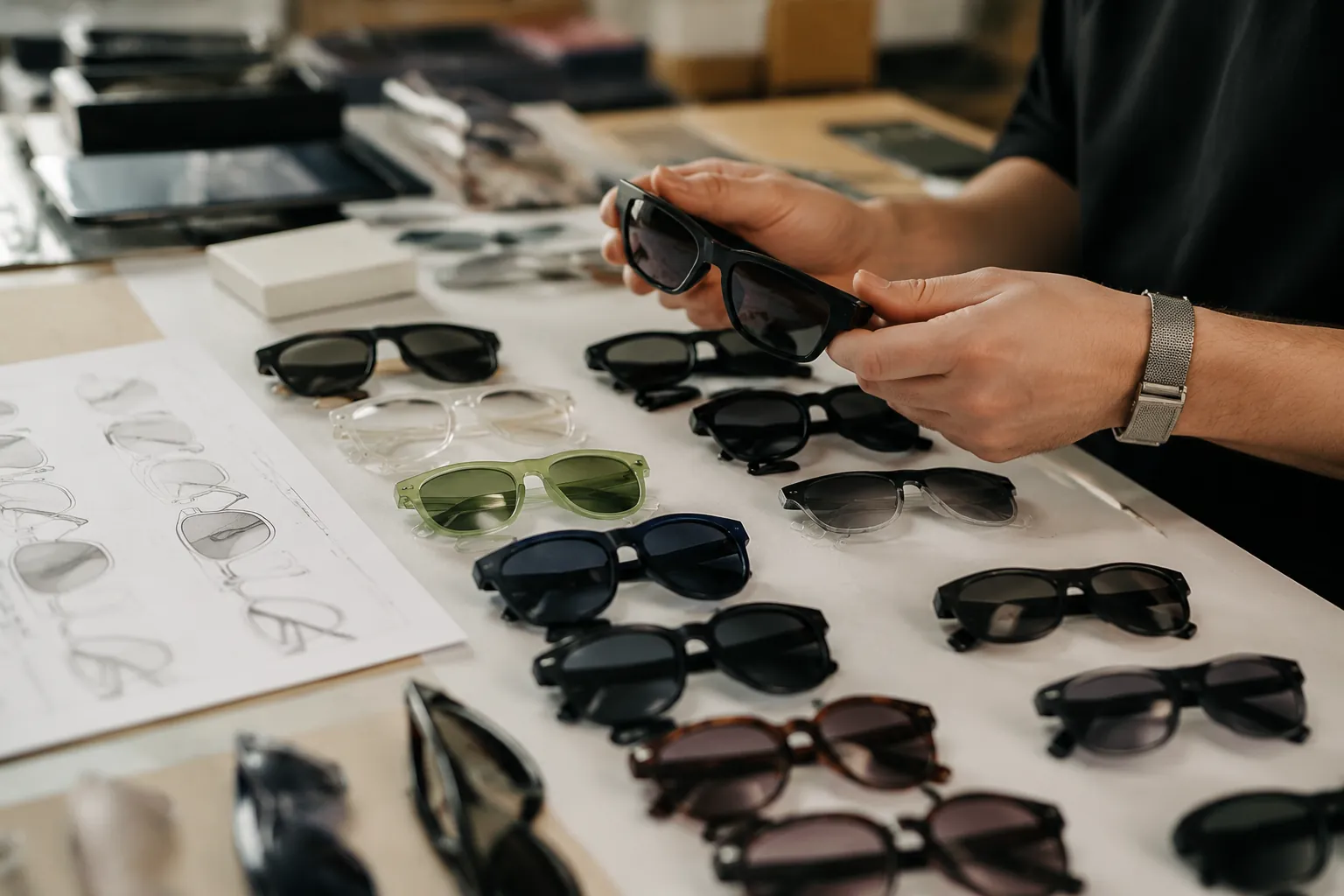
This guide is for brand owners, importers, distributors, and retailers sourcing custom sunglasses at volume. The real question is not whether sampling matters. It does. The question is how many rounds are enough to control fit, finish, compliance, and repeatability without dragging development into endless revisions. In most B2B programs, two to three disciplined sample rounds are enough. The key is to give each round a job, set measurable checkpoints, and stop reopening decisions that were already approved. Done well, a sample plan saves time, limits unnecessary tooling changes, and reduces the odds of painful surprises in bulk production.
Most projects need two to three rounds
For many custom sunglasses programs, 2 to 3 prototype rounds are enough. If a project runs to 4 or more rounds, the problem is often not factory capability. More often, it is a weak tech pack, unclear approval authority, or too many variables changing at once.
In a controlled process, Round 1 should confirm the frame platform: overall shape, key dimensions, fit direction, hinge position, lens fit, and material choice. Round 2 should confirm the saleable version: branding, finish, lens color, packaging fit, and corrections from Round 1. Round 3 is usually for technically sensitive projects such as new molds, acetate construction, metal logo hardware, mirrored lenses, or programs that need a final pre-production check before bulk release.
Extra rounds make sense only when they reduce a real production risk. If frame geometry changes, if new hardware is added, or if the approved sample no longer matches the intended bulk specification, another physical sample is justified. If the only change is a small artwork edit that can be reviewed accurately by marked-up file or photo, a full remake may not be necessary.
Every avoidable round costs time. Not just sample fees. Also factory remake time, courier time, internal review time, and the delay created when bulk production cannot start until approvals are closed. For seasonal or launch-driven programs, lost schedule can cost more than the sample itself.
Match the sample path to the project type
Not every sunglasses program needs the same approval path. Decide the route before the supplier starts frame modification, tooling work, or decoration setup.
| Project type | Typical sample rounds | Main technical risk | Typical MOQ logic |
|---|---|---|---|
| Logo on existing stock frame | 1 to 2 | Print position, logo color, adhesion | Useful for lower-risk programs where speed matters more than engineering change |
| Existing frame with custom lens and finish | 2 | Tint consistency, coating appearance, finish durability | Suitable for market testing or line extensions with limited development risk |
| Modified existing mold | 2 to 3 | Fit change, hinge alignment, temple balance | More appropriate when the style is expected to scale and repeat |
| Fully new injection or acetate style | 3 | Tooling correction, geometry accuracy, repeatability | Usually justified for a long-term SKU or signature product line |
The point is simple: development effort should match commercial value and technical risk. A basic private-label style built on an existing frame can move through a lean approval path. A core year-round model, a market-specific launch, or a new design direction usually needs tighter control, locked dimensions, documented references, and one clear sign-off owner.
Link the sample plan to the supplier's actual setup as well. If a factory cites systems such as ISO 9001 or social compliance programs such as BSCI, buyers should still confirm how those controls apply to the exact style in development. System credentials help. They do not replace style-level approval.
Round 1 proves fit, geometry, and materials
The first sample is the technical round. Treat it that way. Too many teams jump straight to logo size or pouch artwork before confirming whether the frame itself is right. That wastes time. If the platform is wrong, cosmetic comments are early and often useless.
Round 1 should focus on construction and fit. Check the sample against the drawing, specification sheet, or approved reference, not against memory. For sunglasses, buyers usually review front shape, bridge fit, lens opening, temple length, hinge action, lens seating, and overall balance on the face.
- Measure front, bridge, lens, and temple dimensions against the tech pack
- Check frame weight and balance so the style does not feel unstable in wear
- Review hinge movement, screw security, and opening-closing consistency
- Confirm the specified material, such as injection plastic, acetate, or metal component usage
- Evaluate lens fit, lens edge quality, and visual clarity from front and side view
- Record pressure points, asymmetry, or alignment issues with photos and marked comments
Material behavior matters here. Injection styles may show early issues tied to tooling stability, shrinkage, or part consistency. Acetate styles bring different risks: lamination appearance, polishing consistency, edge finishing, and machining accuracy. Comment on the result you can see and test, not just on the named material in the spec.
Good feedback is specific. Say widen the bridge opening, reduce temple flare, increase hinge resistance, or adjust the lens color reference. Do not say make it look more premium. That tells the factory nothing. A sample round works only when each requested change can be observed, measured, or clearly photographed.
Round 2 confirms finish, branding, and production realism
Once frame geometry is stable, the second round should look close to a saleable unit. This is where decoration, finishing, and production realism matter more than shape review.
For custom sunglasses, Round 2 often includes pad printing, laser engraving, screen printing, hot stamping, or metal logo plates, depending on the brand position and frame material. Each method has limits. Pad printing is efficient but sensitive to surface curvature and fixture control. Laser engraving is durable but depends on material contrast. Metal logo plates can look strong, but they add placement, bonding, and surface-leveling risk.
At this stage, buyers should verify lens color, mirror appearance, gradient transition, finish consistency, and logo placement under controlled viewing conditions. If approval is visual, the supplier needs a fixed reference: an approved sample, a signed swatch, or a documented artwork file. Without a shared standard, visual approval turns subjective and becomes harder to repeat in mass production.
Separate cosmetic approval from process approval. A finish may look acceptable on one prototype and still be hard to reproduce in bulk. Ask how the factory will control the approved features during production, including decoration position, lens color consistency, assembly checks, and final inspection criteria.
Compliance should be checked here, not at the shipping stage. Depending on the destination market, buyers may need technical documentation, test reports, or supporting records linked to CE EN ISO 12312-1, ANSI Z80.3, AS/NZS 1067, REACH, or FDA registration where applicable. Confirm that the exact lens and frame configuration being approved is the same one used for compliance support.
Know which changes need a new physical sample
One of the fastest ways to waste time is to treat every correction as if it needs a complete remake. Strong buyers separate structural changes from artwork changes and approve each through the right channel.
As a rule, any change affecting fit, function, durability, compliance, or production repeatability should trigger a new physical sample. That includes frame size changes, hinge position changes, temple geometry changes, material substitution, lens changes, hardware changes, or decoration changes that may affect durability or placement accuracy on the actual frame.
Some changes do not need that. Text edits, barcode updates, insert card changes, and some carton artwork corrections can often be approved digitally or by reference sample, unless the print method itself is still under review. Requiring a new courier shipment for every small artwork revision slows the project without reducing meaningful risk.
There is also a middle case: the production pre-sample or top-of-production sample. This is useful when the design is already approved but the buyer wants one final confirmation under real production conditions. It matters most for mixed materials, mirrored lenses, strict color matching, or complex decoration placement.
Use a blunt filter. If the correction changes how the sunglasses fit, perform, or are made, ask for another physical sample. If the supplier can prove the correction clearly through marked artwork, swatches, or detailed photos, digital approval may be enough.
Use one approval sheet and measurable checkpoints
Many sample delays start with scattered comments across email threads, chat messages, screenshots, and separate department notes. Serious buyers use one approval sheet, one revision history, and one final decision owner.
The approval sheet should identify the style code, revision number, material, color reference, target market, and intended order quantity. Then it should list measurable checkpoints, not vague opinions. Instead of writing better finish, define the actual issue: color match, surface appearance, decoration position, hinge feel, packaging fit, or lens specification.
For sunglasses, useful checkpoints often include dimensions, lens specification, polarization requirement if any, decoration method and location, packaging fit, and a clear pass-fail-revise status for each item. Many buyers also add a photo column and an owner column so every requested change has a source and a record.
Examples of measurable checkpoints include:
- Front dimensions checked against approved drawing or sealed sample
- Temple length and opening symmetry checked against specification
- Logo plate or print position confirmed against approved artwork and placement reference
- Lens color approved against signed sample under consistent lighting conditions
- Hinge action reviewed for smooth opening and secure closing with no abnormal looseness
- Pouch, case, and box fit confirmed with no distortion or pressure damage to the frame
This matters later in QC. A factory can inspect only against a standard that has been defined clearly. Terms like luxury feel or premium quality are too loose for production control. Clear references, documented checkpoints, and controlled revisions keep the bulk order aligned with the approved sample.
Sampling costs less than fixing a bad bulk order
Some buyers try to save time or money by cutting sample work too hard. That often pushes risk out of development and into production. One extra controlled sample round can cost far less than sorting, discounting, reworking, or replacing a bulk order with preventable defects.
If a buyer skips a saleable second sample and goes straight into production, problems such as incorrect lens appearance, inconsistent finish, unstable logo placement, or poor packaging fit may surface only after the goods are made. At that point, it is no longer a sample issue. It is a batch issue. That hits delivery, margin, and customer satisfaction at the same time.
That said, too many sample rounds waste time. A low-risk program based on an existing frame, a standard lens option, and a simple logo application may need only one physical sample plus one confirmed revision. A new acetate design with detailed machining, metal logo plates, and compliance support for multiple markets should usually be planned with three structured checkpoints.
The goal is not to approve the fewest samples possible. It is to use the fewest useful sample rounds that still protect the order. In practice, that often means one round to prove fit and structure, one round to prove saleable finish and branding, and one final production-level confirmation only when the technical risk is higher.
A realistic buyer timeline prevents internal delays
Even when a supplier moves fast, the buyer side can still break the schedule through slow or conflicting approvals. In many projects, internal delay causes more disruption than factory sample lead time.
A workable process starts with a complete tech pack: dimensions, material direction, target quantity, branding files, packaging requirements, destination market, and any compliance expectations. Without that, the first sample often becomes a discovery exercise instead of a controlled prototype review.
After Round 1 arrives, buyers should consolidate comments into one response from one responsible owner. If design, sales, sourcing, and compliance teams all send separate feedback over several days, the factory may receive conflicting instructions. The next sample can end up less accurate, not more.
A typical structured flow is straightforward: submit the tech pack, receive Round 1, issue one consolidated revision list, receive Round 2 with corrected frame and final decoration direction, approve a production pre-sample if needed, then release bulk production with packaging and compliance requirements locked. Simple. But it works only if the buyer controls version history and decision-making.
Experienced importers treat sample management as part of sourcing control. The prototype stage shapes delivery reliability, complaint risk, and margin protection. If the sample process is vague, the bulk order usually inherits that vagueness. If the sample process is measured and documented, production is much easier to manage.
Have a custom sunglasses project in mind?
Send us your styles, target market and quantities and we will return a detailed quote with MOQ, lead time and a sample plan.
Get a QuoteWhy source this from Wenzhou with LumiShades
Wenzhou in Zhejiang Province is widely regarded as China’s eyewear manufacturing capital, producing a large share of the world’s sunglasses. That concentration matters to buyers: a deep local supply chain for acetate sheet, hinges, lens blanks, plating and packaging means shorter component lead times, easier color and material matching, and a workforce with decades of eyewear-specific skill. LumiShades has manufactured in this ecosystem since 2009, and our vertical integration — in-house injection molding, acetate cutting, CNC milling, lens tinting, decoration and quality control — means no part of your order is quietly subcontracted to a workshop you cannot audit.
For international buyers, that vertical control translates into accountability. When a single factory owns every step, defects are traced and fixed at source rather than bounced between vendors, and your specifications survive intact from first sample to bulk. For procurement review, buyers can request process records, approved samples, quality checkpoints and project-specific compliance files before placing a bulk order. Required testing and documentation are confirmed against the destination market and product specification rather than assumed from a generic certificate list. Explore our manufacturing capabilities and quality control process to see how this works in practice.
Frequently asked questions
How many sample rounds should I budget for on a new sunglasses style? Budget for <strong>2 rounds</strong> if you are customizing an existing frame platform with limited structural change. Budget for <strong>3 rounds</strong> if you are developing a fully new style, modifying mold geometry, adding complex hardware, or requiring a final pre-production confirmation. Before placing the order, ask the supplier to define what each round is meant to confirm so the project does not drift into unnecessary revisions.
Can I skip a physical second sample and approve by photos? Only for clearly non-structural changes, such as text edits, carton artwork updates, or minor graphic adjustments that do not affect wear, durability, or compliance. Do <strong>not</strong> rely on photos alone when the change affects frame shape, fit, hinge action, lens appearance, hardware, decoration durability, or any feature that must be judged in hand. A simple rule works well: if the change could alter product performance or the way it will be made in bulk, request another physical sample.
What should I check first when a prototype arrives? Start with the frame platform before cosmetics. Compare the sample against the tech pack or approved reference and check dimensions, alignment, hinge movement, lens fit, frame balance, and visible construction quality. Record issues with photos and clear notes. Approve logos, packaging, and decorative details only after the structure is acceptable.
At what stage should compliance requirements be discussed? Raise compliance requirements at quotation stage and confirm them again before the first sample is made. Tell the supplier which market you are targeting and whether you need support related to <strong>CE EN ISO 12312-1</strong>, <strong>ANSI Z80.3</strong>, <strong>AS/NZS 1067</strong>, <strong>REACH</strong>, or <strong>FDA registration</strong>. Then make sure the approved sample uses the same frame and lens specification that will be linked to the final compliance documents or test path.
Does a low MOQ mean I can be less strict in sampling? No. A lower MOQ reduces inventory exposure, but it does not reduce product risk. A small order can still create returns, complaints, wasted freight, and repeatability problems if the sample process is weak. For low-MOQ projects, keep the sampling plan lean but disciplined: define the critical checkpoints, approve against one clear reference, and document every revision before bulk production begins.
Ready to start?
Explore our cat-eye sunglasses or request a quote — our sales team replies within 12 hours.
Request a Quote