
Wenzhou vs Shenzhen: Best Base for Custom Sunglasses
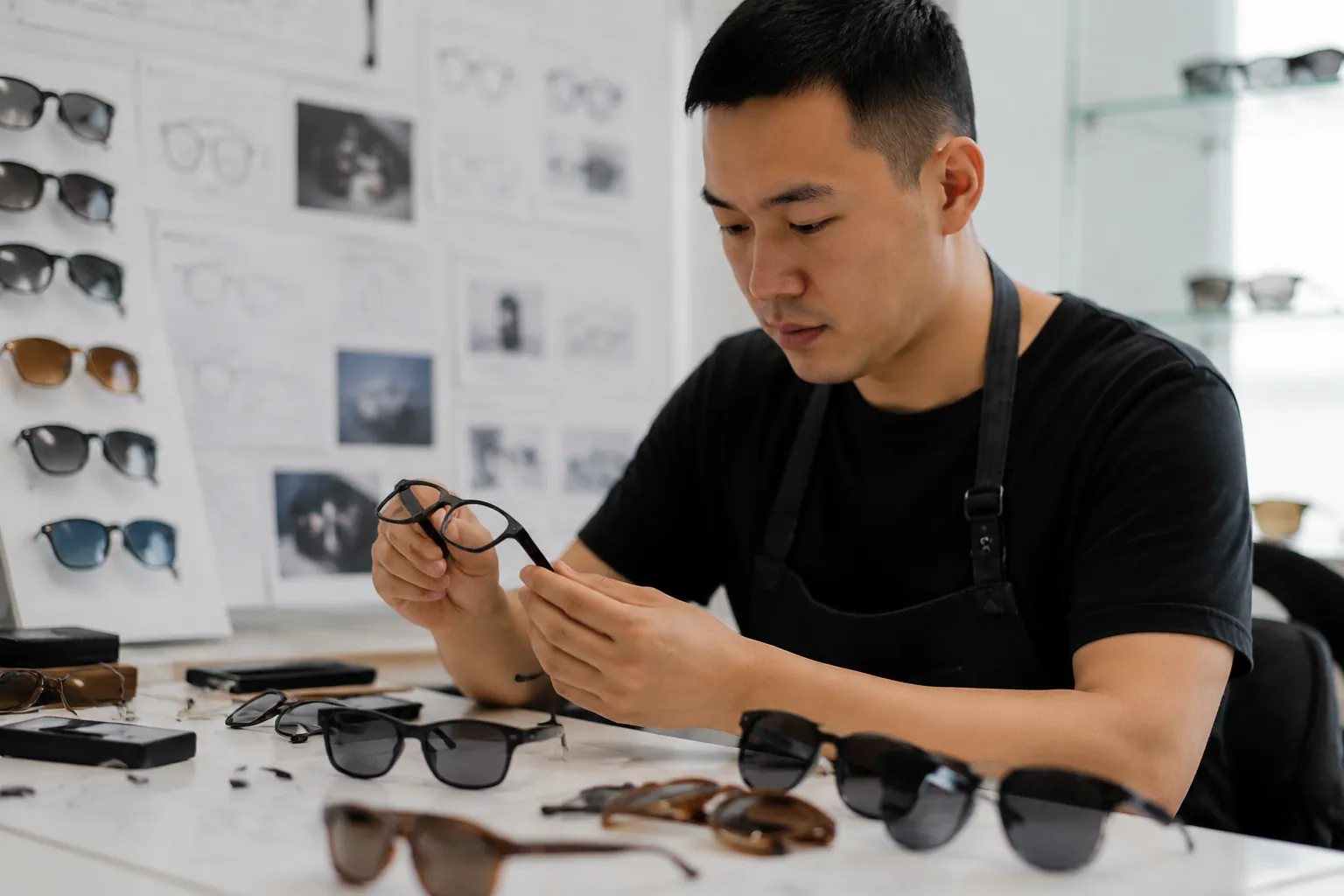
This guide is for brand owners, importers, distributors, and retail buyers comparing two major China sourcing bases for custom sunglasses: Wenzhou and Shenzhen. The point is not to name one city the winner. It is to help buyers match the right product program to the right manufacturing setup. Both regions can produce good sunglasses. They differ in supplier concentration, development workflow, process ownership, and the amount of oversight needed after a purchase order is placed. Those differences affect cost, sample control, lead-time risk, and how reliably a factory can repeat the approved standard in bulk.
Why the regional choice affects sourcing risk and margin
Many overseas buyers still treat China as one sourcing market. In eyewear, that is too broad to be useful. Wenzhou and Shenzhen run through different factory networks, cost structures, and development models. Those differences show up fast in quote clarity, sample control, and delivery reliability.
Wenzhou is one of China's main eyewear manufacturing clusters. That matters because one sunglasses project can involve frame production, lens sourcing or processing, hinge fitting, surface finishing, logo application, assembly, and final inspection. If more of those steps are handled by one factory or by nearby specialist partners, communication is usually easier. Handoff risk is easier to track too.
For standard commercial sunglasses and repeat private label programs, many buyers see Wenzhou as a practical option because so many suppliers are built around eyewear production. Shenzhen has clear strengths as well. It often fits development-heavy projects, mixed-material concepts, or programs that combine eyewear with premium packaging and other consumer-product components. The tradeoff is simple: buyers usually need to map the supply chain more carefully to see what is done in-house and what is outsourced.
Do not compare suppliers on ex-factory price alone. Compare process ownership, document control, quality responsibility, and how many parties touch the order before the final carton is sealed.
Supplier density and in-house process depth
Supplier density is not a minor detail. It affects how quickly components can be replaced, how fast production issues can be corrected, and how much coordination is needed to keep a bulk order on schedule.
In Wenzhou, buyers can often source within an eyewear-focused industrial network. Depending on the factory, that may include hinges, screws, temples, lenses, acetate sheets, nose pads, logo parts, cases, and cartons. A concentrated supply base can make replenishment and troubleshooting easier, especially when a problem appears in the middle of production.
In Shenzhen, buyers often find stronger front-end coordination across design, packaging, and accessory sourcing. That helps when the program includes gift boxes, pouches, cleaning cloths, or a stronger retail presentation. Useful, yes. But there is a risk. If several external vendors are involved and ownership is vague, the project can become fragmented.
- Dense local sourcing can reduce transit between production steps and simplify communication.
- More in-house operations make quality accountability easier to trace during inspection or corrective action.
- Heavy subcontracting can work, but it requires tighter process control and clearer release standards.
- Shorter engineering loops help resolve fit, finish, and decoration issues before mass production begins.
Ask each supplier for a process map, not just a quote. Confirm which steps are internal, which are outsourced, who buys the key components, and who has authority to release finished goods after final QC.
Style strengths, MOQ logic, and development fit
Neither region is best for every eyewear category. Still, buyers often see clear patterns. Wenzhou is commonly linked to volume-driven programs such as injected fashion sunglasses, commercial sport styles, acetate private label collections, and repeat orders across multiple colorways. Shenzhen can be attractive when the project needs more packaging development, more shape revisions, or closer coordination between eyewear and accessories.
MOQ depends on the supplier, the build, and the level of customization. That said, pricing logic usually becomes clearer as volume rises because setup cost, materials purchasing, and inspection effort are spread across more units.
- 50 pairs: possible with some suppliers for market testing or influencer capsules, but unit cost is usually high and customization may be limited.
- 300 pairs: often a more practical starting point for branded launch orders with custom logos and packaging.
- 1,000 pairs: usually gives the supplier more flexibility on materials planning, scheduling, and finishing consistency.
- 5,000+ pairs: often where efficiency gains become more visible on repeatable, standardized builds.
Shenzhen can be useful for trend-led development with more rounds of revision before approval. That flexibility has value. It does not automatically mean lower landed cost or easier bulk execution.
| Factor | Wenzhou | Shenzhen |
|---|---|---|
| Best fit | Volume programs, private label, repeatable commercial styles | Development-led projects, mixed sourcing, accessory-heavy programs |
| Typical MOQ behavior | Often clearer volume pricing on eyewear-focused programs | Varies more by supplier structure and outsourcing model |
| Cost position | Often competitive on standard injected or acetate sunglasses | Can be competitive in development, but requires closer quote review |
| Sample revision speed | Often stable when tooling, finishing, and assembly are closely managed | Often responsive on front-end coordination and concept iteration |
| Bulk repeatability | Often stronger on standardized builds and carryover SKUs | Can be strong, but depends heavily on supplier process control |
Sampling speed versus sample-to-bulk consistency
Many buyers focus too much on the first sample deadline. Fast sampling helps only if the approved sample reflects what the factory can repeat in bulk. That is the real test.
A supplier that ships one prototype quickly is not necessarily a supplier that can hold the same materials, finish, and assembly standard in production. Ask how the sample is made. Then ask whether bulk will follow the same process route.
A typical custom sunglasses sample flow may include artwork confirmation, CAD review or base-shape selection, tooling review where needed, frame and temple production, lens fitting, logo application, cosmetic finishing, alignment checks, and packaging review. Timelines vary by construction, season, and capacity, so buyers should request a written sampling schedule tied to milestones rather than a verbal promise.
Sample-to-bulk problems usually start when the process changes after approval. A sample may be hand-finished while production uses a different polishing routine. A logo method may change to save time. Lens shade may drift because the approved sample and the bulk order were not tied to the same lens specification or color reference.
Before approving bulk production, request measurable controls:
- Approved reference sample: seal one confirmed sample for production and inspection comparison.
- Critical dimensions: list the frame measurements and tolerances the supplier must hold.
- Logo standard: define method, position, size, and appearance against approved artwork.
- Assembly checks: confirm hinge function, lens fit, temple alignment, and cosmetic inspection criteria.
- Packaging standard: confirm barcode, labeling, carton marks, and pack-out method before mass production starts.
These controls matter more than broad claims such as "quality is no problem."
Cost structure: what to compare beyond piece price
Piece price is only part of the sourcing decision. Break the quote into tooling or mold cost, frame material, lens specification, decoration method, packaging, inspection standard, and shipping assumptions. Without that breakdown, a true like-for-like comparison is not possible.
On straightforward sunglasses programs, Wenzhou suppliers are often seen as competitive because many are structured around eyewear production rather than broad trading coordination. Shenzhen suppliers may also quote well, especially during development, but buyers should confirm whether the price assumes outsourced finishing, external lens work, or separate packaging vendors.
Decoration method affects both cost and durability:
- Pad printing: commonly used for logos, with relatively low setup cost and wide applicability.
- Laser engraving: often used on suitable metal parts or some temple components where a permanent mark is preferred.
- Metal logo insert: can raise perceived value, but adds tooling, fit, and assembly complexity.
- Hot foil or screen decoration: often used on cases and packaging rather than on the sunglasses themselves.
Ask suppliers to state what is included, what is optional, and what triggers extra cost. This matters most for polarized lenses, mirror coatings, spring hinges, custom hardware, packaging upgrades, and compliance testing for the final product configuration.
Materials, tolerances, and defect risk
Material choice affects more than price. It also affects production difficulty, cosmetic consistency, and defect risk. Review materials at the process level, not just by appearance or unit cost.
Injected plastic frames are often used for volume sunglasses because they can be efficient once tooling is in place. Common risk points include flash, sink, weld lines, color inconsistency, warpage, and weak hinge insert retention if process control is loose.
Acetate frames usually offer higher perceived value and stronger color depth, but they involve more machining and hand finishing. Buyers should watch thickness consistency, polishing quality, symmetry, and hardware fit. Problems often show up there first.
Lens specification matters just as much. Confirm whether the lens material is polycarbonate, TAC polarized, nylon, or another material. Then verify whether UV400 performance, coating claims, and lens category information are documented for the target market. If the product uses mirror, flash, or gradient effects, confirm whether those finishes are part of the tested configuration.
Useful production checkpoints include frame alignment, lens seating, bridge symmetry, screw retention, surface finish, and color matching against an approved reference sample. If a supplier claims strong in-house control over major steps, ask to see how those controls are recorded during inline and final inspection.
Compliance, testing, and export paperwork
For export sunglasses, compliance is not a paperwork detail. It affects customs clearance, retailer acceptance, online marketplace approval, and product liability exposure. Check both factory credentials and product-specific testing requirements before bulk production starts.
Frameworks often requested by buyers include CE EN ISO 12312-1 for many European-market sunglasses, ANSI Z80.3 for the United States, AS/NZS 1067 for Australia and New Zealand, and REACH for applicable chemical compliance obligations. Buyers may also ask whether the factory maintains ISO 9001 quality management certification or BSCI social compliance audit status. Where relevant, confirm whether FDA registration applies to the supplier's export documents and the product category being sold.
Testing documents must match the product actually being shipped. A report for one lens material, filter category, or coating does not automatically cover a different configuration. Changes to frame material, lens construction, tint, mirror coating, or labeling may require document review or further testing, depending on the market and the claim.
Practical document checks should happen during sample approval:
- Product test reports: confirm they apply to the exact frame-and-lens configuration being purchased.
- Factory certificates or audits: request current copies of ISO 9001 or BSCI documents if those matter to your program.
- Material declarations: request supporting information for REACH or other required chemical compliance pathways.
- Labeling review: confirm markings, warnings, and packaging text before production starts.
If a supplier cannot explain whether existing reports apply to your exact SKU, treat that as a risk. Clarify it before deposit payment or bulk release.
How to choose by order size and team capacity
The better region depends less on geography and more on how your company buys. If your team is lean, your target product is standard commercial eyewear, and you need a repeatable production model, Wenzhou is often a practical starting point. If your team has stronger development capacity and the product needs more concept iteration, premium presentation, or multi-vendor coordination, Shenzhen may be the better fit.
Use this decision filter:
- Choose Wenzhou if you prioritize eyewear-focused production depth, clearer repeat-order execution, and a simpler process map for standard sunglasses.
- Choose Shenzhen if you prioritize development coordination, packaging integration, and flexibility across a broader vendor base.
- Choose neither blindly if the supplier cannot explain in-house versus outsourced steps, inspection ownership, compliance documentation, and corrective-action responsibility.
In practice, the best supplier is the one that can document its process flow clearly, provide an approval sample tied to production reality, explain how quality is controlled, and support the compliance path required for your target market. Sales language is secondary. Manufacturing transparency, document accuracy, and consistent execution from sample room to final carton matter more.
Have a custom sunglasses project in mind?
Send us your styles, target market and quantities and we will return a detailed quote with MOQ, lead time and a sample plan.
Get a QuoteWhy source this from Wenzhou with LumiShades
Wenzhou in Zhejiang Province is widely regarded as China’s eyewear manufacturing capital, producing a large share of the world’s sunglasses. That concentration matters to buyers: a deep local supply chain for acetate sheet, hinges, lens blanks, plating and packaging means shorter component lead times, easier color and material matching, and a workforce with decades of eyewear-specific skill. LumiShades has manufactured in this ecosystem since 2009, and our vertical integration — in-house injection molding, acetate cutting, CNC milling, lens tinting, decoration and quality control — means no part of your order is quietly subcontracted to a workshop you cannot audit.
For international buyers, that vertical control translates into accountability. When a single factory owns every step, defects are traced and fixed at source rather than bounced between vendors, and your specifications survive intact from first sample to bulk. For procurement review, buyers can request process records, approved samples, quality checkpoints and project-specific compliance files before placing a bulk order. Required testing and documentation are confirmed against the destination market and product specification rather than assumed from a generic certificate list. Explore our manufacturing capabilities and quality control process to see how this works in practice.
Frequently asked questions
Is Wenzhou usually cheaper than Shenzhen for private label sunglasses? Often, yes, for standard and repeatable sunglasses programs. But do not assume. Ask both suppliers for a like-for-like quote that breaks out frame material, lens type, logo method, packaging, compliance testing, and shipping terms. Then confirm which processes are in-house and which are outsourced. A lower price is not a lower landed cost if it leads to remakes, slow approvals, or split shipments.
What is a realistic MOQ for a new custom sunglasses design? There is no single MOQ across the industry because it depends on tooling, material, logo method, and packaging. Some suppliers may accept around 50 pairs for small tests, but customization is often limited and unit cost is usually high. Around 300 pairs is often a more workable level for a branded launch, while higher volumes usually improve purchasing efficiency and production planning. The practical step is to ask for MOQ by component: frame, lens, logo, case, and carton pack-out.
How fast should samples and bulk production take? Timing depends on product structure and factory capacity, so treat generic promises with caution. Ask for a written schedule covering artwork approval, tooling or mold review, sample build, revisions, bulk production, and final inspection. Also ask whether the sample will be made with the same materials and process route planned for production. That matters more than the shortest quoted sample lead time.
What compliance documents should I ask for first? Start with the documents tied to your market and the exact product you plan to sell: CE EN ISO 12312-1, ANSI Z80.3, AS/NZS 1067, and REACH-related documentation where applicable. If your retailer or sourcing policy requires factory-level controls, also request current ISO 9001 and BSCI evidence. Then verify that the reports and declarations match the actual frame material, lens material, coating, and labeling of your SKU before production begins.
How do I know if a supplier is too dependent on subcontractors? Ask for a step-by-step process map covering frame production, lens sourcing or processing, logo application, assembly, packaging, and final QC. Then ask who owns quality release at each stage, where each step takes place, and whether the supplier can show incoming, inline, and final inspection records. A supplier does not need to do everything in-house to be reliable, but it should be able to explain its vendor chain clearly and show how outsourced steps are controlled.
Ready to start?
Explore our wayfarer sunglasses or request a quote — our sales team replies within 12 hours.
Request a Quote