
Best Logo Methods for Custom Sunglasses Packaging
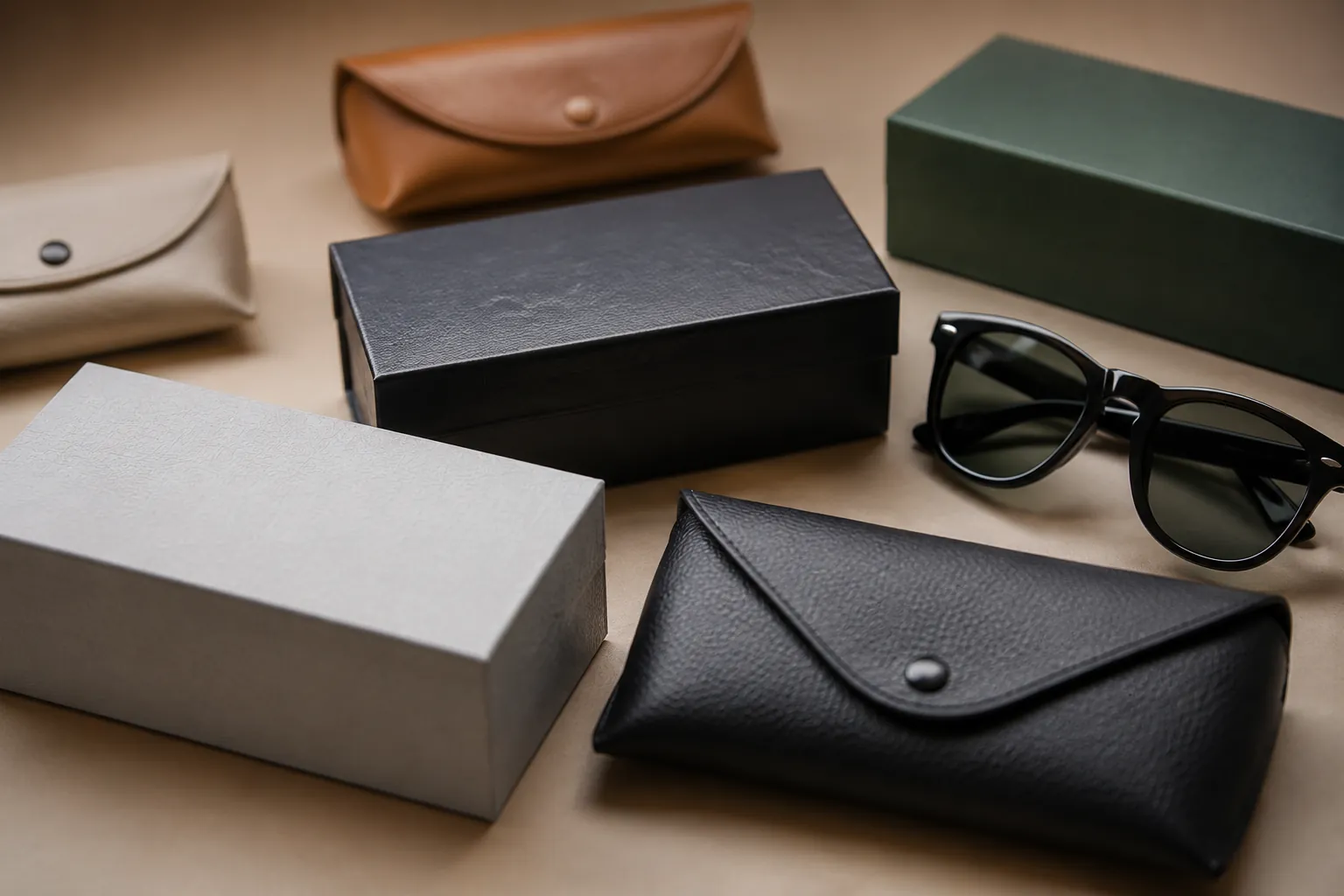
This guide is for buyers sourcing custom sunglasses packaging at volume: brand owners, importers, distributors, and retailers. The job is simple to state and easy to get wrong. Choose a logo method that fits the pack structure, target cost, order quantity, timeline, and retail position. Not the one that looks best in a mock-up. Printed, embossed, debossed, and metal badge branding behave differently on hard cases, paper boxes, PU pouches, fabric bags, and microfiber cloths. Results depend on substrate density, surface grain, coating, tooling, placement tolerance, and expected handling. This article explains how each method works in production, where it works well, where it tends to fail, and what to confirm before approving samples and placing a PO.
Start with the commercial brief, not decoration
Most packaging logo problems start too early. The discussion begins with looks, not the buying brief. That usually leads to one of two mistakes: overspending on a value program or under-specifying a premium pack. Before comparing print, emboss, deboss, or metal badges, confirm four basics: order quantity per SKU, packaging cost target, channel position, and required ship date.
The sequence should be operational. Fix the packaging structure first. A logo method that works on a rigid paper box may reproduce poorly on a curved PU hard case or a brushed pouch. Budget matters early too, because some methods add tooling or hand assembly that make little sense on lower-volume programs.
A practical decision sequence looks like this:
- Define the packaging structure first. Hard EVA case, rigid box, folding carton, PU pouch, drawstring bag, and microfiber cloth all accept logos differently.
- Set a clear packaging cost ceiling. Ask suppliers to quote within that limit instead of offering decoration methods with no commercial filter.
- Match the logo method to realistic volume. Tooling-based methods are easier to justify when the cost is spread across larger runs.
- Identify the wear point. Logos on case lids, pouch flaps, and outer-facing panels take more rubbing and handling than logos on inserts or internal cards.
- Approve samples on the final material and color. Black PU, light-color PU, matte-laminated board, and uncoated board can all change edge sharpness, depth visibility, and print density.
Sampling time also needs a realistic view. A basic print sample can move quickly once artwork is complete. Embossing, debossing, foil stamping, and metal badges usually add tooling, finish approval, or manual assembly steps. If packaging approvals slip, shipment can still be delayed even if frame production is on schedule.
Head-to-head: how each logo method works
| Method | Best packaging types | MOQ and setup logic | Typical production detail | Durability | Main risk |
|---|---|---|---|---|---|
| Printed | Paper boxes, folding cartons, care cards, microfiber cloths, some flat pouches | Lowest setup burden; often the easiest choice for low-MOQ programs | May use screen print, pad print, UV print, offset print, or foil stamp depending on surface and artwork | Good on suitable coated board and cloth; can be weaker on high-rub flexible surfaces | Rub-off, color variation, weak adhesion on textured or low-adhesion surfaces |
| Embossed | PU cases, rigid boxes, laminated paper wraps, thicker pouches | Requires a custom die; usually makes more sense when the die cost is spread across larger quantities | Raised effect formed by pressure and matched tooling; final appearance depends heavily on substrate thickness and backing support | Good when the substrate holds shape consistently | Shallow impression, loss of fine detail, uneven height on soft or padded areas |
| Debossed | PU cases, leather-look pouches, heavy paperboard, rigid set-up boxes | Requires a custom die; usually more efficient at medium to higher volumes | Pressed-in effect that often looks clean and restrained on stable materials | Good on stable substrates | Soft edges, weak visibility, distorted detail on coarse grain or thin skins |
| Metal badge | Hard cases, premium rigid boxes, structured pouches | Highest setup and assembly burden; typically most suitable when the order volume and retail positioning justify it | Badge is stamped, etched, cast, or cut, then plated or painted and attached by adhesive, prongs, or another fixing method | Good if attachment and handling are controlled properly | Detachment, crooked placement, scratching, visible adhesive, finish inconsistency |
Printed logos are usually the safest choice for cloths, inserts, and simpler carton programs. Emboss and deboss perform best on structured materials that can hold a permanent impression. Metal badges send a stronger premium signal, but they add a separate component, more approval points, and more cosmetic risk.
That is the real comparison. Not which method looks best in isolation, but which one still looks controlled after production, packing, shipping, and shelf handling.
Material behavior matters more than the artwork file
The same logo artwork will not reproduce the same way across all packaging materials. In custom sunglasses packaging, substrate behavior is often the deciding factor.
- PU hard cases: Commonly used for emboss, deboss, print, and metal plates. Fine detail depends on surface grain, skin thickness, and the firmness of the shell underneath. Heavy grain can soften thin strokes and reduce small-letter clarity.
- Rigid paperboard boxes: Suitable for print, foil stamp, emboss, and deboss. Board thickness, lamination, and wrap tension all affect sharpness. Some laminated surfaces reduce the visual contrast of a shallow emboss or deboss.
- Folding cartons: Best suited to print and foil. Emboss can work, but the carton structure must support it. A deep impression on thin stock can mark the reverse side or affect panel flatness.
- Velvet or brushed fabric pouches: Usually better for print or a sewn label than embossing. Surface pile can blur edges and make small branding inconsistent.
- Microfiber cloths: Print is the standard solution. Clarity depends on weave, ink spread, and artwork thickness.
This is why a physical sample on the actual production material matters more than a digital mock-up. A logo that looks sharp in flat artwork may lose definition once it is pressed into grainy PU, printed on absorbent cloth, or centered on a curved case lid.
If the brand mark contains hairline strokes, tight counters, or very small text, do not assume one master file will suit every packaging component. It usually will not. Prepare production-ready artwork variations for print, emboss, deboss, and badge use so the branding stays legible and consistent.
Cost, MOQ, and lead-time logic buyers can use
There is no universal price card for packaging decoration. Case size, board grade, PU type, plating finish, logo size, and assembly method all affect the quote. Even so, the cost pattern is predictable enough to guide sourcing decisions.
| Method | Setup cost pattern | Unit cost effect | Sample timing effect | Best volume fit |
|---|---|---|---|---|
| Printed | Low; typically limited to artwork preparation, print screens, plates, or foil tooling where applicable | Low to moderate depending on color count, coverage, and process | Usually the fastest option if no special tooling is required | Low to high volumes, depending on packaging type |
| Embossed / Debossed | Moderate; custom die required | Usually modest once tooling is approved and volume is sufficient | Commonly adds time for die making and strike approval | Usually medium to high volumes |
| Metal badge | Highest; badge tooling, finish development, and attachment process may all apply | Highest due to component cost and added assembly | Usually the longest because badge finish and placement must be confirmed | Usually better suited to higher-volume or premium programs |
For lower-volume trial orders, printed logos usually carry the least commercial risk. There is less sunk tooling cost and fewer production variables. At higher volumes, emboss or deboss often becomes more reasonable because the die cost is spread across more units. Metal badges usually make sense only when retail presentation, margin, and order scale support the extra cost and process control.
Lead-time risk rises as soon as decoration adds separate steps. Dies need approval. Badge finishes may need physical comparison. Manual badge placement can slow output and create variation. Treat packaging branding as part of the critical path. Not as a late add-on.
Failure modes and QC points by method
Each logo method has predictable defects. Review them before artwork approval. Then ask the supplier how they control them in sampling and mass production.
- Printed logos: low opacity on dark substrates, color mismatch against an approved standard, edge feathering on absorbent materials, and abrasion during handling or transit. For cloths and pouches, ask what rub or adhesion checks are used internally.
- Embossed logos: uneven height, crushed detail, weak formation near curves, and inconsistent appearance between pieces if pressure or backing support changes.
- Debossed logos: ragged edges on coarse-grain PU, insufficient depth on thin stock, and poor readability when artwork is too small or placed too close to seams or curved edges.
- Metal badges: misalignment, tilt, detached corners, scratches, visible adhesive, finish variation, and inconsistent spacing relative to case edges.
Ask for measurable controls, not general assurances. For visible logo placement on premium packs, buyer and supplier should agree on a written placement tolerance on the approved drawing or sample. For emboss and deboss, the factory should compare production pieces against an approved master sample. For badges, confirm the attachment method and whether it has been validated for the actual substrate, whether PU, wrapped board, or another surface.
Effective packaging QC should cover legibility, position, depth or height consistency, adhesion where relevant, orientation, and cosmetic condition. That is the baseline. It is not enough to confirm only that the logo was applied.
How to match the method to the buyer scenario
The right method changes with the commercial use case.
- Small pilot order: Use printed logos on the box and cloth. Keep the case plain or use simple print if the material supports it. This reduces tooling cost and makes revisions easier.
- Mid-market retail line: A debossed PU case with a printed cloth is often a good balance between perceived value and production control.
- Promotional or gift-with-purchase program: Prioritize visibility, speed, and cost control. Printed branding is often enough because recognition matters more than tactile finishing.
- Premium collection: A structured hard case with restrained debossing or a small metal plate can work well, supported by a printed rigid box and branded cloth. Avoid decorating every component heavily; too many treatments can weaken the premium effect.
- Multi-SKU program: Standardize one case decoration method across all SKUs and vary only the printed outer packaging where possible. This reduces tooling count, simplifies QC, and supports more reliable delivery.
A common sourcing mistake is stacking too many custom elements into one program at the same time: new frame, new case, new pouch, new badge, new cloth, and new rigid box. Every added customization creates another approval point. If speed matters, simplify the packaging stack and invest in the element the buyer will notice most.
Keep compliance in order as well. Packaging decoration supports presentation, but the eyewear product still has to meet the right market requirements and documentation path. Depending on market and project scope, buyers may need to review controls such as CE EN ISO 12312-1, ANSI Z80.3, AS/NZS 1067, REACH, FDA registration where applicable for the responsible facility or process, plus broader supplier-system indicators such as ISO 9001 or BSCI where relevant to vendor qualification.
Artwork and specification points to lock before sampling
Clear specification shortens sampling time. A logo file with a vague note such as "make it premium" is not a production brief.
- Artwork format: Provide vector artwork and convert all text to outlines.
- Line thickness: Ask the supplier to confirm the minimum reproducible line weight for the chosen method and material. Do not rely on one generic rule across print, emboss, deboss, and badge production.
- Minimum text size: Confirm the smallest readable text size on the actual substrate, especially for textured PU, cloth, and small deboss areas.
- Logo size: State width and height in millimeters on the approved drawing.
- Placement: Define location from the edge, centerline, seam, or another fixed reference with measurable dimensions.
- Color reference: Use Pantone or an approved physical standard for print and any painted badge details.
- Finish callout: Specify matte, gloss, brushed, polished, antique, sandblasted, or other required finish where relevant.
- Attachment method: For badges, confirm whether the part is fixed by adhesive, prongs, or another method suitable for the packaging structure.
- Acceptance standard: Write down what is acceptable for placement variation, print sharpness, depth consistency, adhesion, and cosmetic marks.
When these points are complete at the start, sampling usually moves faster and with fewer revision rounds. In many projects, delays come less from factory capacity than from incomplete artwork and missing approval criteria.
Checklist before placing the PO
The best packaging logo method is the one that still looks controlled and appropriate after shipping, shelf handling, and customer use at the target price point.
Before placing the order, verify the following:
- Approved sample uses the exact production material, color, and surface finish.
- Logo method matches the order volume, retail positioning, and cost target.
- Artwork has been adjusted where fine detail will not reproduce reliably.
- Placement, dimensions, color, finish, and attachment method are written clearly on the PO or approved specification sheet.
- Lead time includes tooling, finish approval, and any revised sample cycle required by the chosen method.
- QC standard covers logo legibility, placement tolerance, adhesion where relevant, and cosmetic defects.
- Packaging approvals are aligned with eyewear production and shipment timing.
That is the practical way to choose between printed, embossed, debossed, and metal badge branding. Spend where the buyer will notice a real difference. Avoid decoration that adds process risk without adding clear value. Always test the logo on the real packaging material before committing to bulk production.
Have a custom sunglasses project in mind?
Send us your styles, target market and quantities and we will return a detailed quote with MOQ, lead time and a sample plan.
Get a QuoteWhy source this from Wenzhou with LumiShades
Wenzhou in Zhejiang Province is widely regarded as China’s eyewear manufacturing capital, producing a large share of the world’s sunglasses. That concentration matters to buyers: a deep local supply chain for acetate sheet, hinges, lens blanks, plating and packaging means shorter component lead times, easier color and material matching, and a workforce with decades of eyewear-specific skill. LumiShades has manufactured in this ecosystem since 2009, and our vertical integration — in-house injection molding, acetate cutting, CNC milling, lens tinting, decoration and quality control — means no part of your order is quietly subcontracted to a workshop you cannot audit.
For international buyers, that vertical control translates into accountability. When a single factory owns every step, defects are traced and fixed at source rather than bounced between vendors, and your specifications survive intact from first sample to bulk. We back this with 15+ years of experience, shipments to 60+ countries, more than 5 million pairs produced per year and a 98.5% on-time delivery rate. Our certifications — CE EN ISO 12312-1, FDA registration, ANSI Z80.3, AS/NZS 1067, REACH, ISO 9001 and BSCI audit — mean the compliance documentation your market requires already exists. Explore our manufacturing capabilities and quality control process to see how this works in practice.
Frequently asked questions
Which logo method is safest for a small first order? Printed branding is usually the lowest-risk option for a small first order because it normally requires less tooling, fewer process steps, and simpler revisions. Ask the supplier which print process will be used on each packaging part, request a physical sample on the actual material, and confirm whether the logo will be tested for rub resistance or adhesion if it is placed on a high-contact surface.
Does embossing or debossing work well on all sunglasses cases? No. Embossing and debossing work best on structured materials that can hold a consistent impression, such as suitable PU wraps and rigid wrapped board. They are less reliable on soft, thin, highly padded, or heavily textured surfaces. Before approval, ask for a sample made on the exact case material and review three points closely: edge sharpness, depth consistency, and readability of small text or fine logo details.
Are metal badges worth the extra cost? They can be, but usually only when the packaging is part of a premium presentation and the order economics support the added component and assembly work. A metal badge introduces more variables: finish approval, placement control, attachment strength, and scratch risk. If you are considering this option, ask the supplier to specify the badge material, finish, fixing method, and placement tolerance, then review a real assembled sample rather than approving from artwork alone.
How long should I allow for packaging logo sample approval? The exact timing depends on the method, the substrate, and how complete the artwork package is when sampling starts. Simple printed packaging samples are usually the quickest. Embossed, debossed, foil-stamped, and badge-applied samples often take longer because tooling, finish confirmation, or attachment trials may be needed. To keep the schedule realistic, ask the supplier for a step-by-step sample timeline covering artwork check, tooling if any, pre-production sample, revision round, and final approval.
Can the same logo artwork be used across case, box, pouch, and cloth? Usually yes in brand identity terms, but often not as one unchanged production file. Different materials and processes reproduce detail differently. Thin strokes, small counters, and micro text may need to be thickened, simplified, or removed for debossing, embossing, or cloth printing. The practical approach is to ask the supplier for method-specific artwork guidance, then approve each version against its actual packaging component so the brand stays consistent without forcing unsuitable detail onto the material.
Ready to start?
Explore our rimless sunglasses or request a quote — our sales team replies within 12 hours.
Request a Quote