
Temple Branding: Textures, Inserts, and Finishes
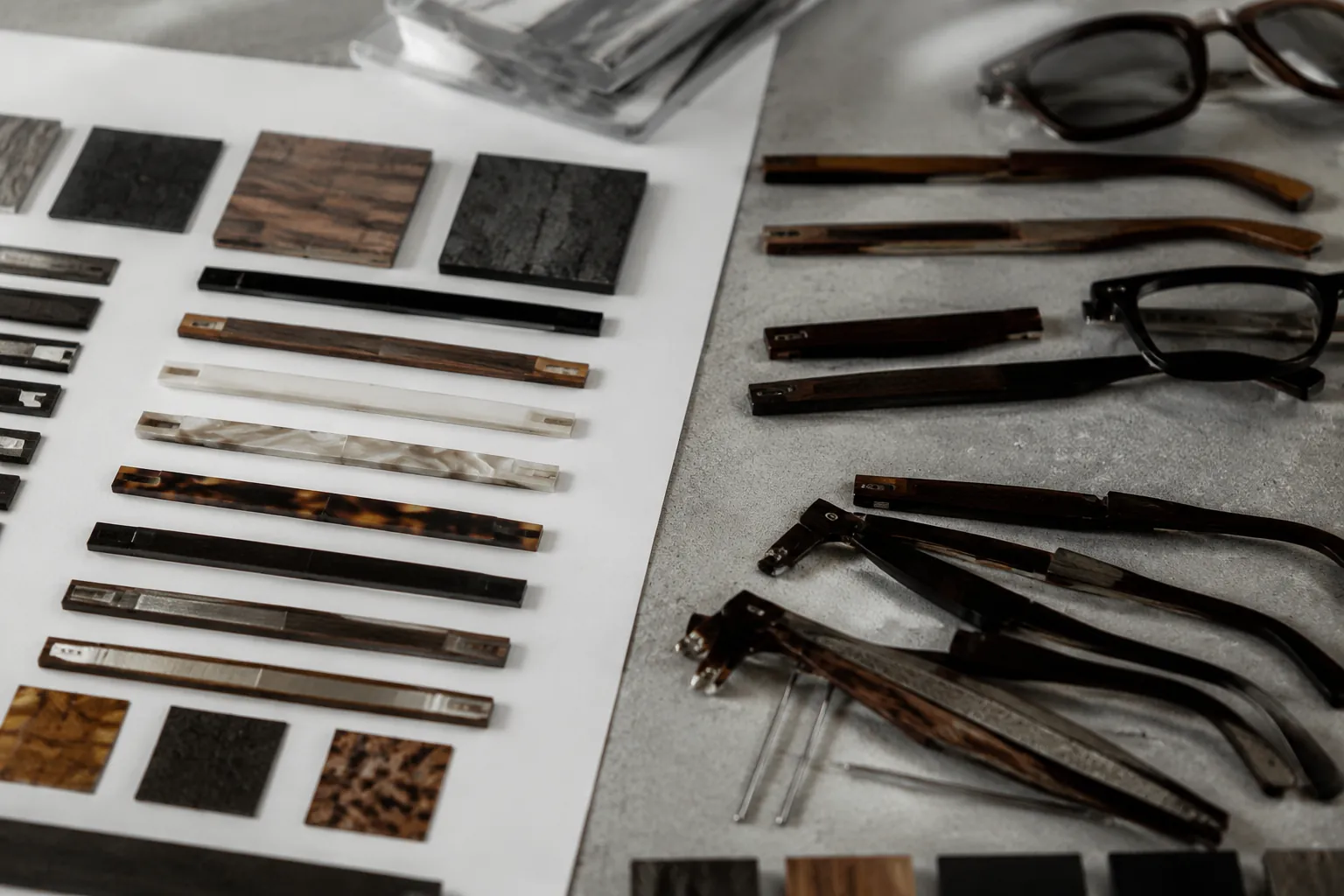
Temple branding is where many private-label sunglasses either look finished or fall apart on inspection. The temple is handled, opened, closed, rubbed in cartons, displayed on racks, and checked at close range. A logo cannot save a temple that feels sharp, shows a crooked print, or carries a badge that starts to lift. For importers, distributors, retail chains, and brand buyers, the temple is also a practical place to build product identity without rebuilding the full front frame. This guide covers temple textures, inserts, engraving, pad printing, and finish combinations, with production notes on materials, tolerances, MOQ, cost drivers, lead time, and QC.
Why the temple needs its own branding spec
The front of a sunglass frame gets the first look. The temple gets the most handling. Buyers grip it when they remove a frame from a display tray. End users open and close it before purchase. If the outside temple looks thin, over-printed, scratched, misaligned, or uncomfortable against the head, the whole product feels cheaper, even if the lens and front frame are acceptable.
From a manufacturing point of view, the temple is useful because it can carry brand identity without changing the lens shape, bridge geometry, or front mold. That matters for private-label programs that need differentiation but cannot justify new tooling at the first order stage. A laser mark, one-color pad print, small recessed plate, or controlled finish zone can make the SKU feel customized while keeping the base frame stable.
MOQ is supplier- and process-specific. It is not a fixed industry number. For small trial runs, decoration methods with low setup cost, such as laser marking or simple pad printing, are usually easier to quote than tooling changes. For larger orders, dedicated plates, custom-color components, repeatable texture areas, or metal plaques may become more economical because setup cost is spread across more units. Mold texture, new insert geometry, and co-molded effects need more engineering review and should be used only when demand is proven or the launch commitment is clear.
Treat temple branding as a production feature, not a loose artwork note. A usable spec defines material, finish, logo size, position, decoration method, edge feel, color reference, approved sample, and basic wear checks. Without those controls, a pre-production sample may look fine while bulk production drifts in alignment, color, adhesion, or surface feel.
Material behavior: plastic, acetate, metal, and TR temples
Material decides what temple branding can realistically do. The same logo file behaves differently on injected PC, TR90 or other nylon-based materials, acetate, stainless steel, aluminum, and zinc alloy. Heat resistance, surface energy, coating hardness, flexibility, wall thickness, and polishing method all affect decoration durability.
| Temple material | Common production considerations | Decoration behavior | Main production risk | Suitable branding choices |
|---|---|---|---|---|
| Injected PC or common plastic | Wall thickness and pigment must be checked before adding recesses or thick logo areas | Can accept pad printing after cleaning and correct ink selection; laser contrast depends on resin, pigment, and coating | Sink marks near thick sections, warping, poor ink adhesion on contaminated or low-energy surfaces | Pad print, molded texture, simple color contrast, shallow recessed detail where structure allows |
| TR90 / flexible nylon | Flexibility is useful for comfort but makes adhesion and plate retention harder | Printing may require primer or a specified ink system; laser contrast must be proven on the actual material | Ink cracking during flexing, badge lift, inconsistent marking contrast | Shallow texture, tested pad print system, simple recessed logo, molded detail designed for flex |
| Acetate | Works well with cutting, polishing, lamination, and thicker temple profiles | Good for CNC milling, laser marking, lamination effects, and recessed hardware when polishing is controlled | Over-polishing can soften detail; deep engraving may collect compound or dust | Laser mark, CNC texture, laminated color detail, recessed metal plate, polished or satin finish contrast |
| Stainless steel, aluminum, or zinc alloy | Surface treatment, plating, coating, and edge finishing are critical | Works well with laser marking, etching, plating, coating, and enamel fill when the surface process is stable | Coating burn-through, sharp edges, plating color variation, fill loss after rubbing | Laser engraving, etched logo, enamel fill, PVD or plated finish where specified |
Do not add heavy hardware to thin or highly flexible temples unless the structure is designed and tested for it. A metal plate can look premium in a rendering and still cause problems in use. It may press near the ear, catch hair, or loosen during flexing. For acetate temples, a recessed plate is usually safer when it sits flush or slightly below the surrounding surface after polishing. For injected temples, the recess must leave enough wall thickness behind it so the part does not sink, weaken, or distort.
Decoration methods: cost, tolerance, and durability
Most temple branding uses one of five routes: laser marking or engraving, pad printing, metal plate assembly, molded or milled texture, and inserted color or material pieces. Each route has a different cost structure. Buyers often compare only the visible result. A factory also prices setup, jigging, cycle time, labor, reject risk, curing, inspection, tooling, and plating work.
| Method | Setup and MOQ logic | Practical tolerance discussion | Durability expectation | When to choose it |
|---|---|---|---|---|
| Laser marking or engraving | Low physical setup when artwork and jig are simple; suitable for trial orders if the material gives acceptable contrast | Position should be confirmed on a jigged sample; tighter targets are easier on flat, stable temple geometry than on curved or tapered arms | Strong on suitable acetate and metal; variable on translucent, coated, or pigment-sensitive plastic | Small logos, serial marks, inside-arm details, clean branding with limited added parts |
| Pad printing | Requires artwork plate, ink selection, pad selection, and curing control; becomes more economical as quantity increases | Artwork should be approved on the actual temple curve; registration tolerance should be stated in millimeters on the purchase spec | Good when surface preparation, primer if needed, ink, and curing are validated; should be checked by rub and tape-pull tests | One- or two-color logos, icons, short text, retail basics, promotional or private-label programs |
| Metal logo plate | Higher component and assembly cost; stock plates are faster, custom plates require tooling or machining | Specify visible gap, height difference, and edge feel; flush or slightly recessed is safer in touch areas | High when mechanically retained, riveted, or well bonded in a protected recess | Premium private label, gift sets, fashion capsules, products where hardware is part of the design language |
| Molded texture | Requires tooling or mold-surface work; best when the style and volume justify the tooling change | Placement is repeatable once the mold is made, but design changes require tooling review | Permanent because the texture is part of the molded surface | Grip zones, brand patterns, matte/gloss contrast, injected frames with repeat orders |
| CNC-milled texture or groove | Adds machine time and finishing control; common on acetate or premium small-batch concepts | Depth, width, and corner radius must be specified so polishing does not remove the detail | Permanent if the groove is not polished away and edges remain comfortable | Micro-ribs, recessed panels, tactile branding, premium acetate temples |
For low-risk first runs, start with laser marking or single-color pad printing. These methods keep tooling light and allow artwork adjustment before harder commitments. For premium lines, a recessed plate, milled groove, or mixed finish can justify the added cost. But the temple must have enough thickness, the comfort zone must stay clean, and the assembly process must be repeatable.
Texture as a brand cue, not decoration noise
Texture can work better than a larger logo because it changes touch and light reflection. A matte-to-gloss transition, fine rib, sand-blasted area, or shallow micro-groove can make the temple recognizable without making it loud.
For injected frames, texture usually comes from the mold surface. This can be efficient after tooling is complete, but changes are not casual. If the texture needs to move, become shallower, or disappear on one colorway, the mold surface may need rework. For acetate, texture can be cut by CNC, created through lamination, or adjusted during finishing. That gives more design freedom, but it also adds labor, polishing control, and inspection time.
Useful texture options include:
- Matte outside temple with gloss logo window: strong contrast for corporate, lifestyle, and retail basics. Approve the matte and gloss levels by physical sample, not by rendering alone.
- Fine rib near the hinge: adds grip and a technical look. Keep the rib shallow and rounded enough to avoid skin irritation, dirt buildup, or polishing inconsistency.
- Micro-etched logo patch: better for repeated small patterns than trying to pad print very fine detail on a curved surface.
- Two-level finish: one polished zone and one satin or frosted zone on the same arm. This can look more expensive than a printed logo if the boundary line is clean.
- Inside-arm texture: useful for hidden brand detail, batch identification, or a quieter design cue. Avoid rough surfaces where the temple touches hair or skin.
Match the texture to the sales channel and use case. Sport and outdoor programs often need functional cues such as grip ribs or low-glare matte surfaces. Fashion programs can support stronger contrast and sculptural detail. Large retail programs usually need a safer balance: one recognizable texture cue, one logo cue, and no sharp edges. Comfort still wins.
Insert and plate strategies that reduce rework
Inserts add material contrast. They also add tolerance stack-up. The temple body, recess, insert part, adhesive or mechanical retention, polishing process, and final inspection all need to work together. Many problem projects start with too many insert types on one temple: metal plus rubber plus wood-look material plus printed color. Each material can behave differently in expansion, bonding, finishing, and aging.
The safest insert strategy is short, recessed, and protected. A short insert near the outer temple is usually easier to control than a full-length strip. Full-length inserts can twist during assembly, show gaps after polishing, or create uneven flexibility. If an insert is decorative rather than structural, avoid placing it in a high-flex area near the hinge unless the supplier validates the design with flex and handling checks.
Common insert choices are:
- Acetate color lamination: good for layered color effects and visible cut lines. Best when the color story supports the front frame or lens tint.
- Recessed metal plaque: gives a premium feel, but requires clean edge finishing. The plaque should be flush or slightly recessed so it does not catch skin, hair, cloth, or packaging.
- Rubber or soft-touch insert: useful for sport styling, but bonding to flexible temples must be checked with flex, rub, and aging observations.
- Molded-in color detail: can be efficient for injected frames at higher volume, but resin compatibility, flow, color stability, and scrap rate must be proven before bulk production.
For assembly control, specify the acceptable gap, height difference, and adhesive visibility. Define the maximum visible gap in millimeters. State whether the insert may sit proud of the temple surface. State whether any adhesive line is acceptable on light, transparent, crystal, or tortoise colors. On darker frames, small gaps are less visible. On crystal and light-color temples, glue lines and polishing marks stand out. Inspection should be stricter.
Finish combinations that stay controlled
The best temple branding is usually a controlled combination, not a single decoration. A plain white print on a glossy black arm can look generic. A metal plate plus heavy texture plus bright color shift can look overworked. Strong commercial designs separate touch, color, and logo function.
| Combination | Visual effect | Best use case | Main control point |
|---|---|---|---|
| Matte temple + gloss logo | Quiet contrast, readable at close range | Corporate programs, polarized basics, retail private label | Base finish must be matte enough and stable across batches; otherwise contrast disappears |
| Polished acetate + laser mark | Clean and premium without added parts | Fashion, boutique, mid-premium collections | Laser setting must not burn, cloud, or create uneven contrast on the approved acetate color |
| Satin metal + etched logo fill | Technical, precise, higher-end feel | Metal sunglasses, prescription-ready frames, executive gifts | Fill color, plating, and coating must pass the agreed rub and sweat-resistance checks |
| Textured plastic + small metal plate | Visible brand cue with tactile contrast | Statement styles, gift programs, higher-impact private label | Control plate weight, edge comfort, visible gap, and retention after flexing |
A useful design rule: one main cue and one supporting cue. Use a fine molded texture as the main cue and a small tonal logo as the support. Or use polished acetate as the main material cue and a small recessed metal mark as the support. If texture, insert, print, mirror lens, and strong temple color all compete at once, the style becomes harder for distributors and retailers to place across multiple markets.
Spec pack, MOQ, and lead-time planning
A temple branding spec should remove interpretation. Phrases such as premium finish, subtle logo, or same as sample are not enough unless the approved sample is physically sealed, dated, and referenced in the purchase documents. Use measurable targets where possible.
- Logo size: state width and height in millimeters and identify the exact artwork file version.
- Placement: measure from a fixed reference point such as hinge centerline, temple top edge, or temple end. Avoid vague center placement on tapered arms.
- Position tolerance: state the acceptable alignment range in millimeters. Laser on a flat jigged surface can usually be controlled more tightly than pad print on a curved, tapered, or flexible arm.
- Finish reference: approve a physical matte, satin, gloss, or soft-touch sample. Do not rely only on renderings or screen colors.
- Color tolerance: approve under agreed lighting conditions. For printed logos, keep a cured ink reference or approved production sample.
- Edge feel: define that insert transitions must not feel sharp. If a raised edge is allowed, state the maximum height difference in millimeters.
- Wear check: request dry rub, tape pull for print, light alcohol rub where relevant to the ink system, and basic temple open-close flex checks before bulk release.
MOQ depends on the supplier, the base frame, and the decoration method. A stock frame with laser marking or simple pad printing can often be quoted at a lower MOQ than a new mold texture, new insert shape, or custom metal hardware. Custom color, dedicated printing plates, coordinated lens and temple packages, and custom plaques require more setup. Plan them with the supplier before artwork is finalized.
Lead time also needs project-by-project confirmation. Simple decoration samples are usually faster than samples requiring new tooling, resin color matching, special plating, or mold-surface work. Bulk timing starts only after the buyer approves the sample, artwork, material, finish, packaging, and payment terms. If the target price is tight, keep the temple treatment simple. Every added assembly step, curing step, polishing step, and inspection risk increases cost and can increase rejects.
Compliance, QC, and stable production
Temple decoration cannot be separated from eyewear compliance and buyer requirements. The finished sunglasses still need to follow the relevant market route. That may include CE EN ISO 12312-1 for the EU, ANSI Z80.3 for the U.S. sunglass route, AS/NZS 1067 for Australia and New Zealand, REACH for restricted substances, FDA registration requirements where applicable for the U.S. market, and factory-management or social-audit requirements such as ISO 9001 or BSCI when requested by the buyer. Decoration must not create sharp edges, unstable coatings, incorrect labeling, or skin-contact material risks.
Before bulk approval, inspect the temple like a production part, not a rendering. Open and close both temples repeatedly on the approved sample. Rub the printed, coated, or plated area with a dry cloth. Check whether the mark stays readable after normal handling. Run a fingertip along the insert edge and inside arm. Place the frame in its pouch, polybag, or carton mock-up and check for scuffing at contact points. For metal finishes, confirm whether sweat-resistance, plating adhesion, or coating checks are included in the agreed QC plan.
A good temple program is controlled. It uses one main visual cue, one supporting finish or texture, and a decoration method the factory can repeat. Production sequence matters: molding or acetate cutting, CNC or recess work, base finishing, decoration, curing or assembly, lens fitting, final adjustment, and QC. If decoration happens too early, later polishing or handling can damage it. If it happens too late, adhesion, alignment, or curing time can become hard to control.
For overseas buyers, the commercial value is simple: fewer approval rounds, fewer complaints, and less rework. When frame production, lens work, decoration, assembly, and QC are coordinated under a documented process, the temple spec is easier to control. Start with a decoration method the supplier can validate. Document the details. Keep approved samples. Scale the branding only after the style and quality standard are proven.
Have a custom sunglasses project in mind?
Send us your styles, target market and quantities and we will return a detailed quote with MOQ, lead time and a sample plan.
Get a QuoteWhy source this from Wenzhou with LumiShades
Wenzhou in Zhejiang Province is widely regarded as China’s eyewear manufacturing capital, producing a large share of the world’s sunglasses. That concentration matters to buyers: a deep local supply chain for acetate sheet, hinges, lens blanks, plating and packaging means shorter component lead times, easier color and material matching, and a workforce with decades of eyewear-specific skill. LumiShades has manufactured in this ecosystem since 2009, and our vertical integration — in-house injection molding, acetate cutting, CNC milling, lens tinting, decoration and quality control — means no part of your order is quietly subcontracted to a workshop you cannot audit.
For international buyers, that vertical control translates into accountability. When a single factory owns every step, defects are traced and fixed at source rather than bounced between vendors, and your specifications survive intact from first sample to bulk. We back this with 15+ years of experience, shipments to 60+ countries, more than 5 million pairs produced per year and a 98.5% on-time delivery rate. Our certifications — CE EN ISO 12312-1, FDA registration, ANSI Z80.3, AS/NZS 1067, REACH, ISO 9001 and BSCI audit — mean the compliance documentation your market requires already exists. Explore our manufacturing capabilities and quality control process to see how this works in practice.
Frequently asked questions
What is the lowest-risk temple branding method for a first run? Start with laser marking or one-color pad printing on an existing frame. Ask the supplier to test the exact temple material and finish before confirming bulk. Approve a physical sample showing logo size, position, color or contrast, and adhesion. Avoid custom plaques, new texture tooling, or complex inserts until the frame and sales demand are confirmed.
Which temple treatment is most durable? The most durable treatments are usually built into the material or surface: molded texture, CNC-milled detail, laser marking on suitable acetate or metal, or an etched metal logo. A recessed plate can also be durable if it is flush or slightly recessed, securely bonded or mechanically retained, and checked for edge comfort and retention after flexing.
What tolerance should I specify for logo placement? Specify placement in millimeters from fixed reference points, such as hinge centerline and temple top edge. Do not write only centered on temple. For laser marking on a stable jig, request a tighter tolerance and confirm it on the pre-production sample. For pad printing on a curved or tapered arm, allow more tolerance and approve the real production position before bulk.
How should I specify an insert or metal plate? State the insert material, surface finish, length, width, thickness, recess depth, visible gap limit, height difference from the temple surface, retention method, and whether adhesive overflow is acceptable. Also state the inspection rule for light or transparent frames, where glue lines and gaps are more visible.
Can matte and gloss be mixed on the same temple? Yes. Matte temple plus gloss logo window is a practical way to create contrast without adding hardware. Approve a physical finish reference for both matte and gloss levels, and ask the supplier to confirm how the finish is produced, such as mold texture, coating, polishing, or masking. The method affects repeatability and cost.
Will temple decoration affect compliance testing? It can. Decoration must not introduce sharp edges, unstable coatings, restricted substances, poor labeling, or skin-contact risks. Finished sunglasses should follow the relevant market requirements, such as CE EN ISO 12312-1, ANSI Z80.3, AS/NZS 1067, REACH, FDA registration where applicable, and any buyer-required ISO 9001 or BSCI documentation.
What should I approve before bulk production? Approve the actual decorated frame, not only artwork. Check logo position, color or laser contrast, finish level, insert edge feel, adhesion, rub resistance, packaging scuff risk, and temple open-close behavior. Keep one sealed approved sample with date, version, and order reference so bulk QC has a clear comparison standard.
How long do samples and bulk production usually take? Timing depends on the supplier, frame availability, and decoration method. Simple laser or pad-print samples are usually faster than projects requiring new insert geometry, metal plate tooling, resin matching, special plating, or mold texture work. Confirm lead time in writing after artwork, material, finish, packaging, and QC requirements are locked.
Ready to start?
Explore our cat-eye sunglasses or request a quote — our sales team replies within 12 hours.
Request a Quote