
Custom Sunglasses for Promo Kits: Sourcing Guide
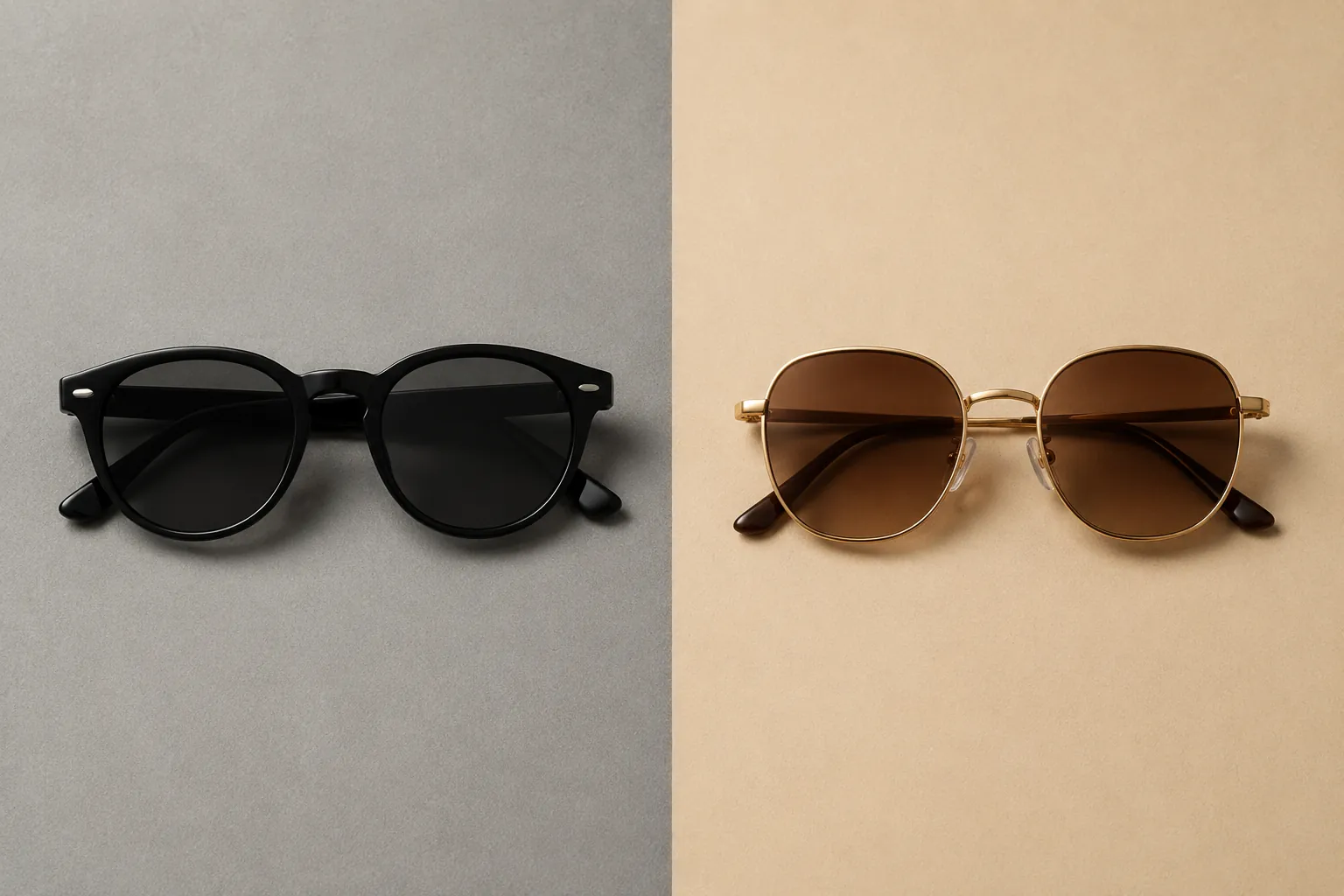
This guide is for subscription box teams, promotional product importers, retail kit planners, and brand buyers sourcing custom sunglasses for campaign orders. It shows how to brief a supplier, choose low-MOQ designs, control logo durability, avoid packaging mistakes, and build a production schedule around a real launch date. The aim is simple: fewer sample rounds, clearer landed-cost planning, and sunglasses that fit the brand, the market, and the final carton.
Start With the Campaign Constraint, Not the Frame
For subscription boxes and promo kits, sunglasses are usually one item inside a larger pack. They may sit next to cosmetics, drinkware, apparel, event badges, printed inserts, or seasonal gifts. That changes the sourcing logic. Start with the campaign limit, not the sketch.
The first question is not just which frame looks good. It is which frame can be branded, packed, documented, shipped, and received before the deadline.
A workable RFQ should include four operating inputs before any design discussion: required warehouse receiving date, quantity by design, maximum packed unit size, and target unit cost or landed-cost range. Without those, a supplier can only give a rough estimate. If the order may ship to more than one market, state the destination countries at RFQ stage so the compliance and labeling plan can be scoped early.
Campaign orders need clear lock points. Pick the frame platform first. Then confirm lens category, logo position, packaging type, carton requirements, and destination market. A switch from microfiber pouch to EVA case is not just a styling change. It changes packed dimensions, carton count, and freight options. Treat those choices as cost and logistics decisions.
Low-MOQ Design Routes That Stay Manufacturable
Low MOQ does not mean every part should be custom. Usually the opposite.
At lower quantities, the safest route is a stock or semi-stock frame with limited customization: temple logo, lens tint, pouch artwork, insert card, or a frame color the supplier already runs. Full new tooling can make sense for a repeat program. It is rarely the efficient choice for a one-off promo kit.
Before you commit, ask which parts are standard and which need development. A logo print may only need artwork approval and a fixture. A new acetate shape may need a longer development cycle, dimensional checks, and more approvals. The more custom elements you add to a low-volume order, the more delay risk you create.
| Design route | Practical quantity | What can change | Main control point |
|---|---|---|---|
| Stock frame with logo | Low MOQ programs | Temple logo, lens tint, pouch, insert card | Fastest route; confirm print area and logo adhesion |
| Stock frame with custom color | Low to mid-volume programs | Frame color, lens color, logo, packaging | Color tolerance; plastic, fabric, and print will not match exactly |
| Semi-custom decoration | Mid-volume programs | Two-tone finish, metal badge, special lens tint | More fixtures and visual checks during production |
| New mold or custom acetate shape | Repeat programs or larger-volume projects | Bridge, temple shape, hinge layout, frame geometry | Tooling cost, longer development, dimensional approval |
Watch SKU splits. Ten colors at small quantities are harder to control than two colors at larger quantities. More SKUs mean more line changeovers, separate labels, carton segregation, more color-approval risk, and more chances for the wrong style to reach the kit line.
Specify Material, Lens, and Approval Details Clearly
A purchase order that says "black sunglasses with UV400 lens" is too vague for production control. The PO should define frame material, color reference, lens color, lens category if relevant, logo method, logo size and position, packaging, inspection standard, destination market, and delivery term. If any item is still open, mark it clearly at sample stage.
Injection-molded plastic frames are common for promotional sunglasses because they are light, cost-efficient, and faster to color-match than more labor-heavy materials. Acetate usually gives a more premium feel and retail presentation, but it needs more processing and tighter dimensional review. Metal frames can increase perceived value, but plating, screws, nose pads, and hinge checks become more important in inspection.
Lens choice affects appearance and defect risk. Standard smoke and brown lenses are often easier to control visually. Mirror lenses show scratches and coating marks more easily during packing and handling. Gradient lenses need stricter visual checks because uneven tint is obvious when units are lined up. For event kits meant for indoor and outdoor use, do not choose a lens so dark that the pair feels impractical once the user goes inside.
- Frame color: provide Pantone or a physical reference, but allow realistic tolerance across plastic, pouch fabric, and printed paper.
- Lens tint: approve under daylight and indoor light; photos alone can hide tint density and coating defects.
- Fit and balance: check temple alignment, hinge tension, nose bridge comfort, and whether folded temples sit flat.
- Approval samples: keep one signed sample with the buyer and one at the factory before bulk production starts.
Packaging Fit Is Part of the Product Spec
Packaging is where many sunglasses projects lose time. Fast.
A frame may look fine on the sample table, then fail the real box plan because the temples do not fold flat, the pouch adds too much bulk, or the case pushes the kit over a freight breakpoint. Treat the packed unit as part of the product spec, not an afterthought.
For subscription boxes, ask for folded frame dimensions, packed pouch dimensions, inner carton dimensions, master carton dimensions, and gross weight before final approval. If possible, test the sunglasses, microfiber pouch, instruction card, barcode label, and retail sleeve together inside the actual kit box. Shake the box. Stack it. Check whether lenses rub against a zipper, bottle cap, metal tin, or sharp insert edge.
Common packaging options behave very differently. A microfiber pouch is usually the best balance for tight boxes because it protects lenses, adds little weight, and can also work as a cleaning cloth. A drawstring pouch may look more giftable but usually adds more bulk. A printed paper sleeve is flat and cheap, but it does not protect lenses from abrasion on its own. EVA and hard cases give better crush protection, but they can sharply increase packed volume and change freight economics.
Also confirm polybag rules early. Some brands want less plastic. Some warehouses require individual polybags for barcode control, dust prevention, or automated handling. Changing this after bulk production starts can add repacking time and create relabeling mistakes.
Match the Logo Method to Real Use
A logo on sunglasses must survive handling, packing friction, cleaning, sunscreen residue, sweat, and sometimes saltwater. The cheapest decoration method is not always the lowest-risk choice. Pick the process based on surface material, expected use, artwork detail, and how much wear is acceptable over the campaign life.
Pad printing is common for one-color or two-color temple logos and can work well if ink adhesion is tested on the actual frame material and finish. Laser engraving avoids an ink layer, but contrast depends heavily on substrate color and texture. Metal logo plates can create a more premium retail look, but they add cost, alignment checks, and more failure points tied to bonding or edge finishing.
| Logo method | Best use | Process detail | Buyer risk |
|---|---|---|---|
| Pad printing | Temple logos on plastic frames | Requires fixture, ink match, curing, and adhesion check | Fine text can fill in; weak adhesion may rub during use |
| Laser engraving | Subtle logos on suitable plastic or metal | No ink layer; mark is created by surface reaction | Low contrast on some colors; sample approval is essential |
| Metal logo plate | Retail kits and higher-value collaborations | Plate placement, bonding, and edge finishing need QC | Adds cost and more failure points if rushed |
| Lens logo printing | Event giveaways and photo-led campaigns | Usually small logo outside the main vision area | Exposed to cleaning abrasion and user complaints if too visible |
Ask for a documented adhesion check on printed logos, such as a cross-hatch tape test after curing if that is part of the supplier's QC process. Also confirm logo size on the actual curved temple, not only on a flat artwork file. A logo that looks balanced in artwork can look oversized on a narrow or tapered arm.
Compliance, Labeling, and Documentation
Promotional sunglasses still need proper compliance. Being a giveaway changes nothing.
UV protection and market fit are not optional. Buyers should define requirements by destination market and ask the supplier to provide the right supporting documents for that exact program.
Depending on the market, the compliance plan may involve CE EN ISO 12312-1, ANSI Z80.3, AS/NZS 1067, REACH, or FDA registration. ISO 9001 and BSCI relate to management systems and social compliance, not product performance, so they should not be treated as substitutes for lens or market-specific conformity documents. If one order will serve multiple markets, plan that before artwork, insert cards, and carton marks are approved, because labeling and documentation may differ by destination.
Labeling also needs control. Cartons should show PO number, style, color, lens, quantity, destination, and carton number. If barcode labels are required, test scannability on the final label size and final surface. A barcode that scans on a flat proof can fail when printed small on a curved sleeve or textured pouch tag.
Confirm what evidence will be supplied before shipment: test reports, declarations, registration details where relevant, and final packing information. Do not wait until the goods are finished.
Cost Drivers, Lead Times, and Release Logic
Promo buyers often start with unit price. Fair enough. But total landed cost is usually driven by customization steps and packaging choices more than the base frame alone.
The tradeoffs are usually simple. A second logo position may add more cost than a better pouch. A custom frame color may require special material ordering or more involved color approval. A mirror lens may increase visible-defect rejection. A hard case can raise freight cost sharply because of the space it takes, even if the piece price increase looks small.
Lead time should be counted from project release, not from first inquiry. Bulk production normally starts only after sample approval, artwork lock, packaging confirmation, payment arrangement, and component release are complete. If the frame is approved but the pouch artwork or carton marks are still open, the project is not released.
Build the schedule backward from warehouse receiving, not from event date. Add time for international freight, customs clearance, local trucking, inbound QC, and kit assembly. If there is any chance the campaign may shift from sea freight to air freight, review packed dimensions early. Packaging volume can determine whether that fallback is still commercially viable.
QC Checks Before the Cartons Leave Wenzhou
Eyewear QC is not just a logo check. Inspectors should review frame balance, hinge movement, screw tightness, lens fit, tint consistency, surface scratches, burrs, temple alignment, logo position, packaging accuracy, and carton marks. A low-cost pair can still look clean and commercially acceptable. A pair with fingerprints, crooked temples, or scratched lenses can make the whole kit feel careless.
Inspect the sunglasses the way the end user receives them. Open the pouch. Remove the pair. Unfold it. Check the logo. Wear it briefly. Fold it again and return it to the packaging. This catches issues that bare-frame inspection misses, such as pouch lint, lens rubbing, tight hinges, crooked hangtags, or barcode placement that blocks the branding.
For mixed-SKU subscription programs, carton labeling is critical. Each carton should identify design, color, lens, quantity, PO number, destination, and carton sequence. Wrong carton marks can do more damage than a minor cosmetic defect because a warehouse may kit the wrong sunglasses into thousands of boxes before the mistake is found.
Pre-shipment photos help, but they do not confirm hinge tension, optical appearance, barcode accuracy, carton count, or formal inspection results. For higher-risk orders, use a written QC checklist and consider third-party inspection if the retail channel, customer exposure, or campaign timeline justifies the extra control.
Have a custom sunglasses project in mind?
Send us your styles, target market and quantities and we will return a detailed quote with MOQ, lead time and a sample plan.
Get a QuoteWhy source this from Wenzhou with LumiShades
Wenzhou in Zhejiang Province is widely regarded as China’s eyewear manufacturing capital, producing a large share of the world’s sunglasses. That concentration matters to buyers: a deep local supply chain for acetate sheet, hinges, lens blanks, plating and packaging means shorter component lead times, easier color and material matching, and a workforce with decades of eyewear-specific skill. LumiShades has manufactured in this ecosystem since 2009, and our vertical integration — in-house injection molding, acetate cutting, CNC milling, lens tinting, decoration and quality control — means no part of your order is quietly subcontracted to a workshop you cannot audit.
For international buyers, that vertical control translates into accountability. When a single factory owns every step, defects are traced and fixed at source rather than bounced between vendors, and your specifications survive intact from first sample to bulk. We back this with 15+ years of experience, shipments to 60+ countries, more than 5 million pairs produced per year and a 98.5% on-time delivery rate. Our certifications — CE EN ISO 12312-1, FDA registration, ANSI Z80.3, AS/NZS 1067, REACH, ISO 9001 and BSCI audit — mean the compliance documentation your market requires already exists. Explore our manufacturing capabilities and quality control process to see how this works in practice.
Frequently asked questions
What is the practical MOQ for custom sunglasses in a subscription box? It depends on how much of the product is actually custom. For low-volume programs, the fastest route is usually a stock frame with a logo, standard lens options, and custom packaging. For a faster and more accurate quote, send the supplier your quantity by design, frame reference, logo artwork, packaging type, and destination market, then ask which elements can be customized without new tooling.
How long should I allow from sample request to bulk shipment? Allow time for three stages: sampling, approval, and production. Sample timing depends on the level of customization, and bulk timing should only be counted after the buyer has approved the sample, locked artwork, confirmed packaging, and commercially released the order. Ask the supplier for a milestone plan covering sample dispatch, approval deadline, production start, inspection window, and estimated ship date.
Which logo method is best for sunglasses used outdoors? Start with durability. Laser engraving is often the lowest-risk option if the frame material gives enough visible contrast. Pad printing can also work well if the supplier validates ink adhesion on the actual substrate and finish. If you are comparing methods, ask for side-by-side samples and request the supplier's adhesion-check method before approving artwork.
Can one order cover the US, EU, and Australia markets? Yes, but only if the compliance and labeling plan is defined before production approval. Depending on destination, relevant requirements may include CE EN ISO 12312-1, ANSI Z80.3, AS/NZS 1067, REACH, and FDA registration. The practical step is to provide destination countries at RFQ stage and ask the supplier to confirm which documents, markings, and insert details apply to each market.
What packaging is safest for tight subscription boxes? A microfiber pouch is usually the most practical option for tight box formats because it adds very little bulk while still protecting the lenses from routine abrasion. To confirm fit, ask for folded frame dimensions, packed dimensions, and carton details, then test the real unit inside the actual kit layout with neighboring items. If the box contains hard or sharp products, review whether a pouch alone gives enough transit protection.
What information should I send for a fast quotation? Send quantity by design, target market, required receiving date, frame reference or photo, lens color, logo artwork, packaging type, size limits for the kit, carton requirements, and any inspection or compliance needs. Also state whether the order is for a stock frame, a custom color, or a new design route. Clear input gives you a more accurate first quote and a more reliable lead-time assessment.
Ready to start?
Explore our shield & oversized sunglasses or request a quote — our sales team replies within 12 hours.
Request a Quote