
Stainless Steel, Titanium, or Aluminum Sunglass Frames
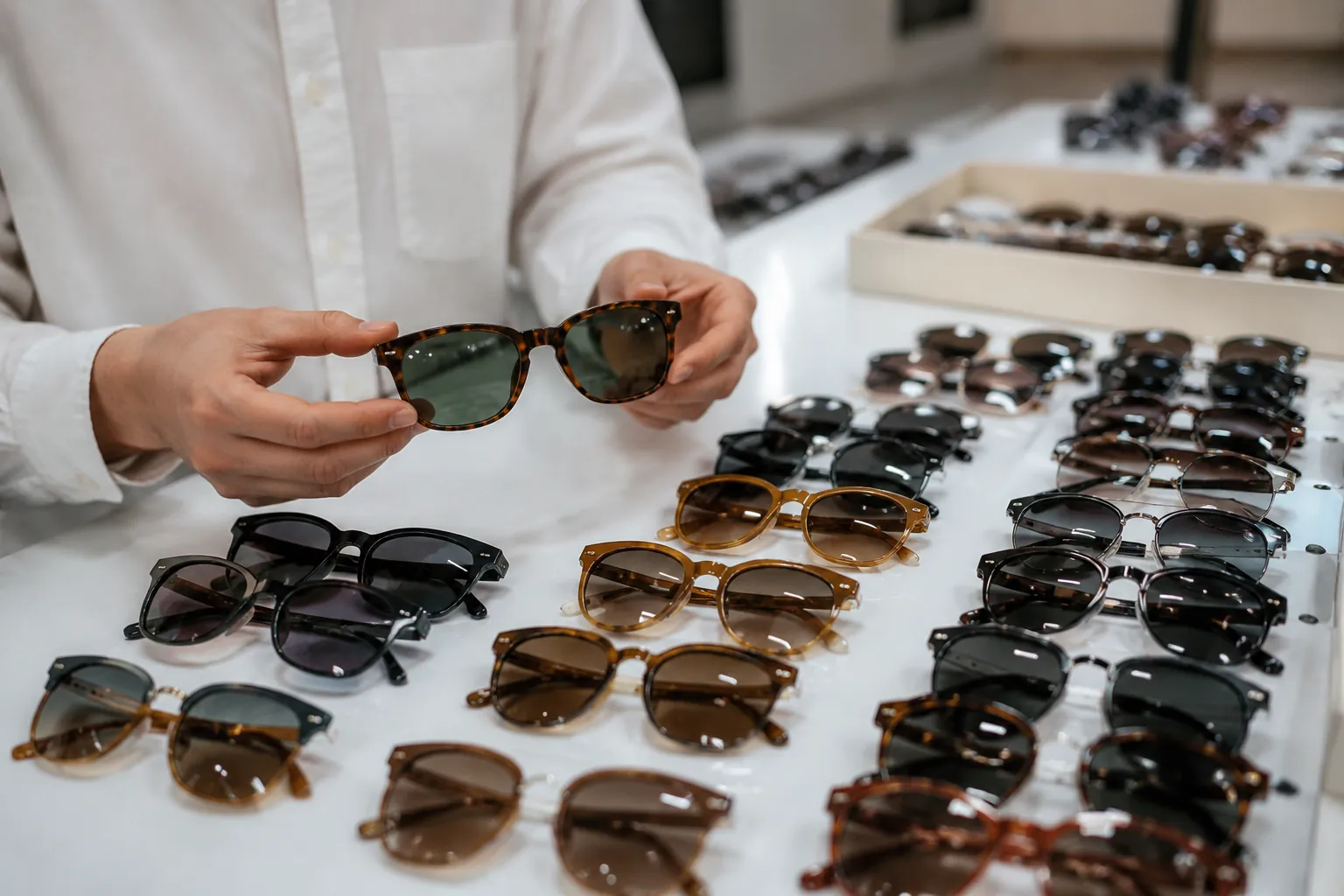
This guide is for brand owners, importers, distributors, and retailers sourcing premium sunglass frames in volume. It compares stainless steel, titanium, and aluminum across the factors that matter in buying: weight, comfort, corrosion resistance, finish options, production control, compliance, MOQ, lead time, and landed-cost risk. There is no universal best material. The right choice depends on your retail price, forecast, target market, and quality requirements.
Start With the Brief
Most sourcing mistakes start with a vague request. A buyer asks for a "premium metal frame" and leaves the rest to the factory. That often leads to a frame that looks fine in a sample photo but bends too easily, scratches too fast, feels uncomfortable, or costs more than planned once finishing and packing are added.
For premium sunglasses, the real question is not simply stainless steel vs titanium vs aluminum. The better question is: what must the finished frame prove? Stable fit. Low weight. Strong corrosion resistance. A polished look. Bold color. Controlled MOQ. A target landed cost. Pick the priority first.
At LumiShades, the practical selection process starts with four points: target retail price, expected order volume, expected wear environment, and required surface treatment. A frame for coastal travel retail may need different corrosion performance than a city fashion frame. A polished stainless steel frame has different scratch-control needs than an anodized aluminum frame. Clear brief, better sample.
Material Behavior in Plain Terms
| Material | What it feels like | Main strength | Main weakness |
|---|---|---|---|
| Stainless steel | Firm, smooth, and usually heavier than titanium | Good strength, stable shape, broad finish options | Heavier than titanium; polished or plated surfaces can show scratches |
| Titanium | Very light, resilient, and premium in hand | Strong corrosion resistance and weight advantage | Higher material and processing cost; welding and forming require tighter control |
| Aluminum | Very light and often rigid in simple shapes | Low weight and strong color potential with anodizing | More vulnerable to dents and visible cosmetic damage than steel or titanium |
Stainless steel is the most common choice for many premium metal sunglass programs because it balances cost, durability, and finish flexibility. Titanium fits lightweight premium positioning, but it comes with a higher cost structure. Aluminum works well when weight and color are central to the design. It needs careful engineering around hinges, bends, and surface protection.
Do not treat "lighter" as automatically better. Some consumers still read a little weight as quality. Too much weight is a problem too. It can drag on the nose bridge and temples. The right material supports both the brand promise and the wearing experience.
Weight, Comfort, and Fit Stability
Weight affects comfort because the load sits on the nose bridge, nose pads, and temples. Titanium usually gives the strongest weight advantage of the three. Stainless steel is heavier, but it can still wear well if the frame geometry, bridge design, lens size, and temple balance are controlled. Aluminum can also be very light, though it may need more cross-section or structural support in stress areas.
Fit stability depends on both material and construction. Stainless steel is predictable for many thin metal frame designs and works well with common hinge structures when the design stays within the material's limits. Titanium can hold shape well, but forming, welding, and alignment must be controlled carefully. Aluminum needs extra caution around hinge mounts, bridge sections, and sharp bends because damage or deformation shows sooner.
Use this rule: for all-day wear, travel, or comfort-led products, start with titanium or a well-designed stainless steel frame. For a fashion-led product with shorter wear time and a strong color concept, aluminum can work if the structure, coating, and packing are validated during sampling.
Finish Quality and Surface Options
Finish quality often decides whether a frame feels premium or merely looks it in a photo. Stainless steel is flexible for polished, brushed, plated, coated, and mixed-material looks. Titanium can also look high-end, but surface preparation and joining processes need more control. Aluminum is often paired with anodizing, painting, or protective coatings. It can look sharp. It is less forgiving of marks and dents.
Branding on metal frames must be confirmed on the actual production material and finish, not only on artwork. Laser engraving, pad printing, and metal logo plates can all behave differently depending on surface preparation, coating thickness, part geometry, and fixture stability during decoration.
For a branded program, ask the factory to confirm:
- the exact surface finish method proposed for bulk production
- the approved sample standard for color, gloss, texture, and logo position
- logo placement tolerance and required artwork file format
- how parts will be protected from scratches during assembly, packing, and transit
- whether the coating or finish has been evaluated for sweat, handling, and UV exposure where relevant
If a supplier cannot explain the finish process and inspection standard clearly, do not assume the approved sample will be repeated in bulk.
Durability, Corrosion, and Compliance Risk
Durability is not one thing. For sunglass frames, buyers should look at fatigue resistance, hinge stability, coating adhesion, corrosion resistance, scratch resistance, lens retention, and damage tolerance during shipping and retail handling.
Titanium is popular in eyewear because it combines low weight with strong corrosion resistance. Stainless steel can perform well when the right grade, surface preparation, and finishing system are used. Aluminum can be durable in the right structure, but cosmetic damage such as dents or coating marks often becomes the bigger issue.
Common metal-frame failure modes include:
- temple looseness or uneven opening force caused by weak hinge design or poor assembly control
- finish wear at the bridge, nose contact points, hinges, and temple tips
- surface scratches caused by metal-to-metal contact during packing or transport
- coating peel or discoloration caused by poor surface preparation or unsuitable finish selection
Compliance should be checked against the destination market and product category. Relevant documentation may include CE EN ISO 12312-1, ANSI Z80.3, AS/NZS 1067, REACH, FDA registration, ISO 9001, and BSCI, depending on the market and buyer requirements. These documents do not replace product inspection. They show that the supplier can support the regulatory, quality, or social-compliance expectations that may apply to your order.
Cost, MOQ, Lead Time, and Margin
Material choice affects margin through more than raw material cost. Buyers should factor in forming difficulty, welding or joining requirements, surface treatment, reject rate, inspection time, packaging protection, freight weight, and the cost of rework if the finish is inconsistent.
| Material | Typical buyer use | Cost pressure | Margin implication | Production note |
|---|---|---|---|---|
| Stainless steel | Core premium fashion line | Moderate | Often the best balance for mid-premium pricing | Suitable for volume programs when finish standards are clearly defined |
| Titanium | Lightweight premium line | High | Can support higher retail if the comfort and premium story are clear | Requires tighter control of forming, welding, and alignment |
| Aluminum | Fashion-forward or weight-sensitive styles | Low to moderate, depending on finish and scrap | Can work when coating, scrap, and cosmetic QC are controlled | Needs careful surface protection during production and packing |
For LumiShades custom sunglass programs, MOQ starts at 50 pairs per design, with pricing reviewed at higher quantity tiers such as 300, 1000, and 5000+ pairs. Samples typically take 7–10 days, and bulk production typically takes 25–35 days after sample approval and order confirmation. Timing can shift if the frame needs complex finishing, special components, extra testing, or revised samples.
Do not change materials casually after sample approval. Moving from stainless steel to titanium, or from stainless steel to aluminum, can affect tooling, forming behavior, finishing, hinge structure, weight, and cost. If the launch date is tight, lock the material, finish, lenses, logo method, and packing method before bulk production starts.
What to Ask the Factory Before You Order
Good buyers do not only ask, "Can you make it?" They ask what process limits and inspection standards will control the order. That is the difference between a good-looking sample and a repeatable bulk shipment.
- What grade or specification of stainless steel, titanium, or aluminum is proposed for this frame?
- What is the target finished frame weight, and does it include lenses, nose pads, and temple tips?
- Which finish method will be used: polishing, plating, brushing, anodizing, painting, or coating?
- What are the inspection points for hinge alignment, temple symmetry, lens groove fit, and opening force?
- How will finished frames be separated and protected to prevent scratches during transit?
- Which compliance documents can be provided for the destination market?
- Will the approved sample use the same material, finish, hinge, lenses, and logo method as the bulk order?
Ask for a physical sample with the final finish whenever possible. A reference sample from another order is not enough because metal frames are sensitive to polishing time, plating bath conditions, anodizing, coating preparation, hinge structure, and assembly method.
LumiShades supports custom eyewear production with in-house capabilities including injection molding, acetate cutting, CNC milling, lens tinting, decoration, and QC. That matters for metal-frame programs because many premium sunglasses combine metal fronts with acetate temples, molded nose components, custom lenses, and branded decoration. Fewer handoffs can reduce gaps and make quality issues easier to trace.
Buyer Checklist Before Sample Approval
Before approving a metal-frame sample, inspect the finished unit against the commercial specification, not only the CAD file or reference photo.
- Confirm finished frame weight against your target range.
- Check hinge action on both sides for equal tension and smooth movement.
- Inspect the bridge, rims, hinges, and temples under strong light for scratches, dents, coating marks, or color variation.
- Verify logo placement, size, edge sharpness, and alignment.
- Check lens fit, lens movement, and groove security.
- Evaluate nose contact and temple comfort on real face shapes, not only on a display form.
- Review available compliance documents for the destination market.
- Approve the packing method before releasing bulk production.
Packing needs specific approval. Metal-to-metal contact inside a carton can damage polished stainless steel, coated aluminum, and decorated surfaces before the goods reach the buyer. Individual protection, correct tray or pouch selection, and carton stability are practical quality controls, not extras.
For premium sunglass programs, the material decision is only half the job. The other half is whether the supplier can repeat the approved sample at the ordered quantity with the same fit, finish, branding, and packing standard.
Have a custom sunglasses project in mind?
Send us your styles, target market and quantities and we will return a detailed quote with MOQ, lead time and a sample plan.
Get a QuoteWhy source this from Wenzhou with LumiShades
Wenzhou in Zhejiang Province is widely regarded as China’s eyewear manufacturing capital, producing a large share of the world’s sunglasses. That concentration matters to buyers: a deep local supply chain for acetate sheet, hinges, lens blanks, plating and packaging means shorter component lead times, easier color and material matching, and a workforce with decades of eyewear-specific skill. LumiShades has manufactured in this ecosystem since 2009, and our vertical integration — in-house injection molding, acetate cutting, CNC milling, lens tinting, decoration and quality control — means no part of your order is quietly subcontracted to a workshop you cannot audit.
For international buyers, that vertical control translates into accountability. When a single factory owns every step, defects are traced and fixed at source rather than bounced between vendors, and your specifications survive intact from first sample to bulk. We back this with 15+ years of experience, shipments to 60+ countries, more than 5 million pairs produced per year and a 98.5% on-time delivery rate. Our certifications — CE EN ISO 12312-1, FDA registration, ANSI Z80.3, AS/NZS 1067, REACH, ISO 9001 and BSCI audit — mean the compliance documentation your market requires already exists. Explore our manufacturing capabilities and quality control process to see how this works in practice.
Frequently asked questions
Which material is best for a premium sunglass line with a mid-range retail price? Stainless steel is usually the safest starting point for a mid-range premium line because it balances cost, strength, finish options, and production stability. Ask the factory to confirm the steel grade or specification, final frame weight, finish method, and packing standard before approving the sample.
Is titanium always worth the higher cost? No. Titanium is worth considering when your product promise depends on low weight, corrosion resistance, comfort, and a premium retail position. Before choosing it, confirm whether your target margin can absorb the higher material and processing cost, and ask for a final-finish sample because titanium forming, welding, and surface preparation need tighter control.
Can aluminum frames meet premium buyer expectations? Yes, but only when the design supports the material. Aluminum is best for lightweight frames, bold color concepts, and fashion-led styles. Buyers should pay close attention to hinge strength, dent resistance, coating or anodizing consistency, scratch protection, and packing because cosmetic damage can be more visible than on stainless steel or titanium.
What should I ask a factory about metal-frame tolerances? Ask for measurable inspection points, not general promises. Key items include hinge alignment, temple symmetry, lens groove fit, opening and closing force, bridge alignment, logo placement tolerance, and target finished frame weight. These points should be checked on the final sample and included in the bulk QC standard.
How do MOQ and lead time affect material choice? MOQ and timing affect both cost and risk. For LumiShades custom programs, MOQ starts at 50 pairs per design, samples typically take 7–10 days, and bulk production typically takes 25–35 days after approval and confirmation. Complex titanium structures, special finishes, revised samples, or extra testing can extend the schedule, so lock the material and finish before bulk production.
Which certifications and documents should overseas buyers check? Check documents that match your destination market and buyer requirements. Relevant items may include CE EN ISO 12312-1, ANSI Z80.3, AS/NZS 1067, REACH, FDA registration, ISO 9001, and BSCI. Ask the supplier which documents apply to your product and market, and make sure the paperwork is current and traceable to the supplier or product where required.
Ready to start?
Explore our square sunglasses or request a quote — our sales team replies within 12 hours.
Request a Quote