
Acetate Block vs Sheet vs Recycled Eyewear
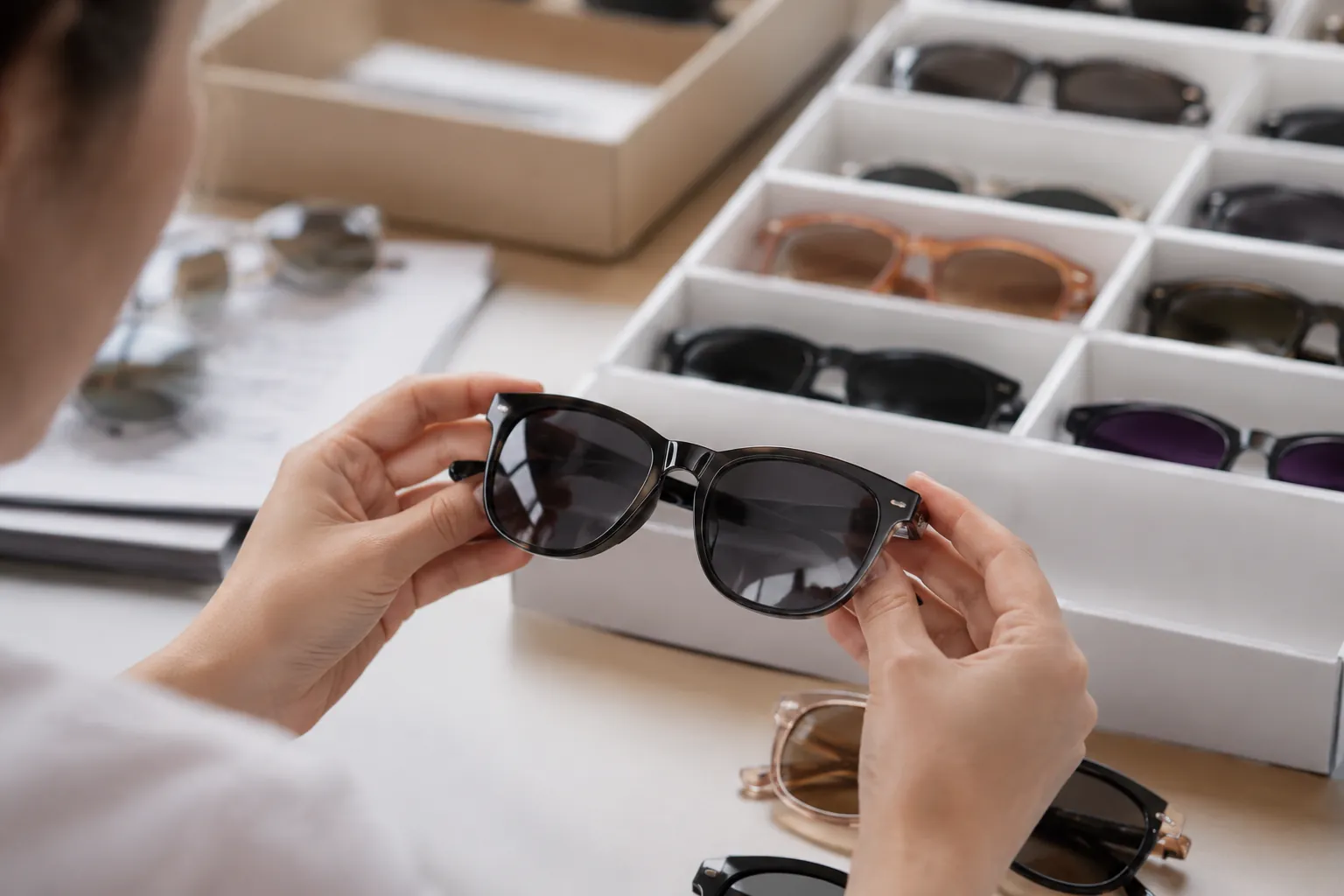
If you buy private label eyewear, the acetate format you choose changes more than appearance. It affects tooling, color consistency, scrap risk, MOQ pressure, and how the frame feels in hand. This guide is for brands, importers, distributors, and retailers that need a sourcing decision, not a material brochure. It focuses on the tradeoffs factories actually manage in production.
1) Start with the buying question
Acetate block, sheet acetate, and recycled acetate belong to the same material family. They do not behave the same on the factory floor. The right question is not which one is best in general. The right question is which one fits your price target, color control needs, lead time, and repeat-order plan.
Private label programs usually optimize for one of four things: premium appearance, repeatable color, lower production risk, or a sustainability claim. Acetate block is often chosen for a heavier, more sculpted look. Sheet acetate is usually the practical choice for repeatable collections. Recycled acetate can support a sourcing story, but it needs tight control if you want stable color and surface quality.
Material choice affects cutting, milling, polishing, hinging, and final inspection. A factory needs the spec early. Thickness, density, and batch behavior can change the finishing route.
2) What each format means
| Format | What it is | Typical factory use | Main commercial upside |
|---|---|---|---|
| Acetate block | Thicker solid acetate material used for deeper shaping and visual depth | Premium optical and sunglasses frames, thick temples, statement fronts | Strong depth, premium hand-feel, good for custom milling and layering |
| Sheet acetate | Flat acetate sheet supplied for cutting and shaping | Standard sunglass and optical frame production | Efficient cutting, broad color availability, easier repeatability |
| Recycled acetate | Acetate made with recovered content or reprocessed acetate feedstock | Sustainability-led private label programs | Supports eco positioning and retailer sourcing requirements |
"Recycled" does not mean low quality. It does mean you need to check feedstock control, color batch control, and surface consistency. If the source material is not tightly managed, variation can show up in polish, odor, or color repeatability.
The word acetate is used loosely in the market. For procurement, the real reference is the material spec, the batch record, and whether the finished frame meets your market standard.
3) Branding, consistency, and margin
Acetate block is the easiest route to a more premium visual story. The depth of color, layered patterns, and polished finish can make a frame look more substantial. Still, the material does not guarantee margin. More milling, more polishing, and more scrap risk can push cost up if the design is complex.
Sheet acetate is the workhorse option. It is easier to cut efficiently, and it is widely used for core collections because it supports predictable production. If you are building a range with many SKUs, sheet acetate makes it easier to keep color and shape consistent across the line.
Recycled acetate works best when the buyer, retailer, or brand wants a documented material story. It should not be chosen on branding alone. If the recycled input varies, yield can drop and finishing rejects can increase. That cost shows up in the unit price.
- Use block acetate for premium positioning and stronger shelf impact.
- Use sheet acetate for repeatable collections and broader color availability.
- Use recycled acetate when the retail brief values traceability and sourcing language.
Simple rule: choose the material that can be produced repeatably at your target gross margin. If the spec looks good in a deck but fails in production, it is the wrong choice.
4) Color matching and batch repeatability
Color consistency is where many private label programs fail. A first sample may look right, but a reorder can shift slightly. In eyewear, even a small drift can show under retail lighting, especially in transparent tortoise, translucent green, and layered smoke finishes.
Block acetate can deliver richer depth and pattern, but that same depth can make color matching more sensitive to pigment mix and curing differences. Sheet acetate is often easier to control for solid colors and standard tortoise patterns. Recycled acetate may show the widest variation unless the supplier segregates feedstock and maintains strict incoming quality control.
For any acetate format, ask for these controls:
- Master sample approval under daylight and controlled light.
- Pantone reference or physical color chip, not just a verbal color name.
- Incoming lot traceability for each production batch.
- Written color tolerance in the purchase order.
- Photo approval of pre-production and first-off pieces.
For repeat orders, ask the supplier to retain the same material lot where possible, or to match the new batch against the approved reference. That is the cleanest way to reduce visible variation on restocks.
5) Lead time, MOQ, and hidden cost
Material choice affects the cost stack as much as it affects appearance. In private label eyewear, the hidden cost often sits in finishing time, yield loss, and rework before packing.
| Format | Typical lead-time pressure | Common cost pressure | Best fit |
|---|---|---|---|
| Acetate block | More milling, polishing, and inspection time | Higher labor and scrap risk | Premium frames, thicker profiles, signature shapes |
| Sheet acetate | Usually the most manageable for repeat orders | Moderate material and finishing cost | Core private label lines, retail programs |
| Recycled acetate | Can slow down if batch variation causes rework | Potential yield loss if color and surface are unstable | Sustainability-led launches and retailer requests |
For custom sunglasses programs, sample lead time and bulk lead time should be confirmed in writing before the order is placed. If a supplier changes material format late, the schedule can move because the finishing route may need to change too.
Decoration also affects cost. Laser engraving, pad printing, and metal logo plates all add steps. A cheaper acetate does not always make a cheaper finished frame.
6) What to check in sampling and QC
A sample is a process checkpoint, not just a product sample. It should show how the frame will behave in production, assembly, and packing.
For acetate programs, check these points during sample review:
- Temple alignment and hinge feel after repeated opening and closing.
- Edge finish near the lens groove and nose bridge.
- Surface clarity after polishing, especially on dark and translucent colors.
- Logo placement accuracy for pad print, engraving, or metal plate mounting.
- Weight balance between left and right temples.
At factory level, QC should cover incoming material, semi-finished components, and finished pairs. It is better to reject a defective part early than to rework a finished frame. That matters even more with recycled acetate, where feedstock variation can affect the final finish.
For market access, keep certification claims exact. The references commonly relevant for eyewear include CE EN ISO 12312-1, ANSI Z80.3, AS/NZS 1067, REACH, FDA registration, ISO 9001, and BSCI. Which ones matter depends on the destination market and sales channel. One document does not cover every market.
7) Choose by buyer scenario
Use the material to support the channel. Do not force the channel to fit the material.
| Buyer scenario | Recommended format | Why it fits |
|---|---|---|
| Premium DTC sunglasses brand | Acetate block | Strong visual depth and more room for differentiated shaping |
| Retail chain core program | Sheet acetate | Better repeatability, easier replenishment, clearer cost control |
| Sustainability-led capsule | Recycled acetate | Supports a sourcing story and retailer requirements |
| Importers testing a new design | Sheet acetate at low MOQ | Lower production risk while validating sell-through |
If you are building a line from scratch, sheet acetate is usually the safest starting point unless your brand promise depends on a heavier, more sculpted look. If your sales strategy depends on a more premium appearance and stronger in-hand feel, block acetate may justify the extra production effort. If a retailer requires material sourcing language, recycled acetate can fit well, provided the supplier can hold batch quality.
A practical test is to order the same frame shape in two material versions and review them in hand, on shelf, and in packing. That will show the real differences in weight, hinge feel, polish depth, and color behavior.
8) PO checklist before you place the order
Before you confirm the order, lock the material details in writing. Otherwise you are buying an idea, not a finished frame specification.
- Material format: block, sheet, or recycled acetate.
- Exact color reference: chip, sample, or approved photo set.
- MOQ and price break points: confirm the order ladder for your volume.
- Sample lead time and bulk lead time: agree the schedule before production starts.
- Compliance target: CE EN ISO 12312-1, ANSI Z80.3, AS/NZS 1067, REACH, FDA registration, ISO 9001, or BSCI as applicable.
- Decoration method: engraving, pad print, metal logo plate, or none.
- QC acceptance rules: scratch tolerance, color tolerance, hinge cycle check, packaging standard.
If the factory cannot answer these points clearly, treat that as a warning sign. Good sourcing is not about finding the cheapest acetate. It is about choosing the format that your factory can repeat, your market can accept, and your margin can support.
Acetate choice is first a production decision, then a branding decision. The best material is the one that holds color, survives finishing, and still leaves margin after freight, duty, and rejects.
Have a custom sunglasses project in mind?
Send us your styles, target market and quantities and we will return a detailed quote with MOQ, lead time and a sample plan.
Get a QuoteWhy source this from Wenzhou with LumiShades
Wenzhou in Zhejiang Province is widely regarded as China’s eyewear manufacturing capital, producing a large share of the world’s sunglasses. That concentration matters to buyers: a deep local supply chain for acetate sheet, hinges, lens blanks, plating and packaging means shorter component lead times, easier color and material matching, and a workforce with decades of eyewear-specific skill. LumiShades has manufactured in this ecosystem since 2009, and our vertical integration — in-house injection molding, acetate cutting, CNC milling, lens tinting, decoration and quality control — means no part of your order is quietly subcontracted to a workshop you cannot audit.
For international buyers, that vertical control translates into accountability. When a single factory owns every step, defects are traced and fixed at source rather than bounced between vendors, and your specifications survive intact from first sample to bulk. We back this with 15+ years of experience, shipments to 60+ countries, more than 5 million pairs produced per year and a 98.5% on-time delivery rate. Our certifications — CE EN ISO 12312-1, FDA registration, ANSI Z80.3, AS/NZS 1067, REACH, ISO 9001 and BSCI audit — mean the compliance documentation your market requires already exists. Explore our manufacturing capabilities and quality control process to see how this works in practice.
Frequently asked questions
Which acetate format is best for premium private label sunglasses? Acetate block is usually the best fit when the goal is a premium look and feel. It gives more visual depth and shaping potential, but it also usually takes more machining and finishing time, so you should price it against your target margin.
Is recycled acetate always cheaper? No. Recycled acetate can cost the same or more if the supplier has to manage sorting, tighter QC, or higher reject rates. Ask for the material specification, batch control method, and sample consistency before assuming it will save cost.
What MOQ should I expect for custom acetate sunglasses? MOQ is set by the factory, the design, and the material route. If your supplier offers a low-entry order, confirm the exact price breakpoints and whether the same tooling and material lot can be used for reorders.
How long should acetate sampling and bulk production take? Lead time depends on design complexity, approval speed, and material availability. Ask the supplier for a written sample schedule and bulk schedule before you confirm the PO, and make sure the timing includes decoration, QC, and packing.
Which compliance documents matter for export? Match the documentation to the destination market and channel. Common references for eyewear include CE EN ISO 12312-1, ANSI Z80.3, AS/NZS 1067, REACH, FDA registration, ISO 9001, and BSCI, but not every market requires every document.
How do I reduce color mismatch on reorders? Approve a physical master sample, record the approved color reference, and keep the same material lot whenever possible. Also write the acceptable color tolerance into the PO so the factory has a clear standard for restocks.
Ready to start?
Explore our square sunglasses or request a quote — our sales team replies within 12 hours.
Request a Quote