
Licensed Character Sunglasses Sourcing Guide
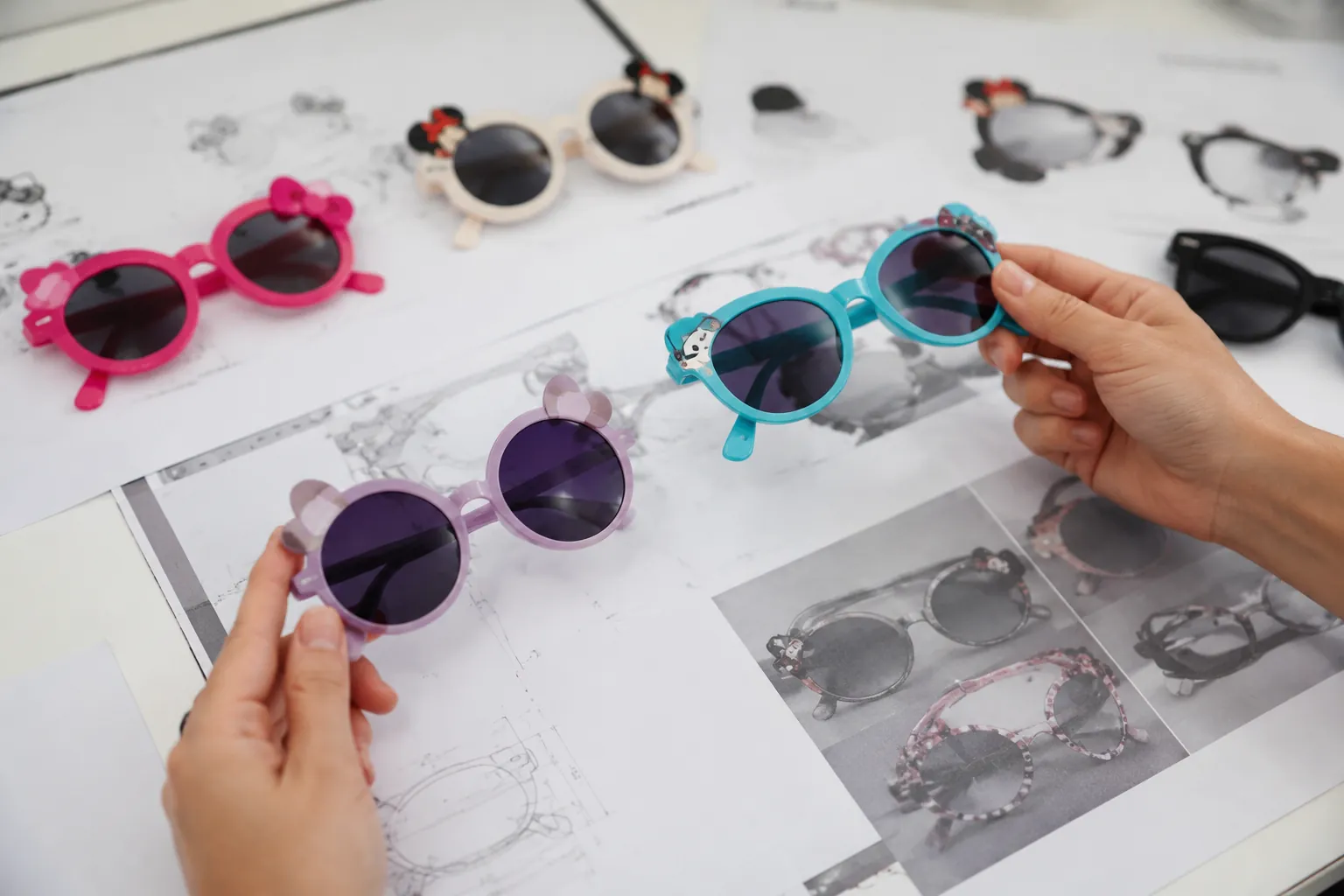
This guide is for brand owners, licensing agencies, importers, distributors, and retail buyers sourcing sunglasses tied to characters, sports teams, films, games, artists, gaming IP, or co-branded retail campaigns. Licensed eyewear needs tighter control than ordinary private-label sunglasses. Artwork must follow the approved style guide. Colors must be checked against physical references. Logos must sit within agreed tolerances. Packaging must carry the correct legal, barcode, language, and market information. Unreleased assets must stay protected. Use this framework to qualify a manufacturer, set clear specifications, and reduce the risk of licensor rejection, compliance gaps, schedule resets, or mixed-version stock.
Start With the Approval Chain, Not the Frame Shape
Licensed sunglasses projects often fail before production starts. A sample may look good, yet the licensor can still reject it. The character mark may be too large. The color may miss the approved reference. The logo may sit outside the style-guide area. The packaging may use an old copyright or trademark line.
Map the approval chain before you ask for a quote. Confirm who approves product design, packaging, color, pre-production samples, and final release before bulk production. These roles may sit with different people at the brand owner, licensing agency, retailer, or distributor.
Ask for the latest style guide, vector artwork, physical Pantone references or approved master samples, trademark usage rules, packaging dielines, legal copy, barcode data, market-specific labeling requirements, and any licensor submission checklist. The factory should turn these inputs into one controlled production file. It should cover frame material, lens color, logo method, Pantone or master-sample targets, artwork placement drawings, packaging structure, barcode position, warning text, carton marks, inspection points, and approved sample photos.
Buyer rule: never approve bulk production from a lifestyle rendering alone. Approve from a physical pre-production sample with measured logo size, confirmed lens category, final packaging copy, barcode information, and a dated artwork version.
Materials and Color Behavior: PC, TR, Acetate, and Metal
Material choice affects cost, color repeatability, tooling, decoration, durability checks, and perceived value. A mass-retail character program with a molded icon and solid-color temples needs a different build than a premium fashion collaboration using acetate or metal trim.
| Material | Best use | Color behavior | Practical sourcing note |
|---|---|---|---|
| PC injection | Promotional runs, kids styles, event merchandise, low-cost retail | Solid colors can be controlled well, but gloss level, pigment batch, and wall thickness affect visual shade | Efficient for volume programs; confirm mold condition, resin specification, pigment approval, and decoration adhesion |
| TR / flexible plastic | Sport, active, youth, and lightweight sunglasses | May show color variation between resin lots; bright or fluorescent colors need trial samples | Good for comfort and flexibility; confirm hinge strength, lens retention, and logo adhesion on the actual surface |
| Acetate | Premium collaborations, fashion capsules, higher retail price points | Rich color depth; patterned or layered sheets can vary from batch to batch | Good hand feel and premium appearance; less suitable when the licensor requires perfectly uniform character colors across all pieces |
| Metal or metal trim | Premium logos, badges, temples, bridge details, decorative parts | Plating or coating color must be approved against a physical sample, not a screen image | Control plating tone, badge alignment, adhesive overflow, corrosion resistance, and contact points with skin |
Use physical Pantone chips, approved color swatches, or licensor-approved master samples for licensed colors. Digital screens are not approval references. On molded plastic, a Pantone target may still require resin trials because pigment loading, gloss, and part thickness can change the final shade.
Do not approve lenses by appearance alone. Visible light transmission and the required lens category must be verified for the selling market.
Artwork, Logo Methods, and Realistic Tolerances
Licensed eyewear often carries small graphics on curved temples, lens corners, metal plaques, pouches, hangtags, retail cards, and cartons. The decoration method must match the surface, artwork detail, durability requirement, and order quantity. A flat mockup can become blurred, distorted, or misaligned on a curved temple. Test the real part.
| Decoration method | Best use | Risk to control | Typical tolerance / note |
|---|---|---|---|
| Pad printing | Temple logos, simple icons, 1-3 color graphics | Ink shift, low opacity on dark frames, poor adhesion, registration error between colors | Logo position is commonly controlled within an agreed range such as ±0.5-1.0 mm, depending on surface and artwork size; request adhesion testing on the actual material |
| Laser engraving | Subtle marks on metal or selected plastic areas | Low contrast, inconsistent depth, weak visibility on some materials | Durable for simple marks; not suitable for bright full-color character artwork |
| Metal logo plate | Premium licensed marks on temples or trim | Plate alignment, plating color variation, adhesive overflow, sharp edges | Works best with a recess, fixture, or defined bonding area; check left/right alignment during QC |
| Lens logo or tint | Small lens mark, limited-edition effect, brand color story | Visible light transmission non-compliance, scratch risk, tint variation, poor logo durability | Confirm lens category, VLT, abrasion resistance, and whether the market permits the chosen lens marking |
| Packaging print | Character cards, pouches, boxes, stickers, barcode labels, carton labels | Wrong legal line, barcode mismatch, mixed artwork versions, incorrect territory language | Use dated PDF proofs, locked artwork files, and one approved artwork folder per SKU |
Simplify small character details early. Fine lines below about 0.2-0.3 mm may fill in or lose definition during printing, especially on textured, glossy, or curved surfaces. Temple logos should be controlled on a technical drawing, not described only as "centered." Include the distance from the hinge, vertical position, logo width and height, color code, printing method, and acceptable tolerance.
Ask the manufacturer which decoration steps are done in-house and which are subcontracted. This matters. If a subcontractor handles printing, plating, packaging, or special finishing, the buyer should approve how artwork files, samples, and rejected parts will be controlled.
Confidentiality and IP Control on the Factory Floor
For character merchandise, confidentiality is a workflow, not just a contract clause. Ask how artwork is received, where it is stored, who can access editable files, how samples are labeled, and how rejected printed parts are quarantined or destroyed. Vague answers are a warning sign.
Write these controls into the purchase order, project brief, or supplier agreement:
- Use controlled file names with version numbers, dates, and SKU codes instead of random chat images.
- Limit editable vector files to merchandising, engineering, decoration, and packaging staff who need access.
- Mark samples clearly as concept sample, licensor approval sample, salesman sample, counter sample, or pre-production standard.
- Keep rejected logo plates, printed temples, lens marks, and packaging sheets in a quarantine area before documented disposal.
- Prohibit factory-floor photos showing unreleased artwork, character names, retail cards, carton labels, or launch dates.
- Require written buyer approval before artwork is sent to any subcontractor for printing, plating, packaging, or special finishing.
- Confirm whether the supplier may use product photos for a portfolio after launch; many licensors do not allow public reference use.
ISO 9001 and BSCI can support document control and management discipline, but they do not replace a project-specific IP handling plan. For co-branded retail launches, define file access, sample security, subcontractor approval, photo restrictions, and disposal rules in writing.
Compliance Is Not Optional, Even for Promotional Runs
Character sunglasses are still sunglasses. Event merchandise, gift-with-purchase items, and promotional giveaways may still need optical, labeling, and chemical compliance. A dark lens is not automatically compliant. A toy-like design does not remove eyewear obligations.
Match the compliance route to the selling market. Common requirements include CE EN ISO 12312-1 and REACH for the European market, ANSI Z80.3 and FDA registration for the United States, and AS/NZS 1067 for Australia and New Zealand. ISO 9001 and BSCI relate to management systems and social compliance. They are not product performance tests.
Specify the lens category in the brief. Category 3 lenses are common for bright sunlight, while lighter fashion tints may fall into a lower category. Visible light transmission should be tested or verified, not judged by lens appearance.
If the line is for children, add checks for age grading, fit, sharp edges, small parts where applicable, material safety, warning text, and packaging suffocation warnings.
Ask for test reports that match the actual frame material, lens type, lens color or treatment, and target market. Do not rely on a generic report for a different style unless your compliance team confirms it applies. Licensors and retailers may require documents before shipment release, so build compliance testing and document review into the timeline.
MOQ, Price, and Lead-Time Logic for Licensed Programs
Low MOQ helps with licensor approval, retail tests, and limited drops. But licensed programs get expensive when every SKU has a different frame color, lens tint, temple print, pouch, card, sticker, barcode, language version, and carton label. Count SKU complexity before you negotiate only the unit price.
For LumiShades projects, MOQ can start from 50 pairs per design. Price breaks are commonly discussed at 300, 1000, and 5000+ pairs, depending on the frame, lens, decoration, packaging, and order mix. Lower quantities carry higher unit costs because setup, color trials, printing plates, packaging proofs, and inspection preparation are spread over fewer pieces.
Samples usually need about 7-10 days after artwork and specifications are clear. Bulk production is commonly planned at about 25-35 days after sample approval and deposit, provided packaging artwork, compliance requirements, and materials are finalized.
| Order level | Best fit | Cost behavior | Common delay |
|---|---|---|---|
| 50 pairs/design | Licensor approval, influencer pack, retail test, limited internal review | Highest unit cost because setup is spread over few units | Artwork revisions, special logo plates, or incomplete packaging files |
| 300 pairs/design | Small event, limited retail drop, regional campaign | Better pricing if colors, decorations, and packaging remain simple | Too many character versions or language versions increase handling and checking time |
| 1000 pairs/design | Distributor launch, chain-store trial, online retail campaign | More stable material purchasing and inspection flow | Late barcode data, carton-label changes, or delayed licensor comments |
| 5000+ pairs/design | National retail, multi-country program, seasonal licensed line | Lower practical unit cost on suitable designs because setup is spread across more units | Starting bulk before the pre-production sample and packaging version are fully locked |
The hidden cost is usually revision time. One rejected character color, one wrong legal line, one late barcode file, or one changed lens category can reset the schedule. Fast production depends on clean approvals, not only factory capacity.
Sample Approval and Packaging QC Workflow
Licensed merchandise should not follow a casual sample path. Use a controlled route from concept to shipment so approval is based on measurable standards, not opinion.
- Technical brief: define frame model, user age, material, lens category, target market, MOQ, packaging format, compliance route, and required ship date.
- Artwork package: send vector logos, physical or specified Pantone references, character placement rules, legal text, barcode data, packaging dielines, and any licensor checklist.
- Factory drawing: confirm logo dimensions, distance from hinge, vertical placement, lens tint, packaging layout, carton marks, and tolerances.
- Prototype sample: review frame color, logo sharpness, hinge feel, lens tint, fit, comfort, and packaging concept.
- Licensor approval: submit the exact sample or a controlled approval set. Do not change material, logo method, lens tint, or packaging text afterward without confirming whether reapproval is required.
- Pre-production sample: make it from intended bulk material and final decoration method. This sample becomes the inspection standard.
- Bulk inspection: check logo position, color, lens scratches, hinge function, lens category labeling, packaging version, barcode scan, carton marks, quantity, and mixed-SKU risk.
Packaging should be specified like the product itself. Define pouch material, box board weight, hangtag size, print method, barcode label position, polybag warning, carton quantity, and master carton marks. If shipping to multiple countries, separate language versions clearly. Match each version to the correct SKU, barcode, and destination.
Request a packing mockup before bulk packing. A thin pouch may work for a giveaway but fail in retail distribution. Tags can scratch lenses if packed badly. Display trays may hold frames incorrectly once hangtags are attached. Fix pouch size, tray slots, card holes, or barcode label position before bulk goods are packed.
Factory Qualification Questions Buyers Should Ask
A qualified licensed sunglasses manufacturer should be able to answer detailed process questions before purchase order placement. Use these questions when evaluating a co-branded or character eyewear supplier:
- Which processes are in-house, and which are subcontracted? Ask specifically about injection molding, acetate processing, CNC work, lens tinting, pad printing, laser engraving, metal badges, packaging, and final QC.
- Can you keep separate approved master samples for frame color, lens tint, logo print, metal badge, pouch, card, and carton label?
- How do you prevent old artwork files, outdated legal lines, wrong barcode data, or incorrect territory packaging from entering production?
- What checkpoints inspect logo position, color match, lens category, hinge function, lens scratches, decoration adhesion, packaging accuracy, and barcode scanability?
- Which documents can you provide for the target market, such as CE EN ISO 12312-1, ANSI Z80.3, AS/NZS 1067, REACH, FDA registration, ISO 9001, or BSCI where applicable?
- What is included in the 7-10 day sample timeline, and what can extend it, such as special plating, unusual lens tinting, new tooling, or packaging proofs?
- Where do price breaks apply at 50, 300, 1000, and 5000+ pairs, and how does the number of SKUs affect the quote?
- How are rejected printed parts, obsolete packaging, and unused licensed components recorded and disposed of?
The best supplier is not always the lowest quotation. For licensed character sunglasses, choose the factory that can protect artwork, repeat approved colors, document approvals, manage packaging versions, support the required compliance route, and ship goods that match the approved pre-production sample.
Have a custom sunglasses project in mind?
Send us your styles, target market and quantities and we will return a detailed quote with MOQ, lead time and a sample plan.
Get a QuoteWhy source this from Wenzhou with LumiShades
Wenzhou in Zhejiang Province is widely regarded as China’s eyewear manufacturing capital, producing a large share of the world’s sunglasses. That concentration matters to buyers: a deep local supply chain for acetate sheet, hinges, lens blanks, plating and packaging means shorter component lead times, easier color and material matching, and a workforce with decades of eyewear-specific skill. LumiShades has manufactured in this ecosystem since 2009, and our vertical integration — in-house injection molding, acetate cutting, CNC milling, lens tinting, decoration and quality control — means no part of your order is quietly subcontracted to a workshop you cannot audit.
For international buyers, that vertical control translates into accountability. When a single factory owns every step, defects are traced and fixed at source rather than bounced between vendors, and your specifications survive intact from first sample to bulk. We back this with 15+ years of experience, shipments to 60+ countries, more than 5 million pairs produced per year and a 98.5% on-time delivery rate. Our certifications — CE EN ISO 12312-1, FDA registration, ANSI Z80.3, AS/NZS 1067, REACH, ISO 9001 and BSCI audit — mean the compliance documentation your market requires already exists. Explore our manufacturing capabilities and quality control process to see how this works in practice.
Frequently asked questions
Can we start with only 50 pairs for licensor approval or a retail test? Yes. For LumiShades projects, MOQ can start from 50 pairs per design. Use this quantity for licensor approval, retail testing, influencer packs, or internal buyer review. Before ordering, confirm what is included at 50 pairs: final material or substitute material, final decoration method or sample-only method, packaging mockup or production packaging, and whether the sample can become the approved pre-production standard.
What files should we send for licensed character sunglasses? Send a complete controlled artwork package: vector logos, character artwork, style-guide rules, Pantone references or approved master samples, logo placement instructions, packaging dielines, legal and trademark text, barcode data, target selling market, required lens category, age range, compliance requirements, and the licensor approval checklist. Name files with SKU codes, dates, and version numbers so old artwork is not mistaken for current artwork.
How long should we allow before bulk shipment? Plan about 7-10 days for samples after specifications are clear, then about 25-35 days for bulk production after sample approval and deposit. Add time for licensor review rounds, compliance testing, packaging proof approval, barcode confirmation, special decoration, new tooling, or material trials. Do not start bulk production until the pre-production sample and packaging version are locked.
Which compliance documents matter for overseas sales? Match documents to the selling market and the exact product. Common requirements include CE EN ISO 12312-1 and REACH for the EU, ANSI Z80.3 and FDA registration for the United States, and AS/NZS 1067 for Australia and New Zealand. Ask whether reports apply to the actual frame material, lens type, lens color or treatment, and target market. ISO 9001 and BSCI support factory evaluation but are not substitutes for product compliance testing.
How do we reduce the risk of logo or character color rejection? Approve a physical pre-production sample, not only a digital mockup. Use Pantone chips or licensor-approved master samples. Define the logo width, height, distance from hinge, vertical placement, color, method, and tolerance. Freeze the artwork version before bulk production. For molded plastic or special lens tints, allow time for color trials because material, gloss, thickness, and tint density can affect the final appearance.
Can different character SKUs share the same frame to lower cost? Usually, yes. Sharing one frame mold or base model can reduce tooling and setup cost while allowing different frame colors, lens tints, temple graphics, pouches, cards, or stickers. To avoid mix-ups, assign each SKU its own artwork folder, barcode, packaging proof, carton mark, and approved sample. During inspection, check that the correct character, barcode, legal line, and destination packaging are matched to each SKU.
Ready to start?
Explore our cat-eye sunglasses or request a quote — our sales team replies within 12 hours.
Request a Quote