
Sunglasses Tooling: Stock, Modified, or New Mold
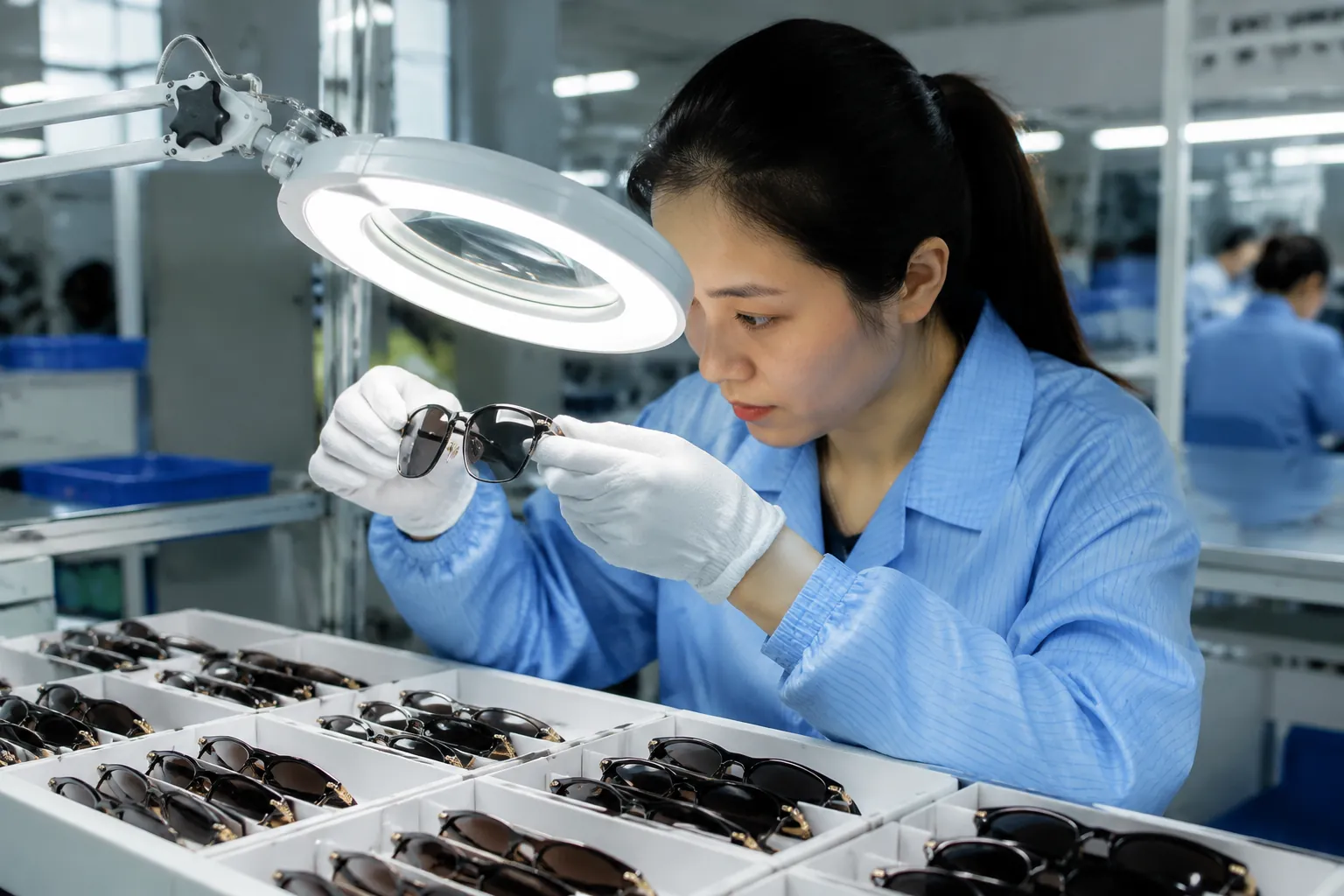
Your tooling choice sets the commercial risk of a sunglasses project. Stock molds keep launch cost low and timelines short. Modified molds add limited brand-owned detail without building a full tool. New tooling gives the most design control, but it only makes sense when volume, margin, repeat demand, or exclusivity can pay for it. Use this guide to compare MOQ, tooling cost, unit-cost behavior, lead time, ownership, and compliance checkpoints before sending an RFQ.
The Three Routes at a Glance
Most sunglasses projects follow one of three routes: stock mold, modified mold, or new tooling. The right route depends on order size, required originality, and how much tooling cost the launch can carry before sales begin.
The ranges below are planning ranges for standard non-prescription sunglasses made with injection-molded plastics such as PC, TR90-style nylon blends, or similar materials. Actual quotations vary by frame size, material grade, hinge type, lens specification, packaging, factory workload, and testing requirements. Use these figures as RFQ benchmarks, not fixed prices.
| Route | Typical MOQ | Tooling Investment | Unit Price Impact | Lead Time (Tooling + Bulk) | Exclusivity |
|---|---|---|---|---|---|
| Stock Mold | 50-300 pairs/design where the supplier supports small runs | $0 buyer-paid mold cost | Lowest launch cost; limited room to lower cost through design engineering | Usually 10-20 days after sample, color, lens, and packaging approval | None. The same frame shape may be offered to other buyers. |
| Modified Mold | 300-1,000 pairs/design | Often $400-$1,500 for localized insert, cavity, or fixture work | Higher than stock at low volume; improves with repeat or larger orders | Usually 20-35 days including modification, sample approval, and bulk production | Partial. The base silhouette may be shared, but selected features are buyer-specific. |
| New Tooling | 1,000-5,000+ pairs/design, depending on factory policy and cost target | Often $1,800-$6,000+ for a standard injection frame mold set; more for complex tools | Highest upfront commitment; strongest control over long-run unit cost when volume is sufficient | Usually 30-60 days including design review, tooling, T1 samples, corrections, approval, and bulk production | Highest. Ownership and exclusivity depend on the tooling agreement. |
Acetate frames follow the same commercial logic, but the technical setup is different. Acetate is usually CNC-cut from sheet material with programs, jigs, fixtures, tumbling, and hand-polishing rather than injection mold cavities. Upfront setup can be lower than steel tooling. Per-unit labor and finishing cost remain higher.
Before comparing quotes, confirm the scope: frame material, lens material, lens category, UV protection, hinge type, logo method, pouch or case, carton packing, compliance testing, freight terms, and Incoterm such as EXW or FOB.
Stock Mold: Fast, Low-Risk, and Not Exclusive
A stock mold is an existing frame tool or existing acetate profile already used by the supplier. The buyer selects from available shapes and customizes commercial details such as color, lens tint, logo placement, and packaging.
This route works best when speed, low MOQ, and lower launch risk matter more than owning the frame shape. It is practical. It is also limited.
What you can usually control:
- Frame color, finish, and material option from the supplier's available production range
- Lens color, lens material, UV400 claim support, polarization, mirror coating, gradient tint, or other available lens treatments
- Decoration method, such as pad printing, laser marking, hot stamping, metal logo piece, or printed temple mark where the surface allows it
- Packaging, including microfiber pouch, EVA case, paper box, barcode label, hangtag, instruction sheet, or retailer-specific carton marks
- Compliance package, such as test reports for CE EN ISO 12312-1, ANSI Z80.3, AS/NZS 1067, or chemical documentation such as REACH where required by the destination market
What you usually cannot change: frame silhouette, bridge width, lens shape, lens groove structure, hinge location, pantoscopic angle, temple length, and core geometry. These features are built into the existing tool or production program. If the change affects molded plastic or machined acetate shape, it is no longer a simple stock-mold order.
Stock molds are useful for first-season launches, promotional programs, event merchandise, marketplace tests, and colorway validation. They also let buyers collect sell-through data before paying for exclusive tooling. The trade-off is clear: no tooling cost, no shape exclusivity.
In the RFQ, ask whether the frame is a public stock model, a supplier-owned private model, or a model restricted by another buyer's exclusivity agreement. A catalog frame is not always free for use in every market.
Modified Mold: One Brand Detail, Controlled Scope
A modified mold starts from an existing frame and changes a limited feature. Common examples include a recessed temple logo area, changed temple end shape, deeper nose pad area, revised lens groove for a different lens thickness, or a small surface feature on the brow or temple. For acetate, the equivalent may be a revised CNC program, custom fixture, or changed milling path rather than a steel mold modification.
This route is useful when a buyer needs a recognizable brand detail but not a fully original frame. It can also solve fit or assembly problems that stock models cannot fix. Keep the scope tight. A localized temple recess is one project. Rebuilding the bridge, lens opening, and temple geometry is new design work.
Ask the factory to quote the modification separately from the unit price. The quote should state what changes, which component is affected, whether a new insert or electrode is needed, whether the change affects the parting line, how many samples are included, and whether corrections after T1 or pre-production samples are chargeable.
Critical detail buyers miss: modification rights are not mold ownership. If the supplier owns the base mold, your agreement must state whether the modified feature is exclusive to you, in which markets, for how long, and what happens if the base mold is retired or replaced. Ask the supplier to confirm tool condition and expected remaining production life in writing. If the factory tracks shot count or maintenance history, request that record before paying for modification work.
Modified molds are strongest when volume can absorb setup cost but demand is not proven enough for full tooling. They are weakest when the requested change is so broad that the buyer pays repeated modification charges without gaining real exclusivity.
New Tooling: Full Control, Full Commitment
New tooling means the frame is built around the buyer's approved design file, technical drawing, sample, or development brief. For injection sunglasses, this usually includes new mold components for the front and temples, with cavity design, gate position, ejection, cooling, shrinkage allowance, and surface finish reviewed before cutting. For acetate, it usually means dedicated CAD/CAM programming, fixtures, jigs, drilling setup, tumbling process, and finishing route.
Choose new tooling when the frame shape is part of the brand value, retail buyers require design separation, or performance depends on geometry that stock molds cannot provide. It also helps when the buyer needs repeatable fit, consistent lens retention, controlled temple alignment, or defined dimensional tolerance across repeat runs.
What full tooling can buy:
- Buyer-controlled frame geometry, subject to a written tooling ownership and exclusivity agreement
- Design around a specific lens curve, lens thickness, hinge type, nose fit, and temple length
- More consistent dimensions across repeat orders when the tool is maintained and process controls are followed
- Cleaner integration of recessed logos, metal parts, overmolded areas, or in-mold decoration where technically feasible
- Better long-term cost control when annual volume is high enough to amortize tooling
New tooling needs a disciplined approval process. Before the factory cuts the tool, review 2D drawings, 3D files or renderings, material specification, hinge specification, lens specification, decoration artwork, and packaging. After first trial samples, check fit, lens retention, hinge function, surface defects, logo position, color, weight, and compliance requirements before approving bulk production.
Ownership must be written into the purchase agreement. A tooling invoice alone may not define who can use the mold, where it is stored, who pays for maintenance, whether it can be transferred, or what happens after a long period without reorders. Put those terms in the PO, tooling agreement, or supplier contract before payment.
Acetate vs. Injection: Different Cost Drivers
Injection-molded sunglasses and acetate sunglasses can both be stock, modified, or custom. Their cost structures are different.
Injection molding depends heavily on the mold, then repeats quickly once the tool is ready. Acetate depends less on steel mold cavities and more on cutting, tumbling, hand-finishing, and polishing time.
Injection frames are common for sport, promotional, fashion-volume, and price-sensitive programs. Materials may include polycarbonate, nylon-based materials, or other plastics selected by the supplier. Verify impact performance through the destination-market standard. Do not rely only on material claims.
Acetate frames are chosen for premium feel, visible lamination, color depth, polish quality, and optical-retail positioning. Expect higher labor content, more finishing variation between factories, and closer inspection of polishing, hinge installation, temple balance, and surface quality.
Typical cost behavior by route:
| Material | Route | Low Volume | Medium Volume | Higher Volume | Main Cost Driver |
|---|---|---|---|---|---|
| Injection plastic | Stock mold | Low upfront cost | Stable unit cost | Limited reduction after normal price breaks | Machine time, material, lenses, hinges, assembly, finishing |
| Injection plastic | New tooling | High effective unit cost after tooling amortization | Improves as tooling is spread over more units | Often strongest long-run cost control | Tooling amortization, cavity count, cycle time, scrap rate |
| Acetate | Stock profile | Lower development cost than custom acetate | Moderate unit cost | Reduction is limited by labor and finishing time | Sheet cost, CNC time, tumbling, polishing, assembly |
| Acetate | Custom CNC setup | Higher setup cost than stock acetate | Improves with repeat production | Still labor-sensitive compared with injection | CAD/CAM setup, fixtures, machining, hand-finishing |
Do not choose material only by quoted unit price. Confirm target retail position, expected durability, required standards, lens performance, perceived quality, and acceptable variation. For regulated markets, ask which test standard applies. CE EN ISO 12312-1 for the EU, ANSI Z80.3 for the United States, and AS/NZS 1067 for Australia and New Zealand are common examples for non-prescription sunglasses.
Decoration Can Change the Tooling Route
Decoration is often where a simple project becomes a tooling project. A printed logo can usually sit on a stock frame. A recessed logo, molded texture, overmolded grip, or in-mold decoration may require tool changes or a new tool. Decide the decoration method before selecting the route.
| Decoration Method | Minimum Practical Route | Tooling Implication | Approx. Cost Impact/Pair | Durability |
|---|---|---|---|---|
| Pad printing | Stock mold | No mold change if the surface is suitable | Usually low; depends on colors and artwork size | Moderate; depends on ink, curing, and abrasion exposure |
| Laser marking | Stock mold | No mold change if the material reacts cleanly to laser marking | Usually low to moderate | High when contrast and depth are appropriate |
| Hot stamping | Stock mold | No mold change if the surface is flat enough for clean transfer | Usually low | Low to moderate; vulnerable to abrasion if poorly specified |
| Recessed metal logo plate | Modified mold | Requires a defined recess, insert, or post-process pocket | Moderate plus modification cost | High when mechanically seated and bonded correctly |
| Molded logo or texture | Modified mold or new tooling | Requires cavity engraving or a new insert | Low per unit after tooling | High because the mark is part of the frame surface |
| In-mold decoration | New tooling | Tool and process must support film or insert placement | Moderate to high | High when validated through production trials |
| Two-material overmold | New tooling | Requires compatible materials and tooling/process design for bonding | Moderate to high | High when material compatibility is proven |
For any decoration method, request pre-production samples made with production-intent materials. Check adhesion, abrasion resistance, color match, logo position, left/right consistency, and packaging rub risk. If the product will be reviewed for REACH or other chemical requirements, include inks, coatings, adhesives, and metal plating in the compliance check.
Pick the Route Before You Request a Quote
Use these questions before sending the RFQ. They prevent suppliers from quoting different assumptions under the same project name.
- What is the launch quantity per SKU? For very small runs, stock frames are usually the only practical route. At several hundred pairs per SKU, modified molds may be worth quoting. At thousands of pairs per SKU or repeat seasonal demand, new tooling becomes easier to justify.
- What part of the design must be exclusive? If only the logo or packaging must be branded, stock may be enough. If the temple detail must be recognizable, modified tooling may work. If the silhouette, fit, and design language must be unique, quote new tooling.
- Which market standards apply? Specify destination markets in the RFQ. Ask whether the supplier can support CE EN ISO 12312-1, ANSI Z80.3, AS/NZS 1067, REACH documentation, ISO 9001 factory certification, or BSCI audit documentation where relevant to your customer or retailer.
- What is the real deadline? Work backward from the retail delivery date, not the factory completion date. Include sample shipping, approvals, lab testing if required, bulk production, inspection, export booking, freight, customs clearance, and domestic delivery.
- Who owns the risk if samples fail? Clarify how many tooling corrections are included, what counts as a buyer design change, what counts as factory correction, and whether failed compliance or fit testing triggers free correction, shared cost, or a new charge.
A useful RFQ includes target quantity by SKU, material preference, lens standard, destination market, decoration method, packaging, required certificates or test reports, Incoterm, target ship date, and whether the buyer requires mold ownership or market exclusivity. Without those details, suppliers may quote the cheapest route instead of the correct one.
Where the Wrong Route Gets Expensive
Tooling mistakes usually happen before the purchase order is issued. Most are commercial, not technical.
Paying for new tooling before demand is proven. A unique design can be valuable, but tooling only pays back when the product sells in sufficient volume or protects margin. If demand is uncertain, a stock or lightly modified frame may be the better first test.
Assuming a modified mold gives full exclusivity. A modified temple or logo recess does not stop the supplier from selling the base frame unless the agreement says so. Exclusivity must define protected elements, sales territories, duration, and remedies.
Ignoring compliance until after production. Sunglasses are regulated in many markets. Confirm applicable standards before production, especially lens category, UV protection, impact resistance, labeling, warnings, and chemical compliance. Testing after bulk production can expose expensive problems.
Comparing quotes that include different scopes. One supplier may include lenses, pouch, printed box, logo, and EN ISO 12312-1 testing support. Another may quote frame assembly only. Compare line items, not only the headline unit price.
Leaving mold ownership vague. If you pay for new tooling, define ownership, storage, maintenance, permitted use, transfer rights, and inactivity terms in writing. If the supplier refuses to define these terms, treat the mold as supplier-controlled even if you paid a tooling charge.
Have a custom sunglasses project in mind?
Send us your styles, target market and quantities and we will return a detailed quote with MOQ, lead time and a sample plan.
Get a QuoteWhy source this from Wenzhou with LumiShades
Wenzhou in Zhejiang Province is widely regarded as China’s eyewear manufacturing capital, producing a large share of the world’s sunglasses. That concentration matters to buyers: a deep local supply chain for acetate sheet, hinges, lens blanks, plating and packaging means shorter component lead times, easier color and material matching, and a workforce with decades of eyewear-specific skill. LumiShades has manufactured in this ecosystem since 2009, and our vertical integration — in-house injection molding, acetate cutting, CNC milling, lens tinting, decoration and quality control — means no part of your order is quietly subcontracted to a workshop you cannot audit.
For international buyers, that vertical control translates into accountability. When a single factory owns every step, defects are traced and fixed at source rather than bounced between vendors, and your specifications survive intact from first sample to bulk. We back this with 15+ years of experience, shipments to 60+ countries, more than 5 million pairs produced per year and a 98.5% on-time delivery rate. Our certifications — CE EN ISO 12312-1, FDA registration, ANSI Z80.3, AS/NZS 1067, REACH, ISO 9001 and BSCI audit — mean the compliance documentation your market requires already exists. Explore our manufacturing capabilities and quality control process to see how this works in practice.
Frequently asked questions
Can I mix stock mold and new tooling in the same purchase order? Yes, if the supplier agrees and the schedule is managed carefully. Many buyers place stock-frame SKUs and custom-tooled SKUs on the same PO, but they should not expect all items to finish at the same time. Ask the factory for a split production schedule with sample approval dates, tooling milestones, bulk production windows, inspection dates, and planned shipment date. If you want one consolidated shipment, confirm whether finished stock-frame goods will be held while the custom-tooled SKU is completed, and whether storage or delayed-shipment charges apply.
Who owns the mold after I pay for new tooling? Only the written agreement can answer that. Before paying, require the tooling clause to state who owns the mold, whether the factory may use it for other customers, whether exclusivity is global or market-specific, who pays maintenance, how long the factory stores the mold without reorders, whether the mold can be transferred to another factory, and what transfer fees or unpaid balances must be cleared first. Also ask for mold identification, component list, and photos after completion. A tooling invoice is useful, but it is not a complete ownership agreement by itself.
What is the unit cost difference between stock mold and new tooling at 2,000 pairs? At 2,000 pairs, stock mold often has the lower total project cost because there is no buyer-paid tooling charge. New tooling may have a similar or even lower factory unit price before tooling, but the effective unit cost rises once the mold cost is allocated across only 2,000 pairs. Compare this way: effective unit cost = quoted unit price + tooling cost divided by order quantity + any extra sampling, correction, or testing cost. New tooling usually becomes more attractive when the buyer expects repeat orders or needs exclusivity enough to protect margin.
Does CE EN ISO 12312-1 testing cost more for new tooling? The lab test fee is normally based on the product and test scope, not on whether the frame came from a stock mold or new tooling. What changes is risk. A stock frame may already have a recent report for a similar lens and frame combination, but you must check whether it covers your exact product, lens category, color, material, and branding requirements. For the EU, ask for EN ISO 12312-1 test evidence and the documentation needed for CE marking. For the US, ask about ANSI Z80.3. For Australia and New Zealand, ask about AS/NZS 1067. Do not rely on a generic certificate that does not match the SKU being shipped.
How do I specify a modified mold correctly so the factory does not overcharge or misunderstand it? Send a marked 2D drawing, annotated photos, or a physical reference sample. Specify the affected component, exact location, dimensions in millimeters, depth or height of the feature, edge radius, surface finish, logo artwork file, material, color, and acceptance tolerance. Ask the supplier to quote the modification as a separate line item and to state whether it requires CNC work, EDM work, a new insert, a fixture, or only post-processing. Also confirm whether the modification affects compliance testing, assembly, lens retention, or packaging fit.
Can I start with a stock mold and move to new tooling later with the same design? Yes, but you are not converting the stock mold itself. You are using market feedback from the stock frame to design a new tool. Keep records from the first run: sell-through by color, return reasons, fit complaints, lens feedback, hinge issues, retailer comments, and customer photos if available. Then revise the CAD or technical drawing before cutting new tooling. Also check that the stock shape is not protected by another party before copying it too closely. The safer approach is to use the first run as fit and market reference, then create a distinct proprietary design.
Ready to start?
Explore our aviator sunglasses or request a quote — our sales team replies within 12 hours.
Request a Quote