
Best Lens Colors for High-Glare Outdoor Retail
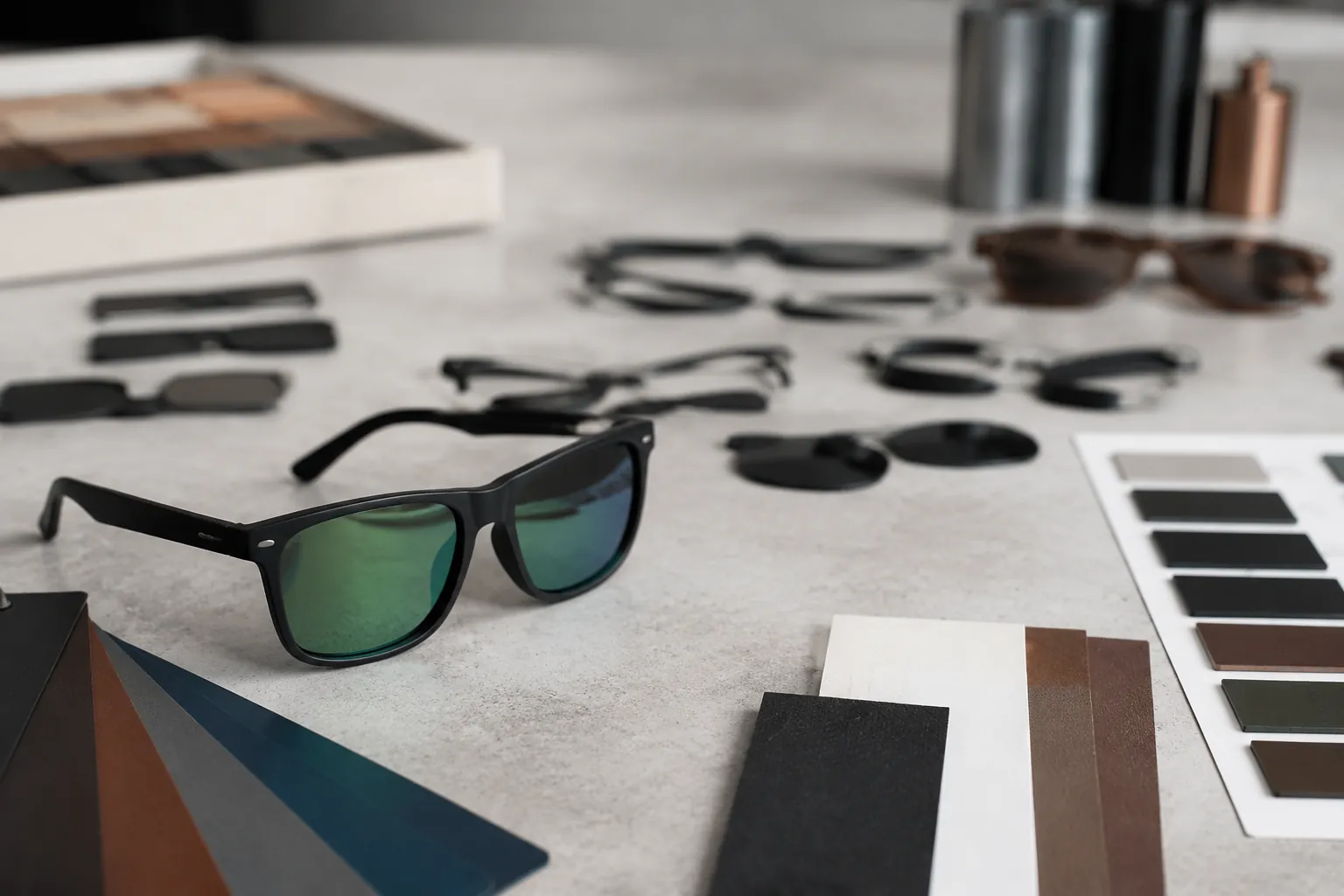
Overseas buyers do not need a broad tint guide. They need a way to match lens color to use case, retail channel, and production reality without leaning on vague claims. This article is written for brands, importers, distributors, and retailers building outdoor assortments for beach, driving, sports, and fashion programs. It focuses on functional differences, process control, order planning, and compliance, so a retail idea can be turned into a factory brief that can be repeated.
How to choose a lens color program
A lens color program should start with use case, not taste. Gray, brown, green, mirrored, and photochromic solve different problems, and they behave differently once a sample card becomes a production run. The question is not "which tint looks best." It is "which tint can be repeated with acceptable variation, acceptable yield, and a margin the channel can support."
For high-glare outdoor retail, buyers should separate three variables. Brightness reduction is how much light the lens blocks. Contrast is how clearly edges, texture, and contours remain visible. Color fidelity is how much the lens shifts the scene. Gray is the neutral standard. Brown pushes contrast. Green sits between the two. Mirror changes the lens surface without replacing the base tint. If those functions get mixed into one brief, the assortment may look broad on paper and still underperform at shelf.
Process detail matters just as much as color. Injection-molded frames are often the most stable route for cost-controlled volume because the frame geometry, lens groove, and temple fit repeat predictably once the mold is set. Acetate supports stronger fashion positioning, but it also introduces more polishing and fitting variables. If lens cutting is off, edge fit can suffer even when the tint itself is correct. CNC-milled components can support premium programs, but they usually require longer setup and more finishing checkpoints.
In-house lens tinting, engraving, pad printing, and metal logo plate attachment can reduce handoffs. Fewer handoffs usually means fewer chances for dust, scratch, shade drift, or label mix-up.
For a practical sourcing brief, a factory should already know the material, lens color family, coating or finish, and target market. Ask for the minimum order quantity, sample lead time, bulk lead time, and the standards used for compliance testing. If any of those items are vague, the factory will fill in the blank. That is where inconsistency starts.
Gray lenses: the safest all-rounder
Gray remains the default option because it is the most neutral. It reduces brightness more evenly across the visible spectrum, which helps preserve natural color balance. For beach programs, that neutrality makes gray easy to place because it works for men's, women's, and unisex frames without needing a long explanation.
Functionally, gray is strongest when the goal is general comfort under full sun. It reduces visual fatigue without pushing the scene warmer or cooler. On a driving wall, that makes it easy to explain and easy to trust. On a retail wall, it is usually the least polarizing option. The trade-off is simple. Gray does not create a pronounced contrast lift. On wet roads, in flat light, or in textured terrain, brown may be the better choice.
Manufacturing consistency is one reason gray is a core SKU in volume programs. A well-controlled gray tint can usually hold shade variation within a narrow production window if the lens batch, dye bath time, and drying cycle are stable. The pair-to-pair difference should not be obvious when lenses are displayed side by side. If the run is not stable, the problem is usually process drift rather than the tint family itself.
Buyers should define darkness in measurable terms. Visible light transmission should be confirmed against the target market and any applicable product standard. The factory should also confirm lens material, because polycarbonate, TAC, and CR-39 behave differently under heat and tinting. Polycarbonate is impact resistant and common for sport programs. TAC is often used where laminated polarized construction is needed. CR-39 is more common in fashion-oriented builds where optical clarity is prioritized.
Best fit: beach basics, general outdoor retail, classic driving programs, private-label core stock.
Brown and amber: the contrast tint
Brown is the workhorse for contrast. It deepens shadows, sharpens edges, and helps surfaces stand out more clearly than gray. That makes it a strong choice for driving, cycling, golf, fishing, and other categories where detail recognition matters as much as glare reduction. In bright sun, brown feels warmer and more active than gray. Consumers notice that.
Amber is the more aggressive version of the same family. It can improve contrast in hazy or low-contrast environments, but it shifts color more visibly and can look too specialized for broad fashion retail. In a performance line, that is acceptable if the use case is clear. In a general outdoor assortment, brown is usually the better commercial choice because it balances usability and sell-through.
Factory control matters here too. Brown tints need the same measurable spec discipline as gray. The buyer should request a target transmission range, an accepted shade tolerance, and a retained reference sample. In production, the common causes of rejection are not "wrong brown" in a vague sense. They are tone drift across batches, uneven darkening after coating, or inconsistency between left and right lens lots. If polarization is involved, the buyer should also confirm the polarization efficiency requirement and axis consistency. A good brown color can still fail as a performance lens if the polarization layer is uneven.
Brown also tends to pair well with sport-oriented frame shapes and rubberized detail. That is not just aesthetic. Consumers are more willing to accept a functional tint when the frame language signals action. If the frame is heavily fashion-led, a brown lens may read utilitarian unless the product story is positioned clearly. If the frame is aimed at outdoor sport, brown often improves shelf logic because the benefit is easy to understand.
Best fit: driving, cycling, golf, fishing, outdoor sport, value-performance retail.
Green lenses: balanced, but narrower in appeal
Green sits between gray and brown. It keeps a relatively natural color balance while offering a modest contrast lift and a slightly cooler visual character than brown. That makes it useful for buyers who want a classic technical look without moving into the strongest warm tint.
In retail programs, green tends to sell first as a style choice and only second as a functional one. It works well in aviator programs, heritage outdoor styles, and premium classic frames where the tint contributes to brand identity. It is less common in volume basics because many consumers do not ask for green by name, and many buyers reserve it as a secondary option once gray and brown are already covered.
Green is not weak. It is narrower. It does not deliver the contrast push of brown, and it is not as universally neutral as gray. That middle position can help in a premium assortment because it reads more considered and less generic. In a price-driven program, the same trait can make it harder to justify as a core color unless the frame design supports it.
From a process standpoint, green can be sensitive to the base material and the tint recipe. Small changes in dye concentration or cure time can shift the lens toward olive, blue-green, or a muted gray-green. Buyers should sample under daylight, indoor retail lighting, and sunlight if the program depends on color accuracy. That matters when the same tint has to sit beside gray and brown on a store wall without looking like a mistake.
Best fit: heritage fashion, premium outdoor classics, aviator programs, secondary assortment colors.
Mirrored lenses: glare control with shelf impact
Mirror is not a tint family on its own. It is a surface treatment applied over a base lens color, and it changes how light reflects off the front surface. In high-glare retail, that matters twice: once for the wearer, because the lens reduces perceived brightness, and once for the buyer, because mirrored products stand out under retail lighting and sunlight.
The correct way to specify mirror is as a system. A gray mirror, brown mirror, and blue mirror all deliver different combinations of appearance and function because the base lens still determines the viewing experience. The mirror layer adds reflectivity, shelf presence, and some extra glare suppression, but it does not replace the base tint's core optical behavior. A factory brief should name the base tint, mirror color, coating method, and scratch-resistance expectation separately.
Mirror finishes bring more process risk than plain tints. Coating adhesion, cure temperature, and handling all affect whether the finish passes QC. If a run is loose, common defects include uneven reflectivity, edge lift, pinholes, streaking, and micro-scratches from packaging or lens stacking. Good factories control this with dust management, soft separators, and a defined post-coating handling sequence, but buyers still need to define acceptable rejection thresholds. A mirror lens that looks fine at arm's length can still fail if the coating shows rub marks under display light.
There is also a merchandising point. Mirror increases visual impact, but it can make the assortment feel overworked if every colorway is mirrored. In practice, mirror works best as a variant on proven base tints rather than as the starting point for an untested SKU. The safer approach is to pair mirror with gray or brown first, then use a stronger mirror color only if the channel can support the inventory risk.
Best fit: beach retail, sports assortments, youth fashion, high-visibility displays.
Photochromic and transition-style programs
Photochromic lenses solve a different problem from static tint. They darken when exposed to UV and return toward clearer transmission indoors or in lower UV conditions. That makes them useful for customers who move frequently between indoors and outdoors, such as commuters, travelers, and mixed-use shoppers who do not want to switch eyewear every time the light changes.
For high-glare outdoor retail, photochromic should be treated as a premium utility option, not a universal replacement for gray or brown. In strong summer sun, some users still prefer a fixed dark lens because the response speed and final darkness of photochromic can feel too conservative for beach use. That matters in cars with UV-filtering windshields, where activation can be reduced. It also matters in hot climates, where the reaction profile can differ from what buyers see in a controlled sample room.
Buyers should test photochromic in the target market, not only in a showroom. Key variables include activation speed, fade-back time, final dark state, low-temperature behavior, and lens material compatibility. Some lenses darken quickly but recover slowly. Others look acceptable in mild conditions but underperform in extreme heat or through a windshield. If the program uses polycarbonate, TAC, or a coating-based photochromic layer, the supplier should be able to explain the construction clearly enough for a buying team to compare options.
Process control is stricter here than with a standard solid tint. The factory should lock the lens batch, coating formula, and cure cycle before approving the master sample. If the sample is approved too early, production can drift enough to create visible differences in darkness or reaction speed. For that reason, photochromic should be sampled early and tested in the actual sales climate before the buyer commits to depth of stock.
Best fit: commuter outdoor use, travel retail, premium utility assortments, mixed indoor-outdoor wear.
Side-by-side lens color comparison
The table below is the simplest way to align product choice with buyer expectations. The functional differences matter, but the commercial differences matter just as much because the most technically appealing tint can still be the wrong line item for a given channel.
| Lens color | Glare handling | Contrast | Color fidelity | Typical transmission target | Best use case | Buyer note |
|---|---|---|---|---|---|---|
| Gray | Strong, even reduction | Moderate | Best | Often 10%-25% depending on market and standard | Beach basics, general outdoor, driving | Easiest core SKU to scale and easiest to keep visually consistent |
| Brown / Amber | Strong in bright sun | High | Warm shift | Commonly 8%-20% for performance-oriented builds | Driving, cycling, golf, fishing | Best for performance-led retail and contrast-driven messaging |
| Green | Good | Moderate | Good | Commonly 10%-25% | Heritage fashion, aviator lines | Useful as a secondary color when the frame story supports it |
| Mirrored over base tint | Very strong surface glare cut | Depends on base tint | Depends on base tint | Depends on base tint and mirror layer | Beach, sports, youth fashion | Needs tighter QC on coating, handling, and packaging |
| Photochromic | Variable, condition-based | Moderate | Good | Changes with UV exposure, so not a fixed value | Travel, commute, mixed indoor-outdoor use | Sample in target climate before scale-up |
If you are building a compact assortment, start with gray and brown. Add green only if the target customer already buys classic eyewear or heritage styling. Add mirror as a finish variant on proven colors, not as a substitute for them. Photochromic should be tested as a separate buying decision because its performance depends on where and how the customer wears it.
What to specify to the factory
Buyers lose time when they ask for "a darker tint" or "a better brown." That is not a production spec. A working brief should describe the lens in the language the factory actually uses: target color family, target darkness, lens material, coating or finish, decoration method, and compliance market. If any one of those is vague, the factory will fill in the blank.
A practical procurement checklist should include the following:
- Lens color family: gray, brown, amber, green, mirrored over base tint, or photochromic
- Target use case: beach, driving, sports, fashion, or mixed retail
- Lens material and finish: standard tint, polarization, gradient, mirror, or special coating
- Frame material: injection-molded, acetate, or CNC-milled component build
- Decoration method: laser engraving, pad printing, metal logo plate, or molded logo detail
- Compliance target: CE EN ISO 12312-1, FDA registration, ANSI Z80.3, AS/NZS 1067, REACH
- Order plan: sample, pilot, or bulk with MOQ and repeat-program assumptions
Decoration deserves its own attention because it is often where a good lens gets damaged. Pad printing is efficient, but it needs clean curing and good fixture control so the ink does not smear or fail during handling. Laser engraving is cleaner for branding but depends on the substrate and can mark frames differently if the material blend is inconsistent. Metal logo plates add premium value, but they also add another attachment step and another failure point if adhesive or rivets are not controlled. The right method is the one that fits the price point and does not create avoidable rejection.
On compliance, ask for the actual test standard and not a vague "passed." A buyer should know whether the product was tested to CE EN ISO 12312-1 for the EU, ANSI Z80.3 for the U.S. safety context, AS/NZS 1067 for Australia and New Zealand, and REACH for restricted substances. FDA registration is relevant in the U.S. market, but it is not a substitute for product testing. ISO 9001 and BSCI support process and audit confidence, but they do not replace a product test report. For export programs, the safer request is simple: show the standard, the test date, and the exact product configuration that was tested.
How to build a retail assortment without overbuying
The main mistake is carrying too many lens colors in low volume. That fragments inventory, raises paperwork, and creates dead stock. A better assortment structure assigns one primary tint per use case and one secondary tint only where the shelf can support it. That keeps the buying story simple and the factory plan stable.
- Choose one core outdoor tint. Gray is usually the safest starting point.
- Choose one performance tint. Brown is the usual pick when contrast matters.
- Add one style-led option only if the target retailer can merchandise it clearly.
- Use mirrored versions as a finish variant on proven colors, not as a replacement for them.
- Test photochromic separately because its value depends on climate, travel behavior, and channel.
Volume logic should guide the depth of each color. At small pilot quantities, you can test a color without locking too much cash into inventory. At a larger first run, the buyer should measure sell-through against a real margin target. As volume increases, the production line should already be locked to the approved lens recipe and decoration method. Even small deviations in tint, coating thickness, or print placement become more expensive when the run is longer and the rejection pool grows faster.
Lead time also needs to be read realistically. A sample window of about one to two weeks is often enough for color approval, logo placement, and basic fit confirmation if the factory already has the material in hand. Bulk production commonly takes several weeks once the spec is approved. Add time when the order includes mirrored coatings, multiple lens colors, or special packaging inserts. If approvals keep changing, the calendar expands quickly, and the problem is usually the spec, not the factory.
Buyer takeaways by channel
Beach programs should lean gray and mirrored gray first. Bright retail, simple consumer logic, and broad appeal matter more than clever tint names. Driving-heavy assortments should lean brown, with gray as the safe backup. Sports programs can justify brown, amber, and mirrored finishes because contrast and glare control are easy to explain to both the buyer and the end user. Fashion assortments can carry green and mirror variants, but only if the frame styling and price point support them.
The correct lens color is the one that fits the channel and can be repeated at scale. If you are sourcing from Wenzhou or another export-oriented eyewear hub, ask the factory how they hold tint consistency, what their rejection criteria are for coating haze or color deviation, and how they protect the lens during decoration and packing. Those questions matter more than the name printed on the sample card. A supplier that can explain shade tolerance, coating control, and defect handling is more useful than one that only offers attractive photos.
For overseas B2B buyers, the practical answer is usually not one color. It is a tiered program: gray for volume, brown for performance, green for style, mirror for shelf impact, and photochromic only where the use case justifies the extra cost and variability. That structure keeps the assortment readable, protects margin, and gives the factory a spec it can actually repeat.
Have a custom sunglasses project in mind?
Send us your styles, target market and quantities and we will return a detailed quote with MOQ, lead time and a sample plan.
Get a QuoteWhy source this from Wenzhou with LumiShades
Wenzhou in Zhejiang Province is widely regarded as China’s eyewear manufacturing capital, producing a large share of the world’s sunglasses. That concentration matters to buyers: a deep local supply chain for acetate sheet, hinges, lens blanks, plating and packaging means shorter component lead times, easier color and material matching, and a workforce with decades of eyewear-specific skill. LumiShades has manufactured in this ecosystem since 2009, and our vertical integration — in-house injection molding, acetate cutting, CNC milling, lens tinting, decoration and quality control — means no part of your order is quietly subcontracted to a workshop you cannot audit.
For international buyers, that vertical control translates into accountability. When a single factory owns every step, defects are traced and fixed at source rather than bounced between vendors, and your specifications survive intact from first sample to bulk. We back this with 15+ years of experience, shipments to 60+ countries, more than 5 million pairs produced per year and a 98.5% on-time delivery rate. Our certifications — CE EN ISO 12312-1, FDA registration, ANSI Z80.3, AS/NZS 1067, REACH, ISO 9001 and BSCI audit — mean the compliance documentation your market requires already exists. Explore our manufacturing capabilities and quality control process to see how this works in practice.
Frequently asked questions
Which lens color should I start with for a new outdoor sunglasses program? Start with gray unless your channel is explicitly performance-led. Gray is the most neutral option, it fits beach and general outdoor use, and it is usually the easiest tint to approve and repeat in production. If you can support a second color, add brown for contrast-driven use cases such as driving or active outdoor retail.
Is brown better than gray for driving sunglasses? It depends on the buying goal. Brown is usually better when the wearer wants stronger contrast and easier separation of road texture, shadows, and edges. Gray is better when the priority is neutral color, more natural visual appearance, and a more universal retail story. For a driving program, brown is often the stronger functional choice, while gray is the safer all-purpose choice.
Should mirrored lenses be treated as a separate color? No. Mirror is a finish applied over a base tint. A mirrored lens still needs a base color such as gray, brown, or green, and that base color determines most of the viewing experience. When you brief a factory, specify the base tint, the mirror color, and the coating expectations separately.
What MOQ should I expect for custom lens colors? MOQ varies by factory, frame material, lens type, and decoration method. Do not accept a generic number without confirming the exact style, color, and compliance target. For a serious sourcing brief, ask the supplier to quote MOQ, sample cost, and repeat-order terms for the exact configuration you want, because mirrored or photochromic builds may require different minimums than standard tinted lenses.
How long does it take to get samples and bulk production? Lead time depends on material availability, color complexity, and approval speed. A sample order is often completed in roughly one to two weeks when the material is already in hand. Bulk production commonly takes several weeks after approval. If the order includes mirrored coatings, multiple colors, or special packaging, expect extra time.
Which compliance standards matter for export programs? Use the standard that matches the target market. For eyewear, the relevant references here are CE EN ISO 12312-1, ANSI Z80.3, AS/NZS 1067, REACH, and FDA registration where applicable. ISO 9001 and BSCI are useful for supplier management and audit confidence, but they do not replace product testing or market-specific compliance.
Ready to start?
Explore our shield & oversized sunglasses or request a quote — our sales team replies within 12 hours.
Request a Quote