
Wholesale Sunglasses Line Sheet Planning
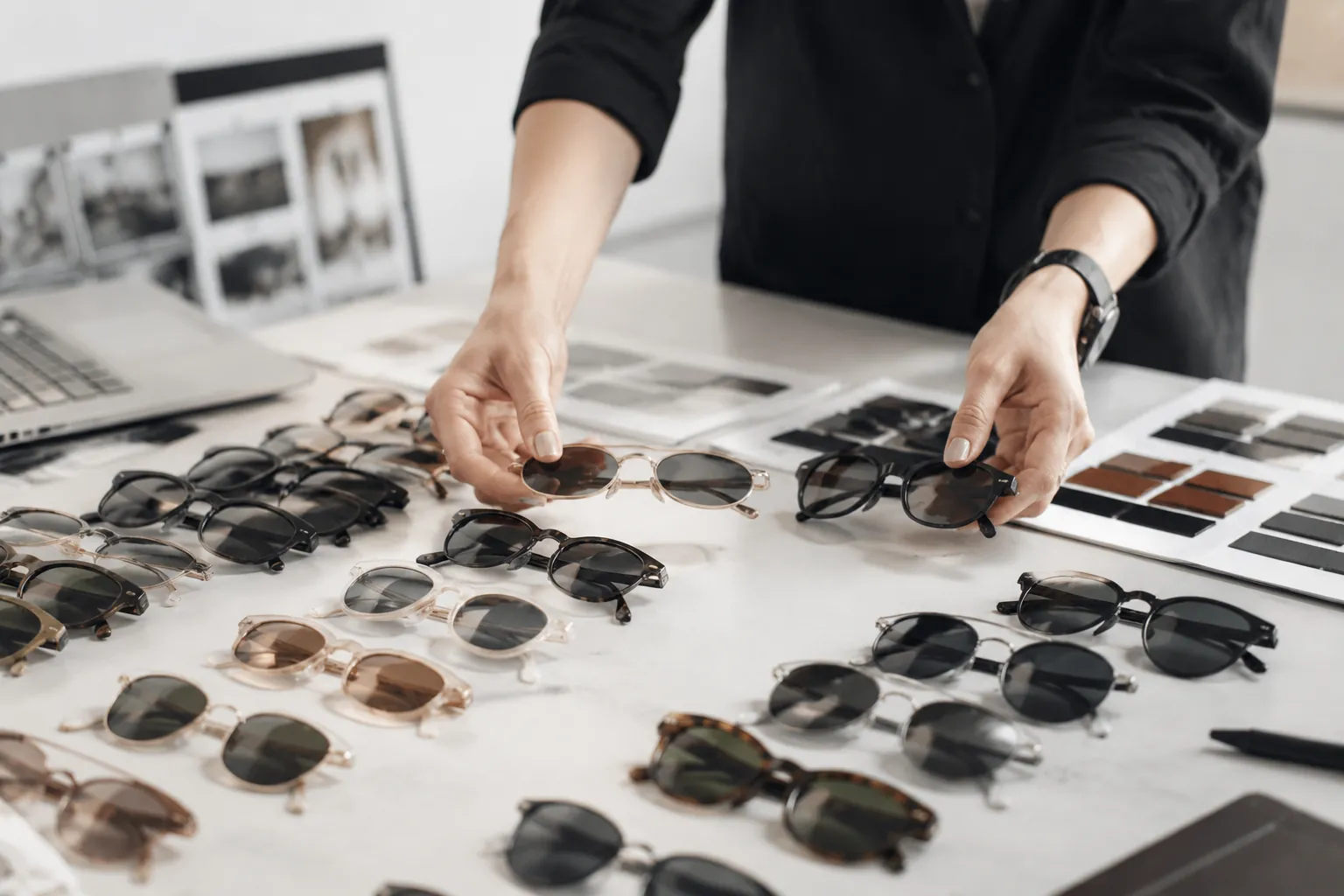
This guide is for importers, regional distributors, retail chains, and brand owners preparing a sunglasses line sheet before requesting OEM or ODM quotes. A strong line sheet gives factories the same brief, so pricing is easier to compare. It also helps them check materials, decoration, compliance, sampling, and production capacity before problems appear. The aim is practical: fewer vague replies, cleaner quotations, faster sample approval, and less inventory trapped in slow-moving styles.
Start With Channels, Not Frames
Weak sunglasses line sheets often start with too many frames and not enough selling logic. Start with the channel instead. Beach shops, petrol stations, optical stores, fashion boutiques, resort gift shops, online bundles, promotional accounts, and private-label retail chains all buy differently. Each channel has its own limits for price, packaging, lens claims, color risk, display method, and damage tolerance.
A petrol station program usually needs fast-moving unisex shapes, smoke or brown lenses, durable hang tags, barcode labels, and packing that protects the product in counter displays. A boutique account may accept acetate-look colors, gradient lenses, metal trim, and smaller seasonal color runs. Optical stores look harder at fit, hinge feel, lens category, UV documentation, and finishing around the nose bridge and temple tips. Do not force these needs into one vague quote request. The factory will either guess or ask for a rewrite.
Before sending an inquiry, give every SKU a job: entry price, core volume, polarized upsell, kids, sport, fashion test, or account special. Add the selling channel, target wholesale price, expected retail price, packaging format, and destination market. This keeps the range from becoming a pile of attractive samples with no reorder plan.
Build a Three-Tier Style Architecture
A useful distributor line sheet groups styles by commercial role. Keep it simple. The first tier is core volume: proven shapes, conservative colors, stable molds, and the lowest landed cost that still meets the required spec. The second tier is margin: better lenses, nicer decoration, acetate-look finishes, or metal details. The third tier is test: small runs for seasonal colors, narrow fashion shapes, or limited packs.
| Tier | Role in Line Sheet | Typical Quantity Logic | Factory Impact |
|---|---|---|---|
| Core volume | Wayfarer, square, aviator, round, basic sport | Higher order depth by design and colorway | Better price comparison, stable mold use, repeatable QC, easier reorder planning |
| Margin styles | Polarized, metal logo plate, gradient lens, acetate-look finish | Moderate order depth where the account supports the retail price | More decoration steps, tighter lens inspection, higher packing care |
| Test styles | Seasonal colors, narrow fashion shapes, limited capsule packs | Controlled quantities for sell-through testing | Useful for market testing but usually less efficient for setup and unit price |
| Account specials | Retailer colorway, private label, gift box pack | Quantity depends on retailer commitment, artwork, and tooling needs | Needs clean artwork, packing specs, approval samples, and barcode control |
LumiShades can support MOQ from 50 pairs per design, but 50 pairs should not become the default planning unit for every SKU. Use it for validation, account tests, or controlled launches. Price usually improves as volume rises because setup, color matching, logo positioning, inspection, and packing preparation are spread across more units. Ask for clear quantity breaks. Then plan each style by its role, not by hope.
Control Colorways Before They Control You
Color is where many distributors lose margin quietly. A black frame with a smoke lens can sell across many accounts. Transparent champagne with a brown gradient may work in resort shops and fail in convenience retail. Mirror lenses photograph well, but visible surface marks are easier for consumers to notice. That can mean more protective packing and stricter inspection.
For a first order, plan colorways by confidence level. Core frames can usually carry more colors because demand is broader. Margin styles should carry fewer colors until sell-through is proven. Test styles should stay narrow until account feedback supports a reorder. If a buyer wants eight colors on a new frame, decide in advance which colors will be cut if pricing rises or the MOQ split becomes inefficient.
- Safe frame colors: black, tortoise, matte black, clear smoke, dark brown.
- Seasonal frame colors: crystal beige, transparent green, blush, navy, amber.
- Lens basics: smoke, brown, green, gradient smoke, gradient brown.
- Higher-control lenses: polarized, mirror, flash coating, special tint matching.
- Approval references: Pantone code for plastics, physical swatch for special colors, and signed lens sample for tint depth.
LumiShades has in-house lens tinting, pad printing, laser engraving, and metal logo plate decoration. That reduces coordination risk because fewer steps need outside suppliers. Still, approve tint against a physical sample. Not a screen image. Screens distort brown gradients, green lenses, light smoke tints, and flash coatings.
Translate MOQ Into Buyable Quantities
A distributor does not need the same quantity on every SKU. Decide depth by role first. Then check whether each design and colorway meets the factory's MOQ, color-change rules, and price-break structure. If the MOQ is 50 pairs per design, a style with two colors can be quoted as 25 and 25 only if the factory accepts that split. Some factories price by total design quantity but still handle color changes, lens changes, logo alignment, and inspection separately. Ask directly before comparing quotes.
Use cartons, account allocation, and replenishment lead time to size the first buy. If ten retail accounts each need 24 pairs of a core model, ordering exactly 240 pairs leaves no buffer for showroom samples, damaged cartons, replacements, late account additions, or online sales. Add a reserve. If one carton holds a fixed number of pairs and each inner pack contains a fixed display quantity, round the order so cartons, displays, and account allocations make sense.
Price breaks matter most when the design is stable. At LumiShades, buyers can request pricing at several quantity levels instead of relying on one low-volume quote. Below an efficient production level, setup, color matching, logo positioning, inspection time, and packing preparation are spread across too few units. A 50-pair custom run can prove fit, color, or retailer interest. It should not be used as the landed-cost benchmark for a scaled program.
Specify Materials and Decoration Clearly
A quote request should not say premium plastic frame. That phrase is too loose for costing or production. State the material: PC, TR90, injected acetate-look material, real acetate, stainless steel, or mixed material. Also state hinge type, lens material, lens category, logo position, and packaging. If the factory must guess, it may quote the cheapest workable version or delay pricing with follow-up questions.
Injection-molded PC is often used for low-cost fashion and promotional programs. It is economical and suitable for volume orders, but it is less flexible than TR90. TR90 is lighter and more flexible, which helps sport and active retail styles, though color matching and material cost should be checked early. Acetate cutting and CNC milling can create richer color depth and better polish, but they add material cost, waste, and lead time. Metal parts can raise perceived value, but they need tighter inspection for plating, screws, solder points, hinges, and sharp edges.
| Material or Process | Best Use | Buyer Detail to Specify | Risk to Control |
|---|---|---|---|
| PC injection | Entry fashion, promo, beach retail | Frame color, lens category, hinge type, packing method | Brittleness, surface scratches, color variation |
| TR90 | Sport, active retail, lightweight programs | Flex requirement, temple length, rubber parts, nose fit | Higher material cost and color matching limits |
| Acetate or acetate-look | Boutique, optical, higher-margin fashion | Sheet color, thickness, polish level, metal trim | Longer lead time, polishing defects, uneven pattern placement |
| Metal trim or plate | Private label and premium appearance | Logo size, plating color, attachment method, corrosion-resistance expectation | Plating marks, loose plates, logo misalignment |
LumiShades has injection molding, acetate cutting, CNC milling, lens tinting, laser engraving, pad printing, and metal logo plate capability in-house. Use that capability with exact instructions. A good decoration line reads: left outer temple pad print, one color, 18 mm wide; right inner temple laser engraving, 45 mm from hinge; outer temple metal plate, brushed silver, 22 mm. For bulk inspection, agree practical tolerances for logo position, visible lens scratches, hinge movement, plating marks, and burrs around the bridge, temple tips, and lens grooves.
Put Compliance Into the Line Sheet Early
Compliance belongs in the line sheet before pricing, not after cartons are packed. Different markets require different documents, labeling, and performance standards. For sunglasses, confirm lens category, UV protection claim, warning text, importer or distributor information, optical requirements, impact requirements where applicable, and the test standard required by the market or retailer.
LumiShades' stated compliance base includes CE EN ISO 12312-1, FDA registration, ANSI Z80.3, AS/NZS 1067, REACH, ISO 9001, and BSCI. Buyers should request current documents and confirm that each one applies to the exact product type, lens category, material, destination market, and shipment being ordered. Do not ask the factory to add random badges to packaging. Ask for the documents that match your selling market and your retailer's vendor manual.
| Market or Need | Relevant Requirement | Line Sheet Field to Add |
|---|---|---|
| European Union | CE EN ISO 12312-1 and REACH | Lens category, UV claim, material restriction note, CE labeling |
| United States | FDA registration and ANSI Z80.3 | Lens impact and optical requirement reference, importer details |
| Australia and New Zealand | AS/NZS 1067 | Category marking, warning language, UV claim format |
| Retailer audit file | ISO 9001 and BSCI where requested | Factory profile, audit document request, expiry date tracking |
Add compliance fields directly into the line sheet: destination market, lens category, UV claim, packaging language, warning text, test report needed, document version or expiry date, and document owner. This prevents a common sourcing mistake: approving a good-looking sample that later needs a packaging redesign, claim correction, or extra testing before shipment.
Use Samples as a Decision Gate
Samples should answer buying questions. They should not just look good on a desk. For a distributor, the sample plan should include one confirmed core color, one risk color, one logo position, and the actual lens option if polarized, mirror, flash coating, or gradient tint affects the retail offer. If the bulk order will use retail packaging, sample that too: barcode size, hang hole position, pouch, cleaning cloth, insert card, or display pack.
LumiShades can normally make samples in 7 to 10 days, depending on material, decoration, lens option, and whether existing molds are used. New tooling, unusual metal parts, special lens colors, or packaging development can extend the schedule. Bulk production is typically 25 to 35 days after sample approval and deposit, subject to confirmed materials, capacity, compliance requirements, and final packaging. Build your calendar around sample shipping, review, corrections, final approval, deposit timing, packaging confirmation, and pre-shipment inspection.
- Send the draft line sheet with quantities, colors, compliance market, decoration, and packaging.
- Confirm which designs use existing molds and which need new development or tooling.
- Approve digital artwork only for placement, not final color or material finish.
- Review physical samples for fit, hinge tension, lens color, logo sharpness, burrs, and packing.
- Freeze the line sheet before bulk material purchasing starts.
During sample review, record decisions in writing. Note accepted color, rejected color, revised logo size, hinge adjustment, lens tint correction, packaging change, and any compliance-related label update. A clean sample report beats a long email thread. It gives the factory a checklist for bulk production.
Set Reorder Triggers Before Shipment
Reorder planning is not only a warehouse task. It belongs on the line sheet because sunglasses production, inspection, freight, customs clearance, and local delivery all take time. If bulk production takes 25 to 35 days after approval, the reorder point must be set before inventory is close to empty.
Use weekly sales by SKU, not total collection sales. A black square frame may sell quickly while the same frame in transparent blue moves slowly. Treat them differently. Set a minimum stock level, reorder quantity, review date, and discontinue rule for every design and colorway.
A practical rule is to trigger core-style reorders when projected stock covers the full replenishment lead time plus a safety buffer. Margin styles can be reviewed with a smaller buffer if the buyer accepts stockout risk. Test styles should be reordered only after sell-through proves demand. If a test color has not reached the agreed sell-through target by the review date, do not reorder it just because the factory can meet MOQ. MOQ is not demand.
Distributors should send the factory a rolling forecast for core models. It does not need to be a purchase order, but it should show likely reorders by month, expected color split, lens mix, and packaging needs. That gives the manufacturer time to check materials, lens stock, labor, and capacity. Even a reliable factory cannot recover time lost to late decisions, moving artwork, or unclear color approvals.
Have a custom sunglasses project in mind?
Send us your styles, target market and quantities and we will return a detailed quote with MOQ, lead time and a sample plan.
Get a QuoteWhy source this from Wenzhou with LumiShades
Wenzhou in Zhejiang Province is widely regarded as China’s eyewear manufacturing capital, producing a large share of the world’s sunglasses. That concentration matters to buyers: a deep local supply chain for acetate sheet, hinges, lens blanks, plating and packaging means shorter component lead times, easier color and material matching, and a workforce with decades of eyewear-specific skill. LumiShades has manufactured in this ecosystem since 2009, and our vertical integration — in-house injection molding, acetate cutting, CNC milling, lens tinting, decoration and quality control — means no part of your order is quietly subcontracted to a workshop you cannot audit.
For international buyers, that vertical control translates into accountability. When a single factory owns every step, defects are traced and fixed at source rather than bounced between vendors, and your specifications survive intact from first sample to bulk. For procurement review, buyers can request process records, approved samples, quality checkpoints and project-specific compliance files before placing a bulk order. Required testing and documentation are confirmed against the destination market and product specification rather than assumed from a generic certificate list. Explore our manufacturing capabilities and quality control process to see how this works in practice.
Frequently asked questions
How many styles should a distributor include in a first wholesale sunglasses line sheet? For a first structured buy, 12 to 24 styles is usually easier to manage than a very broad assortment. Put most of the quantity into 5 to 8 core shapes with clear commercial roles, then use smaller controlled runs for margin styles, account specials, and seasonal tests. Each SKU should have a channel, target price, lens type, colorway, packaging format, compliance market, and reorder rule before it goes to quotation.
Should I request OEM or ODM pricing first? Request ODM pricing first if you want to use existing molds, shorten sample time, reduce development risk, and compare factories more cleanly. Request OEM pricing when the frame shape, hinge structure, temple design, material mix, lens treatment, or decoration is specific to your brand and justifies extra development work. If you are unsure, ask the factory to quote two routes: an existing ODM model close to your brief and an OEM version showing tooling, sample timing, MOQ, and unit-cost differences.
Can I mix colors to reach the 50-pair MOQ? Do not assume you can mix colors until the factory confirms it in writing. Ask whether the MOQ applies per design, per colorway, per lens type, or per logo setup. A 50-pair order split into 25 black and 25 tortoise may be possible for some existing models, but it can still affect color matching, lens pairing, setup time, inspection, and packing. Put the approved split directly into the line sheet and quotation.
What files should I send with the line sheet? Send logo vector files, Pantone codes or physical color references, lens tint references, packaging dielines if available, barcode rules, destination-market compliance requirements, and any retailer vendor manual. The spreadsheet should list style code, frame material, lens material, lens category, colorway, quantity, logo method, logo position, packaging, destination market, required documents, sample requirement, and target ship window.
When should I place a reorder for core sunglasses styles? Place a reorder when projected stock covers only the total replenishment lead time plus your safety buffer. Calculate this by SKU using average weekly sales, current stock, confirmed open orders, production time, freight time, customs clearance, and local delivery. For core models, review stock weekly during the season and send a rolling forecast to the factory so materials, lens options, and packaging can be checked before the purchase order is issued.
Ready to start?
Explore our cat-eye sunglasses or request a quote — our sales team replies within 12 hours.
Request a Quote