
Wholesale Sunglasses: Build SKUs That Reorder
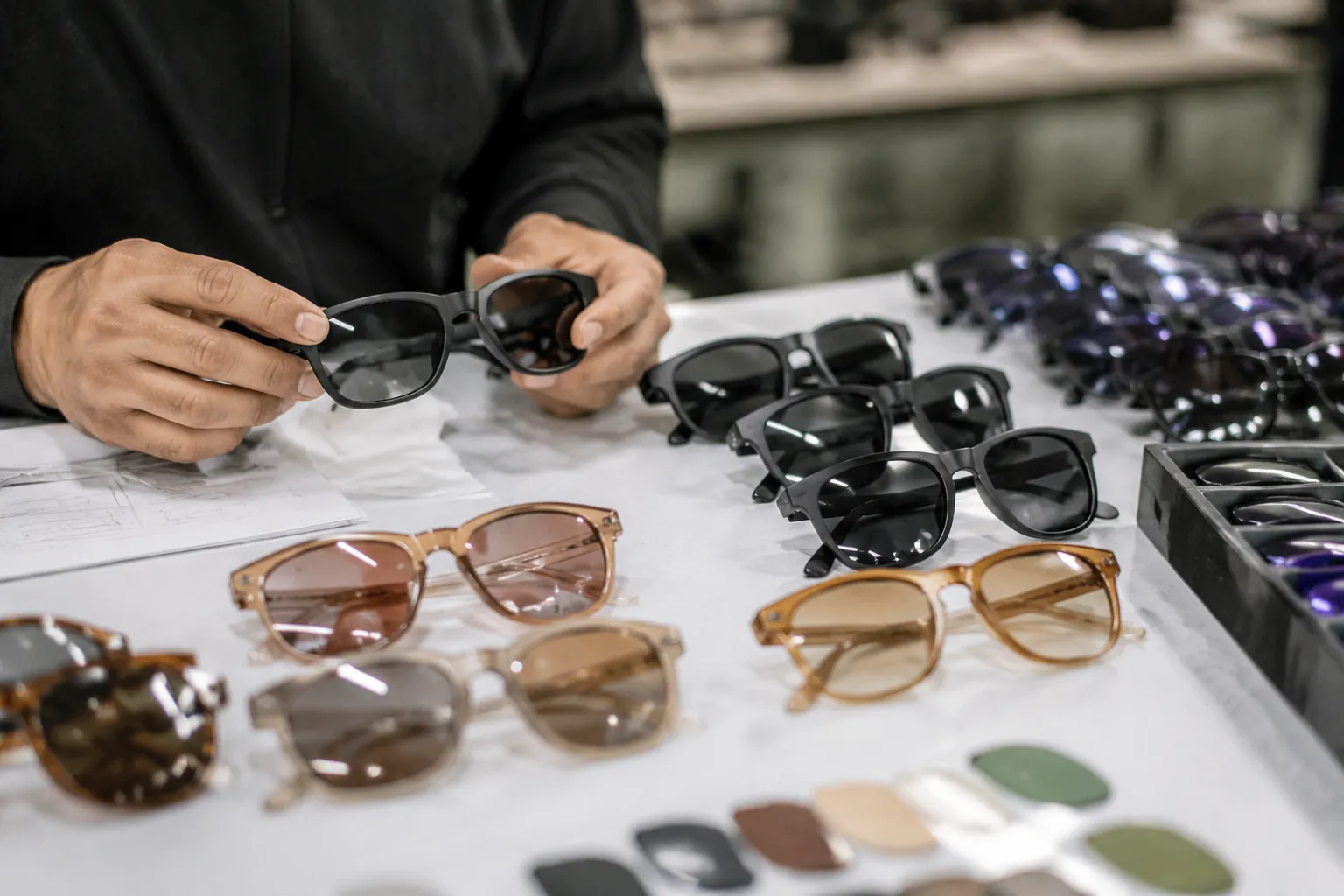
This guide is for importers, distributors, retail chains, and brand owners that need wholesale sunglasses SKUs they can reorder with confidence. The goal is not a bigger sample wall. It is a tighter commercial range: fewer slow movers, clearer MOQ planning, stable specifications, documented compliance needs, and products a factory can repeat season after season. The article uses practical production references from Wenzhou eyewear manufacturing, including LumiShades' stated MOQ from 50 pairs per design, typical 7-10 day sample timing, and a typical 25-35 day bulk production window after approval and deposit. Confirm final timing, pricing, and documents against the exact specification, destination market, and purchase order.
Start With Reorder Logic, Not Taste
Distributors do not make money from attractive samples. They make money from SKUs that retail buyers can understand, stock, sell through, and reorder without rebuilding the project every season. That changes the planning method. Start with a controlled core range. Add seasonal colors or trend shapes only after the core has sell-through data.
A practical first order is usually a focused SKU map, not a broad catalog launch. Many buyers start with 6 to 12 SKUs so they can test shape, fit, color, lens choice, logo method, packaging, and retailer response without spreading inventory too thin. LumiShades' stated MOQ starts from 50 pairs per design, which can support controlled testing. MOQ flexibility helps. It can also create clutter. A buyer who launches too many weak ideas still has to barcode, warehouse, present, inspect, and reorder them.
A core SKU should pass four tests. First, it should fit the intended customer group with few complaints. Second, it should work in neutral or proven colors. Third, it should meet the compliance and labeling requirements of the destination market. Fourth, it should be repeatable without changing tooling, artwork, lens tint, logo placement, packaging structure, or inspection criteria. If a design depends on an unusual material, special coating, complex decoration, or hard-to-source component, treat it as a test SKU until sales data proves otherwise.
Blunt rule: if the sales team cannot explain the SKU in one sentence, the retailer will not reorder it quickly.
Choose Shapes That Cover Real Shelves
Most distributor ranges should cover common retail needs before chasing trend frames. A balanced wholesale assortment may include square, wayfarer-style, round, aviator-style, rectangle, and sport-wrap shapes. Each shape has a different shelf role, fit profile, production risk, and inspection focus.
| Frame type | Best use | Main risk | Core planning note |
|---|---|---|---|
| Square acetate or TR-style frame | Fashion, unisex, lifestyle retail | Can feel heavy or tight if dimensions and balance are not controlled | Use black, tortoise, and dark smoke as base colors; approve fit and front weight from physical samples |
| Wayfarer-style injection frame | Mass retail, beach shops, promo channels | Highly competitive category with many low-cost alternatives | Differentiate through cleaner finishing, reliable hinge performance, clear lens category marking, and consistent logo placement |
| Round metal or acetate | Boutique, youth, lifestyle channels | Narrower fit range and higher fashion risk | Start with controlled volume unless the channel already sells round frames well |
| Aviator-style metal | Men's, travel, duty-free, classic retail | Solder quality, nose pad comfort, lens alignment, and plating defects | Check bridge solder, pad arm symmetry, temple opening, lens alignment, and the applicable market standard early |
| Sport wrap | Outdoor, driving, fishing, active channels | Lens curve can affect visual comfort if not controlled | Confirm base curve, lens thickness, polarization if used, coating quality, and visual comfort during sample approval |
The safest core plan is controlled, not dull. Use two high-volume shapes, two mid-volume shapes, and one or two channel-specific shapes. A beach distributor may put more volume into injection square and sport-wrap frames. A fashion importer may weight acetate square, rectangle, and round frames more heavily. Give every SKU a shelf job before giving it a purchase order line.
Match Materials to Price and Repeatability
Material choice affects price, weight, perceived quality, lead time, defect risk, and repeatability. Injection frames are often efficient for commercial volume and promotional channels. Acetate gives a richer look and deeper polishing potential, but sheet color and pattern variation must be controlled with approved physical standards. Metal frames can feel premium at low weight, but soldering, plating, nose pads, screws, and alignment need tighter inspection.
For core wholesale sunglasses, do not change material for a small cosmetic difference. A black square frame in TR-style material, acetate, and PC may look similar in a catalog. In production, they behave differently. Fit, polishing, repair, packing, and retail handling all change. Material selection should match the price point, target channel, expected reorder volume, and inspection plan.
- Injection frames: suitable for stable color, efficient production, and repeat volume, but mold condition, shrinkage, surface finish, and hinge assembly should be checked.
- Acetate frames: suitable for premium retail and tortoise effects, but sheet batches can vary, so approve a physical color range rather than relying only on a code or photo.
- Metal frames: suitable for classic and thin-profile designs, but check solder points, plating consistency, nose pad alignment, screw retention, and lens seating.
- Sport frames: suitable for active channels, but lens curve, temple grip, coating durability, polarization accuracy if specified, and visual comfort are the main risks.
Useful production checks include frame width, temple length, bridge fit, lens seating, hinge movement, temple opening symmetry, screw retention, surface finish, and packing deformation. Write the exact tolerance into the specification or inspection checklist. A reorder feels reliable only when the second batch is measured against the same approved sample and acceptance criteria as the first batch.
Use Neutral Colors Before Seasonal Colors
Neutral colors make reordering easier because they do not depend on a trend forecast. Black, matte black, tortoise, dark brown, crystal smoke, and transparent grey are safer than bright seasonal colors for most wholesale programs. Retailers understand them. End customers try them on faster. Factories can usually repeat them with fewer disputes when physical standards are retained.
Lens color should stay practical too. Grey lenses keep color perception relatively neutral and suit broad channels. Brown lenses add contrast and often pair well with tortoise or warm transparent frames. Green lenses work on classic metal and acetate shapes. Mirror lenses can sell in beach, sport, and festival channels, but they show coating scratches, dust, fingerprints, and color variation more clearly during packing. Inspect them harder.
- First buy: make most of the assortment neutral frame colors, then reserve limited space for seasonal or channel-specific color.
- Reorder plan: reorder only the strongest frame-color-lens combinations unless seasonal colors prove sell-through by exact SKU.
- Logo control: keep logo color consistent across the range, such as white, silver, gunmetal, black, or debossed tone-on-tone where suitable.
- Packaging control: avoid giving every SKU a different pouch, cloth, barcode layout, or hangtag unless the volume and retailer requirement justify it.
Color approval should use physical standards whenever possible. A Pantone reference can help communication, but it is not enough for acetate sheet, translucent injection color, tortoise pattern, lens tint, or mirror coating. For acetate, approve an acceptable color and pattern range. For lenses, keep one approved master sample at the factory and one with the buyer, then compare under consistent lighting. Phone photos are not a standard.
Build MOQ Tiers Around Cash, Not Hope
LumiShades' stated MOQ starts at 50 pairs per design, which can be useful for buyer meetings, market tests, and controlled launches. Unit cost usually changes with volume, material, lens type, decoration, packaging, testing requirements, inspection level, and delivery terms. Do not plan a range around a target low price before the SKU is proven. A low unit price does not help if the inventory sits.
Plan volume in three layers. Test SKUs should stay close to the minimum practical quantity. Core candidates can move into a first commercial run once the sales channel is clear. Proven reorder SKUs can justify larger quantities when sell-through, replenishment timing, and retailer commitments support the exposure. Large distributor or chain retail programs should use high-volume tiers only for combinations with reliable demand or a confirmed program.
| Order tier | Best purpose | Buyer risk | Factory planning point |
|---|---|---|---|
| 50 pairs/design | Market test, buyer meeting, small launch | Higher unit cost and weaker freight efficiency | Useful for checking fit, color, logo, packaging, and early sell-through before scaling |
| 300 pairs/design | First commercial run | Moderate inventory exposure if the channel is not proven | Allows more stable material planning, decoration setup, production flow, and inspection scheduling |
| 1000 pairs/design | Repeatable core SKU | Risky if based only on opinion rather than sales data | Supports more efficient scheduling, clearer QC sampling, and better cost structure depending on specification |
| 5000+ pairs/design | Distributor program or chain retail item | High exposure if forecast, compliance, or retailer commitment is wrong | Best suited to proven specs with stable components, locked artwork, and confirmed delivery requirements |
Do not average an order across too many colors. A large total quantity split into many weak SKUs is still a complicated factory job and a difficult inventory job. Fewer strong SKUs are easier to control, inspect, sell, and reorder. Cash should follow proven velocity, not catalog variety.
Lock Specs Before Bulk Production
A good wholesale SKU is a written specification, not a photo in a chat thread. The spec should cover frame material, lens material, lens color, lens category, hinge type, logo method, logo artwork, color reference, packaging, barcode position, carton mark, compliance target, destination market, and inspection criteria. If the same SKU may ship to Europe, the United States, Australia, or New Zealand, say so before artwork and labeling are finalized.
LumiShades offers production and customization processes such as injection molding, acetate processing, CNC work, lens tinting, laser engraving, pad printing, metal logo plates, and QC support. Those processes can reduce coordination risk, but every added process still creates a control point. Pad printing is visible and cost-effective, but placement, ink adhesion, and abrasion resistance should be checked. Laser engraving is clean and durable in many applications, but it may look too subtle on translucent frames. Metal logo plates can look premium, but they add placement, attachment, scratch, and corrosion checks.
For repeat production, define the tolerances that matter before bulk begins. Check logo placement against the approved artwork and fixture position. Lenses should sit securely without rattle, stress marks, or frame damage. Hinge screws should open and close smoothly and should not loosen during normal handling checks. Temple tips should sit evenly, and frames should not twist after packing or carton compression. Agree on critical, major, and minor defects before inspection.
- Approve one golden sample per SKU before bulk production.
- Freeze logo artwork, including size, position, color, and application method.
- Confirm lens category marking, UV claim, warning text, user information, and destination market label.
- Keep one retained sample at the factory and one with the buyer.
- Use the same SKU code on purchase order, carton marks, barcode file, packing list, and inspection report.
Match Compliance and QC to the Market
Sunglasses are not just fashion accessories in many markets. They are consumer products with optical, safety, chemical, and labeling requirements. LumiShades' stated compliance base includes CE EN ISO 12312-1, ANSI Z80.3, AS/NZS 1067, REACH, FDA registration, ISO 9001, and BSCI. Request documents that match the destination market, product type, lens category, and order date. Generic certificates are not enough.
For Europe, buyers commonly need CE marking supported by EN ISO 12312-1 performance requirements and REACH chemical compliance. For the United States, FDA registration and ANSI Z80.3 are common reference points for non-prescription sunglasses. For Australia and New Zealand, AS/NZS 1067 is the relevant standard to check. ISO 9001 and BSCI relate to management systems and social compliance. They do not replace product testing or market-specific labeling.
Compliance must be planned before packaging artwork. Lens category, UV protection claim, manufacturer or importer details, warnings, traffic suitability statements, and user information may need to appear on the product, hangtag, pouch card, instruction sheet, or retail packaging depending on market requirements. UV400 is a claim about ultraviolet protection. It is not the same as full product compliance. Check optical power, transmittance, lens category, traffic signal recognition where applicable, frame safety, labeling, and restricted substances based on the destination market.
QC should match the risk level of the SKU. A simple black injection frame with grey lenses may need standard checks for cosmetics, fit, lens seating, logo placement, labeling, barcode, and packing. A polarized sport-wrap frame needs additional review of polarization, lens curve, coating consistency, visual comfort, and any applicable performance requirement. For commercial orders, use AQL inspection or another agreed sampling plan, and define critical, major, and minor defects before the inspector opens cartons.
Plan Sampling, Bulk Timing, and Reorders
Fast wholesale planning depends on realistic calendars. LumiShades' typical sample timing is 7-10 days, and bulk production is usually 25-35 days after approvals and deposit, depending on order size, material readiness, decoration process, packaging complexity, compliance requirements, and factory schedule. Freight, customs clearance, destination inspection, and retailer warehouse booking sit outside the factory lead time.
A distributor launch should work backward from the retailer delivery date. Allow time for sample review, correction rounds, compliance document review, carton artwork, barcode confirmation, production, inline QC, final inspection, and shipping. If the range includes new tooling, special acetate sheets, polarized lenses, mirror coatings, metal logo plates, or complex packaging, add buffer. Do not build a launch plan that assumes every approval happens in one day.
- Day 1-3: confirm SKU map, target markets, forecast tier, artwork, packaging, inspection criteria, and compliance needs.
- Day 4-10: produce or prepare samples for fit, color, lens, logo, packaging, and labeling review where applicable.
- Day 11-15: approve samples or issue one clear correction list with photos, measurements, and marked artwork.
- Day 16-50: run bulk production, inline QC, final inspection, packing, carton confirmation, and shipping preparation.
- After shipment: track sell-through by exact SKU, including frame color, lens color, logo version, and retailer channel.
Set reorder timing before the first shipment lands. If a core SKU sells quickly, the buyer needs enough stock cover for the next production cycle plus shipping, customs, and warehouse receiving time. Buyers who wait until the warehouse is empty will miss the reorder window. After launch, separate SKUs into permanent core, seasonal refresh, and test. Move cash toward the frame-color-lens combinations that reorder. Cut weak colors before they become warehouse decoration.
Have a custom sunglasses project in mind?
Send us your styles, target market and quantities and we will return a detailed quote with MOQ, lead time and a sample plan.
Get a QuoteWhy source this from Wenzhou with LumiShades
Wenzhou in Zhejiang Province is widely regarded as China’s eyewear manufacturing capital, producing a large share of the world’s sunglasses. That concentration matters to buyers: a deep local supply chain for acetate sheet, hinges, lens blanks, plating and packaging means shorter component lead times, easier color and material matching, and a workforce with decades of eyewear-specific skill. LumiShades has manufactured in this ecosystem since 2009, and our vertical integration — in-house injection molding, acetate cutting, CNC milling, lens tinting, decoration and quality control — means no part of your order is quietly subcontracted to a workshop you cannot audit.
For international buyers, that vertical control translates into accountability. When a single factory owns every step, defects are traced and fixed at source rather than bounced between vendors, and your specifications survive intact from first sample to bulk. We back this with 15+ years of experience, shipments to 60+ countries, more than 5 million pairs produced per year and a 98.5% on-time delivery rate. Our certifications — CE EN ISO 12312-1, FDA registration, ANSI Z80.3, AS/NZS 1067, REACH, ISO 9001 and BSCI audit — mean the compliance documentation your market requires already exists. Explore our manufacturing capabilities and quality control process to see how this works in practice.
Frequently asked questions
What is a sensible first order for a new sunglasses distributor? Start with a focused SKU map, often 6-12 SKUs, so sales, warehousing, inspection, and reordering stay manageable. Use MOQ-level quantities such as 50 pairs per design for tests. Move stronger commercial items to higher quantities only when the retailer channel is clear, and reserve large orders for SKUs backed by sell-through data, pre-orders, or confirmed program demand.
Which frame colors should be used for core wholesale SKUs? Use neutral colors first: black, matte black, tortoise, dark brown, crystal smoke, and transparent grey. Approve physical color standards, especially for acetate, translucent materials, lens tints, and mirror coatings. Add seasonal colors only when the main shape already sells and when you can track sell-through by exact frame-color-lens combination.
How long should I allow for samples and bulk production? LumiShades' typical sample timing is 7-10 days, and typical bulk production is 25-35 days after approval and deposit. Build your calendar with extra time for sample corrections, artwork approval, compliance review, barcode and carton confirmation, inspection, freight, customs clearance, and retailer warehouse booking. Complex materials, mirror coatings, polarized lenses, or special packaging may need more buffer.
Which compliance documents should I ask for before ordering? Ask for documents that match the destination market and product specification. For Europe, check CE EN ISO 12312-1 and REACH. For the United States, check FDA registration and ANSI Z80.3. For Australia and New Zealand, check AS/NZS 1067. ISO 9001 and BSCI can support factory evaluation, but they do not replace product-specific testing, labeling, or restricted-substance checks.
How can I avoid too many slow-moving SKUs? Limit the number of frame shapes, keep most colors neutral, separate test SKUs from core SKUs, and track sell-through by exact SKU rather than total order value. Reorder only the combinations that sell through, and remove weak colors before placing the next purchase order. Avoid different packaging, logo colors, or barcode structures unless the volume justifies the added complexity.
Is the lowest price always the best buying tier? No. A lower unit price usually requires higher volume, but high volume only works when the SKU is proven. Compare the full landed cost, including inspection, freight, duties, warehousing, markdown risk, and cash tied up in inventory. Use larger tiers for repeatable core SKUs with reliable demand, not for untested colors or shapes.
Ready to start?
Explore our cat-eye sunglasses or request a quote — our sales team replies within 12 hours.
Request a Quote