
Wholesale Sunglasses Range: SKUs, MOQ, QC
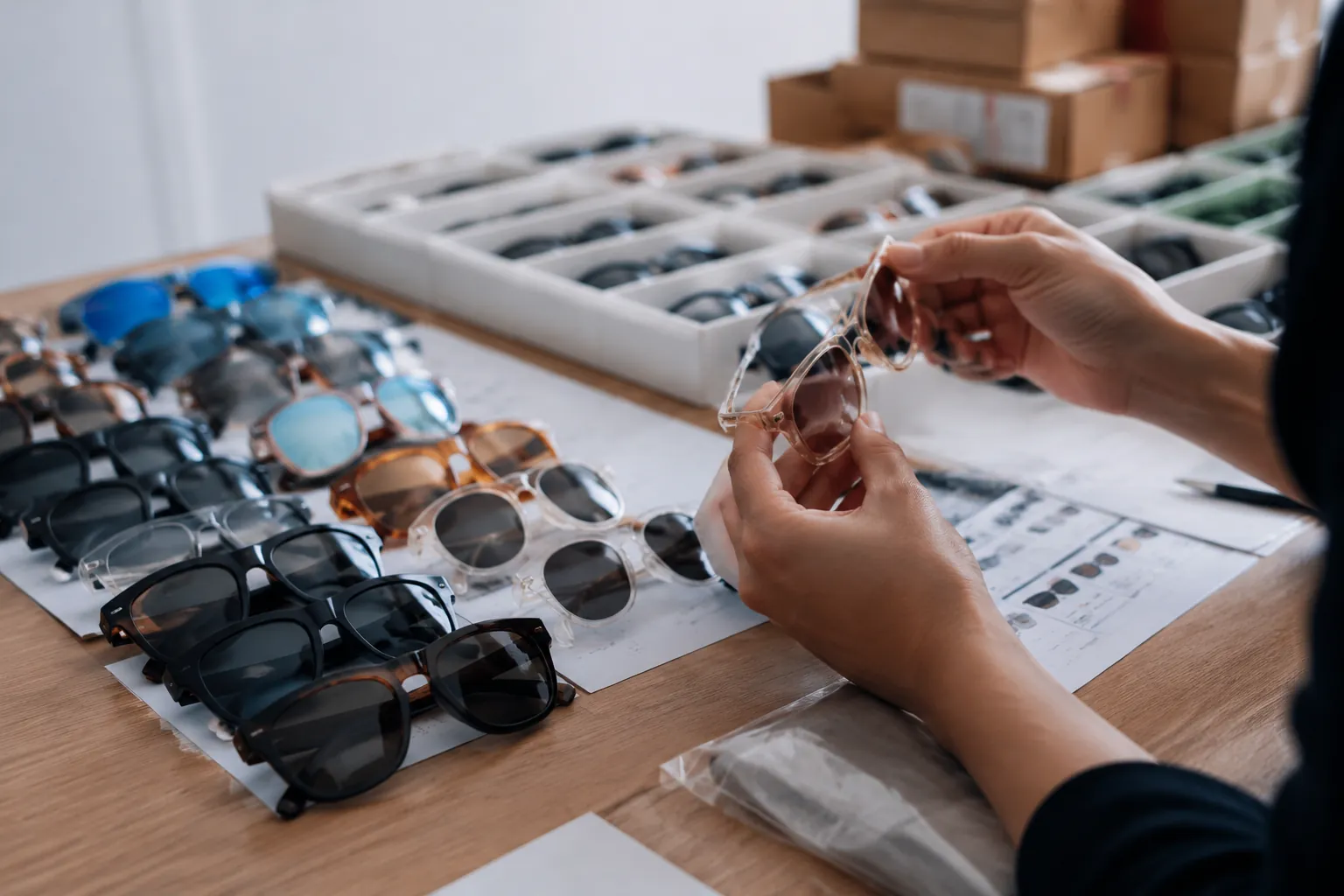
This guide is for distributors, importers, retail chains, and brand owners building a wholesale sunglasses range that must sell through without trapping cash in slow stock. It covers frame shapes, lens categories, materials, decoration, packaging, compliance documents, first-order quantities, and reorder triggers. The aim is simple: cover the main buyer needs, keep SKUs under control, test uncertain styles in small runs, and scale only the combinations that prove demand.
Start With A Core Range, Not A Factory Catalog
Most distributor problems start with too many SKUs. A factory catalog may show hundreds of frames. That does not mean you should buy them. A profitable wholesale range needs a tight core, a few seasonal colors, and clear reorder rules.
If every retailer gets a different assortment, forecasting breaks down. Cartons become harder to plan. Slow stock becomes harder to clear. Keep the first range focused.
For a first distributor order, build around 12 to 24 SKUs, not 80. A SKU means one frame shape, one frame color, one lens color, and one packaging level. A black wayfarer-style frame with a smoke lens and microfiber pouch is one SKU. The same frame with a brown lens is another SKU. Start with fewer frame shapes, then use color, lens, and packaging to create controlled variety.
- Core frames: 5 to 8 shapes covering men, women, unisex, sport, and kids demand only where the channel needs kids products.
- Core colors: black, tortoise, crystal, brown, matte black, and one seasonal color such as champagne, olive, or translucent pink.
- Core lenses: smoke category 3, brown category 3, green category 3, selected gradient lenses for fashion SKUs, and polarized lenses only where the price point and use case support them.
- Packaging: one low-cost option for volume channels and one upgraded option for retail display, gifting, or private-label positioning.
LumiShades can handle low test quantities starting from 50 pairs per design, subject to the selected frame, lens, packaging, and decoration. For larger programs, quote breaks are often discussed at 300, 1000, and 5000+ pairs. Final pricing still depends on the approved specification, current material costs, packaging, and inspection standard.
Buy narrow first. Read sell-through. Reorder winners deeper.
Choose Frame Materials By Price Point And Reorder Risk
Frame material affects cost, lead time, hand feel, durability, color options, and inspection risk. Do not load the first buy with every material family unless your sales channels clearly need it. A convenience-store program, a resort rack, and a boutique private-label line should not use the same material plan.
| Material | Best Use | Process Detail | Risk To Control |
|---|---|---|---|
| Injection-molded PC | Low-cost wholesale, promo, beach, travel, online bundles | Plastic pellets are molded, cooled, trimmed, assembled, fitted with lenses, adjusted, inspected, and packed. | Watch gate marks, frame warpage, brittle temples, lens fit, color consistency between batches, and sharp edges. |
| TR90 or flexible nylon | Sport, kids, outdoor, lightweight comfort programs | Requires stable molding temperature and controlled cooling to keep flexibility and shape recovery consistent. | Check temple rebound, bridge fit, lens retention, heat deformation, and hinge strength. |
| Acetate | Fashion, boutique, gift, optical-style retail | Sheet cutting, CNC milling, tumbling, polishing, hinge riveting, lens fitting, and hand adjustment. | Longer lead time, higher labor cost, polish quality, hinge alignment, sheet color variation, and frame symmetry. |
| Metal or combination | Aviator, navigator, classic men's, travel, premium display | Cutting, bending, soldering, plating or coating, lacquer protection where applicable, nose pad assembly, screws, and final alignment. | Control plating or coating consistency, solder strength, nose pad comfort, screw tightness, lens alignment, and corrosion resistance expectations. |
For a first wholesale sunglasses program, injection-molded PC is often the safest volume base. It supports broad price points and simpler replenishment. Acetate belongs in ranges where the retailer can explain and price the better hand feel. Metal frames can sell well, especially aviators and navigators, but they add QC points: solder joints, finish color, bridge symmetry, pad arm angle, screw loosening, and lens alignment.
If speed and cash control matter, keep the first production wave mostly injection-molded. Use acetate or metal only for controlled, higher-margin SKUs.
Pick Frame Shapes By Channel Risk, Not Taste
Frame shape selection should follow channel fit and sales evidence. Convenience stores, beach retailers, pharmacies, fashion boutiques, fishing shops, resort stores, and online sellers do not move the same mix. Do not buy only what looks good in a showroom.
A safe distributor assortment often includes two wayfarer-style plastic frames, one square oversized frame, one aviator or navigator, one round or panto fashion frame, one sport wrap, and one kids or youth frame only if the channel already has demand for children's sunglasses.
Be careful with extreme novelty shapes, tiny lenses, unusual bridges, and oversized shield styles. They may look fresh. They may also sit.
- Low-risk anchors: black wayfarer-style, tortoise square, matte black sport wrap.
- Medium-risk fashion: crystal frame, round frame, gradient lens, colored transparent frame.
- Higher-risk styles: narrow retro shapes, oversized novelty frames, unusual lens colors, bold seasonal prints.
Fit dimensions matter. For adult unisex sunglasses, common lens widths are often around 50 to 56 mm, bridge widths around 16 to 22 mm, and temple lengths around 140 to 150 mm. Oversized fashion frames may use lens widths of about 58 to 62 mm. Kids frames often need shorter temples, commonly around 120 to 130 mm, but the intended age range and face size must be defined before sampling.
For mass-market plastic frames, a practical tolerance is often ±0.5 mm to ±1.0 mm on key dimensions, depending on design, tooling, material, and process. Do not demand optical-frame tolerances on very low-cost injection sunglasses unless you accept higher rejection rates, sorting time, and cost.
Use Lenses To Build Clear Price Tiers
Lens color is an easy way to build a price ladder. It also creates risk if buyers treat lenses as decoration only. Sunglass lenses must meet the optical and protection requirements of the destination market and match the claims printed on the product, hang tag, or packaging.
For general wholesale sunglasses, smoke and brown lenses should carry the base range. Smoke is neutral and easy to sell. Brown can improve perceived contrast and works well with tortoise, champagne, and warm frame colors. Green has a classic look but should be used selectively. Gradient lenses sell on appearance, but the lower portion is lighter, so the filter category and intended use must be clear.
For most everyday sunglasses, distributors commonly specify UV protection up to 400 nm and a visible light transmission category suited to the market. Category 3 lenses are common for bright sunlight. Category 2 may work for lighter fashion tints, but they should not be sold as strong-sun lenses. Category 4 is very dark and is generally not suitable for driving. Confirm the applicable standard and warning language before printing any claim.
- Base tier: PC frame, non-polarized smoke or brown category 3 lens, polybag or pouch.
- Mid tier: improved hinge, cleaner finishing, green or gradient lens, branded pouch and hang tag.
- Outdoor tier: polarized lens, stronger frame, optional anti-scratch coating if specified and tested, microfiber pouch or EVA case.
- Retail gift tier: acetate or upgraded frame, polarized or premium tint, printed box, case, cloth, and barcode label.
For repeat orders, approve a physical lens master sample. Do not rely on a Pantone reference, rendering, or photo. Ask the supplier to confirm the visible light transmission category and provide test documentation for the destination market, such as CE EN ISO 12312-1 for Europe, ANSI Z80.3 for the United States, or AS/NZS 1067 for Australia and New Zealand.
For polarized SKUs, add a polarization check during QC. Also check lens orientation after fitting. A polarized lens installed the wrong way is still a failed product.
Lock Decoration And Packaging Before Quoting
Packaging is not an afterthought. It changes unit cost, carton cube, damage rate, retail presentation, barcode workflow, and landed cost. Define packaging levels before asking for a final quotation. Otherwise, two suppliers may quote the same frame with very different packing assumptions.
| Packaging Level | Typical Use | Cost And Freight Impact | Risk To Watch |
|---|---|---|---|
| Polybag only | Very low-price channels or local repacking | Lowest unit cost and smallest carton volume | Higher scratch risk if lenses are handled roughly; barcode process may be manual. |
| Microfiber pouch | General wholesale, online, resort shops | Low to moderate cost; still compact for shipping | Logo print, fabric color, drawstring quality, lint, and dye transfer should be approved. |
| Pouch plus hang tag | Retail racks, pharmacy, tourist shops | Moderate cost; improves display and scanning | Barcode, warning text, country of origin, importer details, and compliance claims must match market rules. |
| Printed box or hard case | Gift, boutique, optical-style retail | Higher cost and much higher carton volume | Check landed cost, corner crushing, insert fit, case odor, barcode placement, and carton compression risk. |
Decoration choices must also be fixed early. LumiShades can provide laser engraving, pad printing, hot stamping, metal logo plates, and printed packaging, subject to material and design suitability.
Laser engraving is clean and durable on suitable temples, but it may be subtle on dark plastic. Pad printing works well for volume logos, but ink adhesion should be checked with rubbing, tape pull, and sweat or moisture exposure where relevant. Metal plates look premium but need tooling, stable recess design, and careful placement.
If the logo position can vary by 1 mm and still look acceptable, state that. If it cannot, define the exact tolerance, approved sample, and inspection method before production. Vague logo instructions create avoidable disputes.
Build The First Order Around MOQ Logic
A distributor first order should answer two questions: what sells, and how fast can it be replenished? LumiShades MOQ starts at 50 pairs per design for suitable programs, but a 50-pair SKU is a test quantity. It is not an efficiency quantity.
Larger quantities usually improve unit economics because setup time, material purchasing, lens preparation, packaging production, and QC are spread over more units. Exact price breaks must be confirmed against the approved specification.
- Choose 5 to 8 core shapes.
- Assign 2 to 3 safe colorways to each core shape.
- Use 50 to 100 pairs for uncertain fashion colors, unusual shapes, or unproven lens combinations.
- Use 300+ pairs for black, tortoise, smoke, and brown combinations that are likely to repeat.
- Reserve 1000+ pair quantities for proven SKUs after sell-through data confirms demand.
Do not average demand across the whole order. A black wayfarer-style frame with a smoke lens and a transparent pink round frame with a gradient lens are not the same risk. Buy the predictable item deeper. Keep the fashion item shallow.
Many importers split quantities evenly because the purchase order looks tidy. Tidy purchasing often creates messy inventory.
If a retailer display holds 24 pieces, pack assortments around replenishment. A 300-pair core SKU can support multiple stores with buffer; the exact store count depends on opening allocation, weekly sell-through, and replenishment frequency. A 50-pair test SKU may support only one or two stores. That is fine if the goal is to test buyer reaction. Use cartons and inner packs that match the sales flow, such as 12 pairs per inner box or 24 pairs per display assortment if stores reorder that way.
Plan Lead Times Around Real Factory Steps
Lead time is not just production days. It includes specification confirmation, artwork review, sample making, sample shipping, buyer approval, material preparation, decoration approval, lens confirmation, packaging proofing, QC, packing, and export handoff.
LumiShades sample timing is commonly 7 to 10 days for many standard customization projects. Bulk production is commonly planned at 25 to 35 days after approval, depending on frame material, order size, packaging, decoration, and compliance requirements. Confirm the actual timeline on the quotation and production schedule.
For injection-molded frames, the flow is usually material preparation, molding, cooling, trimming, hinge or temple assembly, lens cutting or fitting, logo work, final adjustment, QC, and packing. For acetate, add sheet cutting, CNC milling, tumbling, polishing, hinge riveting, and more manual adjustment. For metal frames, add soldering, plating or coating, lacquer protection where applicable, nose pad assembly, and screw checks. Each extra process adds time. It also adds defect points.
- Day 1 to 3: confirm spec sheet, artwork, lens category, packaging, barcode, labeling, and compliance market.
- Day 7 to 10: review physical samples for many standard projects and approve corrections or request revisions.
- After approval: start bulk materials, components, lens tinting or lens purchasing, and packaging production.
- Production window: often 25 to 35 days after approval for many bulk orders, subject to the final specification and capacity.
- Final stage: inspection, carton marking, packing list, commercial invoice, and shipping handoff.
A distributor with spring or summer demand should not place the full seasonal order at the last minute. Put proven core SKUs into production first. Move experimental fashion colors to a second wave only if the calendar allows.
Fast buyer approvals matter. Slow artwork approval, changed packaging, missing barcode files, or late compliance instructions can delay production even when factory capacity is available.
Write Specs And Reorder Rules QC Can Use
A vague spec sheet creates arguments at inspection. A useful one gives the factory and QC team measurable requirements. Include frame material, lens material, lens color, VLT or filter category, hinge type, screw color, logo method, logo position, packaging, labeling, barcode placement, carton packing, destination market, and applicable compliance standard.
Frame dimensions should include lens width, bridge, temple length, overall front width, lens height, and sometimes pantoscopic angle or wrap if the frame is sport-oriented. Practical plastic-frame tolerances are often around ±0.5 mm to ±1.0 mm on key dimensions, but this depends on tool condition, material, and frame shape.
QC should check lens scratches, frame warpage, hinge tension, screw tightness, temple opening, logo position, color match against approved samples, lens fit, nose bridge comfort, packaging accuracy, and carton labeling. For polarized lenses, add a polarization check. For kids frames, add extra attention to hinge strength, sharp edges, small parts, warning language, and age labeling.
Compliance documentation must match the sales market and product claims. Common documents to request include CE EN ISO 12312-1 test documentation for Europe, ANSI Z80.3 test documentation for the United States, AS/NZS 1067 test documentation for Australia and New Zealand, and REACH chemical compliance information where relevant. FDA registration may be relevant for the U.S. eyewear import context, but it is not a substitute for product performance testing.
If a buyer requires factory management or social compliance documents, request current copies of ISO 9001 or BSCI documentation where available. Verify the certificate number, scope, site name, and validity dates.
Blunt rule: if the inspection team cannot measure it, photograph it, test it, or compare it to an approved sample, do not leave it as a loose promise in the purchase order.
Set reorder triggers before the first shipment arrives. Use a simple formula: reorder point = average weekly sales × total replenishment weeks + safety stock. For example, if a SKU sells 80 pairs per week and replenishment takes 7 weeks including production, QC, export, freight, customs clearance, and inbound handling, the reorder point is at least 560 pairs plus safety stock.
A-items can move to 1000+ pair reorders after demand is confirmed. B-items may repeat at 300 to 600 pairs. C-items should repeat only after sell-through improves. Dead items should be discounted, bundled, or stopped. Do not reorder them because the gross margin looks good on paper.
Have a custom sunglasses project in mind?
Send us your styles, target market and quantities and we will return a detailed quote with MOQ, lead time and a sample plan.
Get a QuoteWhy source this from Wenzhou with LumiShades
Wenzhou in Zhejiang Province is widely regarded as China’s eyewear manufacturing capital, producing a large share of the world’s sunglasses. That concentration matters to buyers: a deep local supply chain for acetate sheet, hinges, lens blanks, plating and packaging means shorter component lead times, easier color and material matching, and a workforce with decades of eyewear-specific skill. LumiShades has manufactured in this ecosystem since 2009, and our vertical integration — in-house injection molding, acetate cutting, CNC milling, lens tinting, decoration and quality control — means no part of your order is quietly subcontracted to a workshop you cannot audit.
For international buyers, that vertical control translates into accountability. When a single factory owns every step, defects are traced and fixed at source rather than bounced between vendors, and your specifications survive intact from first sample to bulk. We back this with 15+ years of experience, shipments to 60+ countries, more than 5 million pairs produced per year and a 98.5% on-time delivery rate. Our certifications — CE EN ISO 12312-1, FDA registration, ANSI Z80.3, AS/NZS 1067, REACH, ISO 9001 and BSCI audit — mean the compliance documentation your market requires already exists. Explore our manufacturing capabilities and quality control process to see how this works in practice.
Frequently asked questions
What is a sensible first order size for a sunglasses distributor? Start with 12 to 24 SKUs so the range looks complete without becoming hard to forecast. Use 50 to 100 pairs for risky shapes, seasonal colors, or unproven lens combinations. Use 300+ pairs for likely core sellers such as black or tortoise frames with smoke or brown category 3 lenses. Move to 1000+ pairs only after sell-through data confirms demand.
Which lens colors should I include in a core wholesale range? Use smoke and brown as the base because they are easy to understand and fit many frame colors. Add green selectively for classic styles and gradient lenses for fashion SKUs. Offer polarized lenses as a separate higher-price tier for outdoor, fishing, driving, travel, or resort channels. Verify the lens category and market standard before printing claims.
What tolerances should I put on a sunglasses specification sheet? For many mass-market plastic sunglasses, use practical dimensional tolerances around ±0.5 mm to ±1.0 mm on key measurements such as lens width, bridge, temple length, lens height, and front width. Confirm tolerances with the supplier before sampling because tooling, material, frame shape, and target price affect what is realistic. Keep an approved physical sample as the comparison standard for fit, color, lens tint, and logo placement.
What compliance documents should I request before bulk shipment? Request documents tied to the destination market and product claims: CE EN ISO 12312-1 for Europe, ANSI Z80.3 for the United States, AS/NZS 1067 for Australia and New Zealand, and REACH information where chemical restrictions apply. For the U.S., FDA registration details may be relevant to the import context, but they do not replace product performance testing. Check that each document matches the product type, lens category, supplier name, test standard, and date.
How long should I allow from sample request to bulk shipment? For many standard customization projects, allow about 7 to 10 days for samples and about 25 to 35 days for bulk production after sample and specification approval. Then add time for final inspection, export handling, international freight, customs clearance, and local distribution. Add buffer for acetate, metal frames, special packaging, new logo tooling, or multiple compliance requirements.
Is acetate better than injection-molded plastic for distributors? Not automatically. Acetate gives better color depth, polish, and hand feel, but it costs more, takes longer, and requires more manual finishing. Injection-molded PC is often better for volume price points, quick replenishment, and broad retail coverage. Use acetate only where the sales channel can support the higher retail price and explain the upgraded material.
How do I reduce inventory risk without making the range look too small? Limit the number of frame shapes, then create controlled variety with frame color, lens color, and packaging level. Keep risky fashion SKUs shallow at 50 to 100 pairs, buy predictable core SKUs deeper, and set reorder triggers before the goods arrive. Review sell-through by SKU, not by total order performance, so slow fashion items do not hide behind strong core sellers.
Ready to start?
Explore our rimless sunglasses or request a quote — our sales team replies within 12 hours.
Request a Quote