
Stock Mold Sunglasses: Fast ODM, No New Tooling
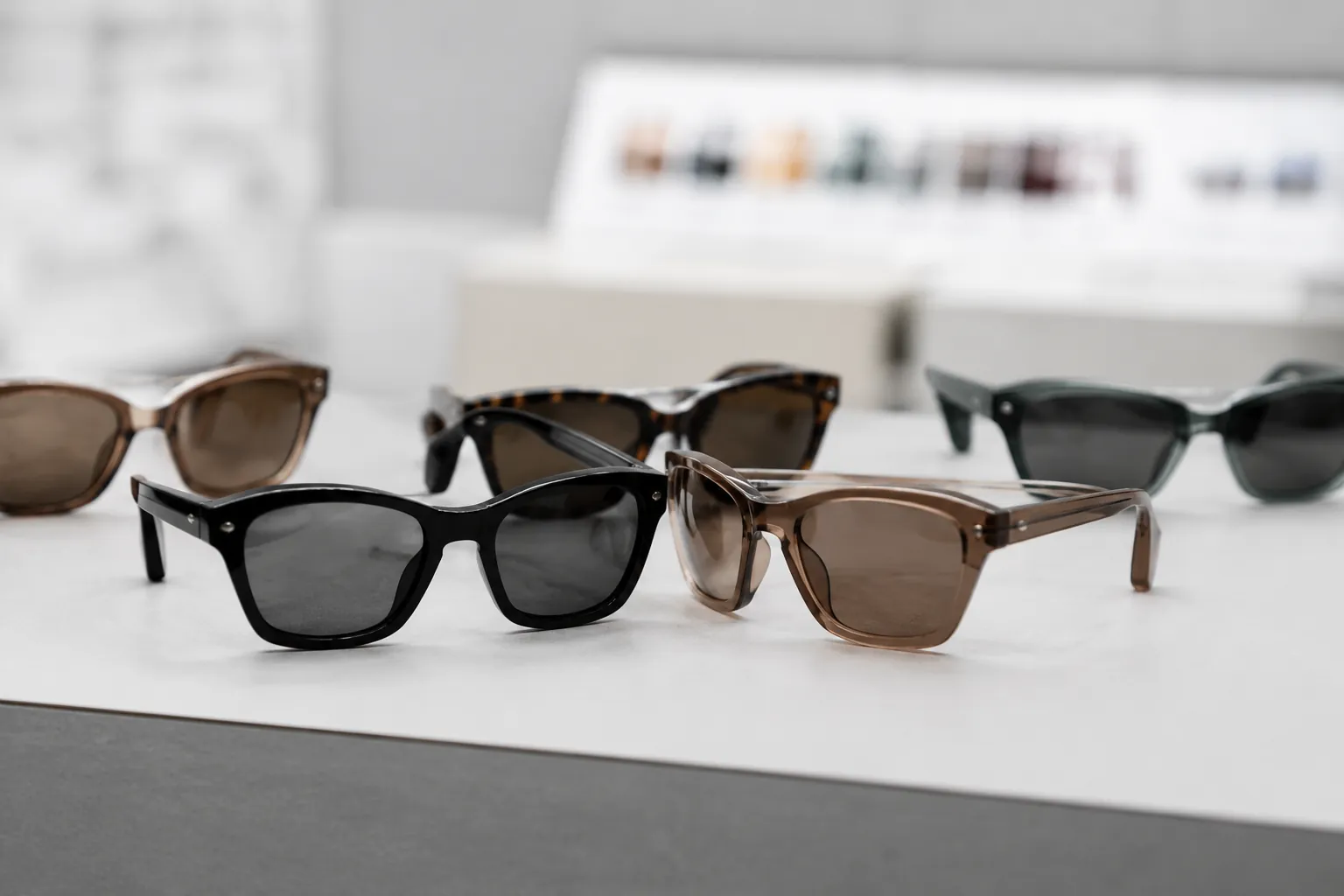
Stock mold sunglasses help B2B buyers launch branded eyewear without paying for new frame tooling. You choose an existing frame shape, then customize the parts the customer sees: frame color, lens tint, logo, decoration, packaging, labeling, and compliance documents. For brands, importers, distributors, event buyers, and promotional programs, the appeal is clear. Lower upfront cost. Faster samples. Shorter bulk lead time. Less engineering risk than a fully custom frame.
The stock mold decision: when it makes commercial sense
Stock molds are existing frame tools held by the manufacturer. The core geometry is already set: front shape, bridge, lens opening, temple form, hinge position, and assembly structure. Customization happens around that structure.
Buyers can usually change frame color, lens color, UV or polarized lens option, logo placement, temple print, pouch, retail box, barcode label, country-of-origin marking, and importer information without cutting a new mold.
This route works best when speed, budget control, and moderate differentiation matter more than a unique silhouette. Common uses include promotional sunglasses, retail test orders, travel retail, festival merchandise, corporate gifts, resort programs, and seasonal private-label collections. At LumiShades in Wenzhou, the MOQ starts at 50 pairs per design. That lets buyers test a frame before scaling.
Higher quantities usually improve unit pricing. Setup, color changeover, QC, packaging preparation, and export handling are spread across more units. But the final price still depends on the exact specification: material, lens, decoration, packaging, inspection level, and shipment terms.
Stock mold ODM is not the right choice when the frame geometry is the main commercial value. A patented temple structure, special bridge architecture, proprietary sports fit, unusual lens-lock system, or protected fashion silhouette may justify new tooling. But if the end customer mainly notices color, logo, lens effect, and packaging, stock molds are usually the faster and lower-risk launch path.
What can be customized without new tooling
A stock mold is not just a generic off-the-shelf product. The frame shape is fixed, but many buyer-facing details remain open. The key is simple: separate cosmetic customization from structural change. Cosmetic changes are faster. Structural changes need engineering review and may require mold modification or new tooling.
- Frame color and finish: common injection options include solid color, translucent color, gloss finish, matte finish, and, on selected styles, two-tone effects. Color matching should be controlled against a Pantone reference, physical color chip, or approved sample. For plastic injection, agree the acceptable color tolerance before production. The same color can look different under daylight, LED light, and retail lighting.
- Frame material: PC is rigid and cost-effective, often used for promotional and fashion styles. TR90-style flexible nylon blends are lighter and more flexible, but logo adhesion may need extra testing. Acetate stock models can offer richer color depth and a more premium feel, but cutting, polishing, and assembly take more time.
- Lens color and function: smoke, brown, green, gradient, mirror, fashion tint, UV400, and polarized lenses can be specified if they fit the selected frame. Lens category must match the sales market and intended use. Driving, children's eyewear, sports use, and very dark fashion lenses need extra care. Poor tint selection, weak UV performance, or optical distortion can create safety problems and returns.
- Logo placement: common positions include outer temple, inner temple, lens corner, pouch, case, hangtag, retail box, and carton mark. On curved temples, a small clean logo is usually safer than a large detailed mark. Fine lines can fill in during pad printing or look weak after laser engraving. Test artwork on the actual material.
- Decoration method: pad printing, laser engraving, hot stamping, heat transfer, metal logo plates, and printed packaging are common options. LumiShades handles laser engraving, pad printing, and metal logo plates in-house, which can reduce coordination time when those methods suit the selected model.
- Packaging and labeling: polybag, microfiber pouch, printed pouch, folding carton, rigid box, insert card, barcode label, country-of-origin marking, user notice, importer information, and carton marks can be configured for the order and destination market.
Do not assume every frame can accept every decoration. A matte TR90-style temple may not hold pad-print ink as sharply as glossy PC. A dark translucent frame may not show strong laser contrast. A metal plate may require a flat landing area and adhesion testing. Confirm the final logo size, color, method, and position with physical samples before bulk approval.
Stock mold vs new tooling: cost, lead time, and control
Bad sourcing decisions often start with a narrow unit-price comparison. New tooling can be valuable for a long-term proprietary SKU, but it adds mold cost, engineering time, trial runs, correction risk, and approval delays. Stock molds trade some design exclusivity for speed and lower upfront exposure.
| Route | Best use case | Typical sample timing | Typical bulk timing | Risk and cost logic |
|---|---|---|---|---|
| Stock mold with logo only | Event order, promotional campaign, fast retail test | Usually 7-10 days after artwork and specifications are approved | Usually 25-35 days after sample approval and order confirmation | Lowest development risk because the frame, hinge, lens seating, and assembly process already exist. Artwork and logo durability still need approval. |
| Stock mold with custom color, lens, logo, and packaging | Private-label launch, capsule collection, distributor program | Usually 7-10 days for standard options; longer for special color matching, mirror lenses, or packaging proofs | Usually 25-35 days for most standard orders, depending on quantity, materials, decoration, packaging, and inspection requirements | Moderate risk. Color, lens tint, logo adhesion, lens category, and packaging proofs must be approved carefully. |
| Modified existing design | Buyer wants a small geometry adjustment, trim change, or component change | Engineering review required; timing depends on the requested change | Often longer than standard stock mold ODM | Higher risk. Even small geometry changes can affect lens fit, hinge alignment, temple closing, assembly yield, and testing requirements. |
| New tooling | Exclusive silhouette, proprietary design, long-term high-volume SKU | Tooling, trial injection, correction rounds, and pre-production samples are required | Bulk production starts only after mold correction and final approval | Highest upfront cost and longest timeline, but maximum design control and stronger exclusivity if ownership and use rights are defined in the agreement. |
For many overseas buyers, stock mold ODM is the middle ground. It avoids the cost and uncertainty of a first launch while still delivering a branded product. If the style sells, the buyer can later discuss dedicated tooling, territory protection, or a proprietary design program.
A practical ODM launch sequence that avoids rework
A fast stock mold order still needs discipline. Most delays come from incomplete specifications: unclear logo files, late barcode artwork, missing lens category, unconfirmed packaging text, or compliance labels changed after sampling. Fix the details early.
- Shortlist the frame: choose by target user, face fit, retail price point, frame width, lens size, bridge comfort, material, and available colors. Ask for model photos, dimensions, material options, available sample colors, and any existing test reports relevant to the model.
- Define the sales market: tell the factory where the sunglasses will be sold. EU, US, Australia, New Zealand, and other markets may require different standards, label content, warnings, and documentation.
- Lock the lens specification: confirm lens material, tint, UV protection, polarized or non-polarized option, mirror coating, gradient effect, and lens category. Lens choice affects unit cost, test requirements, packaging text, and user information.
- Prepare artwork correctly: provide vector files such as AI, EPS, or PDF outlines. Include Pantone references, logo size in millimeters, placement drawing, and decoration method. Do not use low-resolution JPEG artwork for production approval.
- Confirm packaging before sampling: pouch, box, insert card, barcode, warning text, importer address, carton marks, country-of-origin marking, and language requirements should be checked before the sample is made, not after bulk production starts.
- Approve physical samples: inspect frame color, fit, hinge tension, lens tint, logo sharpness, printing position, packaging, and markings. Sign off with written notes and photos. This approved sample becomes the golden sample for production and QC.
- Start bulk production: LumiShades' usual bulk lead time is 25-35 days after approved sample and order confirmation, depending on quantity, material, lens type, decoration, packaging, inspection requirements, and current production schedule.
- Run final QC and ship: inspect against the approved sample, agreed AQL plan, packing list, and carton marks. Confirm commercial invoice, packing list, shipping marks, and any requested compliance documents before goods leave Wenzhou.
Samples usually take 7-10 days once artwork and specifications are complete. That timing only works when the buyer supplies final files and confirms the sales market at the start. A missing barcode, revised lens tint, changed logo position, or late label correction can add days.
Price drivers: what actually changes the quotation
Buyers often ask for a target price before the product is defined. That is risky. For stock mold sunglasses, the frame tool already exists, but the quotation still changes with quantity, material, lens, decoration, packaging, inspection requirements, and trade terms.
Quantity is the first lever. LumiShades can start from 50 pairs per design, which is useful for market testing, showroom presentation, and small private-label drops. But a 50-pair order cannot carry the same unit price as a larger run. Machine setup, ink setup, lens preparation, packing labor, carton handling, and export administration are spread across fewer units. A larger order in one frame color and one lens color will usually price better than a smaller order split across many combinations.
Lens selection is often a major cost driver. Standard UV-protective tinted lenses are normally less expensive than polarized lenses. Mirror lenses add coating control and can increase rejection risk if the surface scratches or the color is inconsistent. Gradient lenses require tighter tint control because left-right mismatch is easy to see. For retail programs, buyers should check optical clarity, lens curvature, tint consistency, and UV performance, not only appearance.
Material affects both cost and quality risk. PC is rigid and economical but may feel less premium if the finish is poor. TR90-style flexible materials can improve wearing comfort and reduce breakage complaints, but they may need surface treatment or adhesion testing for reliable printing. Acetate feels heavier and more premium, and the color depth can be strong, but cutting, tumbling, polishing, and hand assembly add labor time.
Decoration adds setup and QC work. Pad printing is efficient for simple logos but requires ink adhesion checks. Laser engraving is clean and durable where the material gives enough contrast. Metal logo plates add component cost and require accurate placement. Packaging also affects price. A polybag and microfiber pouch are simple. A printed box, insert card, barcode label, warning leaflet, and custom carton mark require artwork proofs and extra handling.
A serious RFQ should include model number or frame image, quantity by color, lens type, logo method, packaging, destination market, required compliance documents, inspection standard, delivery deadline, and requested Incoterms. Without those details, any price is only a rough indication.
Material, tolerance, and fit checks buyers should not skip
Stock molds reduce development risk. They do not remove the need for physical checks. Sunglasses are worn on the face, so small defects are visible. Customers notice them fast. The approved sample should become the inspection reference for each shipment.
For stock-mold production, agree practical tolerances instead of using vague language. Frame width, bridge width, lens height, and temple length should be checked against the approved sample and technical dimensions. For many plastic fashion sunglasses, dimensional variation around +/-0.5 mm to +/-1.0 mm may be realistic, depending on the part and measurement point. Visible logo placement should usually be controlled tightly, often around +/-1 mm where the surface and decoration method allow. Check color under consistent light. Black, tortoise, translucent smoke, and matte finishes can shift under warehouse lighting, daylight, and retail lighting.
- Frame width and temple length: confirm fit for the target region and user group. A narrow promotional frame may feel tight for many European or North American users. A very wide frame may not sit securely on smaller faces.
- Bridge comfort: check whether the bridge sits evenly and does not create sharp pressure points. This is especially important for rigid PC frames.
- Hinge action: temples should open and close smoothly without wobble. Screws should not be so tight that the temple binds or so loose that it collapses.
- Lens seating: lenses should sit securely without rattle, stress whitening, visible gaps, or pop-out risk. Uneven seating is one of the most obvious quality failures.
- Surface finish: inspect for sink marks, flow lines, scratches, rough gate trimming, color streaks, coating defects, and polishing inconsistency.
- Decoration durability: rub the logo area and check whether printing flakes, smears, or scratches too easily. A logo that wipes off during handling becomes a complaint.
- Lens tint consistency: compare left and right lenses against a white background and under daylight. Tint mismatch makes even a low-cost product look defective.
LumiShades keeps injection molding, acetate cutting, CNC milling, lens tinting, decoration, and QC in-house. That can help communication and correction speed. Still, buyer approval matters. Use a golden sample, written defect definitions, and an AQL inspection plan before shipment.
Compliance planning for EU, US, Australia, and beyond
Compliance is not a sticker added at the end. It must be built into the product specification before sampling. The same stock frame may be suitable for several markets, but lens category, UV claim, label wording, user information, and documents can change by destination.
For Europe, buyers commonly need CE marking supported by EN ISO 12312-1 for sunglasses. REACH is also relevant for chemical restrictions in materials, coatings, inks, and parts that contact skin. For the United States, ANSI Z80.3 is a key sunglass standard, and FDA registration may be relevant for eyewear products and certain US import or retail channels. For Australia and New Zealand, AS/NZS 1067 applies. Retailers may also impose their own requirements beyond legal minimums, especially for children's products, polarized claims, UV claims, and packaging warnings.
LumiShades lists compliance references including CE EN ISO 12312-1, FDA registration, ANSI Z80.3, AS/NZS 1067, REACH, ISO 9001, and BSCI. Buyers should ask which certificates, registrations, audit documents, or test reports apply to the selected model, lens type, coating, material, and shipment. Do not assume one old test report covers every new color, coating, lens batch, or material change. If the order uses a special mirror coating, a new polarized lens, or a changed material, confirm whether additional testing is needed.
Marking and paperwork need early attention. Retailers may require barcode labels, model codes, lens category, UV claims, country of origin, importer details, warning statements, and user information in the local language. Send distributor label templates before sampling. Relabeling finished goods after production is slow, expensive, and easy to get wrong.
Final buying checklist before you issue the PO
A good stock mold project is not complicated. It is specific. The purchase order should be detailed enough that production can follow it without interpretation. A vague PO creates arguments later because the factory and buyer may make different assumptions.
- Confirmed frame model, material, color, finish, and approved reference sample.
- Quantity split by design, frame color, lens color, and lens function.
- Lens specification including UV requirement, polarization, mirror or gradient details, lens category, and any optical testing requirement.
- Logo artwork in vector format, logo size in millimeters, placement drawing, decoration method, and color reference.
- Packaging specification including polybag, pouch, box, insert card, barcode label, carton marks, country-of-origin marking, and labeling language.
- Destination market and required documents, such as CE EN ISO 12312-1, ANSI Z80.3, AS/NZS 1067, REACH, or FDA registration-related information where applicable.
- Approved golden sample or written photo approval with clear notes on any acceptable differences.
- Inspection plan, AQL level, defect definitions, packing method, shipment deadline, shipping marks, and requested Incoterms.
If product details are locked early, samples can usually be ready in 7-10 days and bulk production can usually finish in 25-35 days after approval and order confirmation. If the buyer keeps changing lens color, logo size, packaging text, or compliance labels after approval, the calendar will move. Production cannot stay on schedule when the approved specification keeps changing.
Have a custom sunglasses project in mind?
Send us your styles, target market and quantities and we will return a detailed quote with MOQ, lead time and a sample plan.
Get a QuoteWhy source this from Wenzhou with LumiShades
Wenzhou in Zhejiang Province is widely regarded as China’s eyewear manufacturing capital, producing a large share of the world’s sunglasses. That concentration matters to buyers: a deep local supply chain for acetate sheet, hinges, lens blanks, plating and packaging means shorter component lead times, easier color and material matching, and a workforce with decades of eyewear-specific skill. LumiShades has manufactured in this ecosystem since 2009, and our vertical integration — in-house injection molding, acetate cutting, CNC milling, lens tinting, decoration and quality control — means no part of your order is quietly subcontracted to a workshop you cannot audit.
For international buyers, that vertical control translates into accountability. When a single factory owns every step, defects are traced and fixed at source rather than bounced between vendors, and your specifications survive intact from first sample to bulk. We back this with 15+ years of experience, shipments to 60+ countries, more than 5 million pairs produced per year and a 98.5% on-time delivery rate. Our certifications — CE EN ISO 12312-1, FDA registration, ANSI Z80.3, AS/NZS 1067, REACH, ISO 9001 and BSCI audit — mean the compliance documentation your market requires already exists. Explore our manufacturing capabilities and quality control process to see how this works in practice.
Frequently asked questions
Can I get exclusivity on a stock mold design? Possibly, but it is not automatic. Stock molds are usually shared factory assets. If exclusivity matters, ask for written terms covering territory, time period, minimum annual order quantity, permitted channels, and what happens if the volume target is not met. For a design that must be legally or commercially exclusive, discuss dedicated tooling and clarify mold ownership, use rights, maintenance responsibility, and whether the factory may sell similar styles to other buyers.
What is the lowest practical MOQ for custom stock mold sunglasses? LumiShades starts at 50 pairs per design. That is practical for market testing, showroom samples, small campaigns, and early private-label drops. For a commercial launch, ask for price breaks by quantity and color split. A 300-pair order in one color is usually more efficient than 300 pairs split across many frame and lens combinations because each combination may require separate setup, color control, decoration checks, packing control, and QC records.
Can one sample represent several frame colors and lens colors? Not safely if those combinations will be sold as final products. Each frame color, lens tint, mirror coating, polarized option, and decoration method can behave differently. Matte frames may print differently from glossy frames. Mirror lenses may show coating variation. Laser engraving may have weak contrast on some materials. For better control, approve a golden sample for each final production combination, or at least approve the highest-risk combinations in writing before bulk production.
How fast can an ODM sunglasses order ship? For standard stock mold options, samples usually take 7-10 days after the factory receives complete artwork, lens specification, packaging requirements, and destination-market information. Bulk production usually takes 25-35 days after sample approval and order confirmation. The schedule can be longer for special color matching, mirror or polarized lenses, custom packaging, added testing, large quantities, late artwork changes, or retailer-specific label requirements.
Which compliance documents should I ask for? Ask based on the sales market, product type, and lens specification. Common references include CE EN ISO 12312-1 for Europe, ANSI Z80.3 for the US, AS/NZS 1067 for Australia and New Zealand, REACH for EU chemical restrictions, and FDA registration-related information where applicable for US eyewear channels. Also ask whether ISO 9001 or BSCI documents are available if your retailer requires factory management or social compliance evidence. Check that any test report matches the actual model, lens type, coating, material, and production batch as closely as required by your importer, retailer, or compliance consultant.
Ready to start?
Explore our wayfarer sunglasses or request a quote — our sales team replies within 12 hours.
Request a Quote