
Sourcing Polarized and Non-Polarized Sunglasses in One Collection
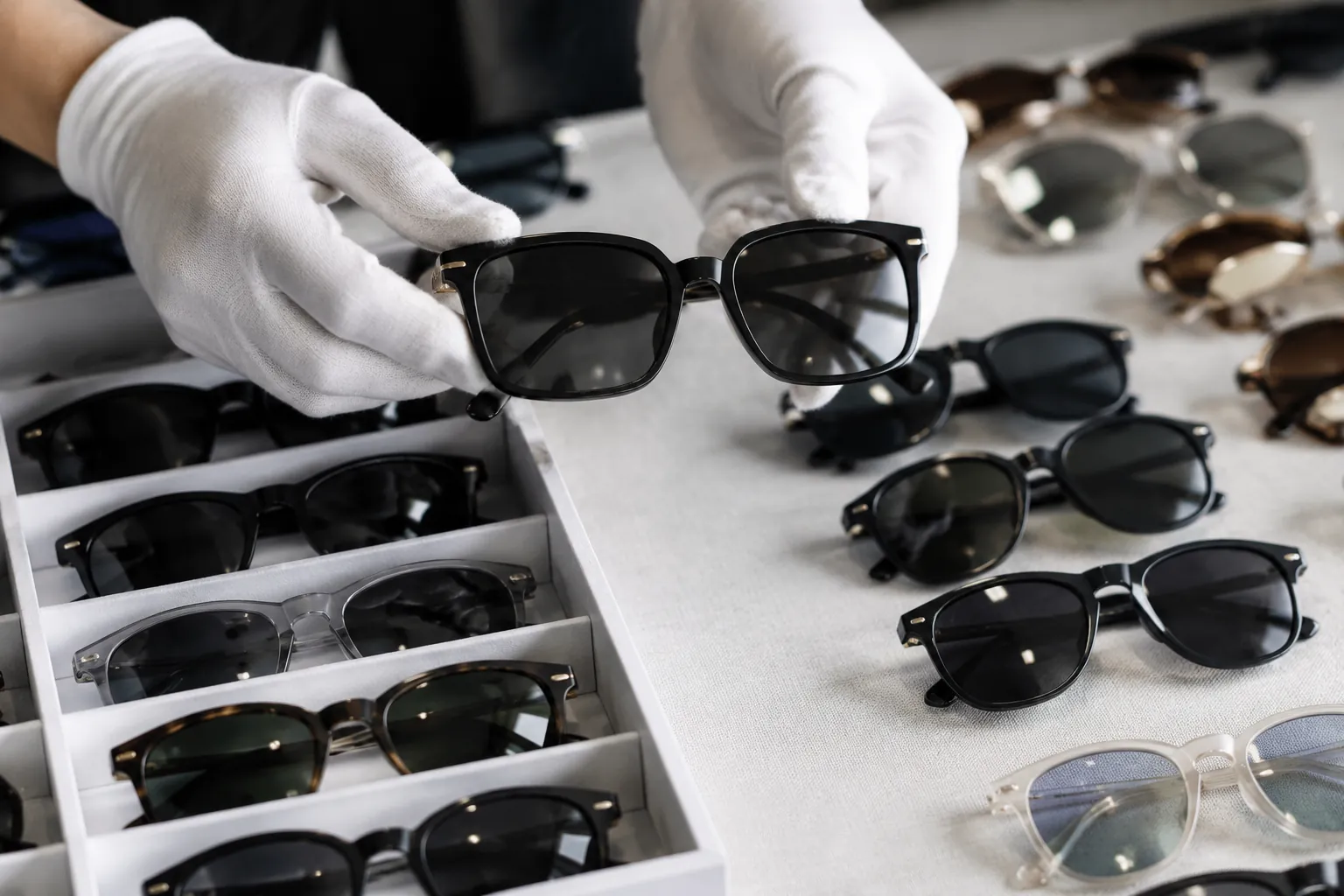
This guide is for overseas brands, importers, distributors, and retailers building one sunglasses collection with both polarized and non-polarized variants. The aim is to offer a clear price and function ladder without creating unnecessary SKUs, weak MOQ splits, unsupported lens claims, or warehouse confusion. Based on practical eyewear factory planning, this article explains what can stay common across the range, what must be specified separately, and how to brief a supplier such as LumiShades with enough detail for sampling, production, QC, and compliance review.
Start With the Frame Platform, Then Split Lens Functions
A mixed polarized and non-polarized sunglasses program works best when the frame platform is defined before the lens split. Confirm the frame shape, material, colors, hinge type, temple decoration, packaging format, SKU code, and barcode logic first. Then decide which SKUs need polarized lenses. If buyers start with lens functions instead of a controlled frame plan, the range can quickly become too wide: multiple frame colors, two lens functions, different packaging versions, and not enough volume behind any single SKU.
The cleaner B2B structure is usually one frame style with two lens functions. The non-polarized version supports price-sensitive channels, event merchandise, fashion assortments, and entry-level retail racks. The polarized version supports outdoor, driving, fishing, resort, travel, and premium gift channels where glare reduction is a relevant selling point. Same frame. Different lens specification. Clearer merchandising. Easier replenishment.
For a supplier brief, do not describe the range as "same sunglasses, one polarized." Treat each lens function as a separate finished product. The frame may be shared, but the lens material, lens claim, inspection method, barcode, packaging label, and compliance file may differ. This distinction is important when the polarized and non-polarized versions look almost identical.
A practical first plan is usually 2 to 4 frame styles, 2 or 3 commercial frame colors per style, and polarized lenses only on the strongest colorways. Do not polarize every SKU just to make the line look symmetrical. Polarized lenses are valuable when the channel can sell the functional benefit, but they do not fix a weak colorway, poor fit, unclear packaging, or an unrealistic retail price.
Choose Polarized SKUs by Channel, Not by Spreadsheet Symmetry
Polarized lenses reduce reflected glare from horizontal surfaces such as water, wet roads, snow, glass, and other bright flat surfaces. The benefit is easy to demonstrate with a polarized tester card or compatible screen, which makes it useful for outdoor and driving-related assortments. It is less central for fashion-led acetate shapes, festival merchandise, and low-cost promotional sunglasses where the customer is primarily buying style, brand, logo, or price.
| Channel | Recommended lens mix | Typical buyer logic | Risk to control |
|---|---|---|---|
| Fishing, boating, outdoor, driving | Mostly polarized, with non-polarized only where price requires it | Glare reduction is a clear functional benefit | Check lens category, UV claim, and visibility of dashboard or digital displays where relevant |
| Resort, travel retail, premium gift | Polarized on hero SKUs; non-polarized for entry price points | Polarized lenses can support a higher retail price when clearly communicated | Packaging and sales copy must explain the lens value accurately |
| Fashion boutiques and apparel brands | Polarized only on selected commercial colors | Style sells first; polarization can strengthen key models | Do not add higher-cost lenses to short-season or unproven colors |
| Pharmacy, supermarket, general retail | Good/better assortment with separate price points | Clear shelf segmentation helps buyers compare options | Separate barcodes, stickers, and shelf labels are essential |
| Promotional, events, giveaways | Usually non-polarized unless the campaign specifically requires polarization | Target price and logo exposure often matter most | Avoid over-specifying lenses when the budget is fixed |
A useful decision rule is simple: polarize the frame colors you already expect to sell. Black frame with smoke lens, tortoise with brown lens, and dark navy with grey-green lens may justify polarized versions. A translucent pink, neon yellow, or one-season fashion color may be better tested first as non-polarized. This keeps purchasing focused on SKUs with the strongest chance of sell-through.
MOQ and Price Logic: Count Design, Color, Lens, Decoration, and Packaging Separately
LumiShades can support low-MOQ custom sunglasses projects, including pilot orders from 50 pairs per design where the selected specification allows it. However, MOQ is not the same as an efficient production plan. A small run can be useful for market testing, distributor samples, trade show displays, influencer kits, or boutique pilots. For ongoing wholesale supply, unit economics and scheduling normally improve when volume is concentrated into fewer, better-planned SKUs.
Buyers should calculate MOQ in layers:
- Design MOQ: frame shape, mold or tooling requirement, lens shape, fitting structure, and any custom component.
- Color MOQ: injected frame color batch, acetate sheet selection, painted finish, plating, or coating.
- Lens MOQ: lens material, tint, category, base curve, coating, and polarized or non-polarized function.
- Decoration MOQ: pad print, laser engraving, hot stamping, metal logo plate, temple inlay, or other branding method.
- Packaging MOQ: pouch, paper box, microfiber cloth, insert card, barcode label, warning label, retail sticker, and outer carton mark.
If one style has 6 frame colors and every color has both polarized and non-polarized lenses, the buyer has 12 sellable SKUs before any packaging variation. That is usually too heavy for a first production order unless confirmed customer orders already exist. A tighter plan might use 3 frame colors, polarized versions on the top 2 colors, and a non-polarized version only on the third color. That creates 5 SKUs instead of 12.
For one new style, a practical first-buy structure may be: black/smoke non-polarized, black/smoke polarized, tortoise/brown non-polarized, tortoise/brown polarized, and crystal grey/smoke non-polarized. The actual quantities should be based on channel commitments, target landed cost, packaging MOQ, and the supplier's confirmed production minimums for the chosen materials.
Pricing should be quoted only after the specification is fixed. The main cost drivers are frame material, lens material, lens function, coating, hinge quality, decoration process, packaging format, testing requirement, and inspection standard. Ask the supplier to quote each SKU separately and show which cost differences come from the polarized lens, packaging, decoration, or material change. This gives the buyer a clear basis for retail pricing and margin review.
Lens Specification: Write the PO So Production Can Build and Inspect It
The purchase order should never say only "UV400 polarized" or "smoke lens." Those terms are not enough for consistent production, testing, or claim control. The factory needs a complete lens specification, and the buyer should keep the approved sample, test requirement, and packaging claim aligned with that specification.
A strong lens specification should include the following points:
- Lens material: for example polarized TAC, non-polarized PC, CR39, nylon, or another approved material.
- Lens function: polarized or non-polarized, with polarized axis control required for polarized lenses.
- Lens category or VLT: visible light transmission value or category according to the destination market standard and intended use.
- UV performance: UV400 or the required UVA/UVB protection level, matched to the market claim and test requirement.
- Lens color: smoke, brown, green, gradient, mirror, or custom tint, controlled by an approved physical sample where possible.
- Base curve: selected to match the frame wrap and lens groove; common sunglasses may use lower or higher base curves depending on design.
- Thickness: defined by lens material, frame construction, rim type, and fitting requirement.
- Coating: hard coating, mirror coating, hydrophobic coating, anti-scratch claim, or no additional coating.
- Tolerance and defects: define acceptable limits for tint variation, fit, thickness, edge quality, surface defects, coating marks, and visual distortion before bulk production.
Polarized TAC lenses need axis control. If the polarizing film orientation is wrong during cutting, the finished sunglasses may not perform as intended. A practical factory control is to confirm lens orientation before cutting and verify finished eyewear with a polarized reference card or suitable test screen. Non-polarized lenses do not require axis control, but they still require UV testing, tint checks, surface inspection, and fit checks inside the frame groove.
Lens fit tolerance must be confirmed during sampling. If lenses are too small, they can rattle or fall out. If they are too large, they can stress the rim, distort the lens, damage coatings, or affect frame alignment. The buyer should approve fitted pre-production samples and record the agreed lens size, curve, edge finish, and inspection criteria before bulk production begins.
Materials and Decoration: What Can Be Shared and What Must Be Separated
Using the same frame for both lens functions can reduce complexity because the frame tooling, polishing process, hinge fitting, temple logo, and some packing steps may be shared. The main differences are the lens blank, lens cutting orientation for polarized lenses, inspection procedure, lens sticker, barcode, SKU label, and any retail claim on the box or insert card.
Material behavior affects the sourcing plan. Injection frames can be efficient for repeatable shapes and volume production, but color batches still need approval and control. Acetate frames can offer a more premium look and richer patterns such as tortoise, crystal, or layered color, but cutting, tumbling, polishing, and adjustment add more manual process control. TR90 and other flexible frame materials can suit sporty or lightweight designs, but lens groove control and lens curve matching become especially important because flexible rims can move during assembly.
Decoration should be specified by method, placement, color, size, artwork file, and durability expectation. Common options include pad printing on the temple, laser engraving on metal or acetate parts, hot stamping, metal logo plates, foil logo on pouch, and printed retail insert cards. Buyers should approve both digital artwork and physical samples. A small placement shift may look acceptable on a long temple but obvious on a small logo plate or metal badge.
Do not use decoration as the only identifier for lens function. A small "P" on the inner temple is not enough for warehouse staff, retail staff, or quality inspectors. Polarized and non-polarized versions need different SKU codes, barcodes, labels, carton marks, and packing list lines even if the frame, lens color, and logo look the same.
Lead Time, Sampling, and QC Gates for Mixed Lens Orders
Mixed lens functions do not automatically double production time, but they do add specification and inspection points. LumiShades can advise sample and bulk lead times after reviewing the frame, lens material, decoration, packaging, testing, and order quantity. Delay risk usually comes from unclear lens category, late artwork, special coating changes, unapproved packaging, or changing lens color after the sample has been approved.
| Production stage | Non-polarized control | Polarized control | Buyer approval point |
|---|---|---|---|
| Lens sourcing or tinting | Confirm material, tint, UV requirement, VLT or category | Confirm material, tint, UV requirement, VLT or category, and polarization performance | Approve physical lens sample where possible, not only a photo |
| Cutting | Check size, edge finish, base curve, and fitting | Check size, edge finish, base curve, fitting, and axis direction | Approve fitted pre-production sample |
| Assembly | Check lens retention, hinge feel, screw condition, and frame alignment | Same checks plus polarized function verification | Approve golden sample and QC checklist |
| Decoration | Check logo position, color, size, and rub resistance where required | Same as non-polarized | Approve artwork, color reference, and placement |
| Packing | Check SKU, barcode, UV claim, warning label, and market information | Check SKU, barcode, polarized claim, warning label, and market information | Approve carton marks, label photos, and packing list format |
A useful QC plan includes incoming lens inspection, frame color check, hinge and screw function check, lens fit check, UV performance check, polarized function check for polarized SKUs, surface defect inspection, logo inspection, packaging inspection, and final pre-shipment inspection. Buyers should request photos of finished goods, SKU labels, inner cartons, master carton marks, and mixed-SKU packing lists before shipment release.
Compliance and Claims: Keep Each Variant Legally Clean
Mixed collections create claim risk because two products can look identical but carry different lens functions. If a non-polarized SKU is packed in a box that says "polarized," the issue is not only customer dissatisfaction. It can become a retailer complaint, product claim problem, customs documentation issue, or compliance file mismatch.
LumiShades can work with compliance requirements commonly used for sunglasses, including CE EN ISO 12312-1, ANSI Z80.3, AS/NZS 1067, REACH, FDA registration, ISO 9001, and BSCI. The buyer should confirm which standards, labels, warnings, and documents are required for the destination market and sales channel. Do not print a certification mark, standard reference, or product claim unless the correct documentation supports it.
For Europe, sunglasses are commonly assessed against CE requirements and EN ISO 12312-1, including required user information. For the United States, ANSI Z80.3 is commonly referenced for non-prescription sunglasses, and FDA registration may be relevant in the supplier and import context. For Australia and New Zealand, AS/NZS 1067 is the key sunglasses standard. For EU sales, REACH is relevant to restricted substances in frame materials, coatings, paints, nose pads, and packaging components.
Compliance samples should be made from the same materials and processes intended for production. If the polarized version uses a different lens material, film structure, coating, or lens supplier from the non-polarized version, it should be reviewed separately. Same frame does not automatically mean same compliance file. Keep test reports, approved samples, packaging artwork, SKU lists, and production specifications together so future reorders match the approved product.
Packaging and Warehouse Control: Prevent Two Similar SKUs From Becoming One Problem
The most common operational failure in mixed lens programs is misidentification. A black frame with smoke polarized lenses and a black frame with smoke non-polarized lenses can look nearly identical in a polybag. Warehouse, retail, and fulfillment teams should not be expected to test every pair manually.
Use hard SKU logic. A code should identify style, frame color, lens color, and lens function. For example: LS2410-BLK-SMK-NP and LS2410-BLK-SMK-POL. Put the code on the polybag label, inner carton label, master carton label, packing list, and commercial invoice. If barcodes are used, each lens function needs its own barcode.
- Use a removable "Polarized" lens sticker only on polarized units.
- Never print "polarized" on a shared box unless every unit packed in that box is polarized.
- Separate cartons by lens function, even when the frame color and lens color are the same.
- Use different item codes in retail and warehouse systems, not only different product descriptions.
- Ask for pre-shipment photos of polybag labels, inner labels, master carton marks, and open cartons.
- Keep a retained production sample for each SKU, including packaging and labels.
For a first mixed collection, stay conservative: fewer frame colors, polarized lenses on commercially proven colors, and enough quantity per SKU to read sell-through clearly. Low-MOQ production can be useful for pilots, but wholesale launches should be built around confirmed channel demand and realistic replenishment plans. The practical rule is direct: if the sales team cannot explain why a SKU needs to be polarized, start with the non-polarized version and test the frame first.
Have a custom sunglasses project in mind?
Send us your styles, target market and quantities and we will return a detailed quote with MOQ, lead time and a sample plan.
Get a QuoteWhy source this from Wenzhou with LumiShades
Wenzhou in Zhejiang Province is widely regarded as China’s eyewear manufacturing capital, producing a large share of the world’s sunglasses. That concentration matters to buyers: a deep local supply chain for acetate sheet, hinges, lens blanks, plating and packaging means shorter component lead times, easier color and material matching, and a workforce with decades of eyewear-specific skill. LumiShades has manufactured in this ecosystem since 2009, and our vertical integration — in-house injection molding, acetate cutting, CNC milling, lens tinting, decoration and quality control — means no part of your order is quietly subcontracted to a workshop you cannot audit.
For international buyers, that vertical control translates into accountability. When a single factory owns every step, defects are traced and fixed at source rather than bounced between vendors, and your specifications survive intact from first sample to bulk. We back this with 15+ years of experience, shipments to 60+ countries, more than 5 million pairs produced per year and a 98.5% on-time delivery rate. Our certifications — CE EN ISO 12312-1, FDA registration, ANSI Z80.3, AS/NZS 1067, REACH, ISO 9001 and BSCI audit — mean the compliance documentation your market requires already exists. Explore our manufacturing capabilities and quality control process to see how this works in practice.
Frequently asked questions
Can I use the same frame mold for polarized and non-polarized sunglasses? Yes, in most cases the same frame can be used for both lens functions if the lens shape, base curve, thickness, edge finish, and fitting tolerance are suitable. Treat the finished products as separate SKUs. The polarized version needs polarized lens material, axis control, polarized function testing, and a correct polarized claim on labels and packaging. The non-polarized version still needs UV, tint, fit, and surface inspection.
What MOQ should I plan for a mixed polarized and non-polarized collection? Start by asking the supplier to confirm MOQ separately for the frame design, frame color, lens material, lens tint, decoration, and packaging. LumiShades can support low-MOQ pilot orders from 50 pairs per design where the specification allows it, but wholesale programs should avoid spreading volume across too many colors and lens functions. Put polarized lenses on the strongest commercial colors first, then expand after sell-through data or customer orders confirm demand.
Will adding polarized versions extend bulk lead time? Not necessarily. If the frame, lens tint, lens category, packaging, artwork, and inspection criteria are approved before production, polarized and non-polarized SKUs can often be planned in the same production program. Delays are more likely when lens color changes after approval, mirror coating is not finalized, packaging claims are revised late, or the buyer has not confirmed the required market standard and test documents.
What lens details should be included in the purchase order? Include lens material, polarized or non-polarized function, VLT or lens category, UV requirement, tint reference, base curve, thickness, coating, lens sticker claim, destination market, required standard, and inspection criteria. For polarized lenses, also state that axis control and polarized function testing are required. Attach or reference the approved physical sample so production and QC have a clear benchmark.
How do I prevent warehouse mix-ups between polarized and non-polarized SKUs? Use separate SKU codes, barcodes, polybag labels, inner carton labels, master carton marks, packing list lines, and commercial invoice lines for each lens function. Do not rely on appearance or a small temple mark. If the sunglasses look similar, require a removable "Polarized" lens sticker only on polarized units and verify carton labels with pre-shipment photos before cargo release.
Ready to start?
Explore our square sunglasses or request a quote — our sales team replies within 12 hours.
Request a Quote