
Resort Sunglasses Specs for Heat, Salt, and Turnover
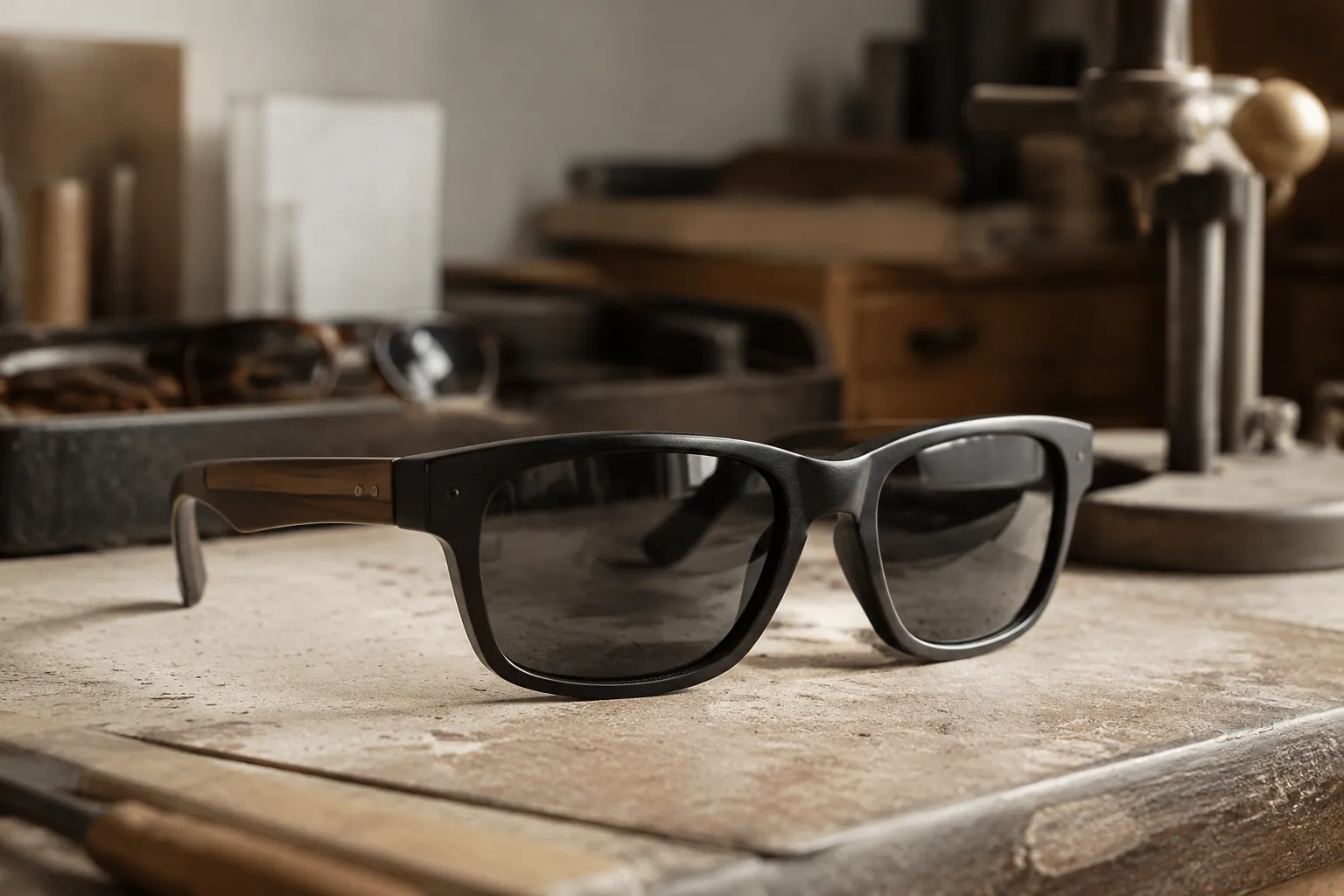
This guide is for resort buyers, cruise retail teams, importers, and private-label brands sourcing sunglasses for hot racks, salt air, constant try-ons, and seasonal replenishment. The goal is a tighter purchase spec: fewer warped frames, fewer lens complaints, fewer barcode errors, and better sell-through planning. Focus on what can be checked: frame material, lens category, hinge and screw construction, decoration method, inspection points, packaging, compliance documents, MOQ logic, and lead-time control.
Start With Failure Modes, Not Catalog Photos
Beach resort and cruise sunglasses fail in predictable ways. Lenses scratch. Temples loosen. Nose pads turn cloudy. Logos peel. Fronts warp. Cartons get mixed. Some styles simply sit on the rack.
A useful purchase specification starts with the reason behind each failure: unsuitable resin, weak hinge geometry, poor screw retention, unstable lens tint, decoration applied to the wrong surface, or packaging that lets frames rub during transit.
Coastal retail puts three pressures on the product at once: heat, salt exposure, and high handling. Back rooms and display areas can get hot during peak season. Salt air can speed corrosion on screws, hinge barrels, plating edges, and nose pad arms. Constant try-ons mean temples open again and again, lenses get wiped often, and staff reload racks quickly during rush periods.
LumiShades manufactures sunglasses in Wenzhou, Zhejiang. Production may include injection molding, acetate cutting, CNC shaping, lens tinting, laser engraving, pad printing, metal logo plate assembly, packing, and QC, depending on the order spec. That matters for resort programs because buyers often start with a small test order, then need repeatable replenishment if the style sells. MOQ can start at 50 pairs per design for testing a style, fit, color, or packaging concept. Larger order levels such as 300, 1000, and 5000+ pairs usually improve unit economics because setup, color changes, lens preparation, decoration setup, packing labor, and inspection time are spread over more units. Samples normally take 7-10 days. Bulk production is usually 25-35 days after approval, depending on specification and order size.
Buyer rule: if sunglasses will be sold near a beach towel rack, marina counter, pool deck, or cruise retail display, specify for heat, salt exposure, and high-touch handling from the start.
Choose Frame Materials by Heat Behavior
Frame material drives durability, fit, weight, finish, and price. One resort program may need bright translucent colors, tortoise basics, kids' sizes, polarized sport styles, and premium boutique frames. Do not treat those needs as one material decision. Each option behaves differently under heat, salt exposure, and repeated handling.
| Frame option | Best use | Process detail | Coastal risk | Buyer spec note |
|---|---|---|---|---|
| PC injection | Entry beach styles, kids' sunglasses, promo assortments | Injection molded; color depends on masterbatch control; flash and parting lines depend on mold condition | Can feel less premium; poor molding can create uneven fit, sharp edges, or weak hinge seating | Check temple alignment on a flat surface and approve acceptable tolerance before bulk production |
| TR90 | Sport, pool, excursion, and active cruise retail | Flexible nylon-based material; requires controlled injection, cooling, and post-molding inspection | Decoration adhesion can be harder on some finishes; color range may be more limited than PC | Test logo ink or coating on the actual material and finish, not only on a color chip |
| Acetate | Premium resort boutiques and fashion capsules | Sheet cutting, CNC shaping, tumbling, polishing, heat forming, and hinge assembly | Can deform if front curve, forming, storage, or packing are poorly controlled | Specify front curve consistency and inspect polish quality around bridge, lens groove, and hinge zones |
| Metal | Aviators, classic adult styles, and higher perceived-value programs | Stamped or formed metal with plating, screws, nose pads, and soldered or assembled parts | Salt exposure can affect screws, plating edges, hinges, solder points, and nose pad arms | Require plating review, screw-locking method, smooth pad arm finishing, and corrosion-related inspection expectations |
| Mixed material | Fashion capsules and premium logo programs | Combines injection, acetate, metal trim, logo plates, or other components | More joints and material interfaces create more failure points | Approve construction samples before bulk; do not rely only on renderings or color swatches |
For many resort and cruise programs, a practical opening mix is PC or TR90 for fast-moving price points, acetate for a smaller premium story, and metal only where the shape has proven demand. Do not overbuild every SKU. Put cost where it protects margin: lens quality, hinge stability, screw retention, finishing, decoration durability, and packaging.
Treat UV400 as the Baseline
UV400 is the starting point, not a luxury upgrade. Match the destination market to the right compliance framework before approving artwork, labels, or packaging. Relevant documents may include CE EN ISO 12312-1 for Europe, ANSI Z80.3 for the United States, AS/NZS 1067 for Australia and New Zealand, REACH for chemical restrictions, FDA registration where relevant, ISO 9001, and BSCI. Claims printed on temples, hang tags, pouches, retail cards, cartons, websites, and invoices must match the purchase order and available documentation.
Lens category and tint affect both compliance and sell-through. Category 3 lenses are common for strong sunlight, but the correct category and label wording should be confirmed for each destination market. Grey is neutral and easy to sell. Brown can improve perceived contrast for driving, beach walking, and marina retail. Green has a classic look. Mirror lenses stand out on display, but scratches show quickly. Gradient lenses can look fashionable, but the darkest and lightest areas still need to match the intended use and labeling.
- UV claim: state UV400 and the applicable standard in the PO, artwork brief, and inspection checklist.
- Polarized option: use for fishing, boating, marina, driving, and excursion retail where staff can explain the benefit clearly.
- Tint approval: approve a master lens or approved shade range before bulk production and keep it available for inspection.
- Lens fit: inspect for rattle, edge chips, stress marks, uneven gaps, and pressure marks after assembly.
- Mirror handling: specify lens film, individual bagging, pouch control, or other protection if mirror lenses will be handled often.
- Market testing: align impact, labeling, and documentation requirements with the destination market instead of assuming one lens spec suits every country.
In-house lens tinting can shorten correction loops when the approved color is not matched in pre-production. If a brown lens reads too red, a smoke lens is too light, or a mirror coating misses the sample, correct it before bulk assembly and packing. Late fixes cost more.
Control Hinges, Screws, and Logos
Small parts decide whether a shopper keeps the sunglasses or returns them. Hinges should open smoothly, hold steady temple tension, and survive repeated try-ons. Screws need the right length, thread engagement, and retention method. A screw that backs out on a busy rack is not a small issue. It creates returns, wastes staff time, and damages the brand.
For PC and TR90 frames, check hinge insertion and temple geometry after cooling because plastic parts can shift after molding. For acetate, hinge position, pin security, and front curvature must stay stable after polishing and heat forming. For metal frames, plating quality, exposed screw heads, solder points, and nose pad arms need close review because salt exposure exposes weak finishing fast. If corrosion resistance matters, define the inspection method and acceptance criteria in the purchase order.
Decoration must match the material. Laser engraving works well for subtle logos and does not peel like weak print. Pad printing is cost-effective for temples, but ink adhesion must be checked on the actual frame material and surface finish after curing. Metal logo plates can raise perceived value, but they add risk if the recess depth, adhesive, staking, or edge finishing is wrong. Foil, heat-transfer, or coated effects may look good on a sample. Rub and flex them before approval.
- Approve logo size and location on a physical sample, not only on a PDF mockup.
- Run tape adhesion or rub checks on pad printing after curing, especially on TR90 and glossy finishes.
- Check logo placement against the hinge barrel so assembly does not shift the visual position.
- Flex temples after decoration to look for cracking, whitening, ink lift, or coating damage.
- For metal logo plates, confirm edge smoothness because sharp edges feel cheap and can snag hair.
A simple temple print can beat a premium badge in humid, salty, high-touch retail. Choose decoration for the selling environment, not the showroom tray.
Build the Assortment Around Real MOQ Logic
Resort and cruise buyers usually need an assortment, not one hero SKU. The common mistake is buying too many similar fashion colors and too few proven basics. Keep the first program tight: adult unisex best sellers, women's fashion frames, sport or polarized options, kids' frames, and a small premium capsule only if the store can support the price point.
A workable opening order is often 6-10 designs with 2-4 colors each. Use 50 pairs per design to test fit, color, packaging, and retail response, but treat that level as validation, not the final cost model. Unit cost is usually higher at small quantities because setup time, color changes, lens preparation, decoration adjustment, barcode control, and QC are spread over fewer units. Moving a proven style to 300 or 1000 pairs normally gives a more practical landed-cost structure. For 5000+ pairs per design, pricing should be quoted against the exact material, lens type, decoration, packaging, compliance requirements, inspection plan, and delivery terms.
| Order level | Best use | Cost logic | Risk control |
|---|---|---|---|
| 50 pairs/design | Seasonal color test, new resort location, first fit trial | Higher unit cost because setup is spread over fewer pairs | Use to prove shape, fit, color, packaging, and display response before scaling |
| 300 pairs/design | Small chain, cruise boutique capsule, or reorder of a proven SKU | Better labor and material efficiency than a small test run | Limit color expansion until sell-through data is clear |
| 1000 pairs/design | Distributor, multi-property resort group, or stronger seasonal buy | Stronger price break and steadier production planning | Lock master samples, packaging, barcodes, carton marks, and inspection criteria |
| 5000+ pairs/design | Core style for high-volume beach, resort, or cruise demand | Best suited to negotiated high-volume pricing based on the approved specification | Plan inspection timing, carton routing, replenishment schedule, and documentation before production |
Do not put all volume into trendy mirror lenses unless sales data supports it. Tourists still buy black, tortoise, smoke, brown, polarized sport, and classic metal shapes because many are replacing sunglasses they forgot, broke, or lost.
Use Packaging to Prevent Damage and Delays
Packaging is not just branding. It controls lens scratches, receiving speed, carton count, display readiness, and staff handling. Cruise retail often has tight storage and fixed delivery windows. Resort shops may receive mixed cartons during peak season with little back-room space. Overpacked sunglasses waste freight and slow replenishment. Underpacked sunglasses arrive scratched, twisted, or hard to scan.
For low to mid-price retail, a microfiber pouch, polybag, and hang tag may be enough. For premium acetate or polarized models, a better pouch or soft case can support a higher retail price. If the sunglasses go into spinner racks, check temple thickness, hang tag hole position, barcode visibility, and whether the frame hangs straight. Approve a fully packed sample before bulk. Tags, pouches, dividers, and cartons can change how the product travels and how staff handle it.
- Barcode placement: place the barcode where staff can scan quickly without removing the sunglasses from packaging when possible.
- Carton labeling: separate by design, color, lens type, and destination to reduce receiving and routing errors.
- Lens protection: use film, individual bags, dividers, or pouch control for mirror lenses and premium finishes.
- Moisture control: avoid packaging that traps humidity against metal parts during sea freight or long storage.
- Retail cards: include required lens category, UV claim, compliance wording, and market information.
- Pack-out check: approve units per inner box, master carton quantity, carton marks, and mixed-carton rules before production.
A practical resort carton is easy to receive, easy to scan, and hard to mix up. Good packaging protects lenses without slowing staff during peak sales hours.
Put QC Requirements Directly in the PO
A serious purchase order defines inspection points. Vague language such as "good quality" does not help during production or final inspection. State the acceptance points that matter for the channel, destination market, and price level.
For resort and cruise sunglasses, start with visual inspection, frame alignment, lens fit, hinge movement, screw tightness, decoration adhesion, lens tint consistency, barcode accuracy, and packing accuracy. Add compliance documents by destination market: CE EN ISO 12312-1 for Europe, ANSI Z80.3 for the United States, AS/NZS 1067 for Australia and New Zealand, REACH for chemical restrictions, FDA registration where relevant, plus ISO 9001 and BSCI where requested as factory-level documentation. Keep claims clean. If a claim is not tested, documented, or approved for the destination market, do not print it.
| QC item | What to check | Typical defect caught |
|---|---|---|
| Frame alignment | Front sits level; temples touch evenly on a flat surface | Twisted frame, uneven fit, heat-memory issue |
| Hinge movement | Smooth open-close action with steady resistance | Loose screw, rough barrel, poor hinge fit, weak assembly |
| Lens seating | No gap, rattle, stress mark, pressure mark, or chipped edge | Poor groove fit, wrong lens size, or excessive assembly pressure |
| Logo adhesion | Tape test, rub test, or buyer-approved method based on the decoration type | Peeling pad print, weak coating, loose metal badge, or poor curing |
| Packing check | Correct SKU, color, lens type, barcode, carton mark, and protection | Mixed cartons, scan failures, scratched lenses, or wrong destination labels |
If a style uses a new mold, new decoration method, new lens tint, or new package format, inspect early production. Do not wait for finished cartons. Problems found after full packing cost more to correct and can push delivery past the selling season.
Plan Lead Times Around the Selling Season
Seasonal retail punishes late decisions. LumiShades samples normally take 7-10 days. Bulk production usually takes 25-35 days after sample approval, depending on frame material, lens work, decoration, packaging, inspection level, order size, and factory schedule. Add time for inspection, freight, customs, local receiving, and distribution to shops, resorts, warehouses, or cruise ports.
A safer sourcing rhythm is to approve core styles first, then finish seasonal colors. Do not hold the whole order because one fashion mirror lens needs another correction. Split purchase orders by urgency if needed. Core black, tortoise, smoke, brown, and polarized sport models can move first. Higher-risk colors, special mirrors, or premium packaging can follow after approval.
For cruise retail, routing matters because missing a vessel delivery window can delay stock availability. For resorts, the risk is arriving after the holiday spike, when the same inventory may sell more slowly and tie up cash. Share the required delivery date, packaging method, carton limits, compliance market, inspection plan, routing details, and consignee requirements before sampling. The factory cannot protect a deadline it does not know.
Buyer takeaway: the cheapest pair is not cheap if it arrives late, scratches on the rack, corrodes in salt exposure, or fails a documentation check in the destination market.
Have a custom sunglasses project in mind?
Send us your styles, target market and quantities and we will return a detailed quote with MOQ, lead time and a sample plan.
Get a QuoteWhy source this from Wenzhou with LumiShades
Wenzhou in Zhejiang Province is widely regarded as China’s eyewear manufacturing capital, producing a large share of the world’s sunglasses. That concentration matters to buyers: a deep local supply chain for acetate sheet, hinges, lens blanks, plating and packaging means shorter component lead times, easier color and material matching, and a workforce with decades of eyewear-specific skill. LumiShades has manufactured in this ecosystem since 2009, and our vertical integration — in-house injection molding, acetate cutting, CNC milling, lens tinting, decoration and quality control — means no part of your order is quietly subcontracted to a workshop you cannot audit.
For international buyers, that vertical control translates into accountability. When a single factory owns every step, defects are traced and fixed at source rather than bounced between vendors, and your specifications survive intact from first sample to bulk. We back this with 15+ years of experience, shipments to 60+ countries, more than 5 million pairs produced per year and a 98.5% on-time delivery rate. Our certifications — CE EN ISO 12312-1, FDA registration, ANSI Z80.3, AS/NZS 1067, REACH, ISO 9001 and BSCI audit — mean the compliance documentation your market requires already exists. Explore our manufacturing capabilities and quality control process to see how this works in practice.
Frequently asked questions
What MOQ should a resort buyer use for a first sunglasses assortment? Use 50 pairs per design to test fit, color, lens choice, packaging, barcode placement, and retail response. Keep the first assortment focused. Then move proven designs to 300 or 1000 pairs to improve unit economics and reduce repeated setup cost.
Which frame material is best for beach and cruise sunglasses? Choose by use case. PC works for entry-price and kids' volume. TR90 is better for flexible sport or excursion styles. Acetate suits premium fashion programs. Metal needs tighter control of screws, plating, hinges, solder points, and nose pad arms because of salt exposure.
Can polarized lenses be mixed with standard UV400 lenses in one program? Yes. Many resort assortments use standard UV400 lenses for fashion price points and polarized lenses for fishing, boating, marina, driving, and excursion styles. Separate SKUs, barcodes, hang tags, and carton labels so staff do not mix polarized and non-polarized inventory.
What compliance documents should overseas buyers request? Match documents to the destination market and to the claims printed on the product. Common requests include CE EN ISO 12312-1 for Europe, ANSI Z80.3 for the U.S., AS/NZS 1067 for Australia and New Zealand, REACH for chemical restrictions, FDA registration where relevant, plus ISO 9001 and BSCI when factory-level documentation is required.
How long should buyers allow from sample to bulk shipment? Plan 7-10 days for samples and 25-35 days for bulk production after approval. Add time for pre-shipment inspection, freight booking, customs clearance, local receiving, labeling if needed, and distribution to resort properties, warehouses, or cruise ports.
What packaging works best for high-turnover resort retail? Use the lightest packaging that still prevents lens scratches and scanning errors. Basic styles may need only a microfiber pouch, polybag, and hang tag. Premium acetate, mirror, or polarized styles may need better pouches, dividers, lens film, or soft cases. Always approve a fully packed sample before bulk production.
Ready to start?
Explore our rimless sunglasses or request a quote — our sales team replies within 12 hours.
Request a Quote