
Wholesale Sunglasses Stock Program: Distributor Guide
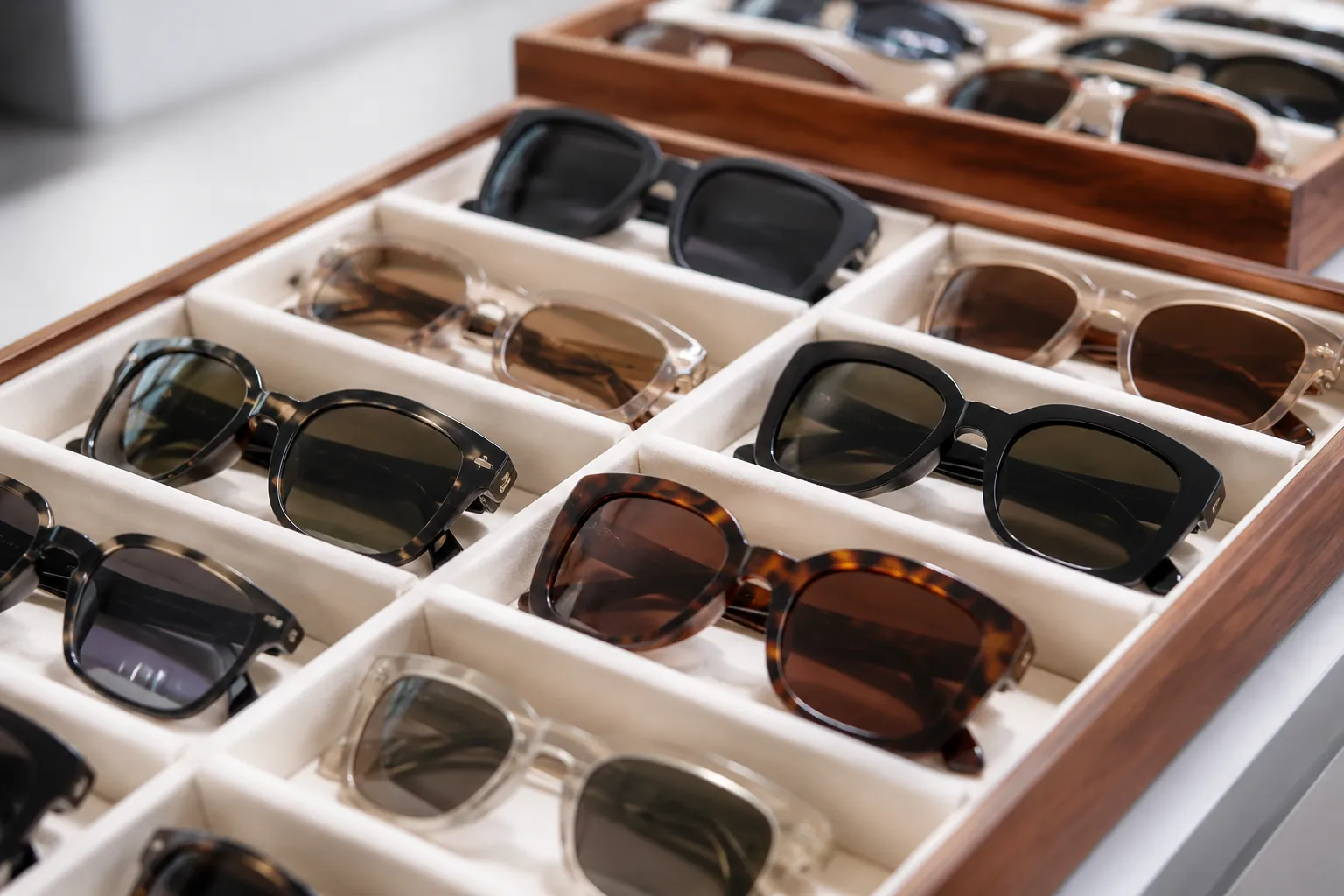
This guide is for distributors, importers, and retail suppliers that need sunglasses they can test, reorder, and supply without guesswork. It covers SKU planning, materials, color ratios, lens specs, logo methods, compliance, QC, packaging, and reorder quantities. The goal is simple: start with controlled MOQ tests, prove demand by SKU, then scale the winners with clear specifications and fewer approval problems.
Start With the Buyer You Actually Serve
A distributor stock program should not start with dozens of frame shapes. It should start with the customers you invoice and the channels they serve. A beach shop, convenience chain, fashion boutique, optical promotion buyer, and outdoor retailer may all ask for "good sellers." They do not need the same product.
Split your customer base into buying groups before you select SKUs. Impulse retail needs sharp price points, simple packaging, hang tags, barcodes, and display-ready cartons. Fashion retail cares more about shape, color, finish, and seasonal refresh. Sport and outdoor buyers focus on fit stability, lens category, wrap angle, temple grip, polarized options, and market standards such as ANSI Z80.3 or AS/NZS 1067.
Keep the first range narrow. A practical opening program may include 12 to 24 SKUs: 4 to 6 frame shapes, several commercial colors, and one or two lens options per shape. If your sales team cannot explain the difference between two models in a few seconds, the range is probably too crowded.
Blunt rule: most stock risk starts with color. Black, matte black, tortoise, brown, smoke, and other neutral colors usually deserve the first money. Bright colors, flash mirrors, and unusual gradients should earn their place through small tests.
Build the Range Like a Shelf Plan, Not a Mood Board
For repeat wholesale sales, every style needs a job. Do not select frames only because they look different in a catalog. Choose them because they cover a face fit, price point, customer type, display role, or performance need.
A balanced opening range can combine injection-molded models for entry pricing, acetate styles for higher perceived value, and sport or wrap styles where fit matters. That mix gives sales teams enough variety without creating a warehouse full of slow movers.
| Range role | Typical frame choice | Recommended opening depth | Main QC watch point |
|---|---|---|---|
| Volume basic | Wayfarer, square, soft rectangle | 3 to 5 colors; keep the largest share in black or matte black | Hinge tightness and lens seating |
| Fashion driver | Cat-eye, oval, narrow rectangle | 2 to 4 colors; cap seasonal colors at test quantity | Color consistency and surface scratches |
| Outdoor seller | Wrap, semi-wrap, rubber nose pad style | 2 to 3 colors; gray or brown polarized options where required | Temple curve, nose fit, lens distortion |
| Premium look | Acetate, metal trim, metal logo plate | 2 to 3 colors; avoid excessive lens variants | Polishing, hinge alignment, logo plate placement |
Limit experimental SKUs in the first buy. If you open with 20 SKUs, put most of the quantity into commercial colors and proven shapes. Reserve a smaller share for controlled tests. Novelty is useful. Overstock is not.
LumiShades can support mixed wholesale programs through injection molding, acetate cutting, CNC milling, lens tinting, laser engraving, pad printing, metal logo plate application, assembly, and QC. The value for distributors is specification control: color references, approved samples, packing instructions, and inspection criteria must be clear enough for repeat orders to match the approved range.
Set Color and Lens Pack Ratios That Protect Cash
Pack ratios should follow reorder probability, not personal taste. For a first order, keep the color count tight. Give the largest share to proven neutrals, then add tortoise, brown, smoke, crystal, or other tones that already sell in your market.
Treat bright seasonal colors, heavy mirror coatings, and unusual gradients as test quantities. They may sell. They may also sit. Make them prove demand before you give them depth.
Lens choice needs the same discipline. Gray lenses are common because they preserve neutral color perception. Brown lenses can improve contrast and pair well with tortoise and brown frames. Green lenses create a classic look. Mirror lenses sell well on displays, but they add SKU complexity and show scratches more easily if the packaging is weak.
- Checkout retail: use simple smoke gray or brown lenses; add only one mirror option unless the lens surface is well protected.
- Fashion accounts: test gradient lenses, transparent frames, and seasonal colors in controlled quantities before adding depth.
- Outdoor accounts: prioritize polarized options where requested, correct lens category, stable fit, and darker gray or brown lenses.
- Private-label programs: keep core frame colors stable and refresh lens tint, temple print, pouch color, or hang tag design seasonally.
At LumiShades, MOQ can start at 50 pairs per design. That lets a distributor test colorways before committing to larger production. Final pricing depends on frame material, lens type, polarization, decoration, packaging, testing, inspection requirements, and order quantity. Use low-MOQ orders to find the winners. Scale only when key accounts place real orders or reorder history supports the forecast.
Choose Materials by Margin, Fit, and Damage Risk
Material choice affects cost, perceived value, returns, and how the frame feels in a shopper's hand. PC injection is common for entry-price programs. It is light and economical, but geometry, hinge design, temple thickness, and finish still decide whether the product feels acceptable.
TR90 is often chosen for flexibility. It suits sport, kids, and active-lifestyle ranges. Acetate gives richer color depth and a more substantial hand feel, but cutting, tumbling, polishing, and hinge setting add production time and manual QC work.
The question is not "which material is best?" The better question is: "which material can my customer sell at the required margin with acceptable claim risk?" A discount retailer selling sunglasses loose in bins may expose polished acetate to scratches before purchase. A resort or gift store selling from a controlled display may support a higher retail price.
| Material | Typical behavior | Production watch point | Best distributor use |
|---|---|---|---|
| PC injection | Light, economical, suitable for volume programs | Gate marks, hinge pin control, temple stiffness | Promotions, tourist retail, entry-price programs |
| TR90 | Flexible, durable feel, comfortable on face | Spring-back consistency and lens groove accuracy | Sport, kids, outdoor, active-lifestyle ranges |
| Acetate | Richer color, heavier hand feel, premium look | Polishing, lamination defects, hinge alignment | Boutiques, resorts, gift retail, higher-margin wholesale |
| Metal combination | Thin profile, premium appearance | Plating quality, screw torque, nickel control where applicable | Fashion accounts, gift retail, private-label lines |
Define QC expectations before production. Common checks include symmetrical temple opening, secure lens seating, smooth hinge movement, acceptable frame-front alignment, clean logo placement, and no obvious surface defects under normal viewing conditions. Agree exact tolerances in writing for the product and price level. Small defects get expensive after distribution because handling, credits, and replacements can cost more than the frame itself.
Control Decoration, Packaging, and Retail Details
Decoration is not just branding. It changes cost, lead time, defect risk, and perceived value. Laser engraving can be durable and clean on suitable materials, but contrast must be checked on the actual production color. Pad printing is economical and visible, but adhesion needs testing, especially on curved temples and coated surfaces.
Metal logo plates create a premium look, but they add placement, glue-control, and scratch-risk issues. Hot stamping can work on pouches and packaging. Printed hang tags often carry the clearest brand story, barcode, UV claim, lens category, and warning text.
Do not stack too many decoration methods on a first-order SKU. A temple pad print plus branded pouch may be enough for entry retail. A metal logo plate, custom cleaning cloth, and rigid case make sense only if the wholesale and retail prices support the cost. Decoration should improve sell-through, margin, or brand control. If it does none of those, cut it.
- Pad print: check adhesion with agreed tape or rub testing before approving bulk production.
- Laser engraving: confirm contrast on the exact production frame color and coating.
- Metal logo plate: define placement reference points and inspect for tilt, glue overflow, and scratches.
- Hang tag: approve barcode scanning, UV wording, lens category, warning text, country-specific labeling, and brand copy before printing.
- Carton plan: define inner box quantity, master carton quantity, gross weight range, carton marks, and SKU separation before packing starts.
Packaging should match the sales channel. Bulk polybags may work for some promotions. Retail distributors usually need hang tags, barcode labels, protective sleeves or microfiber pouches, and export cartons strong enough for normal international handling. If you use mirror lenses, add lens protection. Visible scratches at delivery become immediate retailer claims.
Put Compliance Specs on the PO
Compliance requirements belong on the purchase order, not buried in an email thread. Match them to the destination market. Common requests include CE with EN ISO 12312-1 for many European programs, ANSI Z80.3 for U.S. non-prescription sunglasses, AS/NZS 1067 for Australia and New Zealand, REACH chemical restrictions for Europe, and FDA registration or listing documentation where applicable for the United States. Buyers may also request ISO 9001 or BSCI documents for factory management or social compliance files.
Do not treat compliance as a generic claim. Define the destination market, lens category, UV claim, visible light transmission requirements, frame material, nickel release expectations for metal parts where applicable, labeling language, packaging language, and test report requirements before production.
If you sell into multiple regions, do not assume one hang tag or warning label works everywhere. It often does not.
- State the destination market for each SKU on the PO.
- List the required standard or document: CE EN ISO 12312-1, ANSI Z80.3, AS/NZS 1067, REACH, FDA registration or listing documentation, ISO 9001, or BSCI as applicable.
- Confirm lens category, UV400 wording, polarization claim, and visible light transmission information before artwork is printed.
- Approve hang tags, warning labels, barcode labels, retail packaging, and carton marks before production packing.
- Keep test reports, inspection records, shipment documents, PO numbers, and SKU codes connected in one file for traceability.
This is routine work. It prevents expensive corrections later. A distributor serving mixed markets should keep separate approved artwork files by region instead of asking the factory to "use the normal label." That phrase causes problems.
Use MOQ, Price Breaks, and Reorder Math Carefully
A good distributor program uses MOQ as a testing tool, not only as a purchasing hurdle. With LumiShades, 50 pairs per design can be used for market tests, sales samples, new color trials, or key-account presentations. Confirm sample timing and bulk timing for each order. Material, lens tinting, polarization, decoration, packaging, testing, inspection, and order complexity all affect the schedule.
Price breaks matter. They can also lure buyers into overstock. A lower unit price helps only if the SKU turns. If you buy too deeply into the wrong lens color or frame finish, the savings disappear through storage, markdowns, slow cash recovery, or retailer credits.
| Order level | Best purpose | Buyer action | Main risk |
|---|---|---|---|
| 50 pairs/design | Market test, sales samples, new color trial | Send to key accounts and collect written feedback or opening-order interest | Higher unit cost and limited immediate stock |
| 300 pairs/design | First commercial stock | Use for proven basics and early wholesale demand | Too many designs can split demand |
| 1000 pairs/design | Repeat wholesale seller | Lock packaging, QC standard, compliance files, and carton plan | Forecast error becomes more expensive |
| 5000+ pairs/design | Chain rollout or established program | Negotiate price, delivery window, inspection plan, and staged shipment if needed | Wrong specification ties up significant cash |
Use a simple reorder formula: average weekly sales × replenishment lead time in weeks + safety stock. Replenishment lead time should include order approval, production, inspection, freight, customs, receiving, and allocation. Safety stock should reflect seasonality, customer ordering behavior, and stockout risk. Use real sales by SKU, not total category sales. One black square frame may reorder quickly while a similar mirrored version stalls.
Make Sampling, Approval, and Reorders Repeatable
Samples should answer production questions. They should not only look good on a desk. Check frame weight, temple tension, hinge smoothness, lens seating, lens color, logo placement, pad print adhesion, engraving depth, nose fit, and packaging fit. Then compare the sample with the target retail price and expected wholesale margin. If the math does not work, change the specification before bulk production.
Use a written approval checklist. Compare left and right temple opening. Check whether the frame sits flat on a level surface. Press lightly around the lens rim to detect movement. Inspect transparent frames under daylight and indoor light because color shifts show more easily. Measure logo position from a defined reference point instead of approving by eye. Test barcode scanning before cartons are packed.
The best wholesale sunglasses programs are built for repeat orders before the first shipment leaves the factory. Keep a live SKU sheet with frame code, material, color reference, lens category, lens color, polarization status, logo method, packaging, compliance market, carton quantity, approved sample date, and last order price. Send that sheet with every reorder. Do not rely on old email chains.
For seasonal planning, place trial orders early enough to allow sampling, artwork approval, production, inspection, freight, customs, receiving, and allocation. Air freight can save an urgent launch, but it can destroy margin on low-price sunglasses. Review dead stock without emotion. If a SKU does not move after a full selling cycle, do not reorder it because the sample looked good in the showroom. Replace it with a tested color in a proven shape. Distribution rewards discipline.
Have a custom sunglasses project in mind?
Send us your styles, target market and quantities and we will return a detailed quote with MOQ, lead time and a sample plan.
Get a QuoteWhy source this from Wenzhou with LumiShades
Wenzhou in Zhejiang Province is widely regarded as China’s eyewear manufacturing capital, producing a large share of the world’s sunglasses. That concentration matters to buyers: a deep local supply chain for acetate sheet, hinges, lens blanks, plating and packaging means shorter component lead times, easier color and material matching, and a workforce with decades of eyewear-specific skill. LumiShades has manufactured in this ecosystem since 2009, and our vertical integration — in-house injection molding, acetate cutting, CNC milling, lens tinting, decoration and quality control — means no part of your order is quietly subcontracted to a workshop you cannot audit.
For international buyers, that vertical control translates into accountability. When a single factory owns every step, defects are traced and fixed at source rather than bounced between vendors, and your specifications survive intact from first sample to bulk. For procurement review, buyers can request process records, approved samples, quality checkpoints and project-specific compliance files before placing a bulk order. Required testing and documentation are confirmed against the destination market and product specification rather than assumed from a generic certificate list. Explore our manufacturing capabilities and quality control process to see how this works in practice.
Frequently asked questions
What is a sensible first order size for a sunglasses distributor? Start with a controlled range, usually 12 to 24 SKUs, rather than a wide catalog. Use 50 pairs per design for uncertain shapes, colors, or lens options. Move core SKUs to larger quantities only when key accounts place opening orders, sales reps confirm repeat interest, or early sell-through data shows the SKU is worth stocking.
How should I brief LumiShades before requesting samples? Send the intended market, target wholesale and retail price, frame material, preferred lens color and category, polarization requirement, logo method, packaging type, compliance standard, barcode or labeling needs, and estimated order quantity. Also state whether the sample is for design approval, key-account selling, compliance testing, or production confirmation.
Which compliance standards should I request for overseas markets? Match the documentation to the destination market and put it on the PO. Common requirements include CE EN ISO 12312-1 for many European programs, ANSI Z80.3 for U.S. non-prescription sunglasses, AS/NZS 1067 for Australia and New Zealand, REACH for Europe, and FDA registration or listing documentation where applicable for the U.S. Confirm lens category, UV wording, labeling, and warning text before hang tags or packaging are printed.
How should I choose pack ratios for frame colors? Put most opening stock into commercial neutral colors such as black, matte black, tortoise, brown, smoke, crystal, or other proven tones for your market. Treat bright colors, flash mirrors, and unusual gradients as test quantities. Review sell-through by SKU, not by style family, before increasing depth on any color.
When should I move from 300 pairs to 1000 or 5000+ pairs per design? Move up only after the SKU has real demand evidence: repeat orders, strong sell-through, or committed customer orders. Use the formula average weekly sales × replenishment lead time in weeks + safety stock. Include production, inspection, freight, customs, receiving, and allocation in the lead time calculation.
What QC points should be approved before bulk production? Approve the production sample for frame color, lens color, lens category, polarization if required, hinge feel, lens seating, temple alignment, logo position, decoration adhesion, packaging fit, barcode scan, and labeling. Record the approved sample date and keep photos or a sealed sample for comparison during inspection.
Can I mix injection, acetate, lens tinting, and logo decoration in one program? Yes, but the program needs clear specifications by SKU. Record frame material, color reference, lens tint, polarization status, logo method, packaging, compliance market, and carton plan for each SKU. Mixed programs work best when approvals, QC criteria, and reorder sheets are controlled from the start.
Ready to start?
Explore our rimless sunglasses or request a quote — our sales team replies within 12 hours.
Request a Quote