
Injection-Molded Frames vs Acetate: When to Choose
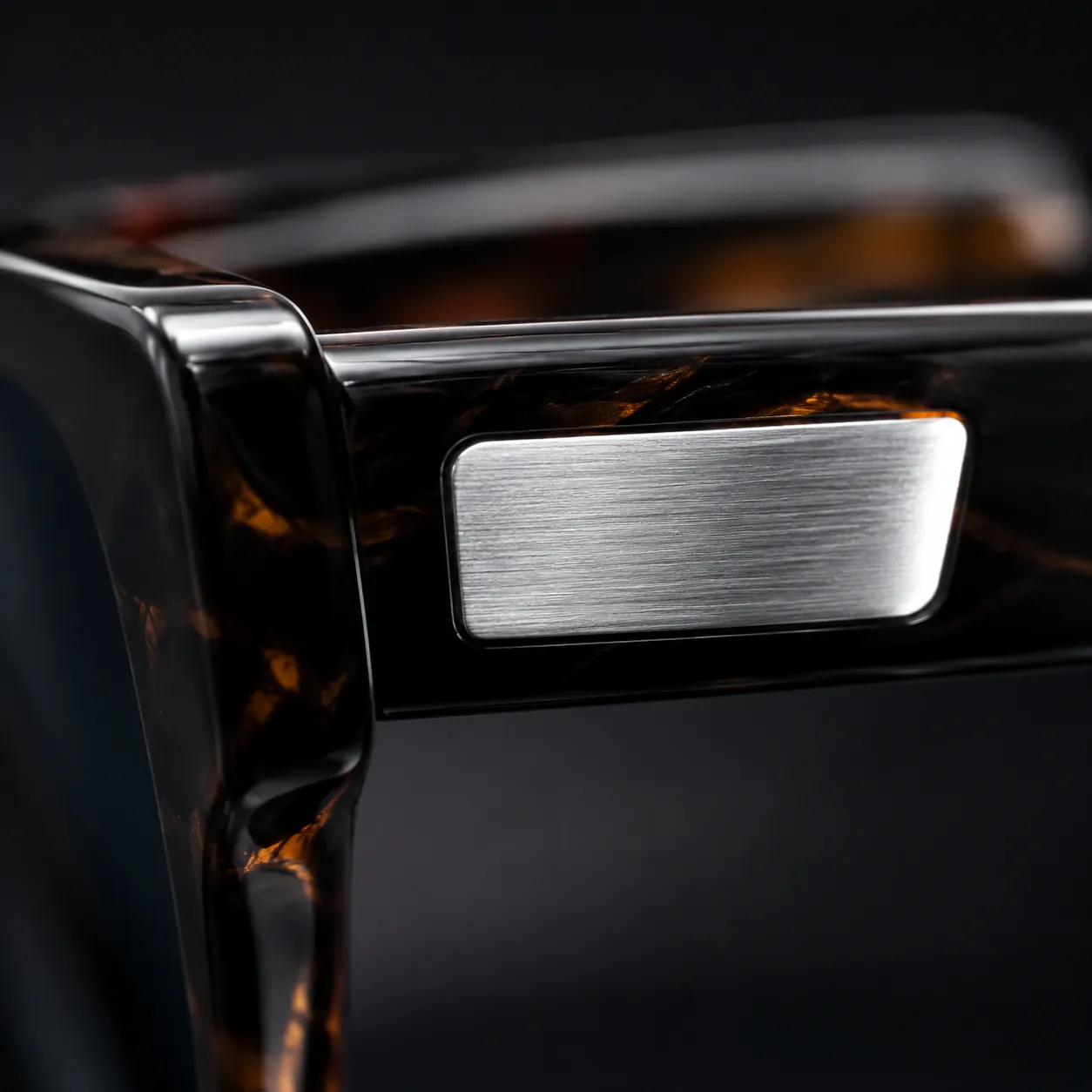
This guide is for brand owners, importers, distributors, and retailers buying custom sunglasses in volume. Choosing the wrong frame material can raise cost, slow approvals, and create avoidable variation between sample and bulk production. The aim is simple: compare injection-molded frames and acetate based on program needs, production risk, and sourcing practicality. The focus is on promotional, retail, and private-label programs where speed, consistency, and cost control matter more than a hand-finished boutique look.
Start with the program, not the material
Many buyers start with the wrong question: which material looks better? Start with the commercial brief instead. What must the program do? Hit a target cost. Ship on a fixed date. Repeat with consistent appearance. Offer several colorways in one base shape.
For those goals, injection-molded frames often have the edge. The process is built for repeat production from a mold. Once the tool, material, and color standard are approved, the factory can usually reproduce the same geometry and finish with fewer manual variables than a frame made from acetate sheet.
Acetate still has a place. A clear one. It works when the design brief depends on visible material depth, laminated color effects, or a heavier premium feel. But that should be a deliberate product decision, not a default choice.
In commercial buying, injection is often the better fit for promotional giveaways, price-sensitive retail programs, and private-label styles that need repeat orders with controlled variation. The reason is plain: molded production usually involves fewer hand-finishing steps than acetate. Fewer hand processes mean fewer chances for drift in shape, polish, fit, and cosmetic appearance.
A practical rule: start with injection when the business goal is speed, repeatability, and budget control. Move to acetate only when the product story clearly justifies the extra material and labor cost.
How injection molding changes the workflow
Injection-molded sunglasses are typically made by heating plastic resin, injecting it into a steel mold, cooling the part, and ejecting it as a near-finished component. The front and temples may be molded separately, then trimmed, decorated, assembled with hinges and lenses, and packed. Compared with acetate production, this usually removes several labor-heavy steps tied to sheet cutting, edge finishing, polishing, and hand fitting.
The main buying advantage is not just speed. It is process control. Because the core shape comes from a mold, frame geometry is usually more repeatable from batch to batch than a style that depends heavily on manual finishing. That can help with lens fit, left-right symmetry, hinge position, and reorder consistency.
Exact tolerances still vary by design, material, tool condition, and factory controls. Buyers should ask the supplier to define critical dimensions and inspection standards for the specific style. Do not rely on broad tolerance claims.
Typical process steps for an injection style include:
- Material selection: choose the resin based on stiffness, flexibility, weight, surface finish, and color requirements. Commercial options may include injection-grade nylon blends, polycarbonate, or other polymers depending on the target application.
- Mold setup: prepare the tool for the frame front and temple components. Tool design affects part quality, cycle stability, and surface appearance.
- Trial and adjustment: review sample shots for warpage, flash, sink marks, short shots, and hinge-seat accuracy.
- Decoration: apply branding or cosmetic treatments such as pad printing, hot stamping, laser marking, or attached logo hardware after the frame passes appearance review.
- Assembly and QC: fit hinges, screws, and lenses, then check alignment, cosmetic quality, and packing accuracy.
This production path suits bulk programs for one reason above all: there are usually fewer manual decisions between sample approval and bulk output. That helps reduce avoidable variation.
Injection vs acetate: buyer-side tradeoffs
| Decision factor | Injection-molded frame | Acetate frame |
|---|---|---|
| Best fit | Promotional, value retail, replenishable private-label styles | Fashion-led collections, premium looks, thicker statement frames |
| Dimensional control | Generally more repeatable because shape is tool-defined | More dependent on cutting, polishing, and hand-finishing consistency |
| Sampling and approval flow | Often simpler when based on an existing mold or a proven construction | May require more appearance and fit review because of manual finishing variables |
| Bulk lead time | Often easier to schedule for repeat programs once tooling and specs are approved | Can run longer when polishing, fitting, and appearance sorting add labor |
| Commercial MOQ logic | Commonly works well for volume programs and repeat replenishment | Usually less efficient when labor content is high relative to order size |
| Cost behavior | Often more cost-efficient at scale, especially on standardized builds | Usually higher because of sheet material cost and finishing labor |
| Visual effect | Clean, consistent surface; can look retail-ready with the right finish | Greater material depth, richer lamination effects, and a heavier premium feel |
The shortcut is simple. Use acetate when the frame itself carries a big part of the brand story. Use injection when the priority is repeatability, lead-time control, and cost discipline.
Where the savings really come from
The savings from injection are not limited to the quoted frame price. Buyers should look at total program cost: development time, engineering changes, labor content, scrap exposure, rejection risk, and the cost of reorder inconsistency. Injection often performs well because it can reduce several of those variables at once.
In many programs, the cost advantage comes from process structure more than raw material price. When parts are molded close to final shape, the factory may need less manual grinding, edge cleanup, and corrective fitting than with acetate. That can reduce labor and help stabilize output.
The exact cost difference still depends on frame design, tool investment, material, lens specification, decoration method, packaging, and order volume. No shortcut replaces a proper quote comparison.
Concrete examples of where the money goes:
- Less labor per unit: molded parts are typically closer to finished geometry, so there is often less hand shaping and polishing.
- Lower scrap exposure: acetate sheet cutting can create offcut waste, especially on larger or thicker styles.
- Fewer fit corrections: when the mold and process are stable, lens seating and temple alignment may require less adjustment.
- Better reorder economics: repeat production from an approved mold is usually easier to standardize than re-creating a hand-finished appearance from sheet stock.
Injection is not automatically the lowest-cost option in every case. Complex tooling, specialized coatings, multi-step decoration, metal trim, or premium lenses can all raise the price. Even so, for opening-price-point retail, promotional programs, and repeat private-label business, injection often gives sourcing teams tighter control over the main cost drivers.
Lead time: why injection is easier to plan
Lead time is not only about machine capacity. It is also about process complexity. Acetate production often includes more variable stages such as sheet selection, cutting, milling, tumbling, polishing, manual fitting, and appearance sorting. Each step can add queue time, rework, or approval delays.
Injection usually compresses the workflow because the core part shape comes directly from the mold. Fewer touchpoints. Fewer chances for delay.
A typical commercial schedule for injection sunglasses may include:
- Specification review: confirm market, lens category, frame size, logo method, finish, packaging, and compliance requirements.
- Sample production: produce a development sample based on an existing style, modified tool, or new tool plan.
- Buyer approval: sign off on dimensions, fit, color reference, decoration placement, and lens appearance.
- Bulk production: run molding, decoration, assembly, inspection, and packing against the approved sample standard.
- Final QC and shipment: verify quantity, labels, appearance, packing method, and shipment documents.
For buyers working toward a promotional date or a retail reset, predictability matters as much as speed. A process with fewer manual finish points usually has fewer places where timing can slip. This matters even more when the order includes multiple SKUs, because one delayed colorway or logo variation can affect the full shipment.
Buyers should still ask for a written production timeline, sample approval deadline, and shipping cutoff. Material choice helps. Scheduling discipline matters just as much.
Finish and branding: what injection can and cannot do
Some buyers still treat injection as a basic giveaway option. That is too narrow. Injection cannot fully copy the visual depth of thick laminated acetate, but it can support a wide range of commercial designs that work well for retail and private-label programs.
Common decoration and finish options include pad printing, laser marking, hot stamping, matte or gloss finishes, translucent colors, gradient lens tints, and applied logo hardware where the construction allows it. For many programs, that is enough to create a strong shelf presentation without the extra labor tied to acetate finishing.
Material behavior also affects wear and design choices. Injection frames are often selected for lighter weight and repeatable shape in production. Acetate is often selected when the brief depends on richer visual depth, a more substantial hand feel, or layered color effects visible at the edge and surface.
Use injection when the design needs:
- a clean square, round, sport, or wrap shape
- consistent dimensions across repeat orders
- lightweight everyday wear
- simple, scalable branding
- multiple colorways with controlled production variation
Use acetate when the brief depends on visible material richness, laminated visual effects, or a premium tactile impression that customers are expected to notice and pay for.
Compliance and QC: where material choice affects risk
Material choice should never be separated from compliance and quality control. A cheap frame that fails market requirements is not a cheap buy. The same applies to a frame that looks fine in sampling but cannot be reproduced consistently in bulk.
For sunglasses, buyers commonly review standards and management systems such as CE EN ISO 12312-1, ANSI Z80.3, AS/NZS 1067, REACH, FDA registration, ISO 9001, and BSCI. These do not serve the same purpose. Product test standards such as CE EN ISO 12312-1, ANSI Z80.3, and AS/NZS 1067 relate to sunglass performance requirements in relevant markets. REACH concerns chemical compliance where applicable. FDA registration may be part of importer or supplier documentation review for the U.S. market. ISO 9001 relates to quality management systems, and BSCI relates to social compliance auditing.
- CE EN ISO 12312-1: relevant for sunglasses sold into markets that require or recognize this product standard.
- ANSI Z80.3: commonly referenced for U.S. sunglasses performance requirements.
- AS/NZS 1067: relevant for Australia and New Zealand market requirements.
- REACH: important where chemical substance compliance applies.
- FDA registration: often checked as part of U.S. supply documentation, depending on importer requirements.
Injection can reduce some QC risk because tool-based production is usually easier to standardize than hand-finished sheet construction. Even so, buyers should ask for a pre-production sample, a signed approval standard, and a written QC checklist. Typical checkpoints include lens category, lens tint consistency, logo position, hinge function, screw tightness, frame alignment, surface defects, carton labeling, and pack count accuracy.
One useful QC question cuts through a lot of noise: can this exact style be reproduced to the same approved standard on the next order? Injection often makes that easier. Still, the answer should be backed by documentation, not assumption.
A practical rule for choosing between them
If the order is a fast-moving commercial program, first test whether injection can meet the design brief. Move to acetate only if the style truly depends on acetate's depth, thickness, or premium hand feel.
Use injection-molded frames when: the cost target is tight, reorder consistency matters, branding is straightforward, and the delivery window is fixed.
Use acetate when: the frame itself is central to the selling story, visible material richness matters more than production speed, and the margin can absorb higher labor and material cost.
This is where many bulk programs are won or lost. Promotional buyers usually need speed and budget control. Retail chains usually need repeatability. Private-label programs often need both. In those cases, injection-molded frames are often the more practical commercial choice.
Acetate still belongs in the assortment. Just use it where the customer can clearly see what the extra cost is paying for.
Have a custom sunglasses project in mind?
Send us your styles, target market and quantities and we will return a detailed quote with MOQ, lead time and a sample plan.
Get a QuoteWhy source this from Wenzhou with LumiShades
Wenzhou in Zhejiang Province is widely regarded as China’s eyewear manufacturing capital, producing a large share of the world’s sunglasses. That concentration matters to buyers: a deep local supply chain for acetate sheet, hinges, lens blanks, plating and packaging means shorter component lead times, easier color and material matching, and a workforce with decades of eyewear-specific skill. LumiShades has manufactured in this ecosystem since 2009, and our vertical integration — in-house injection molding, acetate cutting, CNC milling, lens tinting, decoration and quality control — means no part of your order is quietly subcontracted to a workshop you cannot audit.
For international buyers, that vertical control translates into accountability. When a single factory owns every step, defects are traced and fixed at source rather than bounced between vendors, and your specifications survive intact from first sample to bulk. We back this with 15+ years of experience, shipments to 60+ countries, more than 5 million pairs produced per year and a 98.5% on-time delivery rate. Our certifications — CE EN ISO 12312-1, FDA registration, ANSI Z80.3, AS/NZS 1067, REACH, ISO 9001 and BSCI audit — mean the compliance documentation your market requires already exists. Explore our manufacturing capabilities and quality control process to see how this works in practice.
Frequently asked questions
At what order size does injection molding usually become the better commercial choice? There is no universal break point because the answer depends on tooling status, frame complexity, decoration, and the target cost. In practice, injection becomes more attractive when the program is repeatable, the style may be reordered, or the order volume is high enough to benefit from mold-based consistency. Ask suppliers to quote both options on the same specification and compare total program cost: tooling or development charges, unit price, sample cost, lead time, and expected reorder terms.
Can injection-molded sunglasses still look retail-ready, not just promotional? Yes. Injection-molded frames can be fully suitable for retail if the design, finish, lens appearance, and branding are handled well. Ask the supplier for production samples from comparable retail programs, not just studio photos. Review surface finish, color consistency, logo execution, hinge fit, and lens appearance under normal store lighting. If retail presentation matters, approve against a physical sample and keep that sample as the bulk reference standard.
What is the main risk if I choose acetate for a deadline-driven program? The main risk is added process variability from manual finishing. Acetate usually involves more handwork in cutting, polishing, fitting, and cosmetic sorting, which can increase the chance of rework or timeline slippage. If you still choose acetate, reduce the risk by locking the color reference early, approving a sealed sample, confirming inspection criteria in writing, and asking the supplier for milestone dates for finishing, assembly, and final inspection.
How should I compare quotes fairly between injection and acetate frames? Use the same specification sheet for both quotes. That means matching frame dimensions, lens type, UV requirement, logo method, finish, packaging, and test requirements. Then compare: 1) sample cost and sample lead time, 2) tooling or development charges, 3) unit price at the actual order quantity, 4) production lead time, 5) inspection standard, 6) expected variation on reorders, and 7) compliance support documents. A lower unit price is not the better offer if it creates more approval rounds, higher defect risk, or weaker repeatability.
What compliance documents should I ask for before confirming the order? Ask for documents that match your market and the exact product specification. For sunglasses, that may include test reports or supporting records for CE EN ISO 12312-1, ANSI Z80.3, or AS/NZS 1067, depending on where the goods will be sold. If chemical compliance applies, ask for REACH-related documentation. If your importer requires it, request FDA registration details. You can also ask whether the factory maintains ISO 9001 and BSCI records. Before paying the balance, confirm that the documents relate to the actual style, lens category, and material configuration you are buying, not to an unrelated sample.
Ready to start?
Explore our shield & oversized sunglasses or request a quote — our sales team replies within 12 hours.
Request a Quote