
When UV400 Outperforms Polarized in Bulk Orders
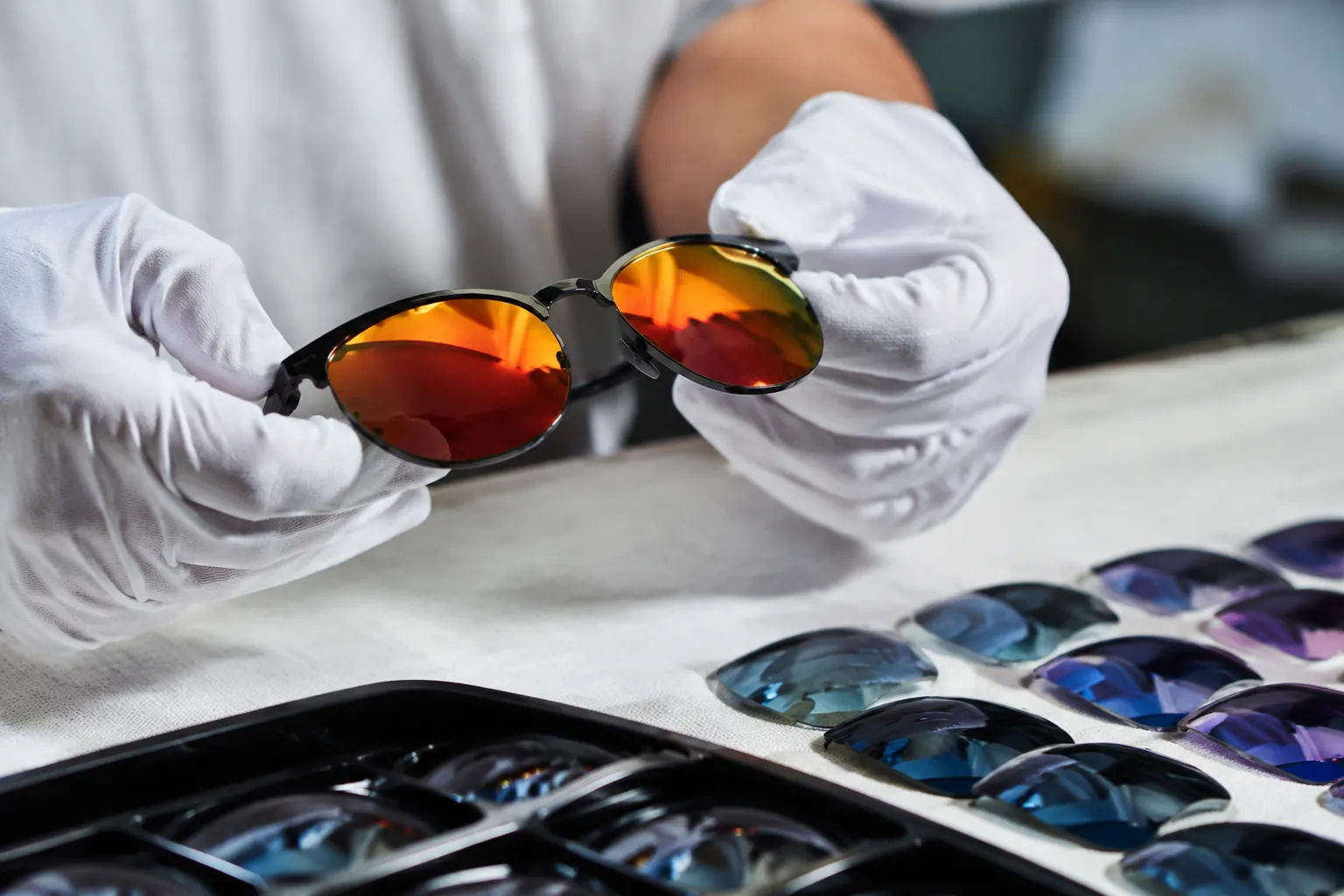
This guide is for brand owners, importers, distributors, and retail buyers building bulk sunglass programs where price target, lead time, and channel fit matter more than stacking on premium lens features. In many programs, non-polarized UV400 is the right spec. Not a fallback. UV400 covers ultraviolet protection up to 400 nanometers. Polarization is a separate glare-control feature. That distinction matters in commercial buying. For entry retail, event, and fashion-led assortments, buyers can meet the core protection expectation while keeping the product easier to source, approve, and execute consistently.
Start With the Buying Decision, Not the Feature List
Many buyers start with the wrong question: should every sunglass program include polarization? In bulk sourcing, the better question is simpler. What problem is the product meant to solve at retail, in a campaign, or within the assortment?
UV400 and polarization do different jobs. UV400 refers to ultraviolet protection up to 400 nanometers, covering UVA and UVB. That is the baseline protection claim buyers usually expect in a legitimate sunglass program. Polarization does something else. It reduces reflected glare from flat surfaces such as water, roads, glass, and painted vehicle surfaces.
One is the core requirement. The other is use-case driven.
That difference changes the buying decision. If you are building a low-price checkout item, an event giveaway, or a trend capsule with fast color turnover, non-polarized UV400 can be the better commercial choice. You still cover the main sun-protection expectation, but you avoid adding a feature that may not improve sell-through or perceived value in that channel.
At the factory level, polarized lenses usually add material and QC variables because the polarized component must be built into the lens consistently. A standard non-polarized UV400 lens program is often easier to sample and approve because the focus stays on tint, visible appearance, surface quality, branding, and compliance documentation.
That is why experienced buyers do not treat polarization as a default. They specify it when the end use, retail story, and price point support it. Not before.
Where Non-Polarized UV400 Wins Commercially
Non-polarized UV400 usually works best in three common commercial scenarios.
- Budget retail under a fixed shelf price. If the retail price is tight, every added process affects margin. A non-polarized lens can help keep the product on target while preserving the core protection claim.
- Promotional and event programs. Giveaways, tourism merchandise, beverage promotions, and branded activations usually care more about logo visibility, color execution, and delivery timing than glare reduction.
- Fashion-first collections. In trend-led assortments, buyers often prefer to spend on frame finish, lens color, trim details, or packaging instead of polarized lens construction.
There is also a practical end-user reason to choose non-polarized. Polarized lenses can affect the visibility of some LCD and OLED screens at certain angles. Dashboards, payment terminals, infotainment displays, or phones may appear darker or show rainbow-like patterns. For casual daily wear, some users prefer non-polarized lenses because screens stay easier to read.
The rule is straightforward: if glare reduction is not part of the product promise, do not force polarization into the bill of materials.
- Retail logic: Keep lower-ticket SKUs aligned with style-and-price buying behavior.
- Promo logic: Preserve budget for branding, packaging, and delivery-sensitive volume buys.
- Merchandising logic: Reserve premium lens features for the smaller part of the line that can support a higher ticket.
- User logic: Avoid preventable screen-visibility complaints in casual-use products.
Cost, MOQ, and Lead-Time Logic Buyers Actually Use
In bulk programs, lens choice affects more than nominal lens cost. It also changes sampling complexity, approval speed, and QC checkpoints. Buyers usually see the difference once the order moves past sample quantities and into real production planning.
| Program Type | Typical Lens Choice | Commercial Logic | Typical MOQ/Price Logic | Lead-Time Effect |
|---|---|---|---|---|
| Budget chain retail | UV400 non-polarized PC | Supports tight cost control while maintaining the expected protection claim | MOQ and pricing vary by supplier, mold status, decoration, and packaging | Usually simpler approval flow than polarized programs |
| Promotional giveaway | UV400 non-polarized PC or acrylic | Works well where branding, appearance, and delivery are the main priorities | Low MOQs may be possible on simple programs, but economics depend on customization and packing method | Often fewer lens-specific approval points |
| Fashion capsule | UV400 non-polarized, gradient, or mirror tint | Lets budget shift toward frame finish, lens appearance, and decoration | MOQ depends on color matching, decoration method, and material sourcing | Can be easier to manage for seasonal launches |
| Fishing or marine specialty | Polarized UV400 | Glare reduction is part of the use case and product claim | Higher lens cost is more defensible when performance is central to the offer | Additional checks are justified by the end use |
The right comparison is not just polarized versus non-polarized on a per-piece basis. Buyers should ask how the lens choice changes the full program: sample approvals, replacement risk, test documentation, and the amount of rework a supplier may need if lens appearance is inconsistent.
Lead times follow the same logic. Non-polarized programs are often easier to move through approval because there are fewer feature-specific variables to review. Buyers still need to confirm lens appearance, branding, frame finish, and the compliance path. But there is one less performance claim to evaluate.
That does not mean polarized orders are slow or unsuitable. It means they should be specified when the use case justifies the added cost and process attention.
What to Specify on a Non-Polarized UV400 Lens
Removing polarization does not mean writing a loose spec sheet. Cheap programs fail when the lens spec is vague, not when the lens is basic. A non-polarized lens still needs a disciplined definition.
- UV protection claim: State UV400 clearly and tie it to the exact finished lens specification being purchased.
- Lens material: Confirm whether the lens is PC, acrylic, TAC, nylon, or another substrate. Do not assume it matches a past sample or quotation.
- Tint and appearance: Lock gray, smoke, brown, green, tea, gradient, flash mirror, or other fashion tints from approved physical samples. Photos are not a reliable approval standard.
- Visible light transmission target: Specify the target category or percentage range so appearance and intended classification stay aligned.
- Surface quality: Define acceptance criteria for scratches, flow marks, bubbles, haze, coating defects, and edge appearance before bulk production starts.
- Hard-coat expectation: Clarify whether a scratch-resistant coating is included and whether the target channel requires it.
- Logo method: Pad print, laser marking, hot foil, metal plate, or molded branding each affect cost, durability, and approval requirements differently.
Material detail matters. Polycarbonate is widely used in commercial sunglass programs because it is lightweight and common in value-oriented production. Acrylic may suit certain low-cost styles or visual effects, but buyers should check whether it fits the intended positioning and test requirements. TAC is more often associated with polarized constructions and should not be specified in a non-polarized program without a clear reason.
Buyers should also define what must match from sample to bulk. A lens should not be approved only as "dark gray" or "mirror blue." That is too loose. It should match the approved visual standard closely enough that the delivered order stays commercially consistent across cartons and replenishment runs.
Compliance Does Not Get Easier Just Because the Lens Is Non-Polarized
Some buyers assume non-polarized means simple compliance. Only partly. Polarization may be optional in many commercial programs, but UV performance, labeling, and market-specific testing still need to be handled correctly.
Depending on the destination market, relevant standards may include CE EN ISO 12312-1, ANSI Z80.3, and AS/NZS 1067. Material compliance may also require controls related to REACH or other applicable restricted-substance rules. A supplier may also present operational or social-compliance credentials such as ISO 9001, BSCI, or FDA registration, but buyers should not confuse those with product-specific compliance for the finished sunglasses.
The practical point is clear: a UV400 claim should be supported by documentation for the finished lens specification being ordered. If the lens material, tint, mirror treatment, or construction changes, the compliance file may need review or retesting depending on the market and the nature of the change.
Good buyers confirm the compliance path before mass production. That means defining the destination market, intended lens category, labeling requirements, test responsibility, and document-retention responsibility in writing. Non-polarized simplifies the feature set. It does not remove the need for disciplined documentation and verification.
Factory Process Details That Change the Outcome
Buyers often focus on styling and miss process capability. That is a mistake. In practice, the difference between a smooth order and a complaint-heavy order usually comes from production control, not from the concept sketch or catalog image.
For a non-polarized UV400 program produced in-house, the workflow commonly looks like this:
- Confirm mold status or CAD basis, frame color, lens tint, logo method, packaging, and destination market.
- Prepare sample color matching or sample tooling as required.
- Approve physical samples for fit, appearance, labeling, and lens look.
- Run frame production using the relevant process for the style.
- Produce, tint, or source lenses to the approved visual and compliance specification.
- Assemble frames and lenses, install hardware where applicable, apply branding, and carry out in-line inspection.
- Perform final QC, packing verification, and carton assortment checks before shipment.
Where do failures usually show up? Lens color variation against the approved sample. Branding misalignment on curved temples. Hinge tension inconsistency. Mirror-coating variation. Cosmetic defects on high-gloss surfaces.
These are standard factory risks. They are easier to control when the lens specification is simple, fixed early, and realistic for the target price point.
Non-polarized programs also remove one feature-specific checkpoint: there is no polarized layer performance claim to validate. That can make approvals more straightforward, but it does not remove the need for visual standards, QC checkpoints, and finished-product compliance review.
How to Decide SKU by SKU and Place the PO
Do not turn this into a brand-wide ideology. Make it a line-planning decision based on use case, price point, and what the end customer is actually paying for.
| If your SKU is... | Choose... | Reason |
|---|---|---|
| Low-price checkout item | UV400 non-polarized | Price sensitivity is usually higher than feature sensitivity |
| Event or campaign giveaway | UV400 non-polarized | Brand exposure, speed, and volume usually matter most |
| Trend fashion style | Usually UV400 non-polarized | Frame look, color, and branding tend to drive the sale |
| Driving, fishing, boating, or outdoor specialty | Polarized UV400 | Glare reduction is part of the real use case and product promise |
A practical assortment strategy is to keep non-polarized UV400 as the default for price-led or fashion-led SKUs, then add polarized versions only where the retail story and use case clearly support them. That helps buyers control complexity, keep the opening buy more flexible, and direct budget toward visible upgrades customers are more likely to notice in the target channel.
Before placing the PO, confirm the basics in writing:
- Target market and required test standard.
- Exact lens material, tint, and UV400 claim.
- Approved physical sample as the production reference.
- Decoration method and logo-position tolerance.
- MOQ structure by style, color, and packaging level.
- Sampling and production timing agreed by both parties.
- QC focus points for lens appearance, hinge feel, logo position, labeling, and carton assortment.
That is the case for non-polarized UV400. It is not a lesser product by default. In many bulk programs, it is the right product for the channel, the clearer specification to manage, and the more disciplined commercial choice.
Have a custom sunglasses project in mind?
Send us your styles, target market and quantities and we will return a detailed quote with MOQ, lead time and a sample plan.
Get a QuoteWhy source this from Wenzhou with LumiShades
Wenzhou in Zhejiang Province is widely regarded as China’s eyewear manufacturing capital, producing a large share of the world’s sunglasses. That concentration matters to buyers: a deep local supply chain for acetate sheet, hinges, lens blanks, plating and packaging means shorter component lead times, easier color and material matching, and a workforce with decades of eyewear-specific skill. LumiShades has manufactured in this ecosystem since 2009, and our vertical integration — in-house injection molding, acetate cutting, CNC milling, lens tinting, decoration and quality control — means no part of your order is quietly subcontracted to a workshop you cannot audit.
For international buyers, that vertical control translates into accountability. When a single factory owns every step, defects are traced and fixed at source rather than bounced between vendors, and your specifications survive intact from first sample to bulk. We back this with 15+ years of experience, shipments to 60+ countries, more than 5 million pairs produced per year and a 98.5% on-time delivery rate. Our certifications — CE EN ISO 12312-1, FDA registration, ANSI Z80.3, AS/NZS 1067, REACH, ISO 9001 and BSCI audit — mean the compliance documentation your market requires already exists. Explore our manufacturing capabilities and quality control process to see how this works in practice.
Frequently asked questions
Does UV400 without polarization still meet basic buyer expectations? Yes, in many mainstream programs it does. UV400 covers ultraviolet protection up to 400 nanometers, which is the core protection requirement buyers usually need to address first. Polarization is a separate glare-reduction feature, not a substitute for UV protection. Ask three questions: what market is the product for, what standard applies there, and is glare reduction part of the selling claim? If the answer to the third question is no, a non-polarized UV400 lens can be fully appropriate, provided the finished product is tested and documented to the relevant market requirement.
How much does skipping polarization matter on bulk cost? It depends on lens material, construction, coatings, decoration, packaging, and order size, so buyers should not rely on generic per-piece assumptions. The practical approach is to request side-by-side quotations for the same frame in both polarized and non-polarized versions, with the same packaging, branding, and delivery terms. Then compare more than unit price. Review sample cost, approval complexity, testing requirements, and replacement risk if appearance or performance does not match the approved sample. That gives a better program-level comparison than a simple lens surcharge.
Are non-polarized lenses better for promotional sunglasses? Usually yes, if the program goal is brand exposure rather than performance positioning. Promotional sunglasses are typically judged on logo execution, color, comfort, delivery timing, and budget control. In that context, non-polarized UV400 often gives the best balance of protection claim, commercial simplicity, and visual flexibility. Buyers should still confirm the destination market, applicable compliance standard, lens material, and packaging method before approval, because promotional product is not exempt from product requirements.
Can non-polarized sunglasses still be compliant in the EU, US, and Australia? Yes, provided the finished product is tested and documented against the applicable requirements for the destination market. Depending on where the goods will be sold, that may involve CE EN ISO 12312-1, ANSI Z80.3, or AS/NZS 1067, along with any relevant material controls such as REACH. The key buyer action is to confirm compliance on the finished specification being ordered, not on a similar past style. If the lens material, tint, coating, or labeling changes, ask the supplier whether the existing documentation still applies or whether review or retesting is needed.
What should I ask for in the sample stage? Ask for a physical sample that matches the intended production specification as closely as possible: frame material, frame color, lens material, lens tint, mirror or coating treatment if any, branding method, and packaging level. Also ask the supplier to state which market standard the sample is intended to meet, whether UV400 is supported by existing test documentation for that specification, whether a hard coat is included, and what visual tolerances will be used in bulk for lens color, logo position, and cosmetic defects. If you approve the sample, make sure it is referenced in writing as the production standard on the PO or approval record.
Ready to start?
Explore our round sunglasses or request a quote — our sales team replies within 12 hours.
Request a Quote