
Gradient Lenses: Margin Gain or QC Headache?
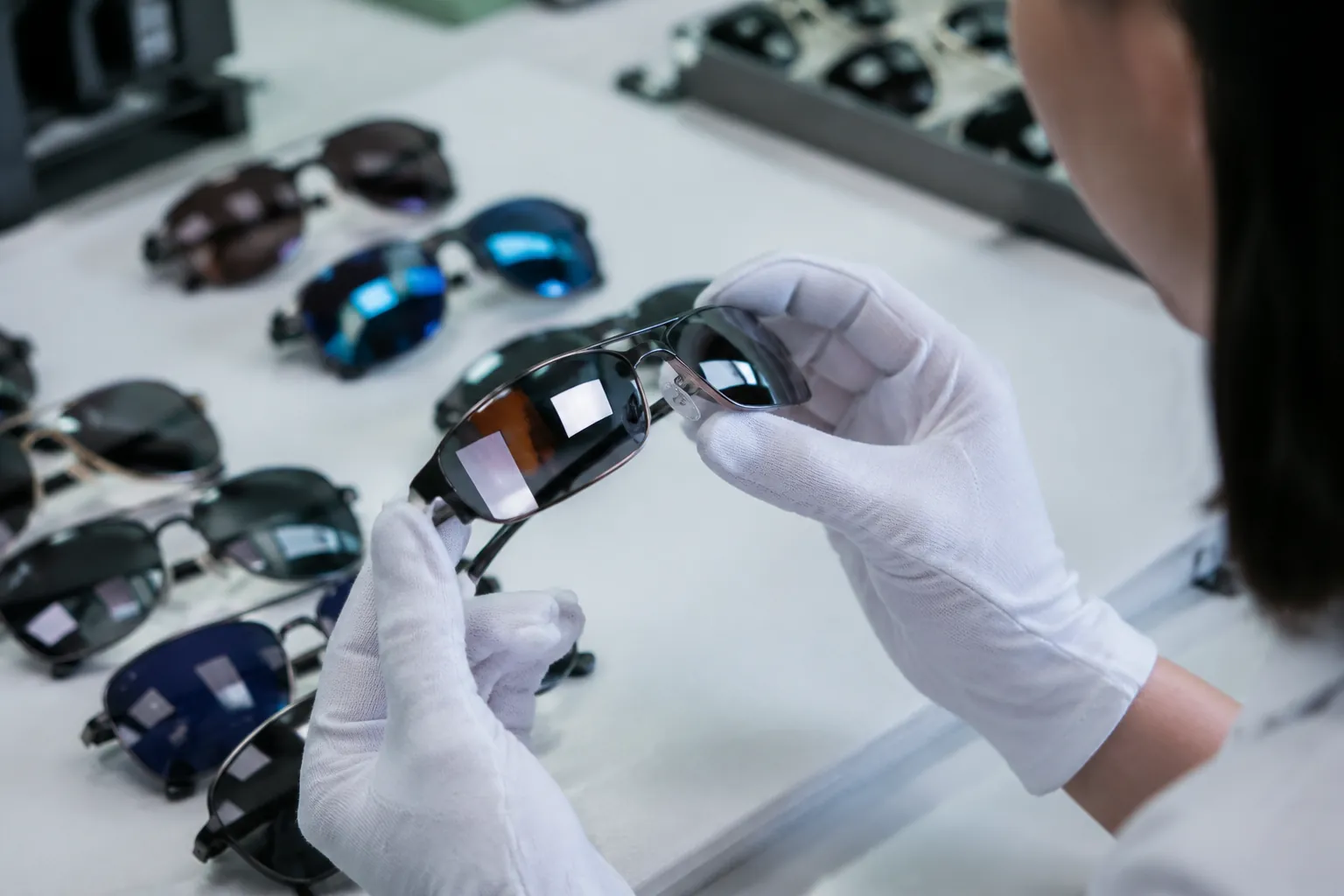
This guide is for brand owners, importers, distributors, and retail buyers deciding whether gradient lenses are worth the extra control work. Gradient lenses can raise perceived value and improve first-purchase appeal, especially in fashion and driving styles. They also create more room for complaints about shade match, visibility, and reorder drift. That is the real question. Not whether gradient looks good, but whether your supplier can repeat the same fade height, top darkness, bottom transmission, and left-right match across samples, bulk production, and repeat orders. This article explains where gradient can add margin, where it adds risk, and what to lock down before sample approval or reorder release.
Use gradient as a sales tool, not a default option
Gradient lenses often make a stronger first impression than solid tints. They add visual depth. They also leave more of the frame line, brow bar, rim detail, and eye area visible. In retail display and ecommerce photos, that can make a style look more premium without changing the frame tooling.
But the control burden is higher. A solid smoke lens is fairly simple to standardize: one darkness, one hue, one transmission range. A smoke gradient adds more variables: top darkness, bottom darkness, fade height, and fade smoothness. Small differences that look harmless in sampling can turn into returns once bulk arrives.
Gradient works best when the styling gain justifies tighter QC. In sourcing terms:
- Best fit: premium fashion programs, seasonal capsules, giftable styles, resort lines, and SKUs sold heavily through photography.
- Conditional fit: driving styles, women's acetate, and classic aviators where a brighter lower field helps wearability or display appeal.
- Poor fit: high-glare-use products, heavy-wrap sports styles, and low-price chain programs where reorder sameness matters more than styling nuance.
Order size also changes the answer. In a small trial run, gradient can be a manageable merchandising test. In a large carryover program, it becomes a repeatability problem. Can the factory hold an acceptable fade across multiple production days, material lots, and future reorders?
Treat gradient as a deliberate business choice. Not a default upgrade because it looks nicer. In a controlled program, it can lift sell-through. In a loose one, it creates avoidable subjectivity.
The complaint patterns that matter
Most gradient complaints are not about breakage. They are about expectation mismatch or pair mismatch. A pair can be technically wearable and still trigger returns because the fade looks wrong, feels too light, or does not match earlier stock.
- Left-right inconsistency. One lens has a higher fade line than the other, or one lower zone looks visibly lighter under controlled lighting. On aviators, semi-rimless, and rimless styles, even small differences show fast.
- Reorder drift. The approved sample was a neutral gray gradient with a soft transition. The repeat order comes back slightly greener, darker at the top, or lighter at the bottom. Same frame. Different commercial result.
- Visibility complaints. End users expected uniform sun shading. Instead, the lower lens area transmits more light. This happens often when the product is described only as sunglasses, without making clear that the lens is gradient rather than uniformly dark.
- Gradient distortion after edging. A fade that looks balanced on the blank can look compressed, tilted, or uneven once cut into a deep cat-eye or a strong wrap shape.
- Batch variation across production days. Dye-bath condition, temperature control, lens insertion depth, immersion timing, and handling all affect the result. Gradient is less forgiving than many solid tints.
Buyers and consumers may accept some variation in acetate color. They usually accept far less variation in lens appearance, especially when the sunglasses are viewed straight on.
Factories that tint lenses in-house often have an operational advantage because sample control, process records, remake decisions, and final pair matching can stay inside one quality system. That helps. It does not guarantee consistency. Buyers should verify how the supplier controls lens tinting, final inspection, and document retention, and whether those controls sit inside a documented system such as ISO 9001. If social compliance matters to your sourcing program, confirm separately whether the factory holds BSCI.
Where gradient pays off, and where it costs you
| Use case | Commercial upside | Main risk | Typical control requirement | Buyer recommendation |
|---|---|---|---|---|
| Fashion metal aviators | Strong display appeal; eyes and brow bar remain visible in photos | Left-right fade mismatch is easy to spot | Signed master sample; pair-match check under controlled lighting | Good fit if reorder standard is archived |
| Women's acetate cat-eye | Higher perceived value than flat tint; supports premium pricing | Bottom area may read too light once edged into deep shapes | Specify top and bottom VLT targets and fade height by % of lens | Use gradient only with a precise spec sheet |
| Driving styles | Brighter lower field can improve dashboard visibility | Users may expect full dark sunglass performance | Clear product copy; keep lower zone visibly tinted unless near-clear is intentional | Commercially effective when explained properly |
| Sports wrap sunglasses | Limited styling gain | Fade can distort on strong base curves; glare-protection expectations are higher | Extra shape verification after edging; stricter rejection threshold | Usually safer to use solid tint |
| Low-price chain retail | Can stand out on shelf | More sorting, more remakes, harder repeat matching | Tighter final inspection and margin buffer for rejects | Use only if margin absorbs extra QC cost |
The direct unit-cost gap between solid and gradient lenses is often not the main issue. The bigger cost is control cost. Extra sample review. More pair matching. More visual inspection. More remakes. Slower approvals.
As a rule, gradient makes more financial sense when:
- the frame sits in a fashion or premium-positioned range rather than a commodity program,
- the retail price can support the stronger visual effect,
- the order is large enough to justify standard-setting and documentation,
- and the buyer plans to keep retained samples for repeat orders.
For a short-run fashion capsule, the styling upside may justify the extra control. For a long-running basic program, where lot-to-lot sameness protects margin, a stable solid tint is often the safer choice.
What to lock on the spec sheet before sampling
The phrase "brown gradient lens" is not a production spec. It is too vague. The factory needs measurable and visual targets, not just a color name.
Before sample approval, define the gradient clearly enough that another technician can reproduce it on another day:
- Base lens material: PC, nylon, TAC, CR-39, or another agreed material. Material affects dye uptake, optical behavior, and impact performance.
- Top color reference: approved physical swatch or approved production sample, not only a verbal description.
- Bottom color reference: lighter same-hue zone or near-clear tint. State whether a visible tint must remain.
- Fade direction: top-to-bottom, double gradient, mirror plus gradient, or another agreed geometry.
- Fade start and end points: define by drawing or by percentage of lens height.
- VLT target: set visible light transmission targets for the top and bottom zones, and state the allowed tolerance if you require instrumental checking.
- Pair-match tolerance: define acceptable left-right visual difference under standard light. If any visible mismatch is rejectable at a stated viewing distance, say so plainly.
- Inspection basis: define light source, viewing distance, lens orientation, and whether inspection is on the blank, after edging, or both.
- Decoration impact: confirm whether logo execution, foil, pad print, laser marking, or metal details raise the expected quality level of the finished product.
For compliance, gradient lenses still need to meet the destination-market requirements agreed for the product. Buyers commonly ask about CE EN ISO 12312-1 for Europe, ANSI Z80.3 for the US market, AS/NZS 1067 for Australia and New Zealand, REACH for chemical compliance where relevant, and FDA registration where applicable to the importer or manufacturer of record in the US. The test plan should match the lens category, market, and claims made on packaging or product pages. Do not assume a fashion gradient supports performance claims that were never tested.
How gradient is made, and why process control matters
Most gradient inconsistency comes from process variation, not luck. A simplified production sequence usually looks like this:
- Lens blanks are molded or prepared to the required material, base curve, and thickness profile.
- The lens surface is cleaned thoroughly. Dust, oil, release residue, or fingerprints can affect dye uptake.
- The dye bath is prepared and monitored for concentration, temperature, and general bath condition.
- The lens is dipped to a controlled depth or moved through the bath in a controlled motion to create the fade.
- Immersion time is controlled to reach the target gradient.
- The lens is rinsed, dried, and visually checked before hard coating, edging, or assembly as applicable.
- After edging, the lens pair is checked again because the final shape can change how the fade reads on face.
Material behavior matters. PC is widely used because it is lightweight and impact resistant, but visual results can shift with thickness and tinting conditions. Nylon is common in sport and wrap applications, but color control still depends on disciplined processing. CR-39 can offer good optical clarity in fashion sunglasses, though it sits in a different construction and cost structure from many low-cost PC programs. TAC laminated polarized lenses add another variable because final appearance depends on both tint and lamination structure.
Lens thickness also affects perception. A large aviator with a deeper top edge can make the upper band look darker even with the same dye formula. A pointed cat-eye can visually stretch the fade at the outer corner. On a strong base-curve wrap, the gradient may look compressed at the edge after cutting. So do not approve a gradient only on a raw lens blank if the production shape is complex.
Decoration changes judgment too. A plain unbranded frame may tolerate a softer gradient. Add precise branding or a cleaner premium finish, and customers will inspect the lens more critically because the whole product signals a higher tier.
Lead time is usually manageable if the brief is clear. Still, gradient programs often need more review time than solid-tint programs, especially if fade height or lower-zone lightness changes during approval.
Reorder control is where programs usually slip
The first order gets attention. The repeat order exposes the real weakness. A gradient that looked right in one run can drift later if the factory changes material lot, adjusts the dye process, or uses a different operator standard and the buyer has no retained reference.
The minimum workable system is simple. Keep a physical retained sample from the approved run, not just photos. Photos are unreliable. White balance, screen calibration, and ambient light all distort how a fade looks. The retained sample should be stored with batch notes covering lens material, top and bottom appearance, production date, and any available transmission data.
Good reorder control usually includes:
- one retained golden sample at the factory and one with the buyer,
- lot records for lens material and tint process,
- pre-production approval when material lot or process conditions change,
- AQL-based final inspection plus a separate visual pair-matching check for fade alignment,
- clear instructions on whether lot-to-lot variation is acceptable in split shipments.
If repeatability matters to your business, add one more rule. Do not approve a reorder from memory. Compare the new pre-production pair directly against the signed standard under the same lighting used for approval.
Practical rule: If you cannot describe the approved gradient in a way a factory can reproduce months later, you do not yet have a production-ready spec.
Buyer checklist before approving gradient bulk production
Use this list before deposit release and mass-production start:
- Confirm target market and compliance basis: CE EN ISO 12312-1, ANSI Z80.3, AS/NZS 1067, REACH, FDA registration, or the relevant combination.
- Approve a physical lens standard, not only a rendering or edited photo.
- Define top and bottom VLT targets, not just a color name.
- Mark left-right pair-match requirements under standard light conditions.
- Define whether the lower lens area may appear nearly clear or must remain visibly tinted.
- Check gradient appearance after the final lens shape is cut, not only on raw blanks.
- Review packaging and product-page wording so users do not confuse a fashion gradient with a uniform dark lens.
- For repeatable styles, require retained samples, batch records, and pre-production confirmation against the signed master.
- Build inspection time into the bulk schedule. Gradient needs more visual review than basic solid tint.
If your supplier claims integrated production control, ask what that actually means. Is lens tinting handled in the same facility as final assembly and QC? Is the process documented under ISO 9001? Are social compliance requirements covered by BSCI if that matters to your program? Also request a pre-production confirmation sample made from actual bulk materials, not a development mock-up. That step catches problems early, especially on acetate frames where frame color changes how the lens tone is perceived.
Done properly, gradient lenses can improve shelf appeal, strengthen online imagery, and support higher perceived value. Done casually, they create avoidable returns, inconsistent reorders, and margin loss through remakes and sorting. That is the trade-off. Can your control system make gradient repeatable?
Have a custom sunglasses project in mind?
Send us your styles, target market and quantities and we will return a detailed quote with MOQ, lead time and a sample plan.
Get a QuoteWhy source this from Wenzhou with LumiShades
Wenzhou in Zhejiang Province is widely regarded as China’s eyewear manufacturing capital, producing a large share of the world’s sunglasses. That concentration matters to buyers: a deep local supply chain for acetate sheet, hinges, lens blanks, plating and packaging means shorter component lead times, easier color and material matching, and a workforce with decades of eyewear-specific skill. LumiShades has manufactured in this ecosystem since 2009, and our vertical integration — in-house injection molding, acetate cutting, CNC milling, lens tinting, decoration and quality control — means no part of your order is quietly subcontracted to a workshop you cannot audit.
For international buyers, that vertical control translates into accountability. When a single factory owns every step, defects are traced and fixed at source rather than bounced between vendors, and your specifications survive intact from first sample to bulk. We back this with 15+ years of experience, shipments to 60+ countries, more than 5 million pairs produced per year and a 98.5% on-time delivery rate. Our certifications — CE EN ISO 12312-1, FDA registration, ANSI Z80.3, AS/NZS 1067, REACH, ISO 9001 and BSCI audit — mean the compliance documentation your market requires already exists. Explore our manufacturing capabilities and quality control process to see how this works in practice.
Frequently asked questions
Do gradient lenses usually cost more than solid lenses? Usually yes, but the tint upcharge is only part of the cost. The bigger expense often comes from extra sample review, added visual inspection, left-right pair matching, possible remakes, and tighter reorder control. When comparing quotes, ask the supplier to separate lens-cost impact from any added QC or rejection allowance so you can judge the true landed-cost difference.
Are gradient lenses harder to keep consistent on repeat orders? Yes. They are more sensitive than solid tints to material lot changes, dye-bath condition, immersion depth, timing, and final lens shape. To control repeats, keep a signed physical master sample, require the factory to retain the same standard, and request pre-production approval against that reference on every repeat PO. If the supplier changes lens material, process, or subcontractor, ask for a new confirmation sample before bulk starts.
What is the biggest spec mistake buyers make? Using only a color name such as "smoke gradient." That is too vague for production control. A usable spec should state lens material, top appearance, bottom appearance, fade direction, fade position by drawing or percentage of lens height, VLT targets where required, and acceptable left-right visual tolerance under defined inspection conditions. If the style has a deep or unusual lens shape, approve the gradient after edging, not only on the blank.
Do gradient lenses still meet standard sunglass compliance requirements? They can, but only if the finished product is designed and tested for the target market and claim set. Typical standards buyers ask about include CE EN ISO 12312-1, ANSI Z80.3, AS/NZS 1067, REACH, and FDA registration where applicable. The key action point is to match the compliance request to the actual sales market, lens category, and packaging claims. Do not assume that a gradient fashion lens automatically meets every performance expectation without supporting test documentation.
Will gradient lenses slow down sampling or bulk production? They can, especially when the brief is vague or approvals change mid-process. Gradient programs usually need more back-and-forth than solid tints because buyers must confirm fade height, top darkness, lower-zone lightness, and pair matching. To keep lead time under control, send a written spec with visual references, approve a physical standard quickly, and require the factory to show the gradient in the final cut lens shape before bulk production starts.
Ready to start?
Explore our aviator sunglasses or request a quote — our sales team replies within 12 hours.
Request a Quote