
Polarized Lens QC Checklist to Reduce Returns
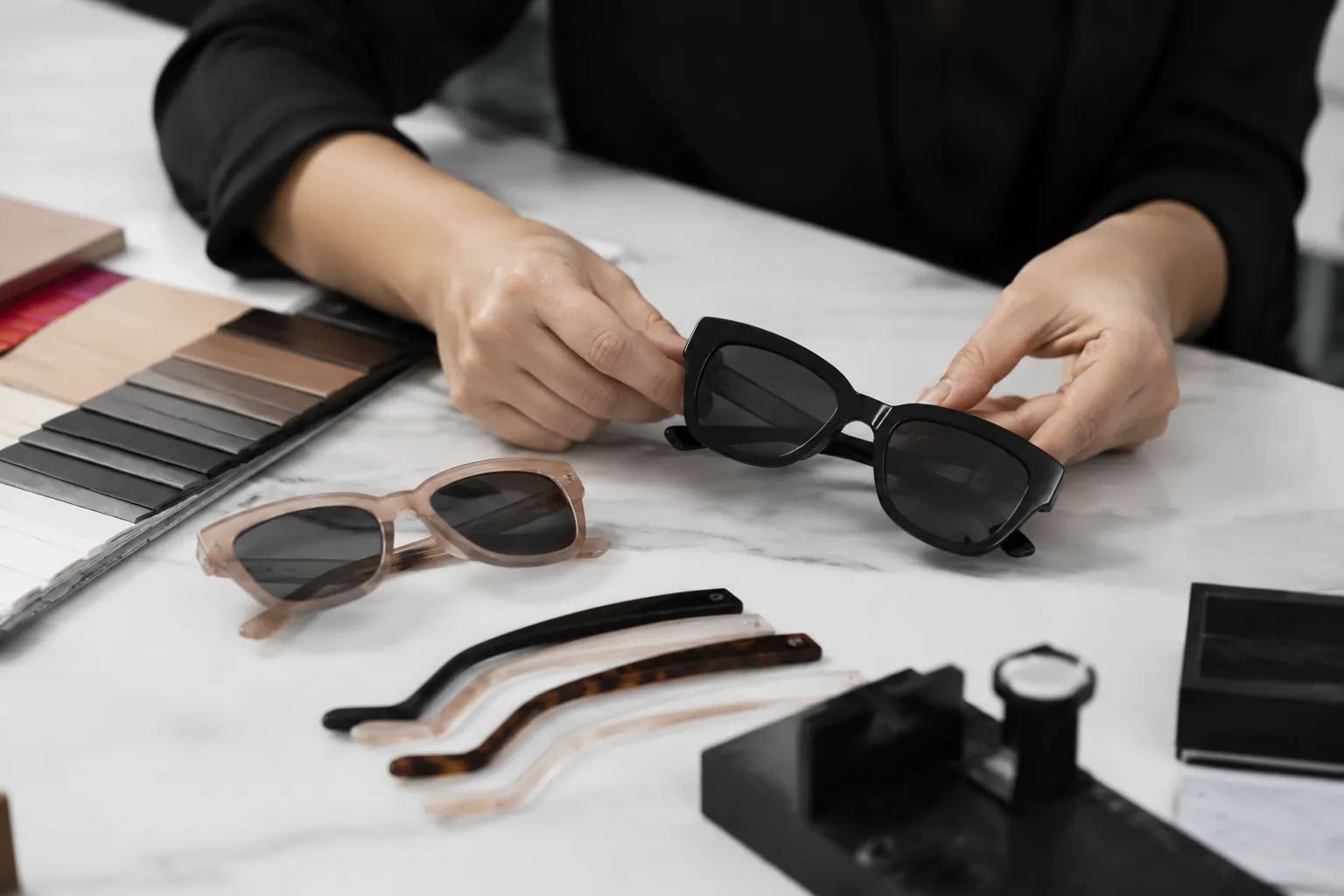
This guide is for brand owners, importers, distributors, and retailers buying polarized sunglasses in volume. The goal is simple: cut returns. Not just buy a lens labeled polarized. The biggest return drivers are usually edge blur, visual fatigue, rainbow stress marks, weak glare reduction, tint mismatch, and early scratching. In bulk programs, those problems usually start upstream: lens material, molding conditions, polarized film quality, lamination control, coating performance, and weak acceptance standards. Define those variables before sampling. Lock them before production. Results become more predictable, and return risk is easier to control.
Start with the complaints you need to prevent
Most polarized-lens returns come back to the same few issues. Consumers describe the symptom, not the cause: blurry vision near the edge, headaches after short wear, rainbow stress patterns in sunlight, poor glare reduction on water or roads, screens that black out too much, left/right tint mismatch, or lenses that scratch too fast.
Build the lens brief backward from those complaints. If you do not define failure clearly, the supplier will usually optimize for output and cost first. That is normal. Your job is to state the retail risks in the tech pack, sample-approval sheet, and final acceptance standard.
- Clarity complaints: often trace back to poor mold polish, unstable base-curve control, uneven lens thickness, haze from poor resin handling, or low-grade polarized film.
- Distortion complaints: can come from warped injection lenses, cooling stress, internal stress in polycarbonate, or poor lamination flatness.
- Glare complaints: often point to weak polarization in the finished lens, the wrong visible light transmission for the use case, or finished-lens performance that falls below the raw film sample shown during development.
- Cosmetic complaints: include dust in lamination, bubbles, streaks, scratches, edge whitening, drill chips, and visible left/right color shift.
- Compatibility complaints: include LCD blackout, color shift that affects driving comfort, or poor visibility of dashboards and phone screens.
Different channels care about different failure modes. Marine and fishing accounts usually focus on glare control, scratch resistance, and durability in harsh use. Sport and kids' programs tend to prioritize impact resistance and stress control. Fashion chains usually care more about color consistency, cosmetic quality, and cost discipline. If a factory cannot explain how it controls those risks, you are approving with limited visibility.
The four lens specs that matter most
Buyers often spend too much time on mirror colors, trim, or packaging. The bigger return drivers usually sit in four lens specs.
- Optical clarity: Ask how the factory checks wave, haze, and visible distortion. For injection lenses, cavity finish, material handling, molding settings, and cooling control matter. For laminated lenses, film flatness, adhesive application, and alignment matter. A lens can look fine in a photo and still produce visible swim when worn.
- Polarization performance: A reflected-light demo is not enough. Ask for performance data on the finished lens, not just the raw film. At minimum, request visible light transmission and the polarization result for the final assembled lens. Dark does not always mean effective.
- Lens material and process: TAC polarized lenses are common in fashion and mid-price retail because they are light and commercially flexible. PC polarized lenses offer higher impact resistance for sport and kids, but they are more sensitive to molding stress and can show birefringence if process control is weak. AC appears in lower-cost programs, but it is usually less scratch-resistant and less durable in rough handling.
- Tint and color consistency: A compliant polarized lens can still drive returns if left and right lenses do not match, if color shifts between lots, or if the tint category does not fit the use case. Category and color should match the channel and environment.
Process integration matters too. If molding, tinting, hard coating, decoration handling, and assembly are split across subcontractors, tracing defects gets harder and color consistency usually suffers. More process visibility usually means faster correction when something goes wrong.
Compare lens structures before you approve the build
| Lens option | Typical use case | Main strengths | Main complaint risks | Cost/lead-time notes |
|---|---|---|---|---|
| TAC polarized lens | Fashion, lifestyle, general outdoor retail | Good glare reduction, light weight, broad tint range, strong commercial acceptance | Delamination if bonding is poor; scratch complaints if hard-coat performance is weak; edge lift if cutting quality is poor | Common volume choice; lead time depends on supplier capacity, lens color, and finishing steps |
| PC polarized lens | Sport, kids, cycling, active outdoor | Higher impact resistance, low weight, stronger positioning for active use | Stress distortion, rainbow marks, molding warp, surface scratching if coating performance is weak | Usually higher cost than basic TAC; sample review should include stress inspection and edge-optics review |
| AC polarized lens | Entry-price sunglasses and promotional programs | Lower material cost, easy tinting, suitable for aggressive retail pricing | Lower durability, easier scratching, less premium feel, higher risk in rough handling | Lower upfront cost, but buyers should weigh savings against durability expectations |
| Non-polarized tinted lens | Pure fashion, low-function seasonal programs | Lower cost, fewer LCD visibility complaints, simpler sourcing | Limited glare control in driving and outdoor use; expectation gap if marketed as performance eyewear | Best suited to programs where function is not the main selling point |
For small runs, buyers often default to the cheapest lens structure to protect landed cost. That can be a false economy, especially in e-commerce and marketplace channels where review photos expose tint mismatch and cosmetic defects fast, and returns are easy.
On bigger runs, improving the lens build and process control usually adds more commercial value than adding decorative trim or premium gift packaging. Buyers forget that. Consumers do not.
Use a stricter sample-approval checklist
Do not approve polarized samples from product photos or a quick look outdoors. Use a repeatable inspection method. Record the result. Keep the standard tight.
- Left/right tint match: Place both lenses against a white background under the same controlled light source. Any visible mismatch should be recorded and reviewed before approval.
- Optical distortion: Look through each lens at a straight line, tile joint, or window frame and rotate slowly. If the line bends, swims, or shifts noticeably, reject the optics or escalate for review.
- Stress marks: Inspect under polarized light or against an LCD screen. Rainbow patterns in PC can indicate internal stress from molding or cooling conditions.
- Edge finish: Check bevels, groove areas, drilled points, and cut edges for chips, whitening, burrs, cracks, or lifting.
- Outdoor glare test: Compare the sample side by side with a known acceptable polarized reference near reflective pavement, car glass, or water. Comparison is more reliable than judging one sample in isolation.
- Screen visibility: Test a phone in portrait and landscape. If the product is intended for driving, also check a vehicle dashboard display where possible. Know the blackout behavior before approval.
- Coating and scratch behavior: Ask what hard-coat is used, how it is cured, and when scratch checks are performed. Testing right after line output is not the same as evaluating the lens after full process completion.
For private-label programs, require the factory to retain an approved master sample, a signed lens color chip or visual standard, and a build record. That file should state lens material, polarized construction, tint reference, coating requirement, and mirror finish if applicable. Without it, repeat orders drift.
Ask the factory about process control, not just price
A capable supplier should be able to explain the lens process in operational terms, not just say the lens is polarized. Many defects come from shortcuts in production, not from the design itself.
- Where is the lens made? If molding, tinting, coating, and QC sit inside one system, feedback loops are usually shorter. If lens making and assembly are split, ask who owns remake responsibility and defect analysis.
- How is film alignment controlled? On laminated lenses, poor alignment can affect both optics and appearance. Ask what checks are done before final cutting or insertion.
- What molding and cooling controls are used? PC lenses are especially sensitive to stress. Ask how the factory monitors conditions that affect warp and birefringence.
- How are defects screened before assembly? Dust, bubbles, flow lines, sink marks, scratches, and mold defects should be caught before lenses reach frame assembly.
- What are the QC checkpoints? Ask about raw-material checks, post-molding inspection, post-tint or post-lamination inspection, coating inspection, assembly inspection, and final random inspection before packing.
Decoration matters too. Hot stamping, metal logo plates, pad printing, laser marking, mirrored coatings, and gradient tints all add handling steps. Every extra touch point raises the risk of scratching, contamination, or color drift if lens protection and decoration handling are not separated well.
If a program combines mirrored flash colors, metal temple logos, custom pouches, and multi-piece packaging, approval risk usually rises. So does production risk. Lead time depends on the lens build, finishing steps, factory load, and approval speed. In many projects, failed samples and rework cause more delay than the actual production cycle.
Compliance is necessary, but not enough
Many buyers stop at paperwork. That is a mistake. Compliance helps reduce legal and market-entry risk, but it does not guarantee optical comfort or low retail returns.
For sunglasses, buyers commonly request alignment with destination-market requirements such as CE EN ISO 12312-1, ANSI Z80.3, and AS/NZS 1067, depending on the sales region. Chemical compliance requests often include REACH. For U.S. market discussions, buyers also frequently ask about manufacturer-side FDA registration documentation. Factory management credentials such as ISO 9001 and social-audit frameworks such as BSCI may also matter to larger retail accounts.
But compliance is only a gate. A lens can meet a standard and still feel too dark, create fatigue through weak optics, or disappoint customers through tint inconsistency and cosmetic defects. Request test reports tied to the actual configuration being purchased: the same lens material, color, construction, and relevant product setup. An old report for a similar style is not proof for a different build.
Spend where it reduces returns
Not every upgrade is worth the money. In polarized programs, the upgrades most likely to improve customer satisfaction usually sit in the lens build and process control, not in cosmetic extras.
Low MOQs can help with market testing, but they often limit custom lens development and reduce the supplier's flexibility on process upgrades. As volume rises, it becomes easier to justify stronger polarized film, better hard-coat performance, tighter tint sorting, and stricter final QC because the added cost can be spread across more units.
- Usually worth paying for: better mold finish, more stable polarized film, stronger hard-coat performance, tighter left/right tint matching, cleaner lamination control, and stricter cosmetic sorting.
- Often worth paying for: PC polarized lenses for sport, cycling, or kids if rough handling and impact resistance are central to the product position.
- Usually not the first priority: upgraded gift boxes, extra inserts, flashier mirror colors, or complex metal trim that add handling and approval complexity without improving what the wearer sees through.
A practical rule is simple: spend first on what the consumer looks through, then on what they handle, and only after that on decoration. Packaging may help close the first sale. Optical comfort and lens durability do more to prevent returns and drive repeat purchase.
Final pre-production signoff: put it in writing
Before mass production, confirm these points in writing:
- Lens material and structure: TAC, PC, or AC; polarized or non-polarized; final tint reference; mirror finish if any; intended lens category and use case.
- Reference sample: approved physical sample retained by both buyer and factory, plus a signed color chip or other visual standard.
- Defect standard: acceptance rules for scratches, dust, bubbles, tint mismatch, edge defects, logo position, and assembly marks.
- Compliance file: destination-market reports and supporting documentation matched to the actual product configuration.
- Packaging protection: individual bag type, lens protection film if used, pouch or case specification, inner-box arrangement, and carton protection for shipment.
- Timeline and approval controls: sample schedule, bulk schedule, approval owners, and buffer for revisions if a sample fails.
Short version: polarization alone does not guarantee quality. Returns are usually driven by distortion, stress, weak coating performance, tint drift, cosmetic defects, and poor process control. A factory can only manage those risks if the buyer asks the right technical questions, approves against a defined checklist, and locks the lens build before production starts.
Have a custom sunglasses project in mind?
Send us your styles, target market and quantities and we will return a detailed quote with MOQ, lead time and a sample plan.
Get a QuoteWhy source this from Wenzhou with LumiShades
Wenzhou in Zhejiang Province is widely regarded as China’s eyewear manufacturing capital, producing a large share of the world’s sunglasses. That concentration matters to buyers: a deep local supply chain for acetate sheet, hinges, lens blanks, plating and packaging means shorter component lead times, easier color and material matching, and a workforce with decades of eyewear-specific skill. LumiShades has manufactured in this ecosystem since 2009, and our vertical integration — in-house injection molding, acetate cutting, CNC milling, lens tinting, decoration and quality control — means no part of your order is quietly subcontracted to a workshop you cannot audit.
For international buyers, that vertical control translates into accountability. When a single factory owns every step, defects are traced and fixed at source rather than bounced between vendors, and your specifications survive intact from first sample to bulk. We back this with 15+ years of experience, shipments to 60+ countries, more than 5 million pairs produced per year and a 98.5% on-time delivery rate. Our certifications — CE EN ISO 12312-1, FDA registration, ANSI Z80.3, AS/NZS 1067, REACH, ISO 9001 and BSCI audit — mean the compliance documentation your market requires already exists. Explore our manufacturing capabilities and quality control process to see how this works in practice.
Frequently asked questions
How can I tell if a polarized sample is likely to cause distortion complaints? Run a simple but repeatable visual check before approval. Look through each lens at a straight line such as a window frame, tile joint, or printed edge, then rotate the frame slowly. If the line bends, swims, or shifts noticeably, the lens carries optical-distortion risk. Also inspect the lens under polarized light or against an LCD screen to look for rainbow stress patterns, especially on PC lenses. Record the result with photos or video and compare it with your approved reference sample, not with memory alone.
Is TAC or PC better for polarized sunglasses? Neither is always better. The right choice depends on the use case. TAC is commonly selected for fashion, lifestyle, and general outdoor sunglasses because it offers a strong balance of glare control, weight, tint options, and cost. PC is usually the better choice where impact resistance matters more, such as sport or kids' eyewear. The trade-off is that PC needs tighter molding and cooling control. If you are comparing suppliers, ask each one to submit the same frame style in both materials where possible, then review edge optics, stress marks, scratch performance, and tint consistency before deciding.
Do compliance reports guarantee low retail returns? No. Reports related to CE EN ISO 12312-1, ANSI Z80.3, AS/NZS 1067, REACH, and manufacturer-side FDA registration help address regulatory and market-entry requirements, but they do not prove that the lens is comfortable, visually clean, or cosmetically consistent. A compliant product can still generate returns because of distortion, weak glare performance, left/right tint mismatch, scratches, or assembly defects. Treat compliance as one checkpoint, then separately approve optics, cosmetics, and durability against your own QC standard.
What MOQ should I use for a first polarized-lens order? Use the MOQ that matches the commercial purpose of the order. If the style is a market test, a lower quantity may be reasonable, but expect less flexibility for custom tint development and fewer cost options for process upgrades. If the product has stronger sales confidence, a larger order usually gives the supplier more room to offer better lens film, tighter tint sorting, and more robust QC. In practice, buyers should ask suppliers to quote at more than one quantity break and compare not just unit price, but also what technical improvements become available at each level.
How much time should I allow for polarized custom samples and bulk? There is no fixed timeline for every project because lead time depends on lens material, tint development, mirrored coatings, logo hardware, packaging complexity, factory capacity, and the number of approval rounds. The safer approach is to request a stage-by-stage timeline: sample preparation, buyer review, revision if needed, pre-production confirmation, mass production, and final inspection. Also ask which steps sit on the critical path. Custom tints, mirrored finishes, and multi-component packaging often add more time than buyers expect, especially if the first sample fails and must be remade.
Ready to start?
Explore our aviator sunglasses or request a quote — our sales team replies within 12 hours.
Request a Quote