
Stop Lens Color Mismatch in Bulk Sunglasses
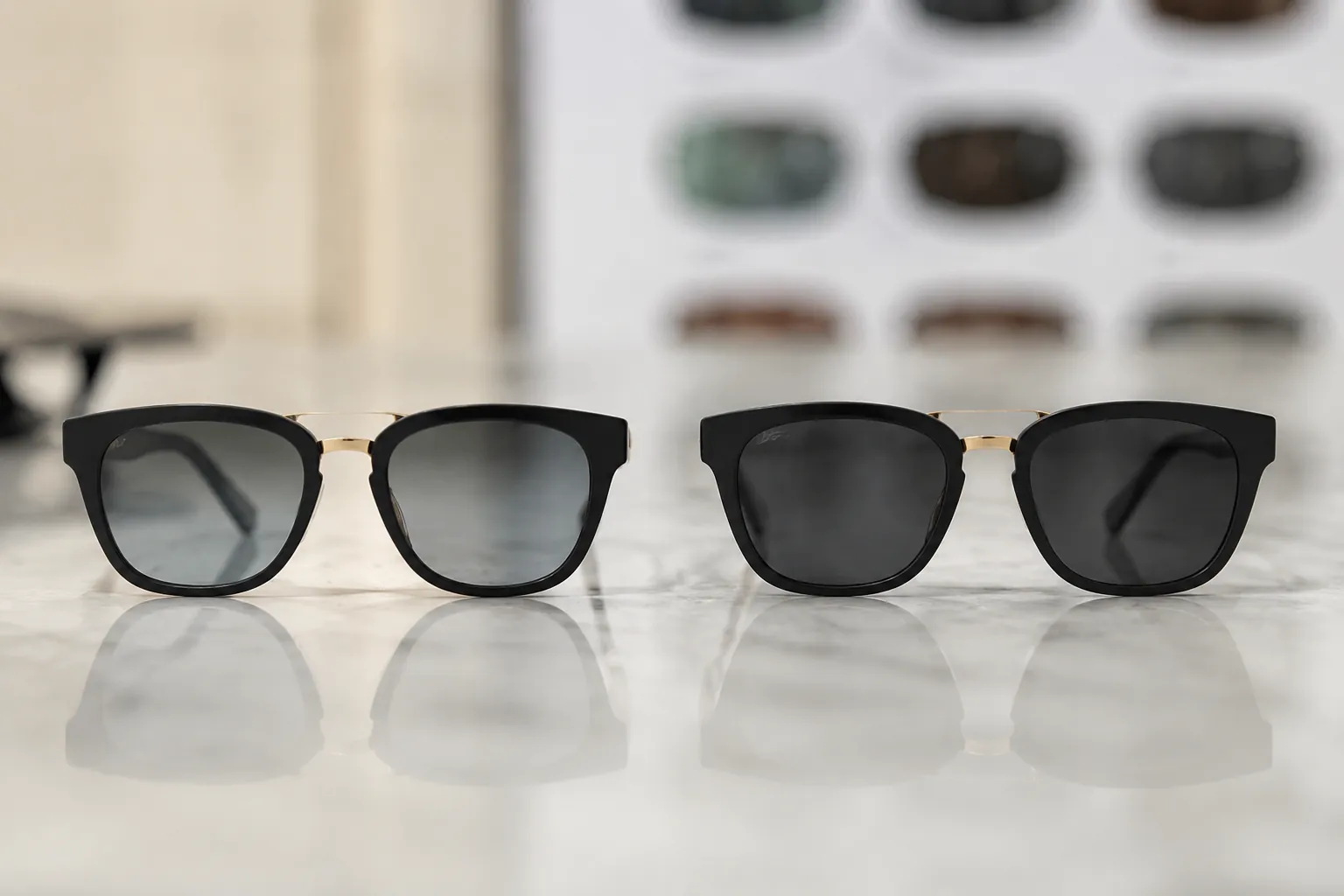
This guide is for brand owners, importers, distributors, and retail buyers placing custom sunglasses orders at scale. The goal is simple: stop left-right lens color mismatch before shipment. This defect shows up most often on tinted, gradient, mirrored, polarized, and fashion-color lenses. Why? Because small variation in individual lenses becomes obvious once two lenses sit side by side in one frame. A loose color name or a photo approval will not control that risk. A finished sample pair will. Buyers need a pair-based standard, fixed viewing conditions, realistic tolerances, and inspection checkpoints at tinting, pairing, assembly, and final QC. In practice, that means approving a finished sample pair, defining how color is judged, and requiring the factory to control tinting, coating, lot separation, and pairing as one linked process.
Why left-right lens mismatch happens in production
Most buyers spot lens mismatch only after cartons arrive. By then, the cost is high. The defect is visible at retail and hard to fix after import.
A left lens and right lens can both fit a broad description such as "smoke" or "brown gradient" and still look wrong together in the same frame. That is the core problem. The commercial standard is not whether each lens looks roughly acceptable alone. It is whether the finished pair matches.
In production, mismatch usually comes from normal process variation that was not controlled tightly enough. Depending on lens construction and finishing method, visible differences can come from raw material lot, tint recipe, immersion time, bath temperature, drying conditions, coating thickness, or weak sorting and pairing discipline. Gradient lenses add another variable because fade position must match from left to right. Mirror lenses add another because reflected tone can shift when coating conditions drift.
Material choice also changes the risk. Polycarbonate, TAC polarized constructions, and nylon do not react the same way in tinting, lamination, or coating. The exact sensitivity depends on the material, the lens supplier, and the factory process. Do not assume a color approved on one lens type will reproduce exactly on another without re-approval.
Assembly can make a small difference look much bigger. A lens that seems acceptable by itself may look mismatched once paired under controlled light, daylight, or store lighting. That is why approving a single loose lens is weak QC. The product sold to the customer is the finished pair. The approval method and the inspection method should match that reality.
Main control points are incoming material, tinting or coating conditions, lot separation, left-right pairing, assembly, and final visual inspection under fixed lighting. Miss one, and mismatch can pass through even if the pre-production sample looked fine.
The failure modes buyers should check first
Not every mismatch looks the same. Buyers get better results when they define the exact failure mode instead of writing "lens color issue." Vague wording slows root-cause analysis and weakens inspection.
- Density mismatch: one lens is visibly darker or lighter than the other.
- Hue mismatch: both lenses look close in darkness, but one reads warmer, cooler, greener, browner, or bluer.
- Gradient position mismatch: the fade line sits higher or lower on one side.
- Mirror tone mismatch: one lens reflects a different mirror color or intensity than the other.
- Polarized film variation: the laminated construction creates a visible tone difference between left and right.
- Surface coating variation: hard coating or backside AR changes the final appearance enough to create a visible left-right difference.
Ask the supplier which of these risks applies to your lens type and how each one is controlled. "We inspect color" is not enough. A useful answer should state whether the factory controls by material lot, tint run, coating run, and visual pairing before assembly. For higher-risk programs, ask whether the line uses positioning fixtures for gradients and whether paired lenses stay together after sorting.
Frame geometry also matters. Large shields, aviators, flat lenses, and pale fashion tints make small differences easier to see. Dark solid lenses can be easier to control visually, but they still require pair inspection. Treat pale tints, gradients, mirrors, and fashion colors as high-risk categories from the start.
Set the approval standard before bulk starts
The best way to prevent disputes is to approve a standard that cannot be interpreted loosely. Do that before bulk tinting or coating starts. Not later.
- Approve the exact lens color on a finished sample pair, not on a single loose lens, digital mockup, or edited photo.
- Keep one master sample on the buyer side and one signed counter-sample at the factory, both linked to the PO or style code.
- Write the lens specification in plain language: material, base color, lens construction, whether the lens is solid, gradient, mirrored, polarized, whether backside AR is included, and the intended visible light transmission category if relevant to the product specification.
- Define the viewing condition for approval, such as daylight-equivalent lighting, a white background, and direct front view plus slight angle view.
- State whether left and right lenses must be matched from the same tint lot, coating run, or laminate lot where practical.
- Define the commercial acceptance rule for mismatch, including how gradient symmetry or mirror consistency will be judged on the assembled frame.
For repeat orders, do not rely on memory, old photos, or chat screenshots. Screens shift color. Cameras flatten small differences. Keep a retained approved sample and reference its sample code, approval date, and any applicable test report tied to that exact lens specification.
Volume and production structure affect risk too. Small runs can be more sensitive to setup variation. Large orders may involve multiple lots and need stronger traceability and segregation. In both cases, ask how the factory identifies lots and how it prevents mixing during tinting, assembly, and packing.
Use a control plan that matches the lens type
Different lens constructions fail in different ways. Buyers should ask what process is used, where variation usually enters, and what control method is realistic for that material and finish.
| Lens type | Main mismatch risk | Typical process detail | Best production control | Buyer checkpoint |
|---|---|---|---|---|
| Solid tinted PC lens | Density or hue drift between runs or lots | Tinting process followed by sorting and pairing | Control tint recipe and processing conditions; separate lots clearly | Approve and inspect the assembled pair under fixed white light against the counter-sample |
| Gradient tinted PC lens | Fade height mismatch and uneven transition | Gradient tinting with controlled positioning | Use a positioning fixture or equivalent control and pair lenses immediately after tinting | Check fade-line symmetry on the assembled frame against a center reference |
| Mirror coated lens | Reflective tone variation between coating runs | Mirror coating process where appearance can change with run conditions | Keep the same style together within the same coating run where possible and pair by visual match before assembly | Inspect under front light, angled light, and daylight-equivalent light |
| Polarized TAC lens | Tone shift from laminate or film variation | Multi-layer laminated construction | Control incoming laminate lot and avoid mixing lots within one colorway where possible | Check color match, polarization function, and left-right uniformity together |
If a factory handles lens processing and final QC in-house, it may catch drift earlier. Still, verify the actual control method. Do not assume capability from a broad claim.
If the program includes pad printing, metal logo application, laser marking, or other finishing steps, check final appearance again on the completed product. The finished frame can change how the lens color is perceived.
For fashion colors, gradients, mirrors, or polarized constructions, ask for basic traceability showing which material lot, tint run, coating run, or laminate lot was used for the order. You do not need every internal record. You do need enough information to investigate a claim later.
Inspection checkpoints that actually catch the problem
Good QC is not one last glance at packed goods. Lens mismatch should be checked at several stages. Once wrong pairs are assembled, packed, and mixed into cartons, correction gets slower and more expensive.
- Incoming material check: confirm the lens material, base color, and lot identification before tinting, coating, or assembly.
- First-off confirmation: review the first approved pairs from bulk production against the signed standard before the run continues.
- In-line pairing: sort and pair lenses immediately after tinting, coating, or receipt from the lens supplier, not only after frame assembly.
- Assembly check: inspect the mounted pair because the frame shape and rim color can make mismatch more obvious.
- Final QC under fixed light: compare sampled finished goods against the approved counter-sample on a neutral background under defined lighting.
In practice, inspectors should view the finished sunglasses straight on and at a slight angle because some mismatches appear only in reflection or only in transmission. Gradient lenses should be checked for left-right symmetry using a consistent visual reference. Mirror lenses should be checked from more than one angle because reflected tone can shift with viewing position.
Make the inspection rule operational, not just descriptive. Define whether mismatch is judged on the assembled frame, under which light source, against which sample, and who has approval authority at first-off and pre-shipment stage. Clear method beats broad wording every time.
How compliance and lens color control overlap
Lens color consistency is not only cosmetic. If lens transmission changes materially from the approved specification, it can affect product classification, performance expectations, and the support behind market claims.
For sunglasses sold into regulated markets, buyers should separate three things clearly: product performance standards, chemical compliance, and management or social audit credentials. CE EN ISO 12312-1, ANSI Z80.3, and AS/NZS 1067 are the standards most directly tied to sunglass lens performance, depending on the market. REACH covers chemical compliance. FDA registration is not a substitute for product performance testing. ISO 9001 and BSCI show management system or audit status, not lens color precision or pair-matching capability.
Compliance testing does not replace visual pair inspection. A lens can meet a market standard and still be commercially unacceptable if left and right lenses do not match in appearance. The reverse is also true. If bulk lenses become visibly lighter or darker than the tested sample, buyers should confirm whether the original performance documentation still applies to that exact specification.
Ask for testing and records tied to the final approved lens specification, especially for polarized lenses, mirrored styles, or category-sensitive tints. If material, tint depth, gradient design, mirror finish, or laminate changes after approval, treat that as a new specification and review whether re-approval or re-testing is needed.
What to write into your PO and QC checklist
Many quality disputes start with vague wording such as "smoke lens" or "brown gradient." That is not enough for bulk production, especially in private-label programs, repeat orders, or multi-color collections.
Your PO and inspection checklist should include these points:
- Lens material: PC, TAC polarized, nylon, or other agreed construction.
- Color standard: approved sample code, approval date, and retained counter-sample reference.
- Construction: solid tint, gradient, mirror, polarized, backside AR, hard coat, or other agreed finish.
- Pairing rule: left and right lenses must visually match the approved standard on the assembled frame and, where practical, come from the same relevant lot or run.
- Inspection method: assembled-pair visual check under defined white light on a neutral or white background, compared to the approved standard.
- Defect definition: obvious left-right lens mismatch is rejectable, with defect class stated according to your QC system.
- Decoration note: final appearance must be rechecked after pad printing, laser marking, metal logo application, or any other finishing step.
Write the requirement so it can be executed on the line. If mismatch is a critical or major defect in your system, say so directly. If you allow a small commercial tolerance, define how it will be judged during sample approval instead of arguing after shipment. Clear rules are easier for the supplier and any third-party inspector to apply consistently.
This matters even more when orders are split across many SKUs or small quantities. Small runs leave less room for resorting and remake. Large runs increase the need for lot control and traceability. Either way, the document should tell the factory exactly what standard must be met and how compliance will be checked.
A buyer workflow that reduces claims and remake costs
If lens color matters to the product, the workflow should reflect that risk. Preventing mismatch during production is usually cheaper than sorting stock after arrival or negotiating claims after shipment.
- Choose the lens construction based on market requirements, target appearance, and process risk. If the color is sensitive, ask early whether the chosen material and finish are stable enough for the intended volume.
- Approve a finished sample pair, not a lens chip, photo, or verbal description.
- Confirm destination-market compliance requirements before final sample sign-off and make sure any test records match the approved specification.
- Lock the approved sample code, material, lens description, and finishing details into the PO.
- Require first-off bulk confirmation and use photos or video only as support, not as the main color approval tool.
- Ask the factory to perform in-line left-right pairing before assembly and maintain lot separation through packing.
- Use pre-shipment inspection that specifically checks lens match on higher-risk styles such as gradients, mirrors, pale tints, and polarized fashion colors.
This workflow is practical because it controls the defect while correction is still manageable. A factory can usually re-pair or isolate questionable lenses during production far more efficiently than a buyer can sort completed retail-packed goods after import.
Buyers often focus on frame color, logo position, hinges, or packaging and assume the lens is straightforward. That is a mistake. Lens appearance depends on material, process, light source, and final assembly. Control those variables early, document them clearly, and bulk quality becomes much easier to manage and defend.
Have a custom sunglasses project in mind?
Send us your styles, target market and quantities and we will return a detailed quote with MOQ, lead time and a sample plan.
Get a QuoteWhy source this from Wenzhou with LumiShades
Wenzhou in Zhejiang Province is widely regarded as China’s eyewear manufacturing capital, producing a large share of the world’s sunglasses. That concentration matters to buyers: a deep local supply chain for acetate sheet, hinges, lens blanks, plating and packaging means shorter component lead times, easier color and material matching, and a workforce with decades of eyewear-specific skill. LumiShades has manufactured in this ecosystem since 2009, and our vertical integration — in-house injection molding, acetate cutting, CNC milling, lens tinting, decoration and quality control — means no part of your order is quietly subcontracted to a workshop you cannot audit.
For international buyers, that vertical control translates into accountability. When a single factory owns every step, defects are traced and fixed at source rather than bounced between vendors, and your specifications survive intact from first sample to bulk. We back this with 15+ years of experience, shipments to 60+ countries, more than 5 million pairs produced per year and a 98.5% on-time delivery rate. Our certifications — CE EN ISO 12312-1, FDA registration, ANSI Z80.3, AS/NZS 1067, REACH, ISO 9001 and BSCI audit — mean the compliance documentation your market requires already exists. Explore our manufacturing capabilities and quality control process to see how this works in practice.
Frequently asked questions
Should I approve lens color from a photo or video? No. Use photos or video only for progress confirmation or first-off discussion. Final approval should be based on a physical finished sample pair because camera exposure, white balance, reflections, and screen settings can change how tint density, hue, gradient position, and mirror tone appear. Keep one approved master sample and require the factory to hold a matching signed counter-sample for production and QC reference.
Are gradient lenses more likely to have left-right mismatch than solid tints? Usually yes. Gradients require both color density and fade position to match. A pair can fail visually even if both lenses are close in color but the fade sits at different heights. If you buy gradients, ask how gradient position is controlled, require assembled-pair approval, and make gradient symmetry a specific checkpoint at first-off and pre-shipment inspection.
What defect level should left-right lens mismatch be in QC? That depends on your QC system, retail channel, and product positioning, but obvious visible mismatch on the assembled frame should be defined as rejectable in writing before bulk starts. State the defect class in the PO or inspection checklist, define the viewing condition, and tie the judgment to the approved counter-sample. Without that, inspectors and suppliers may apply different standards.
Can compliance testing replace color inspection? No. Compliance testing and color matching do different jobs. Testing against CE EN ISO 12312-1, ANSI Z80.3, or AS/NZS 1067 addresses performance requirements for the target market. It does not confirm that left and right lenses are visually matched in production. Buyers still need pair-based approval, in-line pairing control, and final visual inspection under defined lighting.
Does low MOQ increase mismatch risk? It can. Short runs leave less time to stabilize the process and less room to sort, re-pair, or remake if variation appears. The practical response is not to avoid low MOQ by default, but to tighten control: approve a finished pair, require first-off confirmation, ask for lot separation, and make lens pairing a named in-line checkpoint instead of relying only on final inspection.
Ready to start?
Explore our aviator sunglasses or request a quote — our sales team replies within 12 hours.
Request a Quote