
Nylon Sunglass Lenses: When They Pay Off
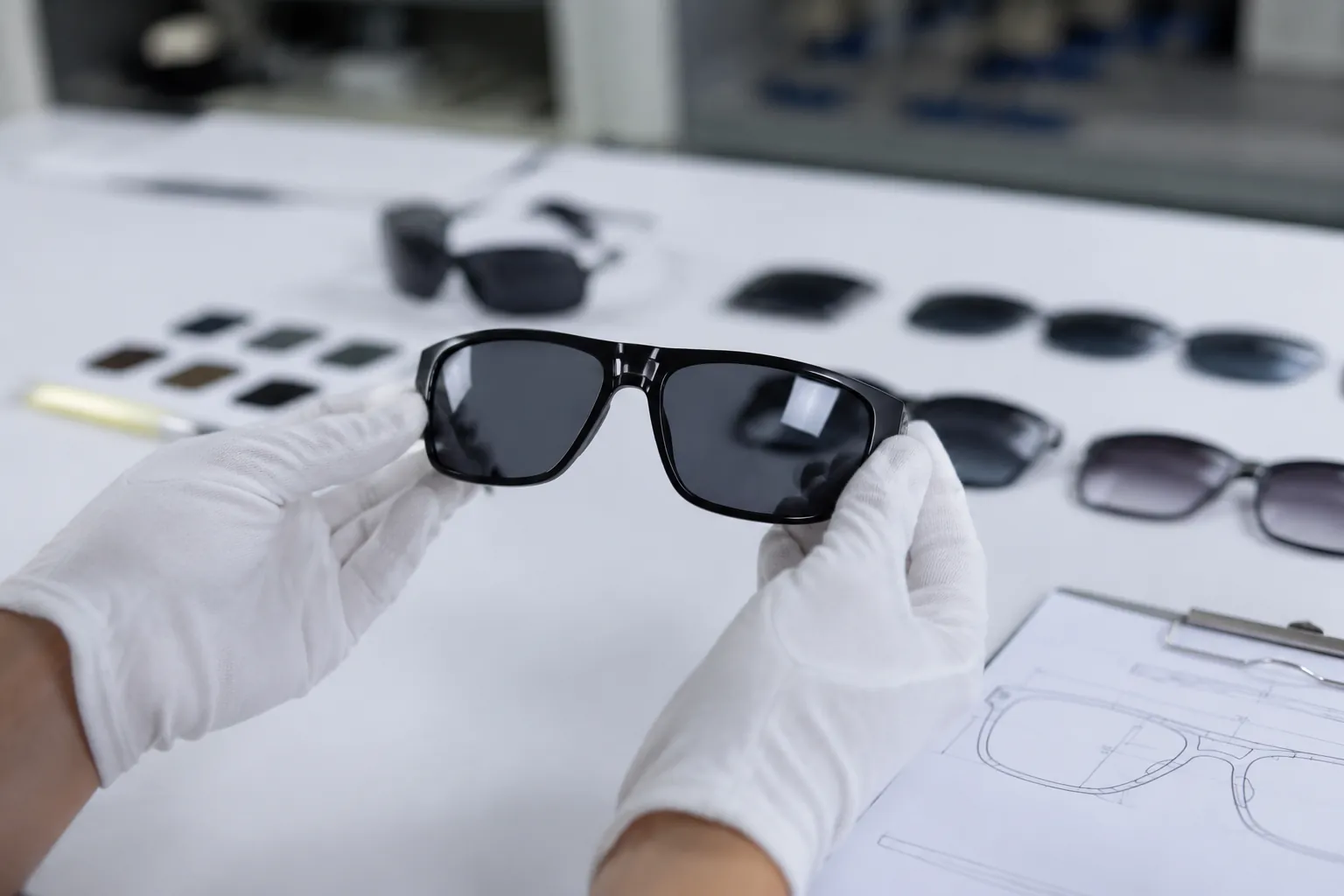
This guide is for brand owners, importers, and retail buyers deciding whether nylon lenses belong in a commercial sunglass range. The question is not whether nylon is "better" in general. It is whether it solves a real product problem in the SKU you are building. Sometimes it does. Often it does not. Nylon matters most in wrap, shield, rimless, and other performance-led styles where weight, lens geometry, and mounting stress are part of the brief. It is far less useful in fashion-led programs built around color, logo, and a hard price ceiling. The sections below show where nylon can justify its cost, where polycarbonate, CR-39, or TAC is the better commercial choice, and what specification, quality-control, and compliance checks should happen before approval.
Start with the product brief, not the material
Buyers often ask whether nylon is the best sunglass lens material. That is the wrong first question. Start with the SKU. What problem is the lens supposed to solve?
If the frame is highly wrapped, shield-style, rimless, semi-rimless, or built for sport use, nylon may make sense. If the style is mainly fashion, promo, or logo-driven, it may just add cost. No one buys a lens material. They buy the result.
Use a simple filter:
- Use nylon for technical sport, wrap, shield, rimless, and premium functional SKUs where lens performance is part of the sale.
- Use polycarbonate for value sport looks, kids, high-volume lines, and programs where impact resistance and cost control matter most.
- Use CR-39 for lifestyle and fashion sun where clarity matters and the lens curve is moderate.
- Use TAC polarized assembly when the main goal is affordable polarization.
That filter saves time. It also avoids a common mistake: paying for a technical lens in a product that does not need one.
Where nylon earns its place
Nylon performs best in demanding shapes and wear conditions. The advantage is most visible on curved products. Less so on flat ones.
The main reasons buyers choose it are practical:
- Curved lens suitability. Nylon is commonly used in higher-wrap eyewear because it can work well in technical lens shapes.
- Low weight. In larger sport frames and shields, lighter lenses improve comfort over long wear.
- Useful for drilled and tensioned builds. Rimless and semi-rimless styles need stable holes, grooves, and controlled assembly pressure.
- Works with performance coatings. Polarization, mirror coatings, hard coat, backside AR, and hydrophobic top coats are often paired with nylon.
But material alone does not make a good lens. Poor forming, weak tint control, bad coating adhesion, or rough edging can ruin the result. A premium resin cannot fix weak process control.
Nylon is usually easiest to justify in mid-tier and premium sport programs. It needs room in the retail price. It also needs a clear product story.
Nylon vs polycarbonate vs CR-39 vs TAC
| Lens option | Typical use case | Main strengths | Main drawbacks | Commercial fit |
|---|---|---|---|---|
| Nylon | Sport wrap, shield, rimless, outdoor performance | Light weight, good toughness, suitable for technical shapes and higher-wrap applications | Higher material and processing cost; unnecessary for many basic fashion SKUs | Best for premium functional assortments |
| Polycarbonate | Entry sport, kids, value programs, promo | Impact resistant, widely available, scalable for volume production | Optical performance may be less refined; scratch resistance depends heavily on hard-coat quality | Best for cost-controlled volume lines |
| CR-39 | Fashion sun, flatter fronts, clarity-focused styles | Good optical clarity, familiar sunglass material | Less suitable for rough impact use, demanding wraps, or drilled stress points | Good for lifestyle assortments above entry price |
| TAC polarized assembly | Value polarized sunglasses | Cost-effective polarization, common in mass-market programs | Quality depends on lamination control; not the same construction as a solid technical performance lens | Common in commercial polarized programs |
Compare materials against three things: frame geometry, claim level, and retail position. If the frame is only mildly curved and the promise is basic UV protection, nylon usually does not add enough value. If the frame is highly wrapped and the sale depends on comfort, technical construction, or sport positioning, it deserves a closer look.
Before approval, check:
- Center and edge clarity in normal wear position
- Left-right tint and mirror consistency under controlled light
- Visible thickness consistency at lens edges
- Mounting fit without over-tension, whitening, drill-point stress, or distortion
- Surface quality for haze, pin marks, coating defects, and drag lines
What nylon changes in landed cost
Nylon affects cost in more than one place. Buyers often look only at the base lens price and miss the rest: coatings, yield, inspection time, and assembly sensitivity. That is how technical styles get underquoted early and lose margin later.
The exact gap versus polycarbonate or CR-39 depends on lens size, base curve, polarization, coatings, color, order volume, and reject tolerance. There is no single number that works across all programs. But the direction is clear: nylon is usually a step-up material, and technical builds around it often cost more than the material change alone.
Think in buckets:
- Lens material: nylon usually costs more than standard polycarbonate before coatings or special treatments.
- Coating stack: hard coat, mirror, hydrophobic treatment, and backside AR all change unit cost.
- Frame complexity: shield assembly, overmold parts, special hinges, or multi-part builds add labor and reject risk.
- Decoration: pad print, laser engraving, foil, and applied logo parts all affect setup and cosmetic yield.
- QC and scrap: tighter tolerance on optics, color match, and finish raises inspection effort and can increase rejects.
Do not specify nylon for a SKU with a low retail ceiling and a weak technical story. If the shopper mainly sees shape, color, and branding, the money may be better spent on visible finish, packaging, or a simpler polarized value build.
Failure points buyers should check early
Nylon is not a shortcut to quality. It can still fail in production if development control is weak or if coating, color, and assembly are inconsistent from lot to lot. A polished prototype is not enough.
Watch for these failure modes:
- Coating inconsistency: haze, rainbow effect, patchy mirror appearance, poor adhesion, or drag marks.
- Stress at mounting points: on drilled, rimless, or highly wrapped products, poor hole placement or too much assembly tension can create durability risk.
- Left-right or lot-to-lot color mismatch: especially visible on mirrored, flash, or sport-tint lenses.
- Edge distortion or cosmetic inconsistency: more likely when forming, edging, or finishing control is weak on wrapped lenses.
- Scratch complaints: often tied to hard coat performance, handling, or packing control rather than the base material alone.
Ask the factory how lenses are inspected at incoming material, during tinting or coating, after shaping, during assembly, and at final packing. You want the light conditions, the color-check method, and the packing controls. Get specifics.
Also request production-standard samples, not just hand-finished development samples. A pilot run or pre-production lot is better still. It shows what bulk is likely to look like.
Compliance: test the finished product, not the label
Material choice does not equal compliance. A nylon lens is not automatically approved for every market, and a premium material description does not replace testing or documentation. What matters is whether the finished sunglass meets the destination standard and whether the claims match the results.
Common references in eyewear sourcing include CE EN ISO 12312-1, ANSI Z80.3, AS/NZS 1067, REACH, FDA registration, ISO 9001, and BSCI.
Use them correctly:
- CE EN ISO 12312-1: product standard commonly referenced for sunglasses in CE markets.
- ANSI Z80.3: relevant for non-prescription sunglasses in the US market.
- AS/NZS 1067: relevant for Australia and New Zealand.
- REACH: relevant where chemical-substance compliance applies.
- FDA registration: administrative reference, not a substitute for product-performance compliance.
- ISO 9001 and BSCI: useful as management and social-compliance indicators, but not product tests.
Test early if you are specifying dark lenses, mirrored coatings, polarized builds, or performance claims around glare reduction. Do not write box copy before the lens spec and compliance path are fixed. If the test result changes category, transmission, or allowed claims, the delay and relabel cost are real.
A sourcing process that avoids bad buys
- Define the use case. Replace vague terms like "sporty" with a real end use: cycling, fishing, golf, trail running, driving, outdoor workwear, or lifestyle with sport styling.
- Set price architecture first. Establish target retail, target FOB, and required margin before choosing nylon.
- Choose frame construction. Confirm whether the frame is full-rim, semi-rimless, rimless, shield, or high-wrap. Lens material must match the mounting method and curve.
- Lock the lens spec in writing. State material, base curve, tint, polarization, mirror color, hard coat, backside treatment, and any top coat requirement.
- Define decoration and packaging. Brand application method and packing both affect cost, durability, and scratch risk.
- Approve samples against a checklist. Review optics, color consistency, fit, balance, hinge function, logo placement, and pack compatibility using written criteria.
- Plan testing and bulk together. If third-party testing or market documents are needed, build that time into development now.
- Inspect by risk. Give extra attention to mirrored shields, polarized styles, rimless builds, and any SKU with strict left-right color-match requirements.
This is basic work. Still, many programs skip it. Then they pay for it later.
When nylon is the wrong call
Sometimes the right move is to hold the line. Nylon is often the wrong choice for a low-risk fashion sunglass with a flat or only mildly curved lens, a tight cost target, and a selling story built on silhouette, logo, or seasonal color.
It is also a weak fit for promotional channels where speed, price, and branding matter more than lens behavior. In those programs, polycarbonate, CR-39, or TAC may deliver a better commercial result, depending on the claim and price point.
For many mass programs, polycarbonate wins because it supports cost control and broad manufacturability. For fashion sun sold on display appeal and perceived clarity, CR-39 may be a better fit if the frame allows it. For affordable polarization, TAC often gives the cleanest value proposition.
Plain rule: if performance drives the sale, review nylon. If fashion, promo pricing, or branding drives the sale, start with a lower-cost lens platform and prove that nylon is needed.
Used well, nylon supports specific frame geometries and positioning goals. Used badly, it is just a higher-cost line item.
Have a custom sunglasses project in mind?
Send us your styles, target market and quantities and we will return a detailed quote with MOQ, lead time and a sample plan.
Get a QuoteWhy source this from Wenzhou with LumiShades
Wenzhou in Zhejiang Province is widely regarded as China’s eyewear manufacturing capital, producing a large share of the world’s sunglasses. That concentration matters to buyers: a deep local supply chain for acetate sheet, hinges, lens blanks, plating and packaging means shorter component lead times, easier color and material matching, and a workforce with decades of eyewear-specific skill. LumiShades has manufactured in this ecosystem since 2009, and our vertical integration — in-house injection molding, acetate cutting, CNC milling, lens tinting, decoration and quality control — means no part of your order is quietly subcontracted to a workshop you cannot audit.
For international buyers, that vertical control translates into accountability. When a single factory owns every step, defects are traced and fixed at source rather than bounced between vendors, and your specifications survive intact from first sample to bulk. We back this with 15+ years of experience, shipments to 60+ countries, more than 5 million pairs produced per year and a 98.5% on-time delivery rate. Our certifications — CE EN ISO 12312-1, FDA registration, ANSI Z80.3, AS/NZS 1067, REACH, ISO 9001 and BSCI audit — mean the compliance documentation your market requires already exists. Explore our manufacturing capabilities and quality control process to see how this works in practice.
Frequently asked questions
How much more should I expect to pay for nylon lenses versus standard polycarbonate? Do not use a fixed percentage. Ask for a side-by-side quote using the same frame, lens size, base curve, coating stack, color, and packaging. Then review ex-factory lens cost, reject risk, assembly sensitivity, and any testing cost tied to the final spec. That is the only useful comparison.
Are nylon lenses necessary for polarized sunglasses? No. Polarization and nylon are separate choices. Many commercial polarized sunglasses use TAC because it gives a lower price point. Nylon matters more in higher-wrap, shield, rimless, or premium sport products where lens shape, weight, and positioning matter. If the frame is relatively flat, start with TAC.
What MOQ makes sense for testing a nylon program? There is no universal MOQ. It depends on the factory, tooling status, color count, and packaging complexity. The practical issue is whether the quantity is large enough to show real production consistency. Ask for the smallest order made under normal production conditions, not a hand-finished sample run. A pilot lot is better if you can get one.
How long should development and production take? It depends on whether you are using an existing frame, changing tooling, adding mirrored or polarized lenses, and needing third-party testing. Ask the supplier to break the schedule into sample development, revisions, lab-dip or lens-color approval if needed, pre-production confirmation, bulk production, testing, and shipping prep. That makes delays visible.
What should I inspect first on a nylon-lens sample? Start with function. Check vision in actual wear position, especially at the edge areas on wrapped shapes. Then inspect left-right color consistency, mirror uniformity, mounting stress at grooves or drill points, and surface quality under bright controlled light. Finally, review packing to see whether the lens is protected from scratching in transit.
Ready to start?
Explore our shield & oversized sunglasses or request a quote — our sales team replies within 12 hours.
Request a Quote