
Bulk Photochromic Sunglasses: Buy or Pass?
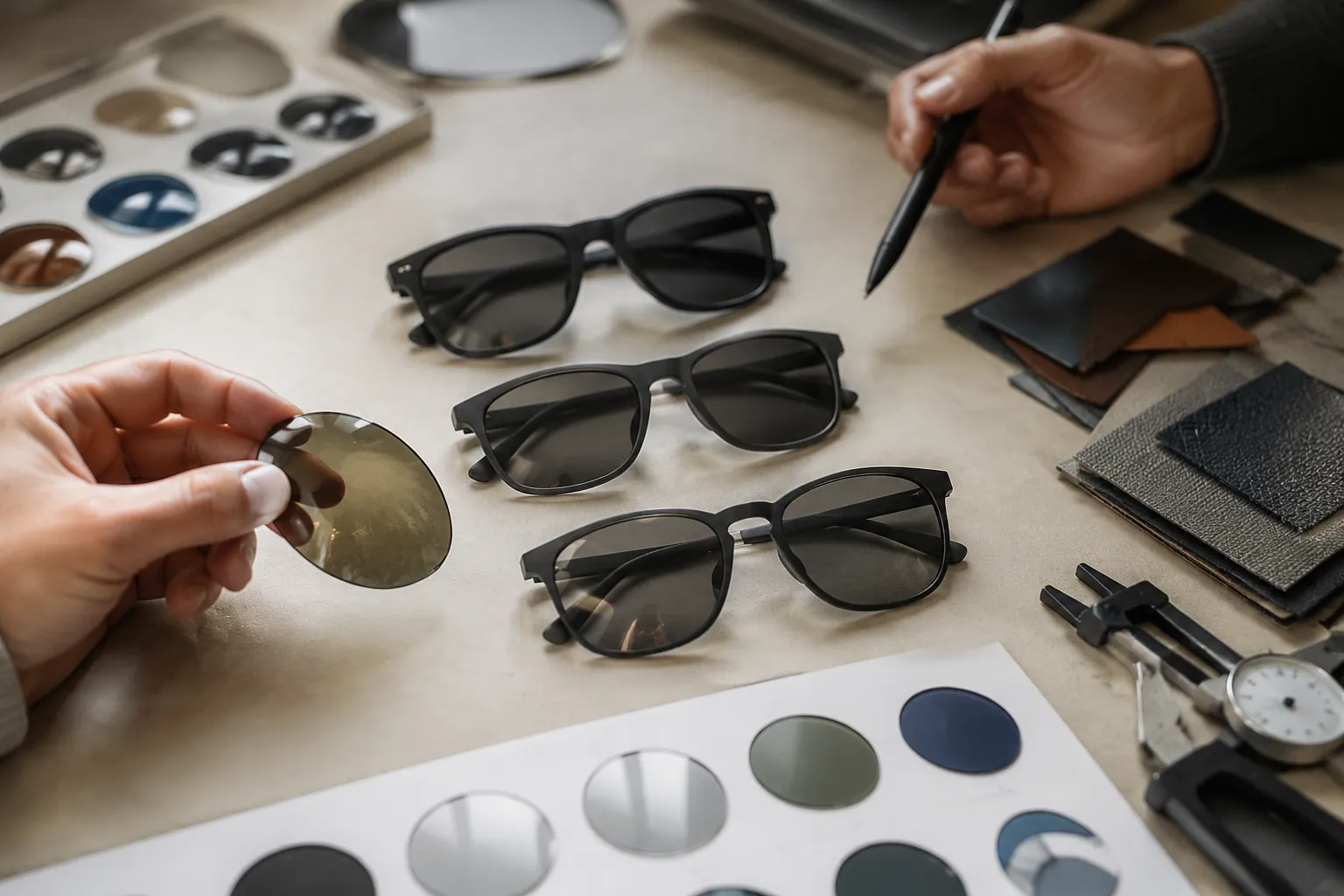
Photochromic lenses are not a default upgrade. In bulk eyewear programs, they work only when the use case is clear, the sales channel can explain the feature, and the target price can carry the extra cost. Pick them for the wrong SKU and you add complexity, QC risk, and customer confusion. Pick them for the right line and they can support a stronger value story. The question is simple: not whether the technology works, but whether it works for your market, margin, and production spec.
1) Start With the Channel, Not the Lens
Start with the sales channel. Not the material sheet.
Photochromic sunglasses usually make more sense where users move through changing light during normal wear: commuting, driving, travel, outdoor activity, and utility-led lifestyle use. In those channels, the feature is easy to explain. The lens adjusts as UV exposure changes. In fashion-first channels, frame shape, logo visibility, color, and opening price often matter more.
Before adding photochromic lenses to a bulk order, ask three direct questions:
- Use case: Will the customer move between lower and higher UV conditions often enough to notice the lens response?
- Shelf message: Can the feature be explained clearly on packaging, a hangtag, product page, or by store staff?
- Price elasticity: Can the retail price absorb the lens upgrade without pushing the SKU beyond its intended bracket?
If the answer is mostly no, keep it simple. A standard tinted lens or polarized lens is often the better commercial choice. Buyers often overestimate demand for a technical feature and underestimate how much the customer values fit, style, comfort, and first impression.
Rule of thumb: if a SKU is expected to win mainly on styling or price, photochromic lenses usually add cost faster than they add conversion.
In practice, the feature tends to fit mid-tier and above, where a functional upgrade can be explained and priced correctly. In entry-price programs, even a modest lens premium can hurt sell-through or compress margin.
2) What Buyers Are Actually Specifying
Photochromic lenses darken under UV exposure and return toward a lighter state when UV drops. That sounds simple. Production is not.
You are not buying a generic "light-changing lens." You are buying a lens with a defined performance range: starting visible light transmission (VLT), activated VLT, activation speed, recovery speed, color consistency, and batch repeatability.
Performance depends on lens substrate, photochromic chemistry, manufacturing method, UV intensity, and temperature. Polycarbonate is common in sunglasses because it is light and impact resistant, but photochromic performance varies by formulation and supplier. TAC-based constructions appear in some lens systems, especially where polarization is involved, but buyers should confirm the exact build instead of relying on a broad material label.
Temperature matters too. In cooler conditions, lenses may darken more and recover more slowly. In hotter conditions, they may not reach the same dark state. That is normal material behavior. Not automatically a defect.
For bulk programs, useful production specs include:
- Clear-state VLT target: whether the lens should appear nearly clear or keep a visible indoor tint.
- Activated VLT range: target darkness under defined test conditions.
- Color family: gray, brown, smoke, or another approved tint family.
- Tolerance window: acceptable variance for activation and color from lot to lot.
- Recovery expectation: the expected return toward the lighter state after UV is removed.
Put those points in the development brief. Then match them to the approved sample. Without a written spec, a sample can look acceptable while the bulk lot still drifts beyond what the buyer expected.
3) A Simple Buy-or-Bypass Filter
Use this filter before you order development samples. If a SKU fails three or more points below, the safer choice is usually a simpler lens.
- Climate: High-UV markets and mixed indoor-outdoor use support the feature better than mostly indoor use.
- Category: Performance, commuting, driving, and travel lines usually fit better than pure fashion programs.
- Retail price band: If the target retail is highly price-sensitive, the premium may be hard to recover.
- Consumer education: If the sales channel cannot explain UV activation clearly and quickly, expect weak sell-through.
- Display environment: If the lens benefit cannot be demonstrated or understood easily in store, it may be ignored.
- Compliance fit: If market-specific testing or documentation is needed, confirm that requirement before launch.
If the channel is uncertain, run a pilot. One frame. One or two lens colors. One destination market. That is enough to test sell-through, complaints, return reasons, and whether customers understand the feature.
Separate technical interest from commercial demand. A feature can look strong in a sample room and still do little at the shelf. If it needs explanation, it should earn its place through better conversion, stronger retail acceptance, fewer markdowns, or clearer differentiation.
4) Cost Logic: Where the Premium Comes From
The extra cost is not just a lens surcharge. It usually comes from a more complex lens system, tighter color and activation control, more production checks, and a higher reject risk if the lot drifts from the approved sample.
At low volume, the premium hurts more because setup time, sampling, and QC effort are spread over fewer units. At higher volume, costing improves, but only if the spec is stable and the program is repeatable.
| Order level | Typical use | Unit-cost pressure | Lead-time impact | Buyer takeaway |
|---|---|---|---|---|
| Sample or very small trial run | Approval, market test, or evaluation | Highest | Fastest to start, weakest cost efficiency | Use for validation, not for margin benchmarking |
| Small launch | Regional pilot or limited release | Moderate-high | More stable planning than sample runs | Often the first level where commercial evaluation becomes realistic |
| Seasonal production run | Confirmed SKU with forecast demand | Moderate | Better production efficiency | Usually a better balance between inventory risk and landed cost |
| Repeat or core program | Reorder, annual line, or volume program | Lowest relative pressure | Best planning efficiency | Best position for process consistency and cost control |
Lead time matters as much as unit price. Sampling often takes about 1-2 weeks, depending on lens availability, branding, and packaging detail. Bulk production usually takes several more weeks after sample approval, deposit, artwork confirmation, and packaging sign-off. Actual timing depends on order size, season, factory capacity, and whether compliance testing or documentation is required.
Do not compare a photochromic quote with a standard sunglass quote as one line item. Break the total into frame, lens, decoration, packaging, and compliance-related costs. That is the only reliable way to see whether the premium is driven by the lens itself or by secondary requirements around it.
5) Where Photochromic Sells Well — and Where It Stalls
Channel fit decides most of this.
- Outdoor and sport retail: Strong fit. Customers are more likely to understand and value adaptive performance.
- Travel retail: Good fit when the story is simple and the frame still looks premium enough for the price point.
- Optical-adjacent or pharmacy programs: Often workable for utility-led assortments where function matters more than fashion novelty.
- Mass fashion retail: Mixed. The lens story is easy to lose if styling, price, or staff communication is weak.
- Promotional programs: Usually a weak fit because price dominates the purchase decision.
Geography matters too. In markets with stronger UV exposure, the lens effect is easier for consumers to notice. In lower-UV or mostly indoor-use markets, the difference may feel less obvious, which makes the premium harder to justify.
Lens color should be chosen for the market, not by factory default. Gray usually gives the most neutral visual profile. Brown can support a warmer visual impression and may suit some lifestyle or driving-oriented programs. If the line is region-specific, sample both before final approval.
| Channel | Typical customer expectation | Photochromic fit | Best positioning |
|---|---|---|---|
| Outdoor/sport | Performance and versatility | High | Adaptive lens for variable sunlight |
| Travel retail | Convenience and perceived value | Medium-high | One pair for changing light conditions |
| Optical-adjacent | Utility and comfort | Medium-high | Functional upgrade |
| Mass fashion | Style and price first | Low-medium | Use only if the frame already has strong appeal |
| Promotional | Lowest cost | Low | Usually bypass |
6) Specs to Lock Before Sampling
Weak specs create misleading samples. Fix that early.
Before requesting a photochromic prototype, define both technical and cosmetic requirements in writing.
- Lens material and construction: Confirm whether the lens is polycarbonate, TAC-based, or another build.
- Base appearance: State whether the lens should be nearly clear indoors or retain a visible tint.
- Activated darkness: Define the target appearance or VLT range under agreed test conditions.
- Tint family: Gray, brown, or another approved color should be listed on the sample record and PO.
- Surface treatment: Confirm hard coating, scratch-resistance expectations, and any mirror or AR layer.
- Frame-lens fit: Higher wrap, larger curves, or thin lens edges can affect both lens selection and assembly stability.
- Decoration method: Laser engraving, pad printing, or metal logo parts should be approved on the final frame finish.
- Packaging: Finalize pouch, polybag, box, barcode label, insert card, and carton marks early enough to avoid delaying bulk release.
Do not treat decoration as a separate decision. Laser engraving may look clean and durable but can show differently on matte and glossy surfaces. Pad printing is flexible but needs adhesion testing. Metal logo parts can improve perceived value but add hardware, alignment, and assembly risk. If you are combining custom branding with photochromic lenses, approve both together on the same production sample.
A clear sample approval file should include photos, color references where relevant, logo position, packaging layout, and any lens-performance notes the factory will use as the production standard.
7) Compliance and QC: What to Ask For
Confirm compliance before bulk production. Not after goods are finished.
The exact requirement depends on the destination market, product category, and sales channel. Common references and management standards seen in eyewear programs include CE EN ISO 12312-1, ANSI Z80.3, AS/NZS 1067, REACH, FDA registration, ISO 9001, and BSCI. Buyers should ask which of these are relevant to their market and what documentation the supplier can provide.
Control the product claims as well. Do not promise identical performance in every temperature, UV condition, or wearing environment. Ask the factory to define expected activation behavior, recovery range, and known environmental limits so packaging and product copy stay accurate.
A practical QC checklist should include:
- Frame alignment: temple symmetry, hinge function, and front shape stability.
- Lens consistency: color match, visual cleanliness, and appearance uniformity across the lot.
- Activation check: compare selected pieces against the approved reference sample under a defined method.
- Recovery check: verify return toward the lighter state within the agreed expectation.
- Decoration quality: logo position, print adhesion, engraving clarity, or metal part attachment.
- Packing accuracy: assortment count, barcode labels, inserts, and carton marks.
For buyer protection, request a pre-production sample, an approval sample retained by both parties, and either pre-shipment inspection records or a third-party inspection if the order value justifies it. For photochromic programs, the approved reference sample matters even more because acceptable variation must be judged against something fixed and documented.
8) Final Buyer Verdict
Choose photochromic lenses when the end user will benefit from adaptive shading and the sales channel can explain that benefit quickly. Choose standard tinted or polarized lenses when the purchase decision is driven mainly by price, style, or immediate visual impact.
The best bulk programs are not the ones with the most features. They are the ones with the fewest unnecessary ones.
Photochromic lenses can justify a premium and support a stronger functional story, but only when user need, market conditions, and retail positioning line up. For most buyers, the safest next step is a controlled pilot: one frame, one or two lens colors, one destination market, and a limited first run. Then review customer feedback, return reasons, margin performance, and whether the lens behavior matched the approved sample in real use. Scale only if the feature clearly earns its place in the assortment.
Bottom line: photochromic sunglasses are worth paying for only when the buyer can clearly define the user, climate, sales message, compliance path, and margin logic.
Have a custom sunglasses project in mind?
Send us your styles, target market and quantities and we will return a detailed quote with MOQ, lead time and a sample plan.
Get a QuoteWhy source this from Wenzhou with LumiShades
Wenzhou in Zhejiang Province is widely regarded as China’s eyewear manufacturing capital, producing a large share of the world’s sunglasses. That concentration matters to buyers: a deep local supply chain for acetate sheet, hinges, lens blanks, plating and packaging means shorter component lead times, easier color and material matching, and a workforce with decades of eyewear-specific skill. LumiShades has manufactured in this ecosystem since 2009, and our vertical integration — in-house injection molding, acetate cutting, CNC milling, lens tinting, decoration and quality control — means no part of your order is quietly subcontracted to a workshop you cannot audit.
For international buyers, that vertical control translates into accountability. When a single factory owns every step, defects are traced and fixed at source rather than bounced between vendors, and your specifications survive intact from first sample to bulk. We back this with 15+ years of experience, shipments to 60+ countries, more than 5 million pairs produced per year and a 98.5% on-time delivery rate. Our certifications — CE EN ISO 12312-1, FDA registration, ANSI Z80.3, AS/NZS 1067, REACH, ISO 9001 and BSCI audit — mean the compliance documentation your market requires already exists. Explore our manufacturing capabilities and quality control process to see how this works in practice.
Frequently asked questions
How do I know if photochromic sunglasses will sell in my market? Start with four checks: user scenario, UV conditions, retail price band, and sales explanation. Photochromic is usually a better fit for commuting, driving, outdoor activity, and travel than for low-price fashion programs. Review your market's sunlight conditions, ask whether store staff or packaging can explain the feature in one short sentence, and compare the expected retail uplift against the added product cost. If the answer is unclear, run a limited pilot with one frame and track sell-through, returns, and customer comments before scaling.
What MOQ should I use for a first run? Use the smallest quantity that still gives you useful market feedback. For a first commercial test, keep the range narrow: one frame, one or two lens colors, and one destination market. The goal is not the best price. It is proof of demand, proof of acceptable quality, and proof that customers understand the feature. Before placing the trial order, confirm sample approval, packaging details, and the exact lens spec you will judge the bulk against.
How much more should I expect to pay? There is no universal premium because cost depends on lens construction, target performance, color tolerance, branding method, packaging, order size, and compliance requirements. Ask the factory to quote the frame, lens, decoration, packaging, and any testing or documentation separately. Then compare that breakdown against the equivalent non-photochromic version. That will show whether the increase is coming mainly from the lens system or from secondary requirements around it.
How long does sampling and bulk production take? Sampling often takes about 1-2 weeks, but timing depends on whether the lens is standard or custom, whether logos and packaging are included, and whether revisions are needed after the first prototype. Bulk production usually starts only after sample approval, deposit, artwork confirmation, and packaging sign-off. Ask the supplier for a written timeline that separates sample making, sample approval, bulk production, packaging preparation, and inspection. For seasonal programs, build in extra buffer time for rework, approval delays, or documentation requests.
Which compliance documents should I request? Request documents based on the destination market and sales channel, not as a generic list. For example, ask whether your program needs support related to CE EN ISO 12312-1, ANSI Z80.3, AS/NZS 1067, REACH, or FDA registration, and whether the supplier operates under ISO 9001 or has BSCI audit status if that matters to your sourcing policy. Ask three specific questions: which standard applies to this product, what document or test report can be provided, and whether the report covers the exact lens and frame construction you are ordering.
Can photochromic lenses be combined with custom logos? Yes, but approve the branding and lens specification together on the same final sample. A logo method that works on one frame finish may not work the same way on another, and decoration should not be approved separately from the lens appearance. Confirm the exact branding method, position, adhesion or attachment standard, and final packaging presentation before releasing the order. That reduces the risk of receiving bulk goods where the lens is acceptable but the branding is not, or the reverse.
Ready to start?
Explore our square sunglasses or request a quote — our sales team replies within 12 hours.
Request a Quote