
Sunglasses PO Details That Stop Costly Misalignment
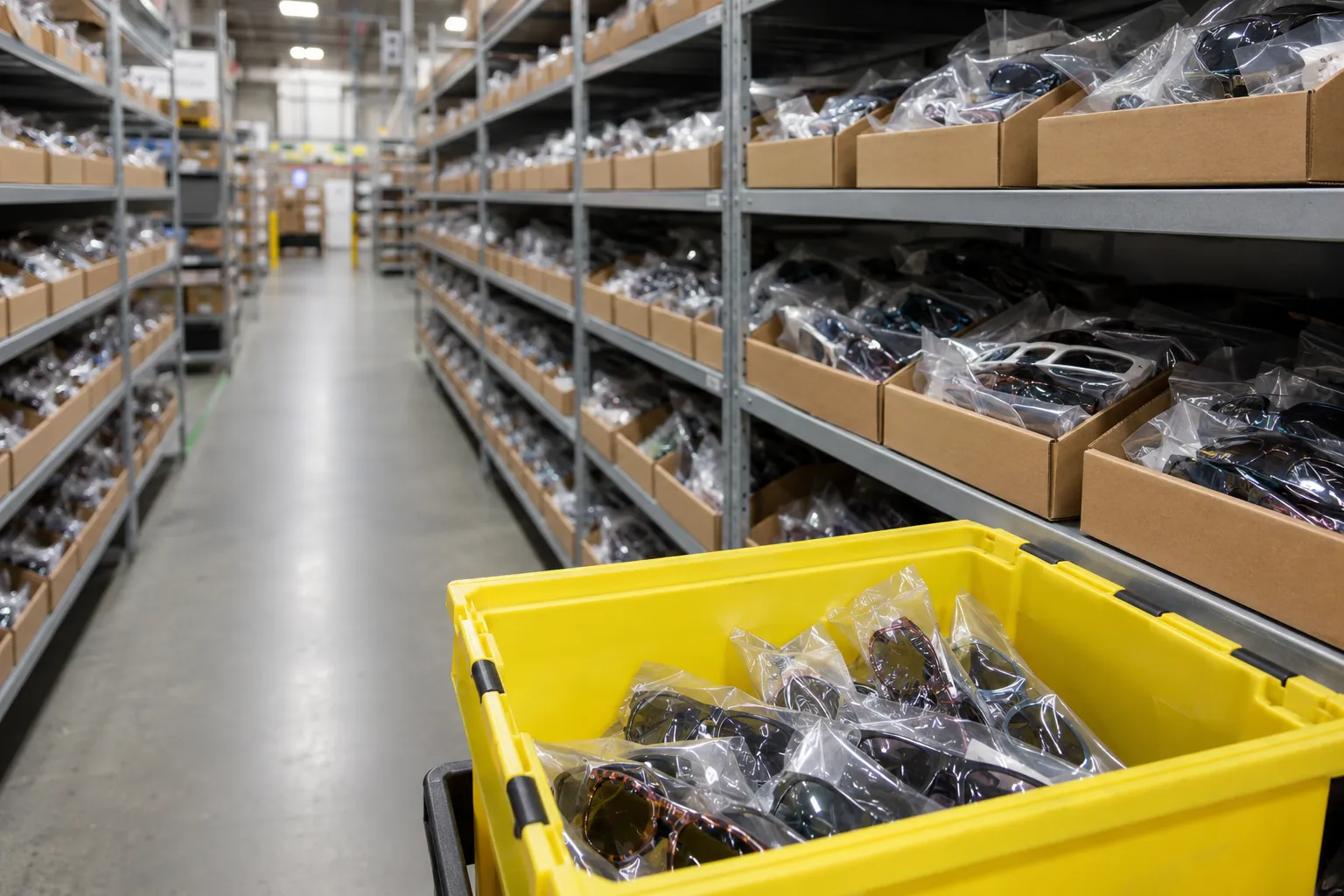
This guide is for buyers who already approved the quote and now need the purchase order to control production. That is where many preventable disputes start. The quote is approved, but the PO is vague on construction, lenses, decoration, packaging, QC, or delivery terms. Then teams work from different assumptions. Write the PO as a control document, not just a payment document. The details below help reduce rework, cost disputes, and shipment delays on custom sunglasses orders.
Use the PO as the production control document
Many buyers still treat the purchase order mainly as a finance document. For custom sunglasses, that is not enough. The PO should also serve as a short production control document that ties together the approved quote, tech pack, approved sample, packaging brief, and shipping terms.
If the quote is precise but the PO is loose, the factory may build to the PO plus whatever was last discussed in email or chat. That is where trouble starts. Simple rule: if a detail can affect cost, appearance, compliance, packaging volume, freight cost, or lead time, put it on the PO.
At minimum, the PO should reference:
- Style code, color code, and revision number
- Approved sample number or approval date
- Frame material, finish, and hardware specification
- Lens material, tint, category, coating, and required standard
- Branding method, size, color, and placement by location
- Packaging components, packout sequence, and carton limits
- Quantity by SKU, color, and destination if split shipment applies
- Unit price by line item, plus any tooling or test charges
- Incoterm, loading port, ship window, and consignee details
- Inspection standard, defect criteria, and document requirements
A useful control step is to place the sample approval reference on every style line. Example: Style LS-214 / Rev B / PPS approved 2025-02-12. That makes it less likely that an old drawing, lens color, or logo file gets used by mistake.
If a supplier holds certifications such as ISO 9001 or has completed a social compliance audit such as BSCI, that may support process consistency or buyer due diligence. It does not replace a clear PO. The factory still needs exact line-item instructions.
Lock the product spec before the delivery date
The first job of the PO is to freeze the product definition. If the front curve, hinge type, logo hardware, or lens tint is still changing, the delivery date is not under control yet.
Write each line item in build language, not marketing language. Example: TR90 injection frame, matte black Pantone Black 6C equivalent, TAC polarized smoke lens, category 3, spring hinge, outer temple laser logo, lens base 6. Or: cellulose acetate frame, 2-tone laminated sheet, CNC bevel, polished finish, CR39 solid green lens, 5-barrel hinge, embedded bright gold metal logo plate.
Dimensions should be measurable. At PO level, include eye size, bridge, temple length, and base curve if fit or silhouette depends on it. Common examples are 52-20-145 or 55-17-145. If a style has an oversized fashion shape, add a front-width tolerance too, for example front width 145.0 mm +/- 1.0 mm.
Useful PO tolerances include:
- Eye size: +/- 0.5 mm
- Bridge: +/- 0.5 mm
- Temple length: +/- 1.0 mm
- Logo placement: +/- 0.5 mm from approved sample
- Left-right lens color variance: no visible mismatch under controlled lighting against the approved sample
- Temple opening symmetry: difference not more than 2.0 mm when laid flat
Also state what is not allowed. Be blunt. No visible sink marks on the front surface. No acetate color streaking on transparent parts. No lens edge chips. No exposed glue around metal plates. No mixed screw or hinge finish. No warpage that causes unstable tabletop balance.
If the quotation was based on MOQ 50 pairs per design, state whether colors may be mixed within that MOQ. This matters. Many factories allow color assortments only when frame construction, lens construction, and branding stay the same. If lens color, hardware finish, or logo process changes, setup, approval, and rejection risk may change too.
Define lens specs and compliance by SKU
Lenses create more post-approval disputes than many buyers expect. Two smoke lenses can look similar in a photo and still differ in visible light transmission, polarization performance, coating durability, or category classification.
Your PO should specify lens material, tint, finish, and required market standard by line item. Writing only UV400 is not enough. UV protection is one characteristic, not a full market requirement.
| PO item | What to specify | Why it matters |
|---|---|---|
| Lens material | PC, TAC polarized, or CR39 | Changes unit cost, optical characteristics, impact behavior, and sourcing time |
| Tint/category | Example: cat. 3 solid smoke, cat. 2 gradient brown, silver mirror over smoke | Controls appearance and visible light transmission range |
| Base curve | Example: base 4, 6, or 8 | Affects lens cut, fit, wrap profile, and wearer perception |
| Required standard | CE EN ISO 12312-1, ANSI Z80.3, or AS/NZS 1067 as applicable | Determines testing scope, labeling, and technical requirements for the target market |
| Chemical compliance | REACH or other buyer-specified market requirement | Helps control restricted-substance risk in frames, coatings, and prints |
| Import support | Any required filing or registration references, such as FDA registration if requested by the buyer for applicable import processes | Supports documentation flow but does not replace product specification or testing |
Material choice should be deliberate. PC is common when impact resistance and cost control matter. TAC polarized lenses are common when polarization is required, but the buyer still needs to define the lens construction and acceptance criteria clearly. CR39 is often chosen for optical performance and appearance, but it may affect cost and sourcing lead time.
If mirror coating is required, define acceptable variance. Example: silver mirror with batch-to-batch appearance matched to approved sample under daylight comparison. If polarization is mandatory, say so directly. State that every finished unit must use the specified polarized lens construction and that inspection must confirm the presence of polarization according to the agreed QC method. If pre-shipment samples must include a polarization check card or test report, note that on the PO.
Most important, tie the required standard to the exact SKU. Do not assume the supplier will infer it. If the PO does not clearly state which standard applies to which style, testing may be missed or scheduled too late to fix the lens construction economically.
Spell out decoration, hardware, and cosmetic standards
Branding details are where vague wording turns into visible defects. A PO that says gold temple logo is incomplete. That could mean pad print, hot foil, laser infill, or a metal logo plate. Each method changes cost, tooling, lead time, and appearance.
List decoration by location and process. For example:
- Left temple exterior: laser engraving, 18 mm from hinge center, logo width 12.0 mm
- Right temple exterior: recessed metal logo plate, bright gold, flush fit, logo width 10.5 mm
- Inner right temple: pad print size 28 x 2.5 mm, white ink, model code and size
- Inner left temple: country of origin and compliance marks, white pad print
Then define the pass standard. Typical controls include:
- Logo position centered within +/- 0.5 mm of approved sample
- Pad print must pass the agreed adhesion check without visible lifting
- Laser mark must be legible with no obvious burn halo under normal inspection
- Metal plate must sit flush with no visible glue overflow under normal inspection
- Hinge opening and closing must feel consistent across the pair, with no free play
Hardware should be named specifically. Write 3-barrel standard hinge, 5-barrel hinge, or spring hinge rather than just metal hinge. On acetate styles, also note whether a temple core is required and whether the wire shape must match the approved sample. For plated hardware, specify finish tone: bright gold, light gold, gunmetal, silver, matte black, and so on. Mixed hardware finish within the same shipment is a common, avoidable defect.
This section matters because decoration and hardware are often completed after frame production is already committed. If branding is rejected late, rework can eat up the ship window even when the frames and lenses are otherwise finished.
Show the pricing logic, not just the total
A PO that shows only one total price leaves room for arguments later. Break out the pricing logic so both sides can see which assumptions hold the number in place.
For custom sunglasses, common pricing variables include quantity tier, frame material, lens construction, branding method, and packaging content. Example logic might look like this: MOQ 50 pairs per design for opening orders, with different unit pricing at 300, 1000, and 5000+ pairs. An injection frame with PC lens and polybag packout should not be assumed to cost the same as an acetate frame with CR39 lens, metal logo plate, and folding case.
| Cost driver | What to put on the PO | Typical impact on cost and timing |
|---|---|---|
| Quantity tier | 50 / 300 / 1000 / 5000+ pairs | Changes unit price, overage logic, and sometimes carton configuration |
| Frame material | Injection plastic, TR90, or acetate | May change process steps, material cost, and production schedule |
| Lens type | PC, TAC polarized, or CR39 | Usually changes material cost and may affect sourcing time |
| Branding method | Laser, pad print, foil, or metal plate | Can change tooling, labor content, and rejection risk |
| Packaging | Polybag, pouch, folding case, rigid box, barcode labels | Often affects material cost, labor time, and freight dimensions |
State clearly whether the following are included or separate:
- Tooling or logo mold charges
- Pre-production sample charges
- Lab test charges
- Barcode labels and carton marks
- Spare overage for replacements
- Export cartons and inner cartons
If sample fees will be credited back against the bulk order, write the amount and the condition for credit. If the quote assumes one logo position but the PO requires two, that difference should be visible right away. A clean PO makes it harder to argue later about what was included in the approved price.
Specify packaging before freight problems start
Buyers often define the frame and lens carefully, then write standard packing on the PO. That is a mistake. Packaging affects labor time, carton dimensions, chargeable weight, labeling accuracy, and transit protection.
Write unit pack and carton packout in one controlled block. Example:
- Each pair with lens protection bag
- Each pair inside microfiber pouch, then inserted in folding paper box
- 12 units per inner carton
- 60 units per master carton
- Master carton maximum gross weight 12 kg
- Master carton size not to exceed 62 x 38 x 32 cm
- Barcode label on retail box right side panel, 40 x 25 mm
- Carton mark to show PO number, style code, color code, quantity, and country of origin
If your retailer, importer, or 3PL has carton weight or label placement rules, put them on the PO. Otherwise the factory may optimize for packing efficiency and create receiving problems later.
Custom packaging files also need revision control. State the final artwork approval date and file version. A delay in printed box approval can hold shipment even when the sunglasses are finished. If replacement overage is needed, specify it before packing, such as 2% spare units packed separately by style or no spare units unless approved in writing.
This is also where barcode and labeling errors should be prevented. If each colorway needs its own barcode or an extra fulfillment label, call that out by SKU line. Label rework after final packing is slow and expensive.
Set milestones, QC rules, and change control
Bulk lead time means little unless the PO defines what starts the clock. For most custom eyewear orders, production time should begin only after all required approvals are complete: sample, artwork, deposit, and any custom packaging file approval if packaging is printed.
Use milestone language directly on the PO:
- Pre-production sample approval date
- Deposit receipt date
- Packaging artwork approval date
- Bulk production start date
- Inline inspection window, for example when 20%-30% of goods are completed
- Final inspection date, usually after 100% packing completion
- Ex-factory date or port handover window
Then state shipping terms clearly: EXW, FOB, or other agreed Incoterm; loading port; consignee; and whether partial shipment is allowed. If the business model includes retailer cancel dates or late-delivery penalties, include them on the PO so the supplier can assess scheduling risk before bulk starts.
The last part of the PO should answer three questions: how the goods will be checked, what documents must ship with them, and what happens if changes are requested after approval.
For QC, define inspection timing and acceptance standard. If you use a third-party final inspection, state who books it, what percentage of packing must be complete before inspection, and what the pass criteria are. If you follow an AQL plan, state the level and whether any defect types are zero tolerance.
Common sunglasses defect points to call out include lens scratches, warped fronts, loose hinges, off-center logos, poor lens fitting, temple imbalance, color mismatch, and incorrect carton labels. If one issue matters more in your sales channel, say so.
For documents, list exactly what must be supplied:
- Commercial invoice
- Packing list
- Carton breakdown by SKU and color
- Inspection report if required
- Compliance documents tied to the ordered styles and target market
- Any sample retention or golden sample reference notes
If the order requires proof related to specific systems or buyer onboarding, state that separately and precisely. Examples may include a request for the supplier's ISO 9001 certificate, latest BSCI audit report if relevant to your vendor file, or test reports showing conformity to CE EN ISO 12312-1, ANSI Z80.3, or AS/NZS 1067 for the applicable SKU and market. Where chemical compliance is required, reference REACH or the buyer's stated requirement clearly.
Finally, set change-control rules. After the PO is approved, any change in material, lens type, logo method, packaging, barcode, or ship mode should be confirmed in writing with price effect and lead-time effect before implementation.
Simple rule: if a detail affects cost, appearance, compliance, packing volume, or timing, write it on the PO in measurable terms.
That is how a purchase order becomes a working control document for custom sunglasses production.
Have a custom sunglasses project in mind?
Send us your styles, target market and quantities and we will return a detailed quote with MOQ, lead time and a sample plan.
Get a QuoteWhy source this from Wenzhou with LumiShades
Wenzhou in Zhejiang Province is widely regarded as China’s eyewear manufacturing capital, producing a large share of the world’s sunglasses. That concentration matters to buyers: a deep local supply chain for acetate sheet, hinges, lens blanks, plating and packaging means shorter component lead times, easier color and material matching, and a workforce with decades of eyewear-specific skill. LumiShades has manufactured in this ecosystem since 2009, and our vertical integration — in-house injection molding, acetate cutting, CNC milling, lens tinting, decoration and quality control — means no part of your order is quietly subcontracted to a workshop you cannot audit.
For international buyers, that vertical control translates into accountability. When a single factory owns every step, defects are traced and fixed at source rather than bounced between vendors, and your specifications survive intact from first sample to bulk. We back this with 15+ years of experience, shipments to 60+ countries, more than 5 million pairs produced per year and a 98.5% on-time delivery rate. Our certifications — CE EN ISO 12312-1, FDA registration, ANSI Z80.3, AS/NZS 1067, REACH, ISO 9001 and BSCI audit — mean the compliance documentation your market requires already exists. Explore our manufacturing capabilities and quality control process to see how this works in practice.
Frequently asked questions
Can I use one PO for multiple sunglasses styles and colors? Yes, but only if each SKU is listed separately. For each line, include style code, frame color, lens material, lens category or tint, branding method, packaging requirement, barcode requirement, quantity, unit price, and target market if compliance differs. Do not combine different constructions under one generic line item. If one style uses TAC polarized lenses and another uses PC lenses, they should not share the same vague description.
What is the most commonly missed PO item on custom eyewear orders? Packaging is one of the most frequently under-specified areas. Buyers often approve the sunglasses but do not define pouch type, retail box, barcode label placement, carton marks, inner-pack quantity, or carton weight limits. To prevent delays and extra cost, add a single packaging block on the PO that states unit pack, inner carton quantity, master carton quantity, carton size or weight limits, barcode format, and required carton markings.
Should compliance standards be listed on the PO even if the supplier already has certifications? Yes. Put the exact required standard on each relevant line item, such as CE EN ISO 12312-1, ANSI Z80.3, or AS/NZS 1067, depending on the market. If chemical compliance is required, state REACH or the buyer's stated requirement. Supplier certifications or factory-level documents do not replace product-specific build, labeling, and testing requirements. A practical step is to add one compliance column to the PO so every SKU shows its target market and required standard.
How do I avoid unit price changes after approving the quote? Match the PO to the quoted assumptions exactly: quantity tier, frame material, lens type, logo method, packaging, test scope, and shipment term. Then show whether tooling, sample charges, test charges, labels, and cartons are included or separate. Before issuing the PO, compare the quote and PO line by line and highlight any change in color assortment, hardware finish, lens construction, or packaging. If anything changes, ask for written confirmation of the revised cost before production starts.
When should the bulk lead time start counting? Only after all required approvals are complete and dated on the PO. In most custom programs, that means at least sample approval, artwork approval, deposit receipt, and any printed packaging approval. To avoid disputes, write the trigger directly on the PO, for example: <strong>bulk lead time starts after PPS approval, packaging artwork approval, and deposit receipt</strong>. Also list the ex-factory date or shipment window so there is a clear endpoint as well as a clear start point.
Ready to start?
Explore our cat-eye sunglasses or request a quote — our sales team replies within 12 hours.
Request a Quote