
How to Split Sunglasses Orders Across Colors
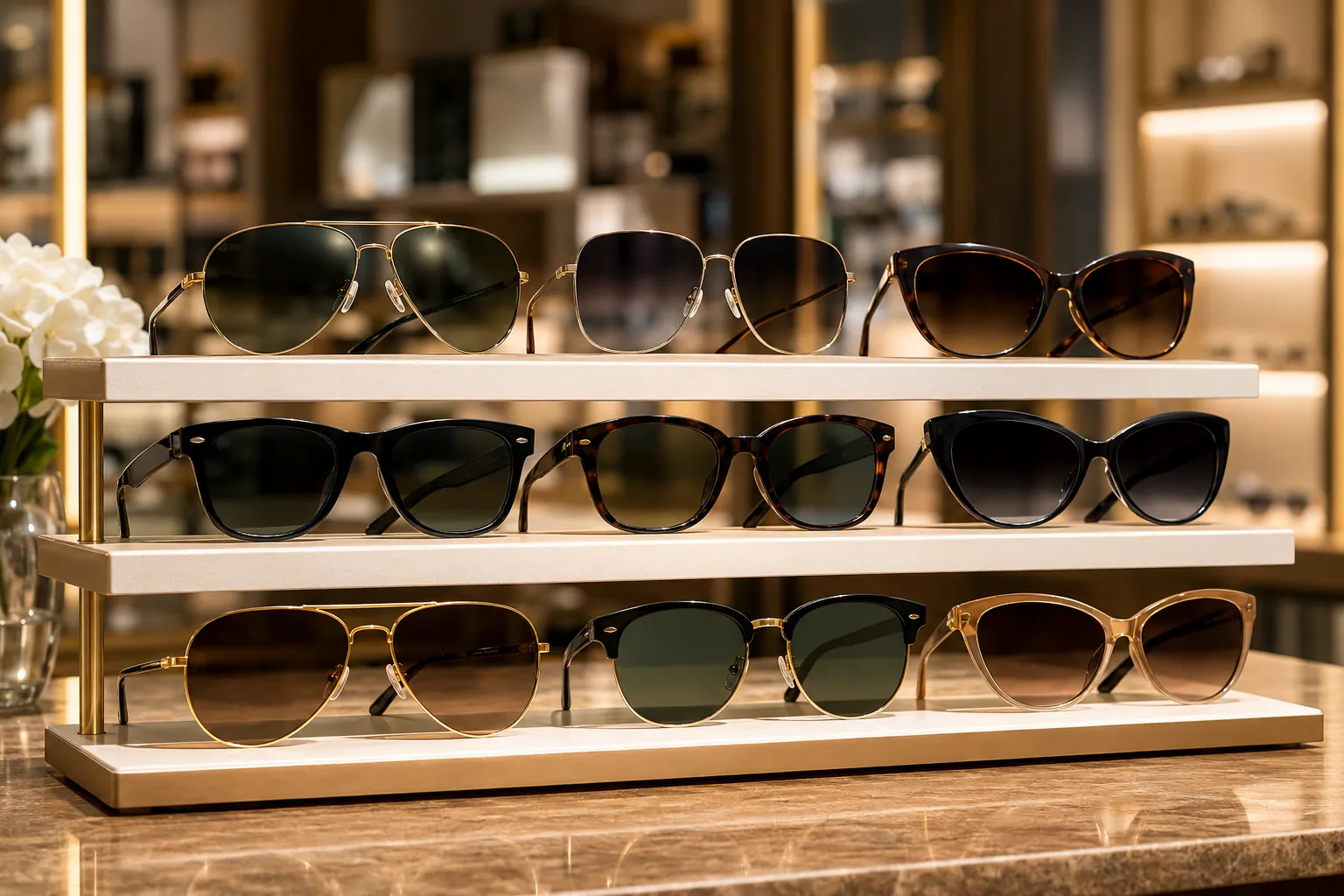
This guide is for brand owners, importers, distributors, and retailers buying one sunglasses style in multiple colors. The goal is not just to offer variety. It is to build the split in a way the factory can actually run without extra material holds, repeated approvals, or packing errors. Start with production limits, approve one master sample first, and keep the main variables under control. Do that, and quoting gets clearer, preventable mistakes drop, and repeat orders get easier.
Start with the bottleneck, not the color chart
Buyers often start with the sales story: black, tortoise, crystal, and a few seasonal colors. Production starts somewhere else. The first question is how many changeovers the assortment creates across frame production, lens processing, decoration, and packing.
For one sunglasses style, the easiest order is one frame color, one lens color, and one branding method. Add a second frame color and the supplier may need separate material staging, separate cosmetic review, separate lens pairing, and a second packing ratio. Add mirrored lenses and metal logo plates, and the order no longer behaves like one simple style. It behaves like several small programs built on the same frame shape.
The main bottlenecks in multi-color orders are usually frame material setup, lens tint or coating setup, decoration changeover, and final assortment packing. Injection-molded frames can often be grouped by color family, but pale crystal or translucent colors usually need closer cosmetic review. They show flow marks, gate marks, and contamination more easily than black. Acetate brings a different set of issues: sheet availability, pattern appearance, cutting yield, and hand-finishing consistency.
A good rule is simple: vary one major element at a time. If you want four frame colors, keep the lens program and branding method as consistent as possible. If you want several lens looks such as smoke, brown, mirror blue, and gradient gray, reduce the number of frame colors. A small print-color change may need only a short setup and approval check. A combined change in frame color, lens type, and logo hardware can slow the order fast if approvals are not fully closed before production.
- Low disruption: same frame material, same lens, same branding method, only a small print-color change
- Medium disruption: same frame construction, but 2-3 frame colors and 2 lens tints
- High disruption: multiple frame colors plus mirrored or gradient lenses plus mixed branding methods
That is why assortment planning should start from the factory sequence, not the line sheet.
Use a clear framework for frame, lens, branding, and compliance
The cleanest way to control complexity is to approve the style in layers. Review each layer for MOQ impact, setup time, cosmetic risk, and compliance before you confirm the color split.
- Frame layer: Confirm whether the color is molded into injected material, sprayed after molding, laminated, or cut from acetate sheet. Mold-in colors can be stable when the material and process are stable, but each color still needs its own material planning and machine cleanup between runs. Acetate colors depend on sheet stock, pattern appearance, and cutting yield, so the approved appearance should be tied to an actual sheet reference where possible.
- Lens layer: Group lens colors by process family. Solid smoke, G-15 green, and brown tints are usually easier to batch than mixing flash mirror, full mirror, and gradient lenses in very small lots. Lens visual category, transmittance, and color consistency should be checked for each lens version. Do not assume one approved lens covers the rest.
- Branding layer: Keep logo position and branding method constant if possible. Pad print, laser engraving, hot stamping, and metal logo plates each need different setup, fixtures, and inspection points. A one-color pad print is often the easiest to control. Metal plates can look more premium, but they add alignment checks, surface-adhesion concerns, and curing time if adhesive is used.
- Compliance layer: Confirm the market requirement for each lens version, such as CE EN ISO 12312-1, ANSI Z80.3, or AS/NZS 1067 where relevant. Do not treat a mirrored lens and a plain smoke lens as the same approval case just because the frame is identical.
This framework improves the sourcing discussion. Do not ask, "Can we do six colors?" Ask, "How many distinct frame programs, lens programs, and branding methods are inside this style?" That gives the supplier a much better basis for quoting lead time, approval needs, and handling risk.
Plan the split around MOQ, price breaks, and real batch efficiency
A low MOQ is not the same as an efficient color split. If the total style quantity is chopped into too many small SKUs, you lose the benefit of shared setup, shared inspection flow, and consolidated packing.
In practice, unit price often improves at higher quantity levels, but the real effect depends on how the order is divided. A common mistake is to place 300 pairs total, then split them into six colors of 50 each. On paper, the MOQ may be met. On the factory floor, the order behaves like six small runs with repeated material handling, lens matching, carton sorting, and final assortment checks.
| Total Style Qty | Example Color Split | Factory View | Likely Cost Effect | Lead-Time Risk |
|---|---|---|---|---|
| 300 pairs | 3 colors x 100, same smoke lens, same pad print | Efficient small program with shared batching | More efficient than a heavily fragmented split | Low |
| 300 pairs | 6 colors x 50, mixed lenses and mixed logos | Fragmented; repeated setup across departments | Higher unit cost from small-batch handling | Medium to high |
| 1000 pairs | 4 colors x 250, 2 lens tints, one branding method | Balanced for frame production, lens prep, and QC | Better chance of volume pricing | Low |
| 1000 pairs | 8 colors, mirrored and gradient lenses, mixed plate finishes | Complex routing with more inspection points | Savings reduced by changeover cost | Medium |
| 5000 pairs | 5 colors x 1000, stable lens family and same logo | Efficient bulk scheduling | Strongest pricing leverage | Low |
The rule is practical. Keep the assortment tighter at lower volumes, then expand it only when each SKU has enough quantity to support organized batching. If you need a wider color offer for launch, a phased release is often easier to control than forcing every color into one purchase order.
Approve one master sample, then lock color with hard references
The fastest approval flow starts with one master sample. Approve fit, construction, hinge alignment, dimensions, and logo position first. Then approve colorways against that master sample instead of treating each one as a full redevelopment.
Sample timing varies by construction, trim complexity, and whether tooling or special lens treatments are involved. Use the sample stage to lock the non-color basics first. Then review color-sensitive items with physical references wherever appearance matters.
- Master sample approval: front width, temple length, bridge fit, lens seating, hinge function, finish level, branding location
- Color approval: frame tone, translucency, lens density, gradient position, mirror appearance, temple-tip match
- Decoration approval: print color, engraving visibility, foil appearance, plate finish, alignment tolerance
- Packing approval: barcode, color naming, inner carton ratio, carton marks, insert language
For acetate, request the actual sheet code and confirm whether the approved look represents a target average or an acceptable range. Tortoise, marble, and laminated patterns do not repeat exactly from piece to piece. For injected frames, ask for the resin color reference or agreed color standard, while keeping in mind that translucent colors usually show more visible variation than opaque black. For lenses, ask for the tint reference, lens category where applicable, and destination-market compliance relevance.
Do not approve color from phone photos alone. A black frame can shift toward charcoal. A mirror coating can read silver instead of blue. A gradient can start too high or too low while still looking fine on screen. If appearance matters, require physical approval samples or retained standards and write the acceptance points into the pre-production package.
Group materials the way the factory runs them
Factories do not usually schedule production in the same order buyers build assortment pages. They batch by process and by risk. If your order structure follows that logic, output is smoother and rework is easier to contain.
For injected sunglasses, a typical flow is material preparation, molding by color family, trimming, polishing, lens fitting, decoration, assembly, and final QC. Dark opaque colors often hide minor cosmetic variation better than pale or translucent colors. That means lighter shades may need more approval time and more sorting.
For acetate, the route is usually sheet selection, rough cutting, CNC machining, tumbling, hand polishing, hinge fitting, lens fitting, branding, assembly, and inspection. Here, sheet yield and pattern appearance matter. One acetate color may cut with low waste, while a directional or laminated pattern may need more selective panel use to keep left-right appearance reasonably balanced.
Lens tinting and coating are also commonly grouped as separate batches because visual consistency matters more than style sequence. Four frame colors sharing one smoke lens can be simpler to manage than two frame colors paired with four different lens treatments. The same logic applies to branding. One hardware finish across all SKUs is easier to control than several finishes spread across small lots.
Best practice: expand frame colors or expand lens and decoration options, but do not push both aggressively on a first run unless total quantity is high enough to support clean separate batches.
Even if a supplier controls multiple processes in-house, poor assortment planning still creates waiting time between departments. Vertical integration helps. It does not remove the need for practical batch planning.
Protect lead time with one complete pre-production package
Bulk lead time is most reliable when approvals are fully closed before material booking starts. Most delays do not come from one major failure. They come from unresolved details after deposit: lens code still open, logo finish still open, carton ratio still unclear, or compliance labeling still under review.
The fix is straightforward. Use one complete pre-production package under version control. One current document is safer than scattered approval points across emails, chat messages, and marked-up photos.
- Style code: confirmed construction, key measurements, hinge specification, lens base, and material callout
- Color matrix: frame color, lens color, decoration color or hardware finish, and exact quantity per SKU
- Approved references: sample code, resin reference, acetate sheet code, lens tint code, print reference, or hardware reference
- Compliance target: destination-market standard, labeling language, and required shipment documents
- Packing ratio: inner carton breakdown by color and outer carton marking format
- Critical tolerances: lens match standard, print alignment, visible pattern balance, and cosmetic expectations by color family
Once that package is locked, purchasing can book materials and packing components against a stable specification. If it is not locked, the order becomes a moving target and the schedule loses buffer. In mixed-color orders, one unresolved SKU detail can hold up packing for the full shipment.
Watch the failure points that hit multi-color orders hardest
Most delays and claims in color assortments come from the same few problems. Good buyers watch them early, not at final inspection.
- Lens mismatch: same named tint, but visible density or mirror appearance differs between batches. Control it with a retained standard and batch-to-standard comparison during QC.
- Acetate variation: tortoise and laminated sheets do not look identical. Control it by approving an acceptable tone and pattern range rather than one perfect image.
- Injected frame shift: crystal and pale colors reveal flow marks, gate marks, and shade drift more clearly than black. Control it with realistic cosmetic criteria by color family.
- Decoration inconsistency: metallic prints and logo plates can read differently on black, crystal, matte, and tortoise surfaces. Control it by checking every substrate version, not just one sample.
- Carton assortment errors: total quantity is correct, but the SKU ratio is wrong. Control it with approved pack ratios and final assortment counts in QC records.
Final inspection should verify more than total quantity. It should confirm color ratio, lens appearance, hinge function, decoration application, barcode and label accuracy, and carton marks by SKU. For shipments serving more than one market, confirm that the compliance labeling and supporting documents match the actual lens version shipped.
Also keep the terms straight. CE EN ISO 12312-1, ANSI Z80.3, AS/NZS 1067, REACH, FDA registration, ISO 9001, and BSCI are not interchangeable. They cover different product, regulatory, system, or social-audit topics and should be checked for their actual purpose in the transaction.
For a first run, keep it conservative: one style, a limited number of colors, one lens family, and one branding method. Then widen the split on repeat orders once sell-through data shows which SKUs deserve the complexity.
Have a custom sunglasses project in mind?
Send us your styles, target market and quantities and we will return a detailed quote with MOQ, lead time and a sample plan.
Get a QuoteWhy source this from Wenzhou with LumiShades
Wenzhou in Zhejiang Province is widely regarded as China’s eyewear manufacturing capital, producing a large share of the world’s sunglasses. That concentration matters to buyers: a deep local supply chain for acetate sheet, hinges, lens blanks, plating and packaging means shorter component lead times, easier color and material matching, and a workforce with decades of eyewear-specific skill. LumiShades has manufactured in this ecosystem since 2009, and our vertical integration — in-house injection molding, acetate cutting, CNC milling, lens tinting, decoration and quality control — means no part of your order is quietly subcontracted to a workshop you cannot audit.
For international buyers, that vertical control translates into accountability. When a single factory owns every step, defects are traced and fixed at source rather than bounced between vendors, and your specifications survive intact from first sample to bulk. We back this with 15+ years of experience, shipments to 60+ countries, more than 5 million pairs produced per year and a 98.5% on-time delivery rate. Our certifications — CE EN ISO 12312-1, FDA registration, ANSI Z80.3, AS/NZS 1067, REACH, ISO 9001 and BSCI audit — mean the compliance documentation your market requires already exists. Explore our manufacturing capabilities and quality control process to see how this works in practice.
Frequently asked questions
Can I split a 300-pair order into six colors? You can, but ask the supplier to quote it two ways: your requested six-color split and a simpler split with fewer SKUs. Then compare unit price, lead time, approval burden, and packing risk. Six colors at 50 pairs each are usually harder to run cleanly unless the construction is very simple and the lens and branding stay identical across all colors. At 300 pairs total, many buyers get a cleaner result with 2-3 colors and more units per SKU.
Do all lens colors under one style need separate approval? Yes, if the tint, mirror, gradient, coating, or lens category changes. Treat each distinct lens version as its own approval point for appearance and market compliance. In practice, ask for a lens matrix showing SKU code, lens description, intended market, and the standard being checked, such as CE EN ISO 12312-1, ANSI Z80.3, or AS/NZS 1067 where applicable. Do not rely on one approved smoke lens to cover a mirrored or gradient version.
How should I handle acetate color variation? Approve acetate against a defined range, not a single ideal piece. Ask the supplier to identify the sheet code, provide approval samples that show the expected pattern character, and confirm what counts as acceptable left-right balance on the front. On the PO and pre-production sheet, state that tortoise, marble, and laminated acetate are pattern materials and must match the approved range rather than one exact visual copy.
What documents should I lock before bulk production starts? At minimum, lock six items: the approved sample code, the SKU color matrix with quantities, frame and lens references, branding reference, packing ratio, and compliance target by market. Also confirm carton marks, barcode mapping, and any critical appearance notes for difficult colors or patterned acetate. Keep all of it in one version-controlled pre-production file so purchasing, production, and QC work from the same specification.
Does FDA registration replace CE EN ISO 12312-1 or ANSI Z80.3? No. FDA registration does not replace a product-standard requirement such as CE EN ISO 12312-1 or ANSI Z80.3. These terms cover different compliance topics, so buyers should ask exactly what the supplier is providing: product test evidence, regulatory registration status, quality-system certification such as ISO 9001, social-audit status such as BSCI, or chemical compliance information such as REACH. Before shipment, match the documents to the destination market and to the exact lens version being sold.
Ready to start?
Explore our aviator sunglasses or request a quote — our sales team replies within 12 hours.
Request a Quote