
Bulk Polarized Sunglasses: Questions to Ask First
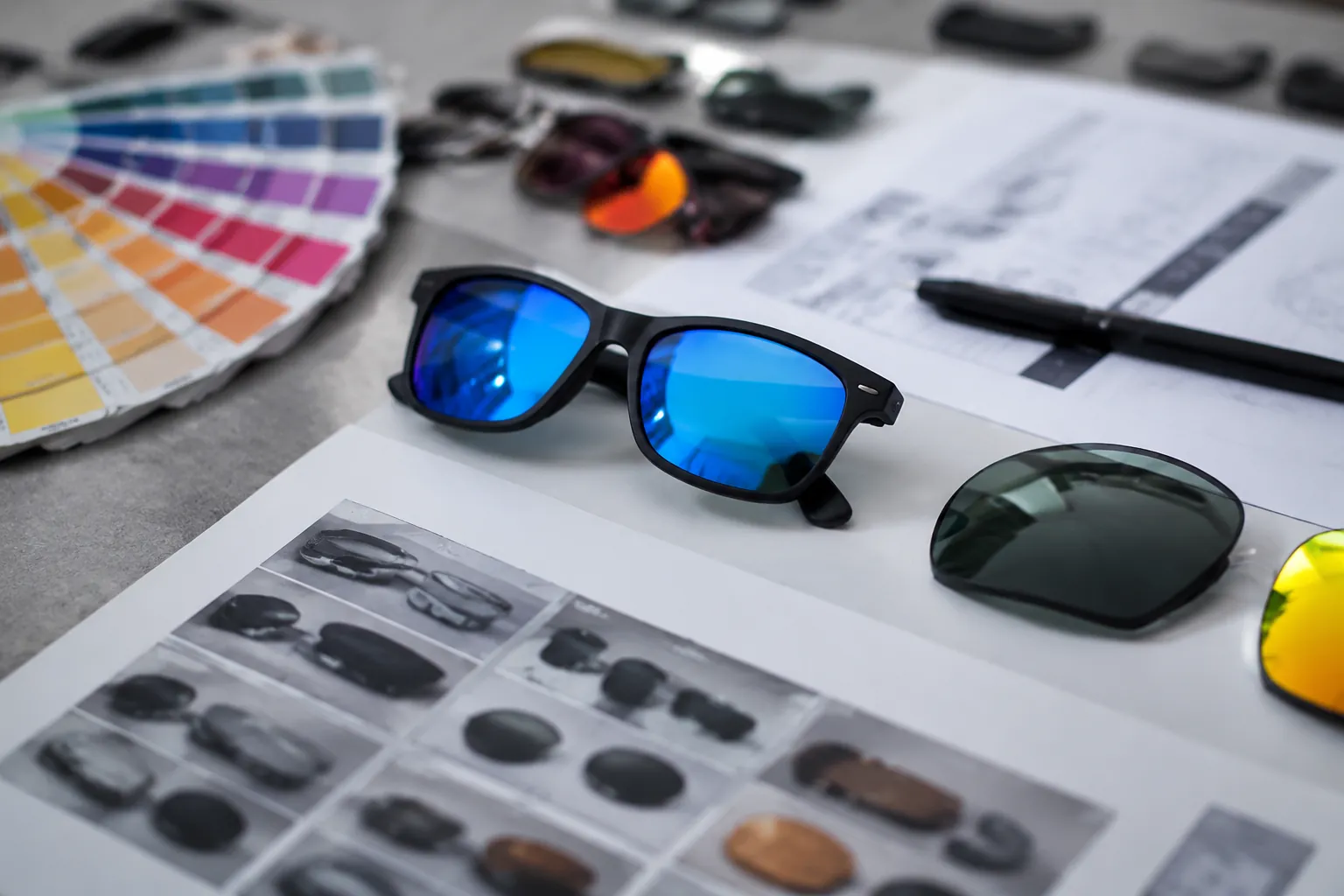
This guide is for brand owners, importers, distributors, and retailers sourcing polarized sunglasses in volume. The goal is simple: ask the right technical, commercial, and compliance questions before you approve samples or place a purchase order. Polarization can add value, but it also adds cost, process control, and failure points. Use the questions below to decide whether it belongs in your program.
Start with the commercial question: do you need polarized lenses?
Not every sunglasses program should use polarization. Buyers often ask for it because the term is familiar, not because the product needs it. That can be a mistake if the target price is tight or the item is mainly promotional.
Start with the use case. Polarized lenses reduce glare from horizontal reflective surfaces such as roads, water, and flat bright areas. That matters most for driving, fishing, boating, and some outdoor sport lines. For a low-cost giveaway, event merch, or a fashion-first frame, the feature may not justify the extra cost and QC work.
Ask this blunt question: Will polarization improve sell-through, positioning, or retail price enough to matter? If not, compare polarized and non-polarized versions of the same frame, with the same packaging and decoration, and judge the full landed-cost difference. Not just the lens price.
| Use case | Polarized makes sense? | Why | Buyer note |
|---|---|---|---|
| Outdoor retail sport line | Usually yes | Glare reduction is a clear functional benefit | Check optical quality and consistency across production lots |
| Driving-focused collection | Often yes | Road glare reduction is useful in daily use | Verify tint category, lens clarity, and market labeling requirements |
| Beach or fishing promotion | Often yes | Water glare reduction is easy for end users to notice | Better suited to mid-tier or premium promo budgets |
| Low-cost event giveaway | Often no | Unit cost is usually the main constraint | Standard UV-tinted lenses may be the better choice |
| Fashion-only fast-turn style | Maybe not | Customers may buy on appearance, not lens function | Budget may be better spent on frame finish or packaging |
If you are unsure, ask for a side-by-side quote and sample set. The right call is usually commercial first. Technical second.
Ask how the polarized lens is built
Two lenses can both be called polarized and still perform very differently. Do not stop at the label. Ask how the polarizing film is built into the lens and how the factory controls that process.
In bulk eyewear, polarized lenses are often made by laminating a polarizing film into the lens structure. If control is weak, the result can be haze, bubbles, delamination, stress marks, edge defects, or uneven polarization. Those flaws may not show in a product photo. They show on the face.
Ask these questions:
- How is the polarized lens constructed?
- What lens material is used: TAC, PC, CR-39, or another material?
- How does the factory control film alignment between left and right lenses?
- What are the rejection criteria for bubbles, haze, scratches, edge chips, and delamination?
- How is lens stress checked after fitting into the frame?
- Is polarization tested during production, or only at final inspection?
Material choice matters. TAC polarized lenses are common in value and mid-range sunglasses. PC lenses are often used when impact resistance matters, but the process has to be controlled carefully. CR-39 can offer good optical clarity, but it is less common in cost-driven bulk programs and may not fit every frame design.
When polarized lenses fail, it is usually one of three things: weak glare reduction, visible cosmetic defects inside the lens structure, or optical distortion introduced during forming, coating, or fitting. The supplier should be able to explain the build and the control points. If they cannot, that is a problem.
Define optical risks before sample approval
Most complaints about polarized sunglasses are about what the wearer sees. Not whether the frame arrived in one piece. Distortion, waviness, double images, color inconsistency, and lens stress can turn a bulk order into a returns problem fast.
Do not approve samples from photos alone or from a quick glance. Check them in person under natural light and indoor light. Use the same checklist every time.
- Visual distortion: Hold the frame at arm's length and look through straight references such as tiles, shelving, door frames, or window lines. Rotate the frame slowly. Lines should not bend or swim excessively. On highly wrapped sport frames, some change is normal, but both lenses should behave the same way.
- Polarization consistency: Use an LCD screen or a polarization test card and rotate the frame. Darkening should change evenly between the two lenses. If one lens behaves differently, ask why.
- Cosmetic defects: Inspect for trapped dust, bubbles, flow marks, edge chips, coating defects, or stress whitening near the rim or hardware points.
- Color match: Compare left and right lenses under daylight and retail lighting. A visible mismatch in shade or hue is a valid rejection point for most retail programs.
- Frame-fit stress: Check for rainbow-like stress patterns, whitening, or pressure around the lens edge after assembly. These can signal an unstable fit that may worsen during transport or temperature change.
Write the acceptance criteria down before approval. Not after production starts. If left-right color matching matters, state it. If a certain level of distortion is acceptable on a wrapped frame, state that too. Clear rules reduce arguments later.
Price bands: what you pay for, and where buyers get caught
Polarization adds cost, but the film is only part of it. The real cost impact also comes from tighter process control, higher rejection risk, more careful left-right matching, and extra inspection time. Ask for pricing broken out by component. Do not accept one blended number.
The common mistake is treating the lens upgrade as the only variable. In many bulk eyewear programs, decoration, packaging, and compliance support can move total cost as much as the polarized lens itself.
| Order size | Typical buyer expectation | Cost pressure point | What to ask for |
|---|---|---|---|
| Small trial run | Sampling or limited launch | Setup efficiency and manual sorting | Ask whether polarization stays cost-effective at this volume |
| Mid-size test order | Market validation | Decoration and packaging can outweigh the lens upgrade | Request separate pricing for frame, lens, logo, and packing |
| Mainline retail volume | Repeatable quality and stable supply | Optical consistency across batches | Ask how the approved sample is retained and used in production |
| Large volume program | Competitive unit pricing | Holding QC discipline under price pressure | Lock the QC standard and packaging method before PO confirmation |
Ask for a build-up quote: frame, lens, logo application, packaging, compliance support, and shipping terms. That makes comparison easier. A lower quote is not lower risk if it depends on weaker lens quality, looser defect limits, or missing documents.
Compliance questions that matter for overseas buyers
Do not leave compliance to the end. Ask early which standard applies to your target market and whether the tested sample matches the lens and frame combination you plan to buy. A clean sample is not enough if the production version is different.
Relevant standards and records can include CE EN ISO 12312-1, ANSI Z80.3, AS/NZS 1067, REACH, FDA registration, ISO 9001, and BSCI. These do not mean the same thing. Product test standards are not the same as quality-system certificates or social-audit records.
Ask these questions:
- Which standard applies to the countries where this SKU will be sold?
- Does the test report match this lens category, tint, mirror finish, and frame construction?
- If the lens color, coating, or gradient changes, does the existing report still apply?
- Can the supplier provide REACH-related material compliance support if needed?
- Can the supplier show the report number, issue date, and sample reference used for testing?
If you are buying for the US, Europe, Australia, or New Zealand, verify the market rules separately. Do not assume one report covers all destinations. Also check that the document matches the actual product, not a similar style or an old lens version.
Sampling and approval: lock the spec before bulk starts
Many bulk problems start at sample stage. The buyer approves the look, but not the full spec. Polarized programs need tighter control because lens performance, color, fit, and cosmetics all matter at once.
Your sample approval sheet should lock at least these items:
- Frame material, color, and surface finish
- Lens material, tint, and polarization requirement
- Appearance standard for haze, scratches, pits, coating defects, and edge finish
- Logo method, location, and durability expectation
- Packaging specification and carton pack-out
- Required compliance documents for the destination market
Ask the supplier to retain one signed golden sample for production reference. That gives both sides a physical standard for repeat orders, especially for lens color, logo placement, and overall finish. If the program uses mirrored, gradient, or darker fashion tints, confirm whether those variations were included in the approved sample and whether they change compliance or lead time.
For acetate, wrapped sport shapes, or tight rim fits, ask how lens fitting is controlled after frame finishing. Small rim changes can increase lens stress. Sometimes the issue appears only after transport or temperature swings. If the factory cannot explain the control method, treat that as a warning sign.
QC checkpoints that separate a usable order from a claim
Bulk polarized sunglasses should not be checked only at final packing. Ask where quality checks happen during the process. In-process control is what prevents big defect claims later.
A practical QC sequence looks like this:
- Incoming material check: frame materials, lens lots, trims, and print consumables are verified before use.
- Lens inspection before assembly: color, cosmetic appearance, and polarization behavior are checked before lenses go into frames.
- Frame inspection: dimensions, hinge function, color consistency, and surface quality are reviewed before assembly is completed.
- Assembly check: lens fit, temple alignment, hardware function, and visible stress around the lens groove are checked during assembly.
- Final random inspection: pair matching, cleaning, labeling, barcode accuracy, carton count, and packaging integrity are verified before shipment.
For bulk programs, ask what AQL standard will be used and how defects are classified. AQL only works if both sides agree on what counts as a major defect and what counts as a minor defect. In eyewear, major defects often include cracked lenses, wrong lens color, broken hinges, severe distortion, or obvious polarization inconsistency. Minor defects may include small print variation or light cosmetic marks outside the normal viewing area, if your brand accepts them.
If the order is for retail, focus on left-right lens matching, frame alignment, and cosmetic consistency. If the order is for promotions, logo durability, count accuracy, and packaging efficiency often drive more claims. The supplier should also be able to explain what happens if a lot drifts out of tolerance: who stops production, how the issue is segregated, and how corrected goods are rechecked before release.
A simple decision filter for buyers under price pressure
If you need to decide quickly, use this filter.
Choose polarized if the product is sold on outdoor function, driving comfort, fishing, boating, or a stronger technical spec.
Choose non-polarized if the order is giveaway-driven, tightly cost-capped, fashion-only, or unlikely to recover the added complexity at retail.
Then ask four direct questions before issuing the PO:
- What is the full landed-cost difference between the polarized and non-polarized versions?
- Can the approved sample pass a basic distortion, color-match, and polarization-consistency check?
- Do the compliance documents match my market and this exact lens configuration?
- Has the factory locked a golden sample and a written QC standard for repeat production?
Simple rule: if polarization does not create a clear customer-facing benefit, do not treat it as an automatic upgrade. Pay for it when the user can feel the difference and the factory can hold stable optics. If the supplier cannot answer these questions clearly, slow the project down before the order gets expensive to fix.
Have a custom sunglasses project in mind?
Send us your styles, target market and quantities and we will return a detailed quote with MOQ, lead time and a sample plan.
Get a QuoteWhy source this from Wenzhou with LumiShades
Wenzhou in Zhejiang Province is widely regarded as China’s eyewear manufacturing capital, producing a large share of the world’s sunglasses. That concentration matters to buyers: a deep local supply chain for acetate sheet, hinges, lens blanks, plating and packaging means shorter component lead times, easier color and material matching, and a workforce with decades of eyewear-specific skill. LumiShades has manufactured in this ecosystem since 2009, and our vertical integration — in-house injection molding, acetate cutting, CNC milling, lens tinting, decoration and quality control — means no part of your order is quietly subcontracted to a workshop you cannot audit.
For international buyers, that vertical control translates into accountability. When a single factory owns every step, defects are traced and fixed at source rather than bounced between vendors, and your specifications survive intact from first sample to bulk. We back this with 15+ years of experience, shipments to 60+ countries, more than 5 million pairs produced per year and a 98.5% on-time delivery rate. Our certifications — CE EN ISO 12312-1, FDA registration, ANSI Z80.3, AS/NZS 1067, REACH, ISO 9001 and BSCI audit — mean the compliance documentation your market requires already exists. Explore our manufacturing capabilities and quality control process to see how this works in practice.
Frequently asked questions
How much more should I expect to pay for polarized lenses in bulk? Do not use a rule-of-thumb percentage. Ask for polarized and non-polarized versions of the same style, quoted separately with frame, lens, logo, packaging, and shipping terms in line-item form. Then compare full landed cost, not just the lens line. Action: request two quotations on the same SKU, ask whether the defect allowance changes with polarization, and confirm whether extra testing or sample approval is needed.
Can I use polarized lenses for promotional sunglasses under 300 pieces? Yes, if the promotion benefits from the feature and the budget supports it. Polarization makes more sense for outdoor, driving, boating, fishing, golf, or premium brand campaigns than for low-cost giveaways. Action: ask the supplier for the MOQ for polarized lenses on your chosen frame, compare total cost against a standard UV-tinted lens, and approve a physical sample before placing a small run.
What is the fastest way to spot bad polarized samples? Use three checks. First, look through straight lines and rotate the frame slowly to check for distortion or waviness. Second, compare both lenses against an LCD screen or polarization test card to confirm even darkening. Third, inspect under strong light for bubbles, haze, coating defects, edge chips, and left-right color mismatch. Action: record these checks in your sample notes and reject any sample with visible inconsistency between the two lenses.
Do polarized sunglasses need different compliance documents than standard sunglasses? They still need to meet the rules of the destination market, but the key issue is whether the test documentation matches the exact lens configuration you are ordering. If tint, mirror coating, gradient, or lens construction changes, the old documentation may no longer apply. Action: ask for the applicable report or registration details for your market, then verify that the document description matches your production lens and frame combination.
What lead time should I plan for custom polarized sunglasses? Lead time depends on frame construction, lens material, decoration method, packaging, testing needs, and whether new tooling is required. There is no single number that fits every factory or project. Action: ask for a written timeline covering sample development, revisions, approval, production, inspection, and shipment; then confirm which steps can extend the schedule, such as mirror coatings, custom packaging, or updated compliance testing.
Ready to start?
Explore our sport wrap sunglasses or request a quote — our sales team replies within 12 hours.
Request a Quote