
Questions to Ask Before Bulk Sunglasses Production
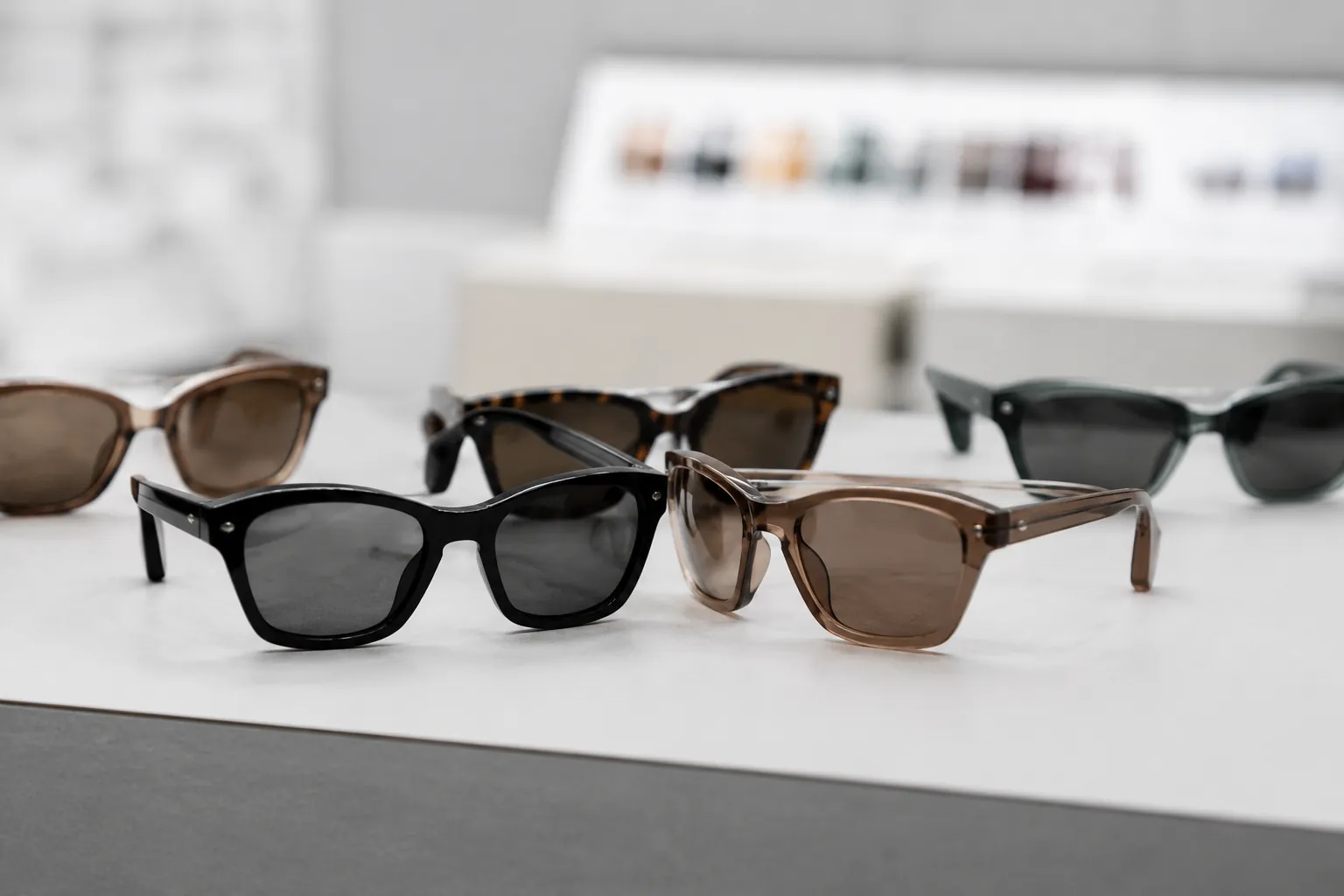
This guide is for buyers who already approved a sunglasses sample and are getting ready to place a bulk order. The risky part is often not sample development. It is the handoff from one approved piece to repeatable factory production. If the product definition, tolerances, compliance file, and approval rules are vague before deposit, small assumptions can become expensive disputes. A disciplined pre-production review helps reduce color variation, logo inconsistency, packaging errors, shipment delays, and arguments about what the factory was told to make.
Lock one master specification before deposit
The phrase "same as approved sample" is not a production standard. A physical sample may sit with the sales team while the factory floor works from a short PO note and the packaging supplier uses separate artwork files. That gap causes trouble. A bulk run ends up with a darker lens tint, a shifted temple logo, or a finish that does not match the approved piece.
Before mass production, ask for one pre-production pack tied to the PO number and revision date. That pack should combine the approved sample reference, technical measurements, material callouts, decoration details, packaging instructions, and inspection criteria. For custom sunglasses, this matters even more when the project includes multiple processes such as injection molding, acetate cutting, CNC work, lens tinting, pad printing, laser engraving, metal logo fitting, and final assembly. Every department should work from the same controlled document set.
At minimum, the master specification should state measurable values and tolerances, not broad descriptions. That means front width, temple length, bridge width, lens width, lens base curve, and any hinge performance requirement if the design makes it relevant. Color should be tied to a recognized reference, a retained approval chip, or a sealed sample clearly identified as the color master.
- Frame material and finish: injected PC, TR90, acetate, or metal, plus glossy, matte, rubberized, crystal, or soft-touch finish
- Critical dimensions: front width, eye size, bridge, temple length, lens thickness, and permitted tolerance by point
- Lens specification: TAC, PC, nylon, or CR-39; tint target; category; coating; polarization requirement; visual quality grade
- Decoration method: pad print, heat transfer, laser engraving, foil stamp, or metal plate, with exact location reference points
- Packing standard: pouch, polybag, retail box, barcode label, carton mark, assortment ratio, and carton quantity
Without a locked specification sheet, the approved sample is only a visual reference. That is not enough.
Define what may vary and by how much
Many disputes start here. Buyers assume sample approval freezes every detail. Factories assume normal production variation is acceptable. The real question is not whether variation exists. It does. The real question is how much variation is acceptable and how it will be judged.
Material behavior is a big reason this matters. Acetate is cut from sheet, so pattern density, grain flow, and translucency can vary from sheet to sheet. Two frame fronts cut from different areas of the same sheet may already look different. Injection-molded frames are usually more consistent in pattern, but they are still affected by resin lot, process settings, surface texture, and color masterbatch control. Lens tinting can also shift by batch if the target is not checked against a retained standard under defined lighting.
Ask the factory to state the acceptable production tolerance for each visible and functional point. For decorated sunglasses, logo placement should have a numeric limit based on part geometry and a clear measurement method. Lens color should be judged under a defined light source, not casual room light. If hardware substitution is not allowed, say so in writing.
| Checkpoint | Typical Control Standard | Why It Matters |
|---|---|---|
| Frame dimensions | Key points controlled to agreed tolerances in the specification sheet | Helps keep bulk production aligned with the approved sample |
| Temple logo position | Measured from a fixed reference point with an agreed tolerance | Reduces left-right inconsistency and visibly crooked branding |
| Lens tint match | Matched to a retained master under a defined light source | Reduces visible shade differences between batches |
| Hardware and trims | No substitution without written approval | Prevents unapproved changes to hinges, screws, pads, or logo parts |
Put the allowed variation in writing before production starts. Be blunt. If substitution is not allowed, write "no substitution." If a finish or pattern difference is natural to the material, define the acceptable range before the goods are made, not after they arrive.
Check compliance against the exact build and market
A passing development sample does not mean the bulk order is fully documented for every destination market. Before deposit, request the current compliance file for the exact construction you are ordering: same frame material, same lens type, same lens category, same coatings, and same labeling. A generic certificate from another style is not enough.
For sunglasses programs, common standards and registrations may include CE EN ISO 12312-1, ANSI Z80.3, AS/NZS 1067, REACH, FDA registration, ISO 9001, and BSCI. These documents only help if they match the ordered product scope and destination market. For example, a report prepared for one lens category or construction should not be assumed to cover another without checking the actual test scope and labeling requirements.
Also review packaging and product markings before print approval. Wrong lens category icons, missing importer details, incorrect origin marking, or non-compliant warning text can create customs issues, retailer chargebacks, or relabeling costs. Packaging errors are expensive because the eyewear may be complete but still blocked from shipment by a box or label mistake.
- CE EN ISO 12312-1: confirm the ordered lens category, transmittance range, and product labeling are covered
- ANSI Z80.3: verify US-market alignment if required by your channel or importer
- AS/NZS 1067: check whether Australia or New Zealand requirements apply
- REACH: confirm frame, coating, inks, and metal trims meet applicable substance restrictions
- FDA registration: verify which supporting documents your US import file requires
Get the document set before bulk production is finished, not after the booking date. That leaves time to correct labels, obtain missing declarations, or arrange retesting if the final build differs from the sample first reviewed.
Confirm MOQ, pricing breaks, and real cost drivers
Commercial approval should be as precise as technical approval. A supplier may accept MOQ from 50 pairs per design, but that does not mean every material, logo method, and retail package makes sense at that level. Buyers often approve a sample and later learn that the exact metal logo plate, rigid box, or low-ratio color split changes the true cost structure.
The main cost drivers are usually frame material, lens type, polarization, decoration method, packaging complexity, and order quantity. Setup-heavy items such as custom metal logo plates, printed microfiber pouches, rigid boxes, and small split runs are often inefficient at low volumes. At higher volumes, setup cost is spread across more units and purchasing efficiency usually improves.
| Order Size | Typical Commercial Effect | Buyer Question |
|---|---|---|
| 50 pairs/design | Useful for pilot orders, but unit cost is usually higher because setup and decoration are spread over fewer units | Which logo methods, color splits, or box styles are inefficient at this level? |
| 300 pairs/design | Printing and packaging setup costs are usually absorbed more efficiently | Do pad print, pouch, or barcode costs improve at this break? |
| 1000 pairs/design | Material planning and unit economics are often more stable | Can mixed colors stay balanced without surcharge or excess stock risk? |
| 5000+ pairs | Higher volumes may support simpler, more competitive costing if specifications remain straightforward | Which specifications must stay simple to maintain the target cost? |
Ask for a final quotation that matches the approved construction exactly: exact frame material, exact lens specification, exact polarization requirement, exact logo method, exact packaging, exact assortment, and exact Incoterm. Not "same style." Not "similar quality." Exact.
Map the timeline backward from shipment
Lead time is not one number. A supplier may quote 7-10 days for samples and 25-35 days for bulk, but the real timeline depends on approval speed, raw-material availability, and whether packaging or trims come from outside vendors. A plan that looks workable on paper can slip fast if artwork changes late or a key material is not ready.
Request a milestone plan before paying deposit. A reliable schedule should show both internal operations and outside dependencies. That lets you see the real critical path instead of assuming the frame factory controls the entire timeline.
- Pre-production sheet and retained sample confirmed
- Deposit received and raw materials booked
- Frame manufacturing: injection molding or acetate cutting, CNC shaping, tumbling, polishing, or painting
- Lens production, coating, tint confirmation, and polarization check if applicable
- Decoration: pad print, laser engraving, hot stamp, or metal logo installation
- Assembly, hinge fitting, alignment, cleaning, and in-line QC
- Packaging receipt, packing approval, barcode application, and carton close
- Final inspection, balance payment, and shipment release
Then ask the harder question: what could push this order outside the quoted window? Common reasons include custom packaging from third-party suppliers, mold schedule congestion, acetate sheet availability, metal logo plate lead time, rework after artwork changes, or decoration failing at first pass. If the supplier can explain those risks clearly before deposit, the production discussion is on firmer ground.
Set QC checkpoints and defect limits early
Quality control must be defined before production starts, not after cartons are sealed. The factory needs to know what counts as rejectable at in-line stage, assembly stage, and final packing stage. If the only instruction is "good quality required," the factory will use its own standard. That may not match yours.
Ask for the internal QC flow by process: incoming material check, frame molding or cutting inspection, polishing review, lens visual inspection, decoration control, assembly alignment check, and final random inspection. Then align that flow with your own requirement or a third-party inspection plan. For sunglasses, appearance criteria should be zone-based. A small mark hidden on the inside of a temple should not be judged the same way as a defect in the primary viewing area of the lens.
- Critical defects: wrong lens type, failed mandatory labeling, cracked frame, sharp edge, broken hinge, severe deformation
- Major defects: logo misplacement beyond tolerance, visible lens scratch in primary field, serious color mismatch, temple skew affecting wear
- Minor defects: small finish mark in non-primary area, light carton scuffing, slight print density variation within approved limit
Be specific about measurement method. For logo position, define whether the reference is hinge center, temple edge, or temple tip. For frame alignment, define whether the unit is checked on a flat plate and what rocking or temple spread limit is acceptable. For lens inspection, define viewing distance, light condition, and angle. A vague QC standard is not a standard. It is an invitation to argue later.
Review packaging, carton math, and approvals
Packaging often delays shipment more than the eyewear itself. The sunglasses may be finished, but the order still cannot ship because retail boxes are late, barcode labels carry the wrong SKU, or carton assortment instructions were never finalized. For mixed-color or retailer-specific programs, the packing plan needs the same discipline as the product specification.
Ask for a full packing specification that includes units per polybag or pouch, units per inner box if used, units per export carton, carton dimensions, gross and net weight, barcode position, carton mark format, and assortment ratio by color or SKU. This affects freight booking, warehouse receiving, retailer compliance, and damage prevention. Overpacked cartons can stress temples and crush boxes. Underfilled cartons can increase movement and transit damage.
If branded pouches, boxes, inserts, stickers, or hangtags are sourced externally, confirm their separate lead times and approval steps. In many programs, outside packaging is the longest-lead item. Keep the rule simple: the order is not ready until the product, package, barcode, and carton mark all match the PO.
Finally, set the approval matrix before deposit. List every item that requires signoff: frame color, lens tint, logo, packaging artwork, barcode, carton mark, and shipping mark. Name the final approver for each item. State whether mass production starts from photo approval, a couriered pre-production sample, or both. Confirm the claims window after receipt and the remedy path if defects exceed agreement, whether replacement, credit, or rework. If a point is important enough to dispute later, it is important enough to define now.
Have a custom sunglasses project in mind?
Send us your styles, target market and quantities and we will return a detailed quote with MOQ, lead time and a sample plan.
Get a QuoteWhy source this from Wenzhou with LumiShades
Wenzhou in Zhejiang Province is widely regarded as China’s eyewear manufacturing capital, producing a large share of the world’s sunglasses. That concentration matters to buyers: a deep local supply chain for acetate sheet, hinges, lens blanks, plating and packaging means shorter component lead times, easier color and material matching, and a workforce with decades of eyewear-specific skill. LumiShades has manufactured in this ecosystem since 2009, and our vertical integration — in-house injection molding, acetate cutting, CNC milling, lens tinting, decoration and quality control — means no part of your order is quietly subcontracted to a workshop you cannot audit.
For international buyers, that vertical control translates into accountability. When a single factory owns every step, defects are traced and fixed at source rather than bounced between vendors, and your specifications survive intact from first sample to bulk. We back this with 15+ years of experience, shipments to 60+ countries, more than 5 million pairs produced per year and a 98.5% on-time delivery rate. Our certifications — CE EN ISO 12312-1, FDA registration, ANSI Z80.3, AS/NZS 1067, REACH, ISO 9001 and BSCI audit — mean the compliance documentation your market requires already exists. Explore our manufacturing capabilities and quality control process to see how this works in practice.
Frequently asked questions
Do I need a pre-production sample if the salesman says the sample is already approved? Usually yes, especially if there are custom colors, printed logos, packaging changes, revised materials, or any difference between the development sample and the actual PO. Ask for a pre-production sample or a sealed pre-production standard tied to the PO number and revision. Confirm in writing whether it includes the final frame material, final lens, final decoration, and final packaging. Do not authorize mass production until you know exactly what the factory will use as the production reference.
What is the most common reason bulk sunglasses do not match the approved sample? The most common cause is incomplete specification control. A buyer approves a physical sample but does not lock the color standard, lens specification, logo position, packaging details, material callouts, and tolerances in one controlled document. To prevent this, require one master specification pack with revision control, one retained approval sample, and one written rule for what variation is allowed and how it will be measured.
How should I handle compliance documents before shipment? Request the applicable document set before production is finished and verify that it matches the exact product build and destination market. Check whether the file covers the same frame material, lens category, lens construction, coatings, and labeling used in the order. For sunglasses, that may include CE EN ISO 12312-1, ANSI Z80.3, AS/NZS 1067, REACH, FDA-related documentation where required, plus any quality-system or social-audit documents your customer requests such as ISO 9001 or BSCI. Also review the packaging artwork and product markings against the compliance file before printing.
Can I place 50 pairs per design and still expect the same cost structure as a 1000-pair order? No. A 50-pair MOQ may work for a trial order, but setup-heavy items such as custom metal logos, printed pouches, rigid boxes, and split color assortments are usually much less efficient at that level. Ask the supplier for a line-by-line quotation by quantity break and confirm which costs are fixed, which are variable, and which features become more economical at higher volumes. That gives you a realistic basis for comparing 50, 300, and 1000-pair scenarios.
What lead-time risk should I ask about after sample approval? Ask which steps depend on outside suppliers, which materials are not yet booked, and which processes most often trigger rework. Common risk points include custom packaging, acetate sheet availability, metal logo plate lead time, mold scheduling, artwork revisions, and lens tint confirmation. Request a milestone schedule with dates for approvals, material booking, production, packaging arrival, inspection, and shipment release. Then ask what event would delay each milestone and what backup plan exists if that happens.
Ready to start?
Explore our sport wrap sunglasses or request a quote — our sales team replies within 12 hours.
Request a Quote