
Eyewear Spare Parts: Questions Every Distributor Should Ask
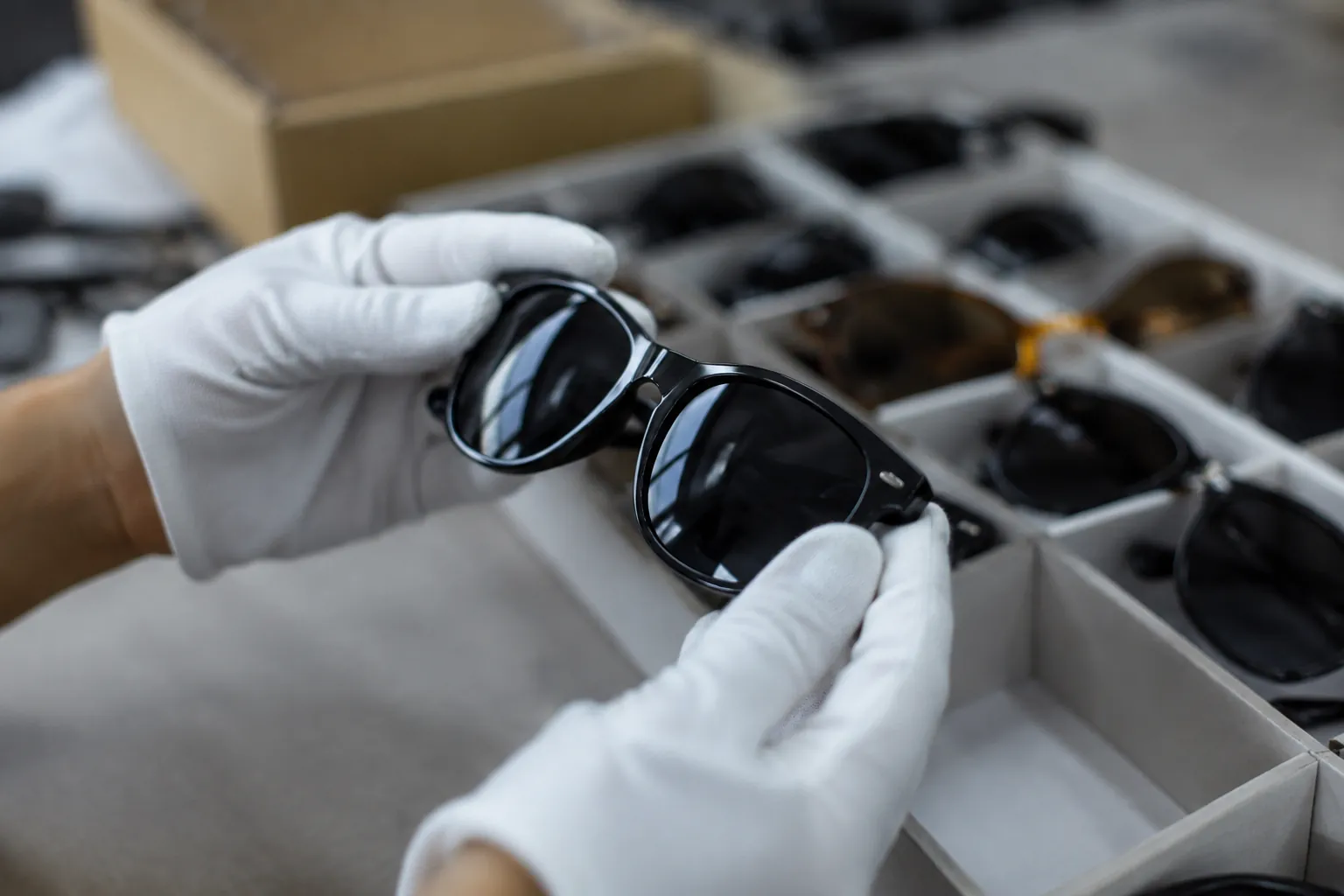
This guide is for distributors, importers, retailers, and brand owners buying sunglasses in volume and planning after-sales support. The point is simple: unit price is only part of total program cost. If spare-parts coverage is not defined before production approval, routine failures such as loose hinge screws, damaged nose pads, scratched replacement lenses, or mismatched temples can turn into write-offs, claim disputes, and unnecessary reshipment cost. A workable eyewear program should state which parts can be replaced, how long they stay available, what matching standard applies, and who pays freight in warranty and non-warranty cases. Get those terms clear on test orders and repeat programs alike.
Start with the service model, not just the frame
Many buyers focus first on frame shape, lens color, logo position, and target FOB price. Fair enough. But that is not enough for distributor planning. After shipment, customer-service teams may need to handle missing screws, broken temples, bent fronts, or color-mismatch complaints. Spare-parts support should be reviewed before sample sign-off, not after the deposit is paid.
Start with a direct question: Which parts can be replaced without remaking the whole frame? On most sunglasses, the practical service items are hinge screws, complete hinges or hinge assemblies where relevant, nose pads, temples, temple tips, and sometimes lenses. Replacement lenses are only realistic when the lens shape is stable, the fit is controlled, and the tint and coating can be reproduced against the approved sample and specification.
Ask for the support model in writing before approving bulk production. A qualified supplier should confirm:
- Which parts are stocked after shipment and which are made only to order
- How long each part remains available after final production, such as a defined number of months or until retained service stock is exhausted
- Minimum reorder quantity for spare parts only, for example temples, nose-pad sets, or screws
- How color matching is controlled for painted finishes, transparent injection colors, rubber temple tips, or acetate patterns
- Who pays freight for warranty replacements versus buyer-requested service parts
If the supplier controls frame production, lens processing, decoration, and final QC within one system, spare-parts consistency is usually easier to manage. Fewer handoffs. Less drift. If multiple subcontractors are involved, ask how the supplier controls part matching, revision history, and retained reference samples. The issue is not subcontracting by itself. The issue is whether the service process is documented and repeatable.
Hinges and screws: confirm the specs before the first PO
Hinges and screws are common service items for one reason: they are small moving parts under constant use. Do not treat all hinges as interchangeable. A standard metal hinge on an acetate frame behaves differently from a spring hinge on an injection frame. Decorative external hinges are another category again.
Ask the supplier which hinge construction is used on each model and how it is fixed into the frame. On injection-molded parts, hinge retention depends on insert positioning and molding control. On acetate frames, it depends on pocket milling accuracy, plate fit, rivet setting where used, screw seating, and polishing control so alignment is maintained.
Useful buyer questions should be specific:
- What screw diameter, length, head type, and finish are used on the approved model
- Whether thread-locking is applied during assembly, and if so, by which method
- For spring hinges, whether the full left or right temple can be replaced if the spring unit fails
- How left-right opening symmetry and alignment are checked at final QC
- How the supplier records hinge and screw specifications on the BOM or technical sheet
At factory level, the control plan should show how hinge fit, screw installation, alignment, and cosmetic condition are checked. A generic promise that the hinges are "good quality" is not enough. You need the actual hardware specification and a clear replacement path. The practical move is simple: add matching spare screws to every bulk PO and record the exact screw specification in the approved document set. If size, finish, and head style were never documented, finding the same screw later becomes guesswork.
Nose pads, temples, and fit parts need tight model control
Replacement programs often fail for a basic reason: service parts are not tied to a stable model code and BOM. This is common in private-label eyewear when a temple curve, logo plate, pad shape, or rubber-tip hardness changes without a matching update to service records.
Nose pads matter most on metal and combination sunglasses, but some sport frames and TR90 styles also use replaceable pad systems. Ask whether the pad is push-in, screw-in, or clip-in. Then confirm dimensions, not just appearance: pad length and width, mounting hole or post size, arm angle where relevant, transparency level, and material type. Small geometry changes can make one pad incompatible with another even if the frame name stays the same.
Temples cost more than screws or pads, but they are often worth stocking because they address common transport and handling damage. For service parts, confirm that the following details are recorded:
- Left and right temples have separate item codes where needed
- Temple length is fixed on the approved specification
- Curvature, logo position, and metal-trim location are tied to the approved drawing or sample
- Hinge type, screw specification, and decoration method are listed on the BOM
- Color reference is controlled by Pantone, approved paint chip, retained sample, or another defined standard
Material behavior matters too. Injection parts are usually easier to repeat in solid colors than patterned materials, but painted finishes can still vary in gloss and adhesion if process control changes. Acetate temples may look strong at sample stage, but replacement matching is harder because sheet pattern, translucency, and polishing depth can shift from batch to batch. Rubberized temple tips also need material and hardness control if comfort and grip are part of the product position. Ask how the supplier records these material references and how those records are retained for service use.
Ask for a spare-parts matrix before bulk approval
A capable supplier should prepare a simple parts matrix for each approved model. It does not need elaborate formatting. It does need to work. Purchasing, QA, and after-sales teams should all be able to use it. The matrix should match the approved sample, drawing, and BOM so replacement support does not drift on repeat orders.
| Part | Typical failure or service reason | What to confirm with supplier | Typical MOQ or stock logic | Best buying practice |
|---|---|---|---|---|
| Hinge screw | Loosening, loss during use, service repair | Screw size, head type, finish color, tool type, thread-locking method | Often stocked; confirm service-pack quantity and replenishment method | Order extra with every bulk PO and record the specification on the BOM |
| Spring hinge temple | Spring failure, impact damage, overextension | Left/right codes, spring type, hinge match, logo match, color reference | Usually made or packed by side-specific set; confirm MOQ before bulk approval | Stock for proven sellers and models with complex decoration |
| Nose pad | Wear, yellowing, cracking, loss | Pad type, mount type, size, material, transparency level | Often low MOQ; confirm whether stock is generic or model-specific | Keep service packs by model family only when fit is verified |
| Standard temple | Scratches, breakage, logo damage | Length, curvature, hinge fit, decoration method, color-match standard | May be stocked or made to order depending on finish and tooling | Order replacement sets with first production for key SKUs |
| Lens | Scratch claims, assembly replacement, lost parts | Lens base, thickness, tint code, coating spec, material, edge fit | Stock only if lens shape is stable and the specification can be repeated | Reserve for repeat programs with controlled specifications |
Volume logic matters. On small trial orders, spare-parts planning may be limited to screws, nose pads where relevant, and selected temple sets. On repeat programs, service stock becomes more practical because parts can be planned with the main production cycle. No fixed quantity rule covers every case. What matters is that the distributor and supplier define spare-parts scope in the same approval package as the product itself.
Policy terms matter more than a small price gap
Generic warranty language is not enough. Ask how claims are actually handled. The difference between a usable policy and a weak one is detail, response method, and evidence requirements.
Get written answers on these points:
- Warranty period measured from shipment date, arrival date, or another defined point
- Definition of manufacturing defect versus wear, misuse, or damage after delivery
- Claim window for visible issues such as scratched lenses on arrival, wrong logo, missing screws, or frame deformation in transit
- Required evidence, such as photos, lot number, carton code, quantity summary, or returned sample
- Remedy method, such as replacement parts, credit note, refund, remake, or inclusion in the next shipment
For sunglasses, visible manufacturing issues should usually be found during incoming inspection or early distribution, so the buyer also needs an internal claim workflow. A clear supplier policy should separate production issues from post-delivery handling issues. A missing screw at delivery or a lens tint that does not match the approved master sample is not the same as damage caused by store handling or consumer misuse.
Cost logic should drive the remedy. On lower-value styles, local repair, spare-parts credit, or inclusion in the next shipment may make more sense than an urgent remake or air freight. On higher-value polarized or heavily decorated styles, the response may need to be faster and more specific. Agree on that ladder before problems show up.
Lead times and matching standards must reflect factory reality
After-sales promises only help if they match actual production conditions. Some spare parts are available from stock. Some come from semi-finished components. Others require a new production run. Ask for part-specific lead times, not one vague general statement.
A practical breakdown looks like this:
- Stock parts: screws, common nose pads, and some standard temple tips that can ship quickly if the supplier keeps service inventory
- Short-lead parts: plain injection temples or undecorated components that may need limited processing before shipment
- Longer-lead parts: acetate temples, custom plated logos, mirrored lenses, gradient lenses, or mixed-finish parts that require material matching and added production steps
Matching standards are the real issue. Ask whether the supplier retains Pantone references, approved paint chips, acetate records, mold or CNC programs, pad-print positions, and golden samples after shipment. Without those records, later replacement becomes guesswork.
Also ask how long production assets and reference materials are retained after the final order. Molds may be stored for a long period, but decoration jigs, old material lots, and approved finish references may not be. Request a written retention period for molds, CNC files, color references, and master samples. If the supplier is certified to ISO 9001, ask how that system controls document retention, engineering changes, and approved revisions. If the supplier cites BSCI audit status, treat it as a social-compliance reference, not a substitute for technical product-control records.
Compliance and traceability do not stop after shipment
Spare parts can create compliance risk if they change lens performance, material chemistry, or traceability. Treat replacement support as part of the product-compliance system, not as a side activity.
For sunglasses, ask the supplier to confirm that finished goods and replacement lenses remain aligned with the standards or registrations relevant to the target market and product setup, including CE EN ISO 12312-1, ANSI Z80.3, AS/NZS 1067, REACH, and FDA registration where applicable.
This does not mean every spare screw needs a separate certification file. It does mean that any change affecting UV protection, lens category, tint, coating, material declaration, skin-contact chemistry, or labeling should be controlled and documented. Ask specifically:
- Whether replacement lenses use the same material, tint, coating, thickness, and construction as the approved bulk order
- Whether replacement plastic or metal contact parts remain consistent with the declared chemical-compliance requirements of the program
- Whether the quality system records part revisions, engineering changes, and approved substitutions
- Whether cartons, inner packs, or service bags carry lot or batch identifiers for claims review
If a supplier changes pad material, plating source, or lens tint without updating the record, service stock can drift away from the approved product. Traceability is what lets the factory and distributor determine whether a defect is linked to a specific batch, colorway, supplier change, or assembly step. That matters for fair claims handling and for controlling repeat-order risk.
A first-PO checklist for distributors
Before releasing the first bulk order, attach after-sales support terms to the purchase documents. Not later. At PO stage. This is one of the simplest ways to cut disagreement once goods are in the market.
- List replaceable parts by model and colorway
- Record screw size, hinge type, nose pad type, lens specification, and temple length on the BOM
- Approve and retain a golden sample for future part matching
- Add spare-part quantities to the PO, even if they are small
- Define the claim window, required evidence, and remedy method
- Confirm retention period for molds, files, color references, and service samples
- Require lot traceability on cartons or inner packs for claim review
This is not bureaucracy. It is cost control. A distributor that defines service rules early is better placed to reduce write-offs, avoid emergency shipments, and make faster decisions when field issues appear. Two frames may look similar at quotation stage. The spare-parts structure and documentation process show whether a supplier is ready for repeat business.
Have a custom sunglasses project in mind?
Send us your styles, target market and quantities and we will return a detailed quote with MOQ, lead time and a sample plan.
Get a QuoteWhy source this from Wenzhou with LumiShades
Wenzhou in Zhejiang Province is widely regarded as China’s eyewear manufacturing capital, producing a large share of the world’s sunglasses. That concentration matters to buyers: a deep local supply chain for acetate sheet, hinges, lens blanks, plating and packaging means shorter component lead times, easier color and material matching, and a workforce with decades of eyewear-specific skill. LumiShades has manufactured in this ecosystem since 2009, and our vertical integration — in-house injection molding, acetate cutting, CNC milling, lens tinting, decoration and quality control — means no part of your order is quietly subcontracted to a workshop you cannot audit.
For international buyers, that vertical control translates into accountability. When a single factory owns every step, defects are traced and fixed at source rather than bounced between vendors, and your specifications survive intact from first sample to bulk. We back this with 15+ years of experience, shipments to 60+ countries, more than 5 million pairs produced per year and a 98.5% on-time delivery rate. Our certifications — CE EN ISO 12312-1, FDA registration, ANSI Z80.3, AS/NZS 1067, REACH, ISO 9001 and BSCI audit — mean the compliance documentation your market requires already exists. Explore our manufacturing capabilities and quality control process to see how this works in practice.
Frequently asked questions
How many spare screws should I order with a bulk sunglasses shipment? First, ask the supplier for the exact screw specification: diameter, length, head type, finish, and whether left and right sides use the same screw. Then add a service quantity directly to the PO instead of leaving it open-ended. A practical approach is to order one clearly defined bag or service pack per model and finish, with the pack quantity stated on the PO and packing list. That gives your warehouse and repair team traceable stock and avoids trying to match undocumented screws later.
Should I stock replacement temples from the first order? Yes for styles you expect to reorder, distribute widely, or service locally. Prioritize models with spring hinges, plated or painted logos, custom acetate patterns, or color finishes that will be hard to match later. Ask for left and right temple codes, confirm the MOQ before bulk approval, and tie each temple to the approved BOM, drawing, and retained sample. If budget is tight, stock temple sets only for the top-selling colorways instead of the full range.
Can replacement lenses be supplied without compliance risk? Yes, but only when the replacement lens is controlled to the same approved specification as the original bulk order. Verify lens material, tint, coating, thickness, edge profile, and any labeling or category information, then ask for written confirmation that the replacement lens remains aligned with the relevant market standard or registration, such as CE EN ISO 12312-1, ANSI Z80.3, AS/NZS 1067, REACH, or FDA registration where applicable. If the supplier cannot tie the replacement lens back to the approved specification, do not treat it as equivalent.
What claim window should a distributor ask for? Ask for two separate timeframes in writing: one short incoming-inspection window for visible issues on arrival, and one defined warranty period for confirmed manufacturing defects found during normal use. Also define the evidence required for each type of claim, such as photos, lot code, carton code, quantity affected, and whether a return sample is needed. The exact number of days matters less than having a documented process that your warehouse, QA team, and supplier all follow the same way.
What is the biggest mistake in eyewear after-sales planning? Failing to lock the spare-parts list to the approved sample, technical drawing, and BOM. Once screw specs, pad geometry, lens details, temple length, or decoration references change without document control, service parts start to mismatch and claims become harder to resolve. Prevent that by requiring part-level records, a retained golden sample, defined revision control, and written spare-parts terms before the first production order is released.
Ready to start?
Explore our round sunglasses or request a quote — our sales team replies within 12 hours.
Request a Quote