
How to Split Sunglasses Orders Without Killing Margin
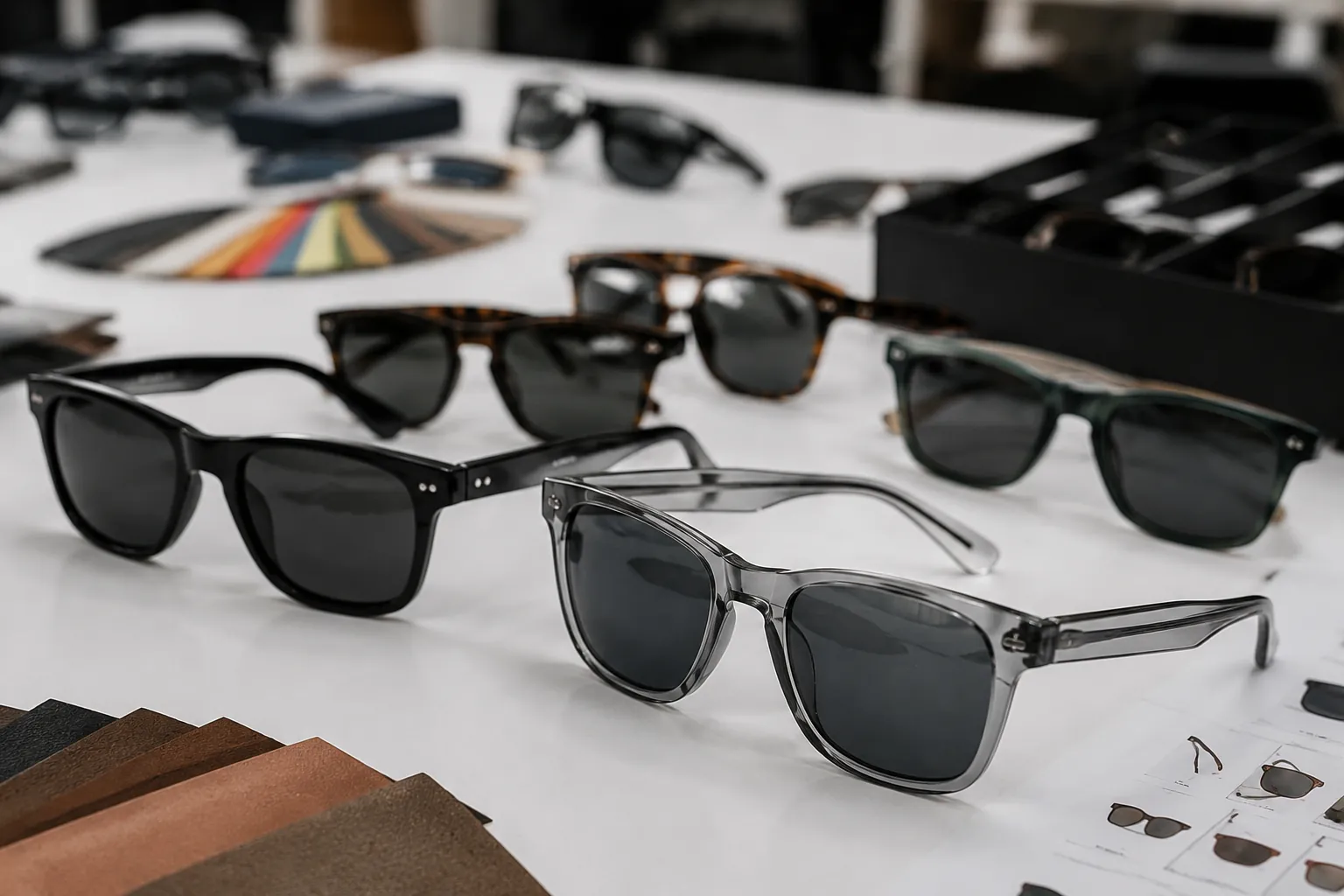
This guide is for brand owners, importers, distributors, and retail buyers placing one custom sunglasses purchase order across two or three styles. The goal is simple: widen the assortment without putting all your inventory risk into one frame. The problem is just as simple. A mixed-style PO rarely runs like one clean production job unless the styles share enough of the same production logic. Different frame constructions, lens specifications, logo methods, and packing rules can turn one order into several small jobs. That pushes up unit cost and coordination risk. A split order can still work well, but only if the structure matches real factory conditions: shared materials, a shared testing path, synchronized approvals, and quantities that justify each setup.
Start with production complexity, not just total pairs
Buyers often assume that a 600-pair order will price close to a 600-pair single-style run, even if the PO is split across several styles. That is often wrong. Factories usually look at both total volume and the number of separate setups the order creates. Each extra style can require its own frame prep, lens matching, logo setup, inspection standard, and packing segregation.
One 600-pair injected style may run through one lens program, one decoration process, and one packing standard. Split those same 600 pairs across three unrelated styles and the factory may need separate material handling, separate sample approvals, and more sorting at final inspection. The goods may ship together. The work inside the factory is still fragmented.
MOQ is not the same as an efficient run size. A factory may accept a low MOQ because the buyer wants to test the market. That does not mean the economics are good at that level. Small per-style quantities carry more setup cost per pair, especially when the order includes multiple colorways, logo treatments, or packaging variations.
The impact also depends on construction. Injection styles are often easier to coordinate in smaller runs because the process is more standardized. Acetate is different. It usually involves more manual work, including material selection, CNC processing, polishing, and fitting. Split acetate into several low-volume style-color combinations and cost pressure rises fast.
Short version: total volume matters. Distinct production groups matter more than many buyers expect.
Build the PO around one anchor style and controlled followers
The strongest mixed order is usually not an equal split. It is one anchor style supported by one or two follower styles. The anchor carries the commercial weight of the PO. The followers expand the range without turning the order into several unrelated projects.
- Keep one style as the volume anchor. Give the strongest style the largest share of the PO so the factory has one clear primary run.
- Avoid very small follower quantities unless the order is strictly for testing. Low-volume followers can help, but they add handling and approval overhead.
- Stay within one material family where possible. Combining TR90 with TR90 is usually simpler than mixing TR90, acetate, and metal in one small PO.
- Align the lens specification. Shared lens material, performance target, and compliance path reduce sourcing and QC variation.
- Use one decoration method across the order. Pad print across all styles is simpler than mixing pad print, laser engraving, and applied logo hardware.
- Lock packaging rules early. One pouch spec, one barcode standard, and one case-pack logic reduce avoidable packing mistakes.
For example, instead of splitting 900 pairs into three equal style quantities, many buyers get a better result from one larger anchor style and two smaller followers. The exact ratio depends on the product and the supplier. The principle does not change: one dominant run is easier to price and schedule than three similar runs competing for setup time.
Supplier capability still matters. A manufacturer with in-house control over frame production, lens processing, decoration, and QC can usually coordinate shared steps better than a chain of subcontractors. But internal capability does not fix a messy PO structure.
Which split structures usually protect pricing best
Not every quantity split performs the same way. Compare split options by the number of separate production groups they create, not just by total unit count.
| Order structure | Example quantity | Operational effect | Likely unit cost effect | Best use case |
|---|---|---|---|---|
| Single style | 900 as 1 style | One main setup path, one QC standard, simplest packing | Usually the most efficient | Core bestseller or replenishment |
| Two-style balanced split | 450 + 450 | Often manageable if frame material, lens spec, and packaging match | Limited uplift versus single style | Launching two closely related variants |
| Three-style anchor split | 500 + 250 + 150 | One strong run plus two controlled followers | Can remain workable when shared parts are high | Testing range while protecting margin |
| Three-style equal split | 300 + 300 + 300 | Can work when all styles are operationally similar | More setup and sorting than a two-style split | Three proven SKUs with common specs |
| Three unrelated small runs | 200 + 200 + 200 | Multiple setups, more approvals, more packing complexity | Often weak pricing relative to effort | Usually avoid unless strategically necessary |
Equal splits get riskier when the styles differ in less obvious technical details. A style with its own lens construction, hinge spec, or applied logo part can behave like a separate project even if the quantity looks acceptable on paper. By contrast, two lower-volume styles may still be workable if they share the same lens type, tint family, branding method, and outer-carton program.
Before you approve a quote, ask one blunt operational question: How many separate production groups will this order create? That answer is often more useful than a price break based only on total volume.
Standardize the hidden specs that drive cost and QC
The best mixed orders preserve visible retail variation while standardizing the technical details that drive speed, inspection, and repeatability. Buyers focus on shape, color story, and logo appearance. Factories focus on how many times they need to stop, reset, inspect, and re-sort.
- Lenses: Keep one lens material across the order where possible, such as PC, nylon, or TAC polarized, so sourcing and QC stay consistent.
- Compliance path: If the collection is for one market, align the styles to the same target requirement, such as CE EN ISO 12312-1, ANSI Z80.3, or AS/NZS 1067.
- Tint family: Staying within one approved tint family is usually easier than managing several unrelated custom shades.
- Hardware: Shared hinges, screws, and core specifications reduce fitting variation during assembly.
- Decoration: One logo application method is easier to control than several methods within one PO.
- Packaging: One pouch, one insert format, one barcode placement, and one carton spec reduce packing errors and rework.
This also improves QC. When styles share one lens category, one decoration method, and one packaging standard, the QC team can apply a clearer inspection benchmark across the order. Even so, buyers should document acceptance criteria in writing. That includes logo position, lens appearance, assembly alignment, and packing assortment rules. Do not rely on assumptions after production starts. Use the approved sample set and the supplier's written specification.
Acetate needs extra discipline. Material lots can vary in appearance. Polishing results depend on finishing consistency. Embedded metal parts add fitting variables. If acetate followers are included in the same PO, keep trims and finishing standards as consistent as possible.
Run approvals as one package with one decision calendar
Many mixed-style POs slip because approvals are split apart. One style gets approved. Another waits on logo placement. A third changes lens color after the first PP sample review. Once approvals move on different timelines, the factory may lose the ability to schedule the order as one coordinated run.
A better approach is one approval matrix covering shared specifications and style-specific exceptions.
- Approve the common specification first. Confirm frame material, lens material, UV performance target, packaging map, carton marks, and the intended compliance route.
- Approve style-specific visual details second. Lock frame color, lens color, and logo placement for each SKU before PP samples are released.
- Review all PP samples together. If the order is meant to run together, the approval decision should also be made together where possible.
- Freeze written acceptance standards. Record what is acceptable for print position, tint consistency, alignment, and packing assortment before bulk starts.
If a supplier states a typical sample or production lead time, treat that as a baseline for standard projects, not a guarantee for a fragmented PO. Mixed materials, multiple packaging formats, and late artwork changes all reduce schedule flexibility. Small approval delays can trigger bigger production delays when decoration, assembly, or packing has already been reserved as one shared slot.
So manage the mixed order as one project with one calendar. Not as separate conversations that happen to share a PO number.
Keep compliance claims precise and style-specific
Compliance is one area where buyers need to stay disciplined. A passed sample for one style does not automatically validate every other style in the PO. Changes in lens category, polarization, tint darkness, frame wrap, or frame-lens combination can affect whether the final product still fits the intended market requirement.
For sunglasses, confirm the target standard before sampling and keep that target consistent across the order where possible. Common references include CE EN ISO 12312-1 for relevant EU market requirements, ANSI Z80.3 for the U.S. market, and AS/NZS 1067 for Australia and New Zealand. Material and supply-chain compliance may also involve REACH controls for applicable products and markets. If the supplier sells into the U.S., ask what they mean by FDA registration and what documentation is actually relevant to the product category.
Company-level management and social compliance claims should also be checked separately from product compliance. If a factory cites ISO 9001 or BSCI, request current documentation and confirm the scope. Those certifications do not replace product testing. They may still help you assess the supplier's operating system.
The practical rule is simple: match each style's final production specification to the required market path, and request test reports or compliance documents based on that actual specification, not on a similar earlier sample.
Where split orders usually go wrong
Most failed mixed-style orders break in predictable places. Spot those pressure points before you place the PO.
Tiny custom variations. A special frame color, mirror coating, or gradient lens may look minor. It is not always minor in production. It can trigger a separate setup, a separate approval cycle, and a separate inspection standard. At low quantities, the cost often outweighs the benefit.
Compliance drift. Buyers sometimes assume one approved prototype covers the whole order. It does not. If one style differs in lens performance, construction, or market labeling, confirm whether it still fits the intended standard and documentation set.
Decoration bottlenecks. Mixing pad print, laser engraving, and applied logo hardware inside one PO usually creates queueing and more appearance checks. Fewer branding methods are easier to schedule and control.
Carton complexity. Different barcode systems, mixed case-pack ratios, and multiple insert versions create late-stage error risk, especially when goods are pre-allocated across channels or customers.
Weak quantity logic. Two very small follower styles can create almost the same complexity as meaningful secondary runs, but with less commercial return. If the smaller styles are necessary, make sure they serve a clear testing or channel objective.
Buyers often say an order is "only three styles." The factory may see three spec trees, several approval paths, and one fixed ship date. Close that gap early.
A practical RFQ checklist for mixed-style sunglasses orders
If you are buying near entry volume, keep the assortment disciplined and give the factory a complete RFQ. Quote quality depends as much on input quality as on price negotiation.
| Total order | Recommended split | Why it works | What to avoid |
|---|---|---|---|
| 150 pairs | 1 style only or 100 + 50 | Keeps the order simple and leaves one style commercially meaningful | 50 + 50 + 50 |
| 300 pairs | 180 + 120 or 150 + 150 | Two styles can still be workable when specifications are tightly shared | 100 + 100 + 100 with different materials |
| 600 pairs | 350 + 150 + 100 or 300 + 300 | Preserves one anchor style and limits unnecessary complexity | 200 + 200 + 200 with different lenses and logos |
| 1200 pairs | 700 + 300 + 200 | Supports stronger material planning and a clearer production structure | Three styles plus many micro color variants |
To get a usable quote, send a complete RFQ pack:
- Style breakdown: exact quantity by style and by color.
- Construction: injection, acetate, metal, or mixed-material frame.
- Lens specification: material, color, category, polarization, mirror treatment, and target market.
- Decoration method: pad print, laser, hot stamp, or applied logo component by style.
- Packaging map: pouch, box, barcode location, inner pack, master carton ratio, and assorting rules.
- Approval path: sample deadline, PP sample requirement, production release date, and ship window.
Ask one last question before placing the PO: Which components can be standardized across all styles to protect unit price and lead time? A capable supplier should answer that directly. If the answer is vague, the quote may not reflect the real operating complexity of the order.
Have a custom sunglasses project in mind?
Send us your styles, target market and quantities and we will return a detailed quote with MOQ, lead time and a sample plan.
Get a QuoteWhy source this from Wenzhou with LumiShades
Wenzhou in Zhejiang Province is widely regarded as China’s eyewear manufacturing capital, producing a large share of the world’s sunglasses. That concentration matters to buyers: a deep local supply chain for acetate sheet, hinges, lens blanks, plating and packaging means shorter component lead times, easier color and material matching, and a workforce with decades of eyewear-specific skill. LumiShades has manufactured in this ecosystem since 2009, and our vertical integration — in-house injection molding, acetate cutting, CNC milling, lens tinting, decoration and quality control — means no part of your order is quietly subcontracted to a workshop you cannot audit.
For international buyers, that vertical control translates into accountability. When a single factory owns every step, defects are traced and fixed at source rather than bounced between vendors, and your specifications survive intact from first sample to bulk. We back this with 15+ years of experience, shipments to 60+ countries, more than 5 million pairs produced per year and a 98.5% on-time delivery rate. Our certifications — CE EN ISO 12312-1, FDA registration, ANSI Z80.3, AS/NZS 1067, REACH, ISO 9001 and BSCI audit — mean the compliance documentation your market requires already exists. Explore our manufacturing capabilities and quality control process to see how this works in practice.
Frequently asked questions
Can I combine three styles to reach a better price tier? Sometimes, but only if the styles are operationally similar. Ask the factory to quote the order in two ways: first by total volume, and second with a clear explanation of how many separate production setups the split creates. If the three styles share frame material, lens type, decoration method, and packaging, combined volume is more likely to help. If they differ on those points, the price benefit from total quantity may be limited.
Is 50 pairs per style a good order structure? It can be acceptable for testing demand, but it is usually not a strong margin structure. Use that level when the goal is validation, seeding, or market feedback rather than optimized landed cost. Before approving, ask the supplier whether the low quantity requires a surcharge, restricted customization, or simplified packaging so the tradeoff is clear.
Should all styles use the same lens specification? If the styles are for the same market, using one lens specification is usually the safest and most efficient option. Confirm the lens material, lens category, UV performance target, and whether polarization or mirror treatment is required. Then ask the supplier to state which standard the final product is being prepared for, such as CE EN ISO 12312-1, ANSI Z80.3, or AS/NZS 1067. Keep that path consistent across the order unless there is a clear commercial reason to split it.
How do I keep a mixed order inside the supplier's stated bulk lead time? Treat the order as one managed project. Approve common specifications first, review all PP samples in one batch where possible, freeze packaging and logo details before production starts, and avoid late changes to lens color or branding method. Ask the supplier to confirm the critical path in writing: sample approval date, material booking date, production start date, final inspection date, and shipment readiness date. That gives you a schedule you can manage.
Do different styles need separate compliance checks? Do not assume one passed sample covers the full PO. Review each style against its final production specification and target market. If lens type, tint category, polarization, frame wrap, or labeling changes, ask the supplier whether fresh testing or updated documentation is needed. Request the supporting reports or declarations that match the final style specification, and separately verify any factory-level claims such as ISO 9001 or BSCI if those matter to your supplier approval process.
Ready to start?
Explore our cat-eye sunglasses or request a quote — our sales team replies within 12 hours.
Request a Quote