
UV400 vs Polarized vs Category 3 Lens Packages
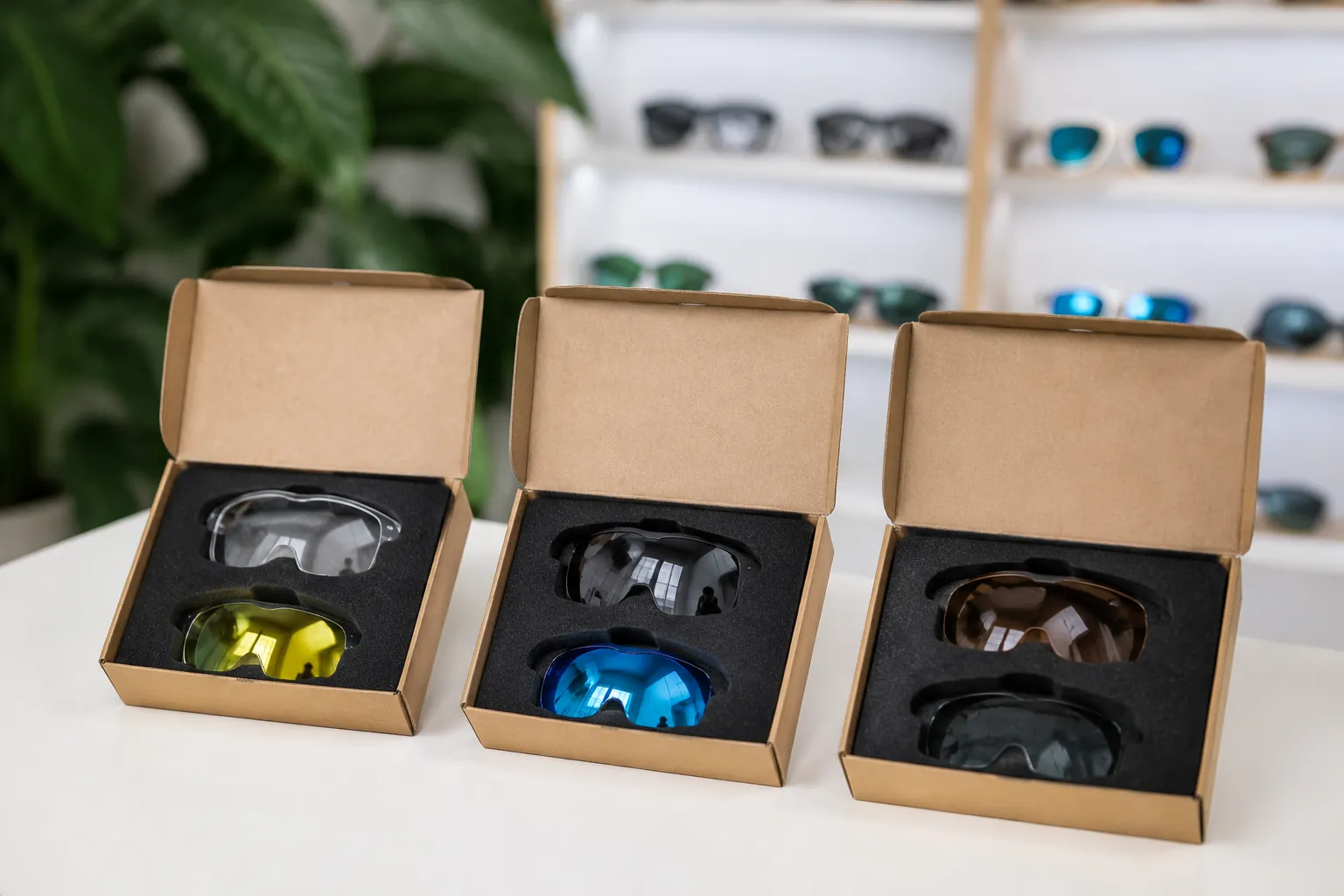
If you buy sunglasses for mass retail, promo, e-commerce, or optical-style channels, lens choice affects returns, margin, and sell-through more than frame color does. This guide helps brands, importers, distributors, and retailers match UV400, polarized, and Category 3 packages to the channel instead of over-specifying features buyers will not pay for. It also shows how a manufacturer can align cost, lead time, and compliance with the actual sales channel.
Start with the channel
Do not start with a feature list. Start with the channel. A promo sunglass, a beach retail SKU, and a higher-ticket outdoor line do not need the same lens package.
The wrong package causes three common problems: the price lands too high, the lens looks weak on shelf, or the spec is right on paper but wrong in use. A lens can be UV400 and still be a poor fit if it is too dark for daily wear or too costly for the target ticket.
LumiShades makes sunglasses in Wenzhou with in-house injection molding, acetate cutting, CNC milling, lens tinting, decoration, and QC. That matters because lens choice is tied to production, not separate from it. A matte injected frame with a standard grey Category 3 lens and an acetate frame with a brown polarized lens should be planned as different builds.
The first question is simple: does the channel need perceived value, glare reduction, or baseline UV protection? Answer that first. The lens spec follows.
What UV400 actually means
UV400 means the lens is designed to block ultraviolet radiation up to 400 nanometers. That is the base UV protection claim buyers should ask for. It is not a style feature.
For procurement, UV400 is useful because it is broad and cost-efficient. It fits low- and mid-price sunglasses, basic fashion pairs, kids' styles where permitted, and promotional lines that need a defensible safety message without polarized film.
Do not confuse UV400 with darkness. A light lens can still be UV400. A dark lens can fail if the raw material or coating is wrong. QC needs measurement, not guesswork. Tinted lenses should be checked for visible light transmission and batch consistency, especially across multiple colors or gradient versions.
Compliance is broader than one label. Relevant requirements may include CE EN ISO 12312-1, FDA registration, ANSI Z80.3, AS/NZS 1067, REACH, ISO 9001, and BSCI, depending on market and sourcing setup. The lens package has to fit the destination standard, not just the marketing line.
Polarized is for glare
Polarized lenses reduce reflected glare from flat surfaces like water, wet roads, glass, and car hoods. That is the real benefit. If the buyer is sourcing for fishing, driving, boating, or outdoor lifestyle retail, polarization is often worth the extra cost.
If the buyer is filling a fashion wall, it may not be worth it. Polarized lenses usually cost more because the filter layer adds material and process steps. They also need tighter QC. Poor lamination or alignment shows up fast. So do uneven stacks and tint drift.
Polarization can also create channel friction. Some customers like the glare cut. Others dislike how it affects screens or mixed indoor-outdoor wear. That does not make it bad. It means the lens belongs in the right channel.
Use polarized lenses where glare is part of the problem. Use UV400-only lenses where the job is fashion, entry-price protection, or broad seasonal volume. Simple rule. It holds up.
Category 3 is a target range
Category 3 lenses are a strong fit for general outdoor sunglasses. They are dark enough for bright daylight but still practical for everyday wear. For retail, this is a workhorse category for summer, travel, beach, and general lifestyle lines.
Category 3 usually means the lens sits in the darker transmission range suitable for bright sunlight. That makes it a better default than Category 2 for most true sunglasses, but less extreme than Category 4, which is too dark for everyday retail and not right for many driving or general-use programs.
For procurement, Category 3 is easy to explain to buyers, merchandisers, and compliance teams. It also lets you build a range: grey Category 3 for broad appeal, brown Category 3 for outdoor contrast, and green Category 3 for a classic look. If the frame sells, changing tint color is often more effective than stacking more features.
Still, Category 3 is not a guarantee of sell-through. In urban fashion or spring assortments, a slightly lighter UV400 lens can feel more wearable. Heavy darkness looks strong on paper. It can sell slowly.
Match the package to the channel
| Lens package | Best channel | Buyer value | Main trade-off | Typical sourcing note |
|---|---|---|---|---|
| UV400 only | Promo, entry fashion, volume retail | Low cost, clear UV protection claim | Less glare control | Best when price point is tight and style drives sales |
| UV400 + Category 3 tint | Mainstream retail, seasonal sunglasses, travel | Good outdoor protection, simple shelf message | No glare cut on reflective surfaces | Usually the safest default for broad distribution |
| UV400 + polarized | Outdoor, fishing, driving, premium casual | Real functional benefit, higher perceived value | Higher cost, stricter QA | Works best when the channel can explain the benefit |
| UV400 + polarized + Category 3 | Specialty outdoor and higher-ticket retail | Strong glare reduction and daylight comfort | Can be over-specified for fashion channels | Use only if the customer segment actually wants performance |
The table is the practical view. For convenience, promo, or broad fashion distribution, UV400 plus Category 3 is usually enough. For outdoor activity, polarized earns its keep. For private label, start with Category 3 UV400 and test polarized only on top sellers.
MOQ is useful for testing before scale. That is the point. Do not assume a lens feature deserves volume until fit, appearance, and commercial response are clear. At volume, pricing should be checked against the real spec. A feature that adds cost but does not lift sell-through is dead margin.
Cost and lead time change fast
Lens package affects more than raw material cost. It changes process load. A basic UV400 tint is simpler than a polarized stack. Mirror coating adds another step. Gradients, flash coatings, and mixed lens colors add setup time and inspection points. If you are trying to hit a ship window, those details matter.
Samples are usually faster than bulk production. Bulk timing depends on spec stability. If the buyer keeps changing lens color, coating, or logo decoration after sample approval, the schedule slips. That is normal production drag, not a factory mystery.
Buyers should follow a simple sequence:
- Confirm lens color, category target, and polarization requirement before sample cutting.
- Check frame and lens fit together, especially on wrap styles and curved designs.
- Review appearance under daylight and indoor light. Grey, brown, and green read differently.
- Lock the compliance target for the market, including CE EN ISO 12312-1, FDA registration, ANSI Z80.3, AS/NZS 1067, or REACH as applicable.
- Freeze decoration before bulk. Laser engraving, pad printing, and metal logo plates can affect yield if added late.
Thin tolerances and coating stability are not abstract. In volume, the issue is consistency across cartons and replenishment orders. If you supply retail, the second order has to match the first. In-house QC matters more than a polished sample photo.
Fit material and decoration to the frame
Frame material affects which lens package makes sense. Injection frames suit price-driven programs and high-volume colors. Acetate works better when you want richer surface feel and a more premium look. CNC milling helps with tighter shaping and more complex geometry. The lens should fit the frame, not fight it.
In practical terms:
- Injection frames pair well with standard UV400 or Category 3 tints for volume retail.
- Acetate frames can carry higher perceived value, so brown or grey polarized lenses make more sense in premium channels.
- Complex wrap or sport-inspired frames need lens curvature checked early, because fit errors show up fast.
- Laser engraving, pad printing, and metal logo plates should be placed before final QC sign-off, not after.
For private-label programs, keep the SKU matrix tight. Too many lens options increase stock complexity and slow replenishment. Three good options usually beat eight average ones. A clean range might be grey UV400 Category 3, brown UV400 Category 3, and brown polarized Category 3. That covers most channels without extra clutter.
REACH still matters. Decorative coatings, inks, and some accessory parts must stay within chemical compliance expectations for EU-bound goods. A lens package is not only optical performance. It is also materials control.
A buyer checklist before the PO
Before you commit, ask these questions and get written answers. They save time and prevent avoidable mistakes.
- What is the sales channel: promo, fashion, outdoor, driving, or specialty retail?
- Is the priority glare reduction, daylight comfort, or lowest landed cost?
- Do you need UV400 only, Category 3 tint, polarized, or a mix by SKU?
- Which compliance standard applies to the destination market?
- What is the approved lens color, and does the sample match the production tint?
- Are logos, engraving, or pad print fixed before bulk?
- Do you want one core lens spec across multiple frames, or channel-specific packages?
Use small initial quantities to validate fit, tint, and sell-through before scaling. Use tiered pricing to decide what deserves volume. Do not pay for polarization on a style that will sit on a fashion rack. Do not under-spec a fishing or driving product where glare reduction is the reason for the purchase. That is the whole game.
Buyer rule: if the lens feature does not change the customer's use case, it probably does not deserve to change your cost base.
Have a custom sunglasses project in mind?
Send us your styles, target market and quantities and we will return a detailed quote with MOQ, lead time and a sample plan.
Get a QuoteWhy source this from Wenzhou with LumiShades
Wenzhou in Zhejiang Province is widely regarded as China’s eyewear manufacturing capital, producing a large share of the world’s sunglasses. That concentration matters to buyers: a deep local supply chain for acetate sheet, hinges, lens blanks, plating and packaging means shorter component lead times, easier color and material matching, and a workforce with decades of eyewear-specific skill. LumiShades has manufactured in this ecosystem since 2009, and our vertical integration — in-house injection molding, acetate cutting, CNC milling, lens tinting, decoration and quality control — means no part of your order is quietly subcontracted to a workshop you cannot audit.
For international buyers, that vertical control translates into accountability. When a single factory owns every step, defects are traced and fixed at source rather than bounced between vendors, and your specifications survive intact from first sample to bulk. We back this with 15+ years of experience, shipments to 60+ countries, more than 5 million pairs produced per year and a 98.5% on-time delivery rate. Our certifications — CE EN ISO 12312-1, FDA registration, ANSI Z80.3, AS/NZS 1067, REACH, ISO 9001 and BSCI audit — mean the compliance documentation your market requires already exists. Explore our manufacturing capabilities and quality control process to see how this works in practice.
Frequently asked questions
Should I default every sunglass order to polarized lenses? No. Polarized lenses make sense for outdoor, driving, fishing, boating, and other glare-heavy use cases. For fashion, promo, and many retail basics, UV400 with a Category 3 tint is usually the better value because it keeps cost lower while still giving strong daylight wearability.
Is UV400 enough for export sunglasses? UV400 is the baseline UV protection claim, but export compliance still depends on the destination market. Confirm the relevant standard before launch, such as CE EN ISO 12312-1, ANSI Z80.3, or AS/NZS 1067, and make sure product labeling matches the test basis. For the U.S. and EU, also check whether FDA registration or REACH applies to your setup.
What is the most practical lens package for mainstream retail? UV400 plus Category 3 is usually the safest starting point. It gives proper daylight wearability, keeps cost under control, and is easy for retailers to explain. If sell-through data later shows a clear outdoor use case, you can add polarized as a second-tier SKU.
How does polarization affect cost and lead time? Polarization adds material and process steps, so cost increases and quality control becomes stricter. Lead time is manageable when the spec is frozen early, but late changes to lens type, tint, or decoration can delay production. The safest way to protect schedule is to approve the lens package before bulk starts.
Can I test a new lens spec without a large commitment? Yes. Start with a small pilot order so you can validate fit, tint, and customer response before scaling. Use the pilot to compare UV400 Category 3 against polarized on the same frame shape, then expand only the option that matches the channel and price point.
Ready to start?
Explore our wayfarer sunglasses or request a quote — our sales team replies within 12 hours.
Request a Quote