
TR90 Sunglasses OEM Guide for Private Label Buyers
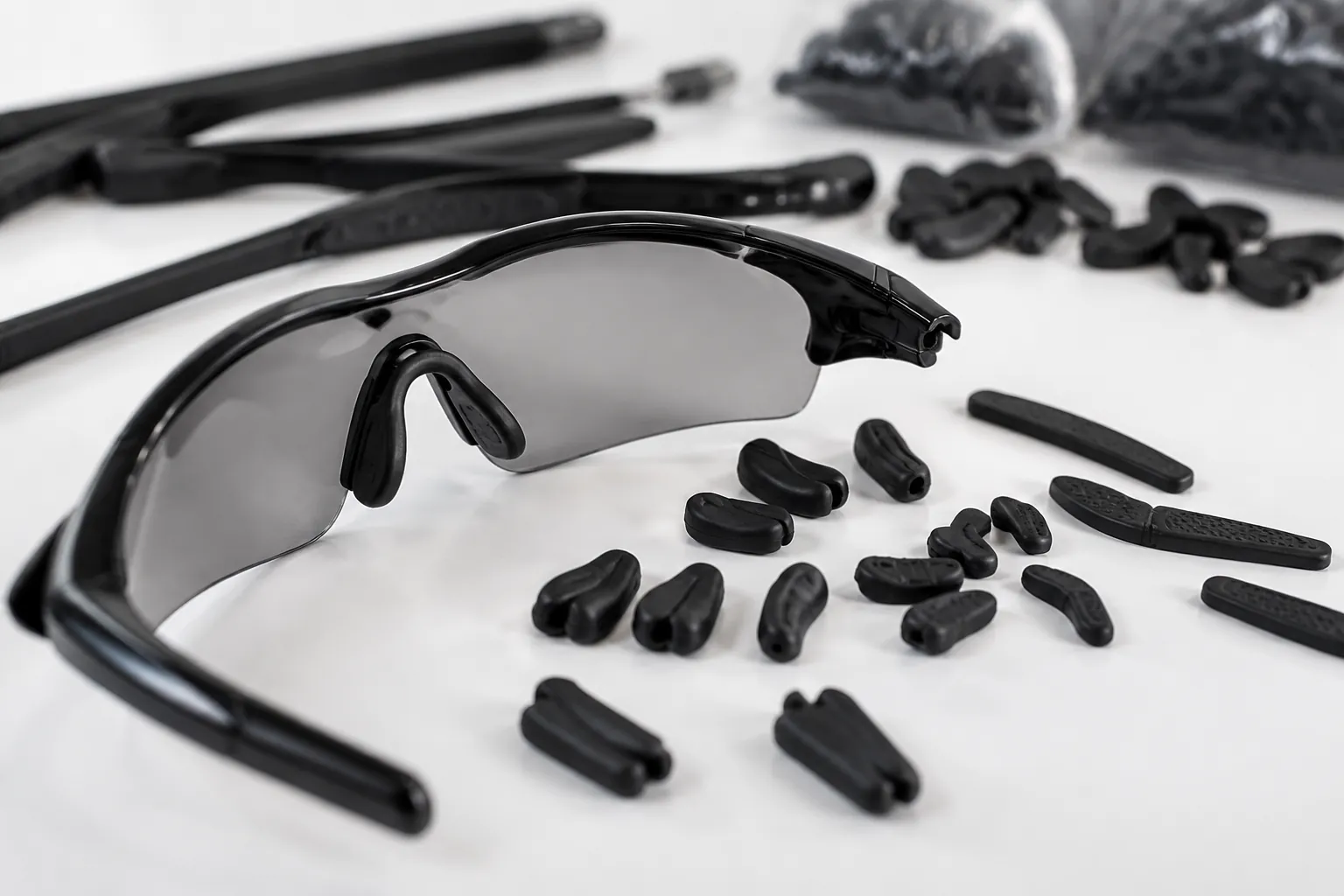
This guide is for brands, importers, distributors, and retail buyers planning lightweight TR90 sunglasses for a private label line. It explains where TR90 works, where it does not, and which specifications must be fixed before sampling. Use it to brief a factory, compare quotes line by line, and avoid soft frames, loose lenses, color mismatch, weak hinges, incorrect labeling, and compliance problems.
Is TR90 the Right Frame Material?
TR90 is a thermoplastic polyamide used for flexible, lightweight eyewear frames. In sunglasses, buyers choose it for comfort, flex recovery, and better toughness than many low-cost rigid injection plastics. It is common in sport-inspired styles, kids' sunglasses, travel retail, outdoor lifestyle ranges, and daily-wear private label collections where low weight and stable fit matter.
Do not treat TR90 as automatically premium. It does not give the same visual depth, laminated color effects, or hand-polished edge quality as acetate. It is also a poor fit for ultra-thin fashion fronts, sharp acetate-style bevels, heavy metal decoration, or luxury optical-positioned collections where dense hand feel is part of the product promise.
TR90 flexes. That is the point. It also means the lens groove, bridge geometry, hinge fixing, and temple tension must be controlled carefully.
At LumiShades in Wenzhou, TR90 private label programs usually cover injection molding, lens tinting or lens sourcing, logo decoration, assembly, and quality control. The practical starting MOQ is 50 pairs per design for validation orders or small-channel launches. For commercial planning, request stepped pricing at 300, 1000, and 5000+ pairs. Setup, color matching, decoration fixtures, packaging procurement, and inspection time spread very differently at each level. Final price depends on the mold, lens material, coating, hinge, decoration, packaging, testing, and shipment requirements.
TR90 vs PC vs Acetate vs Metal
Many sourcing mistakes start with a material name. A beach retailer, cycling brand, pharmacy chain, and boutique fashion label are not buying the same product. Match the material to the sales channel, target retail price, finish level, and expected wear conditions.
| Material | Best Use | Main Strength | Main Risk | Buyer Note |
|---|---|---|---|---|
| TR90 | Sport-inspired, kids, travel, active lifestyle, daily wear | Lightweight feel, flexibility, comfort, good toughness for daily handling | Can look too casual if mold polish, texture, color, or assembly control is weak | Strong mid-range private label choice when comfort is a priority |
| PC | Promotional sunglasses, low-cost retail, event merchandise | Low cost, fast molding, easy mass production | Can feel stiffer or lower value depending on grade, design, and finish | Use when price is the main driver and product life is limited |
| Acetate | Fashion sunglasses, optical-style models, boutique retail | Rich color depth, polished finish, premium hand feel | Higher cost, more manual work, longer production schedule | Better for premium positioning and visible color layers |
| Metal | Aviators, rimless, slim fashion, adjustable nose pad designs | Thin profile, mature look, adjustable fit | Plating, soldering, corrosion resistance, screw control, and pad-arm alignment matter | Requires strong plating control and corrosion-related QC |
TR90 often sits between budget PC and premium acetate. It is rarely the cheapest option, but it usually offers a strong comfort-to-cost ratio. For a retailer building a lightweight range with repeatable delivery, TR90 can be easier to scale than acetate and more wearable than basic promotional PC.
The material name does not save a weak product. Resin handling, mold condition, injection settings, lens fitting, hinge assembly, and inspection discipline decide the result.
Specifications to Freeze Before Sampling
"Black TR90 sunglasses with UV400 lenses" is not a production brief. It leaves too much open to factory interpretation. That usually means repeated sample rounds, revised pricing, or disputes later.
Before sampling, lock the frame, lens, decoration, packaging, and compliance assumptions.
- Frame material: Confirm whether the front and temples are both TR90. If PC, TPE, rubber-like inserts, stainless steel, zinc alloy, or other parts are included, list each material separately.
- Frame dimensions: Specify lens width, bridge width, temple length, overall frame width, lens height, base curve, and preferred fit position if relevant to the channel.
- Critical tolerances: Ask the factory to define workable tolerances for the actual mold and design. Lens groove, hinge seat, screw position, and lens-cut dimensions need tighter control than non-functional exterior surfaces.
- Hinge system: Choose standard metal hinge, spring hinge, screwless hinge, or integrated molded hinge. Spring hinges may improve fit comfort but add parts, assembly steps, and extra failure points.
- Lens material: PC is common for standard sunglass lenses. TAC is common for polarized lenses. Confirm thickness, lens curve, impact expectations, coating stack, and whether the lens is stock or custom.
- Lens performance: Confirm UV400 claim, filter category, visible light transmission, polarization, mirror coating, gradient, solid tint, and any driving or sports-use limitation.
- Color reference: Use Pantone, a physical color chip, or an approved master sample. Screen color is not a reliable approval standard for frames or lenses.
- Logo method: Choose laser marking, pad printing, hot stamping, metal logo plate, temple insert, or lens logo. Each method has different durability, cost, setup, and inspection requirements.
- Packaging: Define polybag, microfiber pouch, EVA case, hard case, retail box, barcode label, warning insert, hangtag, carton mark, and market-specific labeling.
For TR90, lens retention is critical. The frame can flex during wearing, packing, and handling, so the lens groove must be deep, even, and matched to the lens cut. A shallow groove, unstable front curve, wrong lens base curve, or poor lens cutting can make lenses pop out.
Test it early. Before approving bulk production, request lens-fit checks after normal temple opening and closing, light front torsion, and reasonable handling simulation.
Tooling, Samples, and Lead-Time Logic
TR90 projects follow two main paths: existing mold or new mold. Existing molds are faster, lower risk, and suitable for test launches. New molds give stronger shape differentiation, but they need more technical review, more calendar time, and a clear agreement on tooling ownership.
- Brief review: The factory checks target market, target price, frame shape, lens type, decoration, quantity, packaging, and compliance requirements.
- Design confirmation: For a new model, CAD files or technical drawings are reviewed for lens groove, hinge seat, bridge comfort, temple opening angle, frame curve, and mold release.
- Material and color approval: TR90 grade, color masterbatch, lens tint, coating, and surface finish are confirmed. Matte and translucent effects need tighter control because variation is easier to see.
- Sample making: Existing-design samples are usually faster if materials are available. Custom colors, special lenses, new logos, or retail packaging add time.
- Fit and function review: The buyer checks weight feel, temple pressure, nose fit, hinge action, lens retention, logo position, color, finish, and packaging.
- Pre-production sample: This is the bulk approval reference. It should be physically approved, dated, and kept by both buyer and factory.
- Bulk production: Production should start only after deposit, specification confirmation, and pre-production sample approval. Lead time depends on quantity, color count, lens complexity, decoration, packaging, testing, and factory capacity.
- Final QC and shipment: Inspection covers appearance, dimensions, hinge function, lens performance, markings, labels, packaging, and carton details before release.
For new molds, allow time for CAD adjustment, mold cutting, mold trial, sample correction, and sometimes a second trial. Do not rush this stage. A first mold trial can reveal lens-seating, bridge-comfort, frame-curve, or temple-angle problems that are not obvious in a rendering.
Cost Drivers: Why TR90 Quotes Vary
Two TR90 quotes can look far apart because the assumptions are not the same. A low quote may use a cheaper lens, basic hinge hardware, simple packaging, no polarization, limited logo durability testing, or no third-party compliance testing.
Compare specifications and responsibilities. Not just unit price.
| Cost Item | Lower-Cost Choice | Higher-Cost Choice | Commercial Impact |
|---|---|---|---|
| Frame | Existing mold, single solid color, standard finish | New mold, two-tone color, insert, special texture, custom surface | Tooling, setup, and production control increase |
| Lens | Standard PC UV400 solid tint | TAC polarized, mirror, gradient, flash coating, custom color | Higher retail value but more inspection points |
| Decoration | One-position pad print | Metal logo plate, laser mark, temple insert, lens logo | Improves branding but adds fixtures, labor, and rejection risk |
| Hinge | Standard metal hinge | Spring hinge, custom hinge, reinforced hinge seat | Comfort and perceived value may improve; screw and fatigue checks become more important |
| Packaging | Polybag only | Pouch, EVA case, retail box, insert, barcode, hangtag | Retail-ready packing adds cost, volume, procurement time, and carton-planning work |
MOQ also changes the cost structure. At 50 pairs per design, the factory still has to prepare materials, set up molding or frame finishing, fit lenses, decorate, pack, and inspect the order. The unit cost will be higher.
At 300 pairs, production planning becomes more stable. At 1000 pairs, setup and QC time spread more efficiently. At 5000+ pairs, material purchasing, color batching, packaging procurement, and line scheduling may become more favorable. Request stepped pricing with the same specification at each quantity level. Otherwise, the comparison is useless.
Decoration Methods and Durability Checks
Branding is where private label sunglasses stop looking generic. It is also where many defects appear. TR90 frames can be decorated in several ways, but each method has limits. Test on the real frame surface.
Pad printing is common for temple logos. It is economical and works well for simple one- or two-color marks, but adhesion should be checked, especially on matte, textured, or curved surfaces. Laser marking gives a clean, durable-looking mark for subtle branding, although contrast depends on frame color and material response. Metal logo plates can improve perceived value but require accurate recess design, reliable fixing, and corrosion control. Hot stamping can create metallic effects but needs surface compatibility checks. Lens logos are possible, but buyers must confirm that the mark does not interfere with wearer vision, coating performance, required markings, or compliance claims.
Set durability expectations before bulk production. Practical checks include tape adhesion after printing, rub testing on temple logos, and visual inspection after normal handling. For metal plates, inspect alignment, edge lifting, glue overflow, plating color, and corrosion risk. For laser marks, confirm position tolerance, readability, and consistency across colors.
Do not approve decoration only on a flat plastic swatch. Texture, curvature, mold-release residue, and surface treatment can change the result on the actual TR90 frame.
Compliance Checks for Export Markets
Sunglasses compliance is not a CE mark printed on a temple. It is not a UV400 sticker either. Different markets require different test reports, markings, warnings, and technical documentation.
For TR90 sunglasses, compliance normally covers UV protection, visible light transmission, optical quality, lens category, labeling, material safety, and restricted substances.
LumiShades can support documentation requests related to CE EN ISO 12312-1, ANSI Z80.3, AS/NZS 1067, REACH, FDA registration, ISO 9001, and BSCI where applicable. Buyers should identify the destination market at inquiry stage because lens category, warning text, labeling format, and test scope may differ between the EU, US, Australia/New Zealand, and other regions.
- EU: CE EN ISO 12312-1 is commonly used for general-purpose sunglasses. Confirm filter category, UV performance, optical requirements, and required warnings before packaging approval.
- US: ANSI Z80.3 is relevant for non-prescription sunglasses. FDA registration may be requested in the US eyewear supply chain, but buyers should confirm current importer obligations with their compliance adviser.
- Australia/New Zealand: AS/NZS 1067 applies to sunglasses and fashion spectacles sold in those markets. Confirm category, labeling, and warnings before printing retail materials.
- Chemical control: REACH may apply to frame materials, coatings, paints, metal parts, packaging components, and accessories for products sold into the EU.
- Factory systems: ISO 9001 relates to quality management systems. BSCI relates to social compliance audits. These do not replace product testing for sunglass performance.
The key question is simple: does the report match the ordered product? A report for one frame and lens combination does not automatically cover every color, lens material, coating, or decoration. Ask whether the available report matches the ordered lens material, tint family, coating type, filter category, and frame decoration. If it does not, plan product-specific testing before shipment.
QC Checklist Before PO and Shipment
TR90 is comfortable on the face. It is not forgiving when the specification is loose. Before issuing a purchase order, reduce the project to hard facts and agree the inspection standard before production starts.
- Confirm whether the design uses an existing mold or new mold, and state who owns any new tooling.
- Approve physical frame color, lens tint, surface finish, and logo sample. Do not approve final color or lens appearance only from photos.
- Lock lens material, thickness, UV400 requirement, filter category, polarization, coating, base curve, and any market-specific warning.
- Define logo size, position, method, color, and durability expectation.
- Set quantity by design and color. Use 50 pairs for testing if needed, but compare 300, 1000, and 5000+ pair pricing for margin planning.
- Approve a pre-production sample and keep one signed or clearly identified sample at the factory and one with your team.
- Agree packing details including pouch, case, box, barcode, warning card, polybag text, carton mark, and shipping carton strength.
- Set AQL or other inspection rules before bulk starts, including critical, major, and minor defect definitions.
Inspection should focus on frame symmetry, temple alignment, hinge resistance, screw tightness, lens retention, surface finish, color consistency, lens scratches, optical distortion, polarization direction, mirror coating defects, logo placement, labels, warnings, and carton information.
Treat UV failure, wrong filter category, cracked hinge seats, missing required warnings, incorrect logo, or lenses popping out as critical or major defects. These are not minor cosmetic issues.
Blunt advice: if a TR90 quote is much cheaper than the others, compare lens material, hinge hardware, decoration method, packaging, testing responsibility, and inspection scope line by line. The cost difference is usually hidden there.
For brands building a lightweight private label collection, TR90 is often a practical middle option. It can offer comfort and durability without pushing the program into acetate pricing or longer manual production schedules. The final result depends on the brief, mold quality, lens specification, decoration control, compliance planning, and inspection discipline.
Have a custom sunglasses project in mind?
Send us your styles, target market and quantities and we will return a detailed quote with MOQ, lead time and a sample plan.
Get a QuoteWhy source this from Wenzhou with LumiShades
Wenzhou in Zhejiang Province is widely regarded as China’s eyewear manufacturing capital, producing a large share of the world’s sunglasses. That concentration matters to buyers: a deep local supply chain for acetate sheet, hinges, lens blanks, plating and packaging means shorter component lead times, easier color and material matching, and a workforce with decades of eyewear-specific skill. LumiShades has manufactured in this ecosystem since 2009, and our vertical integration — in-house injection molding, acetate cutting, CNC milling, lens tinting, decoration and quality control — means no part of your order is quietly subcontracted to a workshop you cannot audit.
For international buyers, that vertical control translates into accountability. When a single factory owns every step, defects are traced and fixed at source rather than bounced between vendors, and your specifications survive intact from first sample to bulk. We back this with 15+ years of experience, shipments to 60+ countries, more than 5 million pairs produced per year and a 98.5% on-time delivery rate. Our certifications — CE EN ISO 12312-1, FDA registration, ANSI Z80.3, AS/NZS 1067, REACH, ISO 9001 and BSCI audit — mean the compliance documentation your market requires already exists. Explore our manufacturing capabilities and quality control process to see how this works in practice.
Frequently asked questions
What MOQ should I use for a first TR90 sunglasses launch? Use 50 pairs per design only for a validation order: fit checks, color review, packaging review, channel testing, or buyer presentation. For margin planning, request the same specification priced at 300, 1000, and 5000+ pairs. Compare unit price, tooling, logo setup, packaging, testing, and inspection costs.
Are TR90 sunglasses better than PC sunglasses? They are better for many comfort-focused programs, but not for every project. TR90 is usually selected for a lighter, more flexible frame with better daily-wear comfort than basic promotional PC. PC can still be right for low-cost giveaways, short-life promotional items, or price-led retail programs. Decide based on sales channel, target price, lens requirement, finish level, and durability expectation.
How long do TR90 samples and bulk production take? Lead time depends on whether the design uses an existing mold or a new mold. Existing-mold samples are usually faster if the frame color, lens, and logo method are already clear. New molds require CAD review, mold cutting, trial, correction, and sample approval. For bulk production, count the schedule from deposit, final specification confirmation, and approved pre-production sample, not from the inquiry date.
Which certifications or test documents should I request for TR90 sunglasses? Request documents based on the destination market and exact product specification. For the EU, ask about CE EN ISO 12312-1. For the US, ask about ANSI Z80.3 and whether FDA registration is relevant to your supply chain. For Australia/New Zealand, ask about AS/NZS 1067. For chemical restrictions, ask about REACH where applicable. ISO 9001 and BSCI relate to factory systems and social compliance; they do not replace product performance testing.
Can I add polarized lenses to TR90 frames? Yes. TAC polarized lenses are commonly used with TR90 frames. Before sampling, confirm lens material, thickness, filter category, UV400 performance, visible light transmission, polarization direction, tint, base curve, and whether mirror or gradient coating is required. During QC, check polarization direction, lens scratches, coating defects, optical distortion, and lens retention in the frame.
What is the biggest quality risk with TR90 frames? The biggest risk is poor dimensional and assembly control. Warped fronts, shallow lens grooves, weak hinge seating, unstable temple tension, inconsistent frame curve, or incorrect lens cutting can cause lens popping, discomfort, or early failure. Control this with a physical pre-production sample, clear inspection criteria, and checks for lens retention, hinge function, frame symmetry, and lens performance before shipment.
Ready to start?
Explore our cat-eye sunglasses or request a quote — our sales team replies within 12 hours.
Request a Quote