
5 Lens Colors That Sell in Private Label Sunglasses
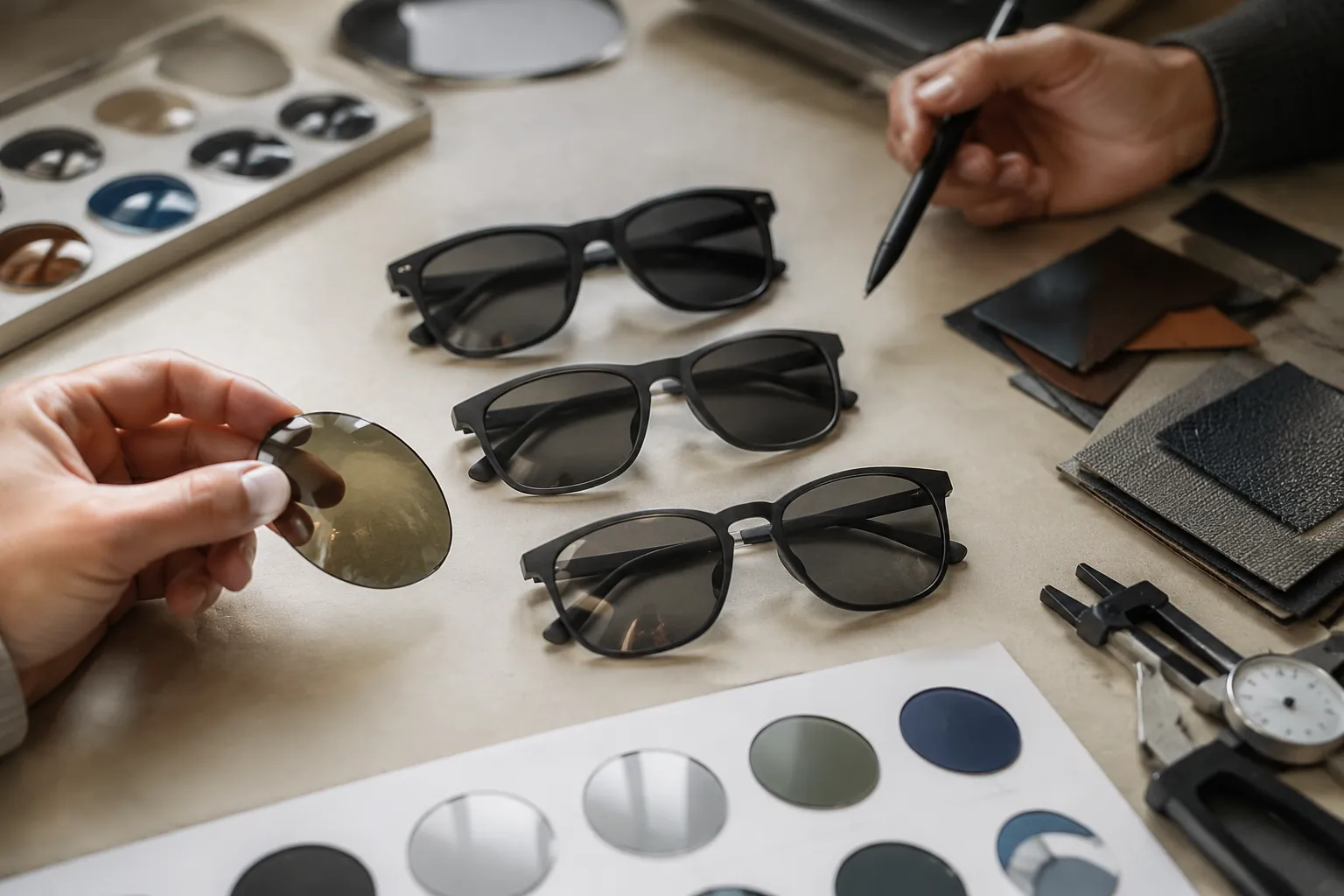
If you buy sunglasses for retail, wholesale, or private label programs, lens color is not a style detail. It affects sell-through, use case, repeat production, and compliance work. The right tint changes the buying decision in real ways. Some colors are easier to keep consistent. Some handle glare better. Some need tighter process control before bulk approval. This guide compares the five lens colors that matter most for overseas B2B buyers, with a channel-by-channel view, practical sourcing notes, and the factory details that affect cost, lead time, and repeatability.
How buyers should judge lens color
Start with the sales channel, not personal taste. A fashion chain, a beach resort shop, a pharmacy rack, and an e-commerce bundle program do not need the same tint profile. Judge lens color with four filters: where it will be sold, what conditions the wearer faces, what the frame design can support, and how consistently the factory can repeat the approved look in bulk.
For private label programs, lens color also affects production control. Gray and brown are usually the easiest to keep consistent because the visual target is simple and the acceptable appearance window is broad. Green and mirror usually need tighter matching between the base lens, coating stack, and final inspection. In practice, factories often work to an approved master sample and a visual tolerance standard, not only a lab value. Your spec should name the approved sample, the acceptable batch-to-batch appearance range, and the lighting used for final acceptance. If a lens looks fine in sunlight but shifts under store lighting, that is a quality issue.
Material and construction matter too. Acetate frames, injected frames, and mixed-material builds do not always use the same lens mounting and finishing flow. Lens tinting, mirror coating, anti-scratch treatment, and final cleaning all need to stay aligned. A small coating defect can become a full-carton rejection when the product is sold through fashion retail, where visual inspection is strict. At LumiShades, the key point is process control. The same design may be produced in different frame materials, with lens tinting and decoration completed before final QC.
There is also a compliance floor. For overseas buyers, lens color is not decoration only. Finished sunglasses still have to be tested against the target market standard, whether that is CE EN ISO 12312-1, ANSI Z80.3, AS/NZS 1067, FDA registration requirements, REACH, ISO 9001, or BSCI. The supplier should explain the intended transmission range, the test basis, and which documents are available for the order. If they cannot explain how the approved sample relates to bulk production, they are not ready for private label volume.
The five colors that actually move volume
Below is the practical buyer view. The table reflects how these colors behave in retail, not just how they look in a photo.
| Lens color | Best use case | Buyer upside | Main risk | Typical channel fit |
|---|---|---|---|---|
| Gray | General outdoor wear, neutral fashion programs | True color perception, broad acceptance, easy to explain | Can feel plain in style-led retail | Mass retail, optical, e-commerce basics |
| Brown / Amber | Driving, mixed sun, hazy conditions | Higher contrast, strong functional story, useful in low-clarity weather | Warm cast can look too heavy if the tint is pushed too dark | Sport, travel, outdoor, pharmacies |
| Green | Classic heritage looks, moderate bright light | Balanced comfort, premium casual appearance | Less familiar in some channels and harder to merchandise with a simple claim | Fashion eyewear, premium casual, optical |
| Mirror silver / flash mirror over gray or brown | Beach, snow, high glare, statement looks | High perceived value, strong shelf impact, strong visual differentiation | Higher scratch, coating, and cosmetic rejection risk | Resort, sport, fashion chains |
| Photochromic / light-adaptive tints | Travel, all-day wear, premium utility | One pair for changing light, clear value story | Higher cost, longer qualification cycle, slower adoption in low-price channels | Optical, premium DTC, travel retail |
Gray is the workhorse. It cuts brightness without shifting color perception too much, so it fits fashion, basic sunwear, and private label programs that need low complaint rates. A good gray lens should look neutral enough that customers do not call it blue or green in store feedback. Brown sells on function. It is easy to position around contrast and glare reduction in variable weather, and buyers often like it because it works in travel, driving, and daily wear without a complicated explanation. Green sits between the two and often wins on comfort and classic appearance. It can feel more premium than brown in some markets, but it needs careful pairing with frame color. The wrong frame can make it look accidental rather than classic.
Mirror lenses are different. They sell on shelf impact and perceived value, but cosmetic reject rates can be higher because coating marks, dust, and handling defects show up fast. Photochromic is useful, but it belongs in a controlled product line with stronger margin, tighter sample approval, and a buyer who can explain why the lens changes outdoors.
From a sourcing angle, the cost gap is rarely just the lens pigment. A plain lens may be inexpensive, but if your spec requires narrow shade matching, hard coating, anti-fog, or decorative printing on the lens, the process gets more complex. That is why two colors with similar retail appeal can land at different landed costs.
Channel by channel: what to stock first
Mass retail wants broad acceptance and low returns. Gray and brown are the safest first buys. They are predictable in presentation and easy to explain in a single retail sign or online bullet. If the buyer wants a second color, green can work, but only if the frame design already reads as more premium than commodity. In a chain program, it is better to have one color that moves consistently than several colors that each move poorly.
Pharmacy and grocery channels reward simple functional claims. Brown and gray do the job. Brown is easier to sell against driving and daily wear because the value proposition is clearer to the shopper. Gray is safer if the shelf assortment already includes many warm-tinted products and you need contrast in the planogram. In these channels, the supplier should prioritize clean labeling, stable carton counts, and low breakage over cosmetic drama.
Fashion chains and boutique distribution can carry mirror and green more comfortably because the customer is buying look first and function second. That said, mirror should not be the only answer. Many buyers over-order flash mirror and then find the core neutrals drive repeat orders. A mixed program usually performs better: one core neutral, one warm tint, and one fashion tint. That mix gives the buyer a way to cover both replenishment and trend traffic.
For e-commerce, the lens has to photograph well and match the product copy. Gray and brown are easiest to describe without overpromising. Mirror and photochromic attract clicks, but they also generate more pre-sale questions and more returns if the shade or transition is not what the buyer expected. If you sell online, sample approval matters more than the color name. Validate the product under the same lighting used for photography. The camera can exaggerate reflectivity or flatten the tint.
- Use gray when you need the lowest complaint risk.
- Use brown when the selling angle is driving, glare, or mixed weather.
- Use green when the frame is premium enough to support a classic look.
- Use mirror when shelf impact matters and the channel can absorb cosmetic scrutiny.
- Use photochromic only when margin, education, and lead time all support it.
Climate and use conditions change the answer
Hot, bright, coastal markets usually favor darker gray or mirror over gray because glare control matters more than color rendering. Beach and snow create the same problem: strong reflection from sand, water, or light surfaces. Mirror helps, but it should sit on a base lens with a defined transmission level, not just a decorative coating. The useful question is not whether mirror looks strong. It is whether the base lens still gives the intended protection level after the mirror layer is added.
Hazy, dusty, and inland markets often do better with brown or amber. Those tints improve perceived contrast in flat light, which is why buyers often reorder them for driving and travel. In cloud-prone regions, green can be the middle ground. It reduces brightness without making everything look too warm, and it photographs well in fashion catalogs. For a private label range, that matters because the same lens may need to work in retail display, online images, and customer wear.
For humid tropical climates, the issue is not only tint. Sweat, salt, and frequent cleaning punish poor coating adhesion and weak surface finishing. If the coating is weak, mirror wear and micro-scratching become complaints fast. That is where in-house QC matters. A factory doing lens tinting and final inspection under one roof can catch color drift, coating haze, and cosmetic defects before packing. A practical QC check should include visual comparison against the approved master, edge inspection for coating lift, wipe testing for surface haze, and carton-level random sampling before release.
Practical rule: if your customer will wear the sunglasses for driving, choose brown or gray. If they will wear them for beach or snow glare, choose mirror over a controlled base tint. If they buy mostly for fashion, green can work, but only if the frame and lens pairing look intentional and the color reads clean in store light.
In mixed-climate markets, the safest assortment is usually one neutral lens for all-purpose wear, one warm tint for haze and driving, and one higher-visibility fashion option for the channel that can support it. That structure reduces guesswork and makes replenishment easier when one SKU outperforms the others.
Price, MOQ, and lead time by lens choice
Lens color changes cost, but not always in the way buyers assume. The biggest cost driver is usually process complexity: coating stack, reject rate, and how many steps are needed before packing. A plain gray or brown lens is easier to hold stable at volume than a custom mirror effect or a photochromic spec. The price difference usually shows up first in scrap, then in labor time, then in the final unit price.
| Lens type | Production complexity | MOQ risk | Approx. price behavior | Lead-time risk |
|---|---|---|---|---|
| Gray | Low | Low | Best base price | Low |
| Brown / Amber | Low to medium | Low | Close to gray; small premium if tint spec is narrow | Low |
| Green | Medium | Medium | Often slightly higher due to tighter color matching | Medium |
| Mirror | Medium to high | Medium | Higher because coating and cosmetic scrap can increase cost | Medium |
| Photochromic | High | Higher | Premium pricing; less suitable for aggressive entry price points | Higher |
The MOQ discussion should be tied to how many variants you are asking the factory to hold in one run. A 50-pair MOQ per design is workable for sample validation, but not every color should be treated as equally easy to scale. Gray and brown are the safest first commitments because they are less sensitive to coating variation and less likely to create a delayed rework loop. Mirror and photochromic often need extra approval cycles, which can add time if the first pre-production sample misses the visual target.
At LumiShades, the commercial frame is straightforward: MOQ starts at 50 pairs per design, samples take 7-10 days, and bulk production typically runs 25-35 days. Price improves at 300, 1000, and 5000+ pairs, with the final unit price depending on frame construction, lens specification, decoration, and packaging. On a normal private label program, the first value gain usually comes from simplifying the specification, not from asking for a dramatic color effect. If you are building a retail program, keep the first drop simple: one gray core SKU, one brown or green support SKU, and only one higher-risk fashion color if the channel can absorb it.
Decoration method also matters. Pad printing on the temple, hot-stamp logos, laser marking on metal parts, and lens printing all affect reject rate and packing speed. Confirm whether decoration happens before or after lens insertion, because that changes handling risk. The more steps required after the lens is finished, the more chance there is for scuffing or coating damage.
Compliance and testing buyers should ask for
Do not let the lens color discussion drift away from compliance. A nice tint that fails the target market standard is a waste of freight. For international programs, ask for the exact test basis, not vague statements. The real compliance references to request are CE EN ISO 12312-1, ANSI Z80.3, AS/NZS 1067, REACH, FDA registration, ISO 9001, and BSCI.
Different channels need different proof. Optical and pharmacy buyers usually care about documentation and consistency. Mass retail wants fewer complaints and clean carton labeling. Sport and beach programs often need stronger glare control and color stability. For mirror lenses, confirm the coating specification and abrasion expectations before mass production. For photochromic, ask how the tint behaves after repeated cycling and whether the final transmission still aligns with the target market standard. If the supplier can provide a test report, ask whether it references production samples or a generic material sample. That difference matters when you are buying by SKU.
One thing worth checking in pre-production is color tolerance. A supplier should confirm what visual difference is acceptable batch to batch and how they verify it. Some factories use visual comparison against a sealed master sample; stronger operations also track process settings, bath time, coating thickness, and final inspection notes. If they cannot describe how they control lens shade under daylight and cabinet lighting, expect trouble. Small tint drift causes mixed-carton complaints, inconsistent shelf appearance, and awkward store comparisons, especially when the buyer orders multiple frame colors under one lens family.
For private label, ask for these checks before bulk approval:
- Approved master sample for each color.
- Written transmission target and acceptable visual tolerance.
- Coating specification for mirror or anti-scratch layers.
- Packaging method that prevents lens-to-lens rubbing.
- Pre-shipment photos or inspection report from the actual run.
A simple buying rule set for private label programs
- Pick the channel first. A beach shop does not need the same lens family as a pharmacy chain.
- Choose the primary use case. Driving, fashion, travel, sport, and all-day wear point to different colors.
- Keep the first order narrow. One core tint and one support tint is usually enough for a launch.
- Approve physical samples under normal light, not just photos. Lens color changes in photos, especially mirror.
- Ask for compliance documents before bulk approval, not after deposit.
- Match packaging claims to actual tint behavior. Do not call a simple gray lens a driving lens unless the specification supports that use.
- Confirm the decoration method and when it is applied in the production flow.
- Set an acceptable batch tolerance before mass production so the factory knows what to hold against.
This is where many programs fail. They buy several fashionable colors, then discover the store staff cannot explain the difference and the customer buys only one. A tighter assortment usually sells better. It also simplifies replenishment, which matters when your supplier is running multiple frame materials, decoration methods, and lens tints across the same production calendar. A disciplined assortment also makes reordering faster because the factory has fewer variables to match on the next run.
What to order first from a factory like LumiShades
If you are testing a new private label line, start with gray, brown, and one fashion-led option such as green or mirror. Gray gives you the broadest base. Brown gives you the clearest functional story. Green or mirror gives you a visual point of difference without pushing the whole program into a high-risk spec. That is the mix most buyers can explain easily to sales teams and store staff.
For low-MOQ testing, 50 pairs per design is enough to validate sell-through, packaging, and customer feedback without locking cash into dead stock. If the first run moves, scale to 300 and then 1000 pairs once the color and frame pairings are proven. At that point, the commercial decision is less about lens theory and more about whether your supplier can hold the same tint, coating, and QC standard at volume. Ask for the repeat-run result, not only the first sample. A supplier that can match the same lens appearance in the second batch is usually a better long-term partner than one that only makes one good sample.
If you want a practical launch formula, use this: one neutral everyday color, one functional tint, one style-led option, and one clear QC standard for all three. That keeps the assortment disciplined while still giving the buyer room to test different retail messages. The real test is not whether the colors look attractive in the sample room. It is whether they sell through at retail and can be repeated without a production surprise.
Have a custom sunglasses project in mind?
Send us your styles, target market and quantities and we will return a detailed quote with MOQ, lead time and a sample plan.
Get a QuoteWhy source this from Wenzhou with LumiShades
Wenzhou in Zhejiang Province is widely regarded as China’s eyewear manufacturing capital, producing a large share of the world’s sunglasses. That concentration matters to buyers: a deep local supply chain for acetate sheet, hinges, lens blanks, plating and packaging means shorter component lead times, easier color and material matching, and a workforce with decades of eyewear-specific skill. LumiShades has manufactured in this ecosystem since 2009, and our vertical integration — in-house injection molding, acetate cutting, CNC milling, lens tinting, decoration and quality control — means no part of your order is quietly subcontracted to a workshop you cannot audit.
For international buyers, that vertical control translates into accountability. When a single factory owns every step, defects are traced and fixed at source rather than bounced between vendors, and your specifications survive intact from first sample to bulk. We back this with 15+ years of experience, shipments to 60+ countries, more than 5 million pairs produced per year and a 98.5% on-time delivery rate. Our certifications — CE EN ISO 12312-1, FDA registration, ANSI Z80.3, AS/NZS 1067, REACH, ISO 9001 and BSCI audit — mean the compliance documentation your market requires already exists. Explore our manufacturing capabilities and quality control process to see how this works in practice.
Frequently asked questions
Which lens color is safest for a first private label launch? Gray. It has the broadest acceptance, neutral color perception, and the lowest style risk across retail and e-commerce. It is also usually the easiest to repeat at volume with the least visible drift. If you are launching only one SKU, gray is the safest starting point.
Is brown better than gray for driving sunglasses? Brown is often easier to sell for driving because it supports a contrast story in mixed light and haze. Gray is still the safer all-rounder if you want one SKU for multiple uses. If your channel wants one functional message, brown is usually the clearer commercial choice; if it wants one universal SKU, gray is safer.
Do mirror lenses sell better than plain tints? They can in beach, sport, and fashion channels, but they also have higher cosmetic rejection risk and are easier to mis-sell online. Mirror works best when the coating quality, base tint, and packaging all support the higher visual expectation. If your team cannot inspect finish carefully, plain tints are lower risk.
What should I ask a supplier about lens compliance? Ask which standard they test to, which documents they can provide, what transmission target they are building to, and how they control tint consistency batch to batch. The compliance references to request are CE EN ISO 12312-1, ANSI Z80.3, AS/NZS 1067, REACH, FDA registration, ISO 9001, and BSCI. Also ask whether the report is tied to your production sample or only a generic sample.
How many colors should I order for a new program? Two to three at most. One core neutral, one functional warm tint, and one secondary style option is enough for launch. More than that usually adds complexity faster than it adds sales. Start narrow, then add colors only after you have sell-through data.
Do lens colors change lead time? Yes, mainly when the color requires more coating steps or tighter matching. Plain gray and brown are usually the fastest; mirror and photochromic add complexity, more inspection time, and more risk of rework. Decoration can also affect timing if it is applied after lens finishing, so ask where it sits in the production flow.
Ready to start?
Explore our rimless sunglasses or request a quote — our sales team replies within 12 hours.
Request a Quote