
TAC vs Nylon vs PC Polarized Lenses: B2B Buying Guide
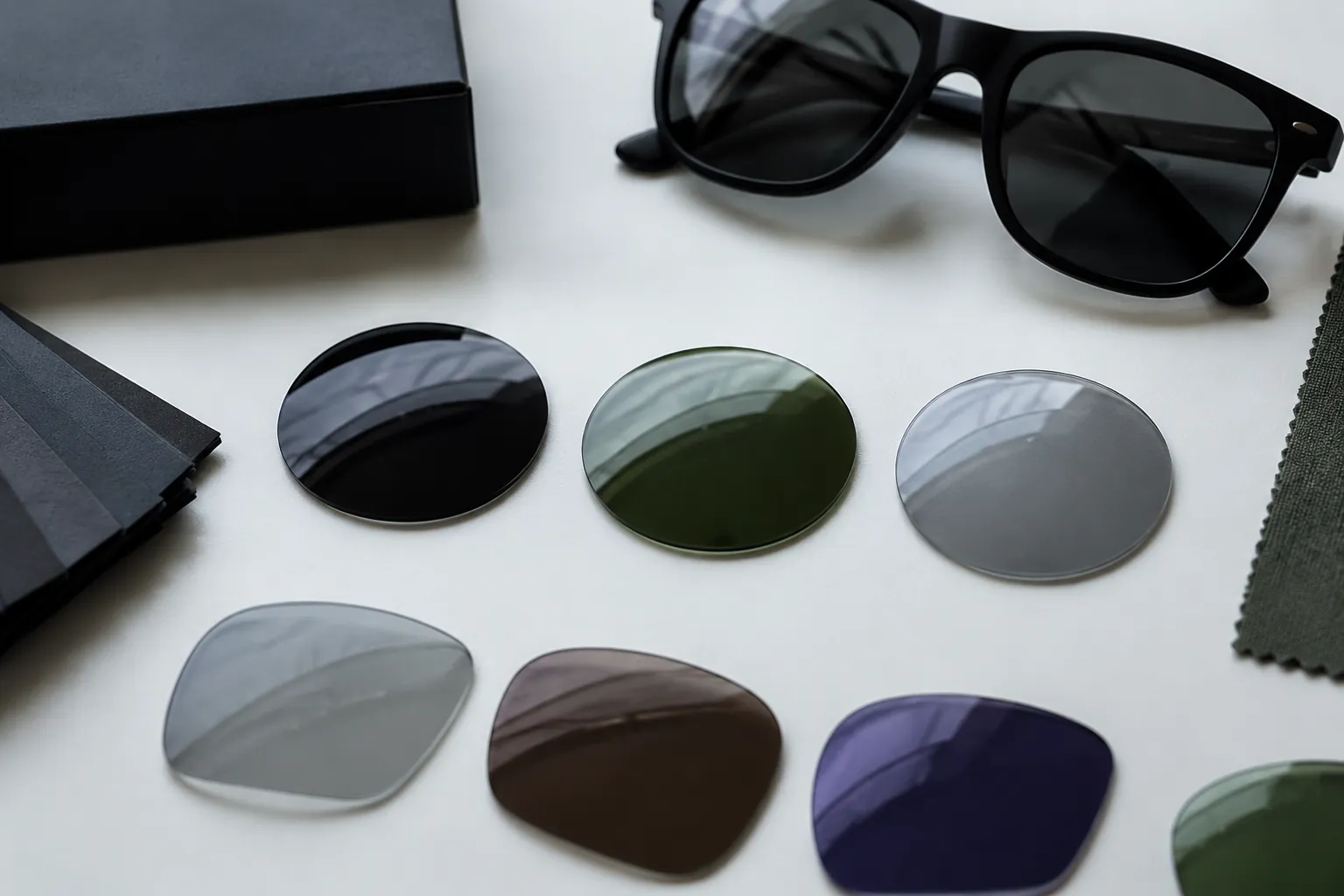
This guide is for brand owners, importers, distributors, and retail buyers sourcing polarized sunglasses at volume. The goal is simple: match lens construction to retail positioning, real use, compliance needs, warranty exposure, and reorder potential before you approve samples or place bulk orders. Get that match wrong and the cost shows up later—through claims, replacements, delayed reorders, and channel friction, not just the original quote.
Start with channel economics, not lens chemistry
Many sourcing discussions start with TAC vs nylon vs PC as if material choice alone decides whether a product line will work. It does not. Start with channel economics instead: what promise the product makes at retail, how hard it will be used, which compliance rules apply, and how costly a complaint becomes once service, replacement, and listing impact are factored in.
A boutique fashion line, an online private-label seller, a convenience chain, a kids' program, and an outdoor specialty brand can all ask for polarized sunglasses. They should not all buy the same lens build. A lens that works for a low-commitment fashion purchase may fail in a sport or fishing product sold on performance claims. That is the real issue. Not whether one material is always good or always bad.
For fashion programs with controlled price targets and moderate wear expectations, TAC is often a practical polarized option. For active outdoor or wrap-frame products, nylon is often preferred because it tends to perform better in curved applications and supports stronger performance positioning. For value sport, youth, and impact-conscious programs, PC is often chosen because impact resistance is a major advantage.
- Start with the retail claim: define whether the product is fashion polarized, driving-oriented, youth-focused, sport, fishing, or premium outdoor.
- Set the complaint tolerance: decide which post-sale issues would be commercially unacceptable for that channel.
- Map actual use conditions: consider abrasion, drops, repeated cleaning, heat exposure, and frame curvature.
- Work back to the lens: choose the construction that can support the claim within the target margin and quality standard.
First define the claim you must defend. Then choose the lens build that can support it.
What TAC, nylon, and PC mean on the factory floor
These lens types differ in more than field performance. They also differ in processing, handling, and consistency control. Those production realities often matter more than first-time buyers expect.
TAC polarized usually refers to a laminated construction in which a polarized film is combined with outer layers. It is common in commercial sunglasses because polarization is straightforward to specify and the construction is widely available. Even so, buyers should still review lamination quality, cosmetic consistency, and behavior in the intended frame shape—especially if the design has noticeable wrap or tight assembly conditions.
Nylon polarized is often selected for lighter weight, flexibility, and stronger optical performance in curved sport-style lenses. It is widely used when visual quality across a wrapped lens matters. But nylon programs still need process discipline. Mold quality, coating control, tint consistency, and frame-lens fit all affect yield and final appearance.
PC polarized uses polycarbonate as the base material. It is widely valued for impact resistance, which is why it is common in youth, entry-sport, and safety-adjacent programs. The main sourcing caution is surface durability. Scratch resistance depends heavily on the hard-coat specification and process quality.
Ask about more than material names. Ask how the supplier controls lens edging, cosmetic handling, coating protection, and frame-lens matching. On wrapped frames, mismatch between lens geometry and frame design can increase assembly stress, affect fit, or trigger visual complaints. Review the full build: lens type, curve, coating stack, frame construction, decoration method, and packing flow.
Compare lens builds by cost band, use case, and risk
| Lens build | Typical best-fit channel | Common base claim | Main failure risk if mismatched | Relative cost position |
|---|---|---|---|---|
| TAC polarized | Fashion retail, online private label, promotion-led chains | Accessible polarized glare reduction | Higher complaint risk if sold as hard-use sport or strong-wrap performance eyewear | Often the lowest-cost polarized option in volume programs |
| PC polarized | Entry sport, kids, convenience, value retail | Impact resistance with polarized function | Scratch complaints if the hard-coat specification is too light for the channel | Low to mid |
| Nylon polarized | Outdoor, fishing, cycling, premium independent brands | Lighter wear, better optics, stable curved lenses | Margin pressure if the channel cannot support the added lens cost | Typically the highest of the three |
Match the material to the program structure as well. For smaller opening orders, it is usually safer to start with a standard, proven lens construction than with an over-customized specification. Early samples should answer a basic sourcing question first: is this a repeatable production build, or just a prototype that looks acceptable on its own?
As order size grows, buyers can review whether a better coating stack, mirror finish, or lens platform improves consistency enough to justify the cost. At higher volumes, standardizing lens construction across several SKUs can also reduce variation, simplify approvals, and make reorders easier to manage.
Keep price comparisons grounded in actual build details. A low quote may be reasonable for a simple frame, a standard lens platform, limited decoration, and straightforward packaging. It is not a reliable benchmark for a more complex sport frame, upgraded coatings, or a premium nylon build.
Return risk is where bad lens selection gets expensive
Many buyers watch ex-factory price closely and pay too little attention to post-sale cost. That is a mistake. The wrong lens choice usually becomes expensive through replacements, complaint handling, stock imbalance, and damage to the selling channel.
TAC-related complaints often come from over-positioning, not from a clear material defect. Sold accurately as a fashion polarized style with moderate wear expectations, TAC can be a sound commercial choice. Trouble starts when the same build is marketed as a demanding performance product, especially in wrapped frames or use cases where optical consistency matters.
PC complaints are often surface-related. The lens may perform well on impact, but if the hard coat is too basic for the real use case, users may still report scratching after ordinary handling and cleaning. Nylon often lowers risk in performance-oriented products, especially where lens curvature and visual quality matter. But it is not magic. A better lens cannot fix weak assembly control, unstable frame geometry, or poor cosmetic handling.
- Define the complaint types that would be most damaging for the program, such as scratching, distortion, or lens fit issues.
- Write those risks into the RFQ and sample brief before approving colors, branding, and packaging.
- Require the approved lens construction and coating stack to appear on the sample record and pre-production approval documents.
- Evaluate samples under realistic use conditions, including cleaning, pouch contact, storage heat, and repeated handling.
Do not just ask for the cheapest polarized option. Ask which option is most likely to hold up in that channel at an acceptable total cost after service and replacements.
Compliance sets the boundary for product claims
For cross-border buyers, compliance often narrows lens choices faster than marketing language does. The key question is not whether a lens can be polarized. It is whether the finished sunglasses can support the exact claims made on packaging, manuals, hangtags, and online listings in the destination market.
Common buyer requests include CE EN ISO 12312-1, ANSI Z80.3, AS/NZS 1067, FDA registration, and chemical compliance such as REACH. On the factory-management side, buyers may also request ISO 9001 and BSCI. Use these references carefully and only where they are relevant to the product and market.
Three controls matter most. First, lens tint category, visible light transmission, and intended-use claim must align with destination-market requirements. Second, any change in material, tint, mirror, or coating after sample approval can affect the compliance status of the finished sunglasses and should trigger review. Third, compliance applies to the assembled product, not just the loose lens.
If a program will be sold in more than one market, ask early whether one approved configuration can support all target markets or whether different lens and labeling combinations are needed. That is far easier to solve before final packaging and claims are printed.
- Confirm claim language early: verify how polarization, tint category, driving suitability, and warnings will be presented.
- Freeze the lens stack before testing: keep the base material, tint, mirror, hard coat, and other surface treatments consistent once compliance samples are submitted.
- Treat material changes as formal changes: switching from TAC to PC or nylon is not just a price update.
- Approve the finished assembly: frame fit and lens mounting can affect whether the tested build matches mass production.
Production details serious buyers should check before bulk
A polished sample can hide process weakness. Before placing bulk, ask how the chosen lens behaves inside the real manufacturing flow.
- Lens edging and fit control: Ask how the factory matches lens edge dimensions to the frame groove and how insertion stress is controlled during assembly.
- Curvature control: On wrapped frames, confirm how the supplier checks curve consistency and frame-lens alignment. This is one reason nylon is often preferred in sport-oriented builds.
- Coating handling between steps: Surface damage can happen during edging, printing, assembly, inspection, or packing, not only during transport.
- Decoration compatibility: Verify whether pad printing, laser marking, hot stamping, or metal logo placement creates abrasion risk near the lens during packing and shipment.
- Inline and final QC: Confirm checks for polarization effect, cosmetic defects, lens alignment, screw tightness, hinge function, and visual inspection under consistent lighting.
Factories with in-house control over molding, frame processing, lens processing, decoration, and QC can often investigate defects faster because frame fit, lens handling, and decoration interaction are reviewed together rather than across multiple subcontractors. For buyers, this is not just a selling point. It is a risk-control advantage. When a defect appears, response is usually faster if the supplier can inspect the groove, the lens edge, the coating, and the decoration process directly.
Also ask how lenses are protected inside production before final assembly. Tray separation, protective film, glove use, and pack-out sequence can directly affect cosmetic consistency.
Lead time, sample strategy, and MOQ logic
Lead-time planning should reflect lens risk, not just shipping targets. Actual sample and production timing varies by construction, finishing, decoration, order size, and factory workload, so confirm timelines project by project instead of relying on standard estimates.
For a new style at a low initial MOQ, do not change too many variables at once. Confirm lens construction first. Then finalize color, mirror effect, logo method, and packaging. If the lens material changes late in development, the program may need another round of fit review, coating evaluation, and claim confirmation.
As orders scale, it becomes more worthwhile to compare whether a better hard coat, improved mirror application, or upgraded pouch material reduces risk enough to justify the added cost. For larger programs, buyers should also review whether multiple SKUs can share one lens platform to reduce variation and simplify reorder management.
Good sampling is not about getting a polished prototype fast. It is about finding failure points before bulk starts.
A practical rule is to validate one decision at a time during sampling. First confirm the lens family. Then approve coating and color. Then lock branding and pack-out. Buyers who try to finalize everything at once often create avoidable delays and make root-cause analysis harder when problems appear.
A practical buying framework for TAC, PC, and nylon
If you need a short rule, use this: choose TAC for price-sensitive fashion polarized programs with controlled wear expectations; choose PC for value-oriented lines where impact resistance matters and scratch performance is managed through the right hard-coat specification; choose nylon for active, curved, premium, or claim-sensitive products where optics and lens stability are tied directly to customer satisfaction.
Then test that choice against five commercial filters: target retail price, expected use conditions, compliance market, warranty exposure, and reorder potential. If the lens choice fails one of those filters, revise it before bulk approval.
Strong buyers do not treat lens material as a technical badge. They treat it as a sourcing decision linked to product positioning, risk control, and margin protection. Material properties matter. Channel fit matters more. A lens that looks strong on paper is still the wrong lens if it cannot support the product claim at an acceptable total cost.
Have a custom sunglasses project in mind?
Send us your styles, target market and quantities and we will return a detailed quote with MOQ, lead time and a sample plan.
Get a QuoteWhy source this from Wenzhou with LumiShades
Wenzhou in Zhejiang Province is widely regarded as China’s eyewear manufacturing capital, producing a large share of the world’s sunglasses. That concentration matters to buyers: a deep local supply chain for acetate sheet, hinges, lens blanks, plating and packaging means shorter component lead times, easier color and material matching, and a workforce with decades of eyewear-specific skill. LumiShades has manufactured in this ecosystem since 2009, and our vertical integration — in-house injection molding, acetate cutting, CNC milling, lens tinting, decoration and quality control — means no part of your order is quietly subcontracted to a workshop you cannot audit.
For international buyers, that vertical control translates into accountability. When a single factory owns every step, defects are traced and fixed at source rather than bounced between vendors, and your specifications survive intact from first sample to bulk. For procurement review, buyers can request process records, approved samples, quality checkpoints and project-specific compliance files before placing a bulk order. Required testing and documentation are confirmed against the destination market and product specification rather than assumed from a generic certificate list. Explore our manufacturing capabilities and quality control process to see how this works in practice.
Frequently asked questions
Which polarized lens is usually safest for a first-order private label fashion program? For a first-order fashion program, TAC is often the safest starting point because it is widely used in commercial polarized sunglasses and usually fits fashion-channel cost targets better than nylon. Buyers should still confirm that the frame shape, lens curve, and product claims stay within fashion-use positioning rather than performance-use claims. A practical step is to request a sample with the exact approved lens construction and check how it holds up under normal cleaning, pouch contact, and everyday handling before approving bulk.
When is nylon worth the extra cost? Nylon is usually worth the added cost when the frame has noticeable wrap, the product is sold for active outdoor use, or optical consistency is part of the retail promise. It is commonly justified in cycling, fishing, sport, and premium outdoor channels where lens stability and visual quality can directly affect returns and brand perception. Before upgrading, compare the added lens cost against the complaint risk in the target channel and confirm that the supplier has stable process control for curved lens production.
Is PC a bad choice for polarized sunglasses? No. PC can be the right choice for entry sport, youth, and value-retail programs because impact resistance is a major advantage. The key control is not the base material alone but the hard-coat quality and the way the product is positioned. Buyers considering PC should ask specifically how scratch resistance is controlled, request samples from the final coating specification, and test them against the handling conditions expected in the selling channel.
Can I change from TAC to PC after sample approval without affecting the project? Treat that as a meaningful engineering and compliance change, not a simple cost edit. Changing lens material can affect lens fit, edging behavior, coating performance, visual appearance, and the validity of any test reports or product claims tied to the approved sample. The practical step is to stop and re-check the sample record, compliance plan, and frame-lens fit before giving bulk approval.
What compliance documents should I ask for on polarized sunglasses? Ask for documents that match the destination market and the final product claim. Depending on where the sunglasses will be sold, that may include <strong>CE EN ISO 12312-1</strong>, <strong>ANSI Z80.3</strong>, <strong>AS/NZS 1067</strong>, <strong>FDA registration</strong>, and <strong>REACH</strong> where applicable. If your vendor approval process also requires factory-management records, request <strong>ISO 9001</strong> and <strong>BSCI</strong> separately from product test documentation. Also confirm that the reports apply to the finished sunglasses configuration being ordered, not just a similar style or a loose lens.
Ready to start?
Explore our aviator sunglasses or request a quote — our sales team replies within 12 hours.
Request a Quote