
Custom Sunglasses Tooling Costs: Molds, CNC, Revisions
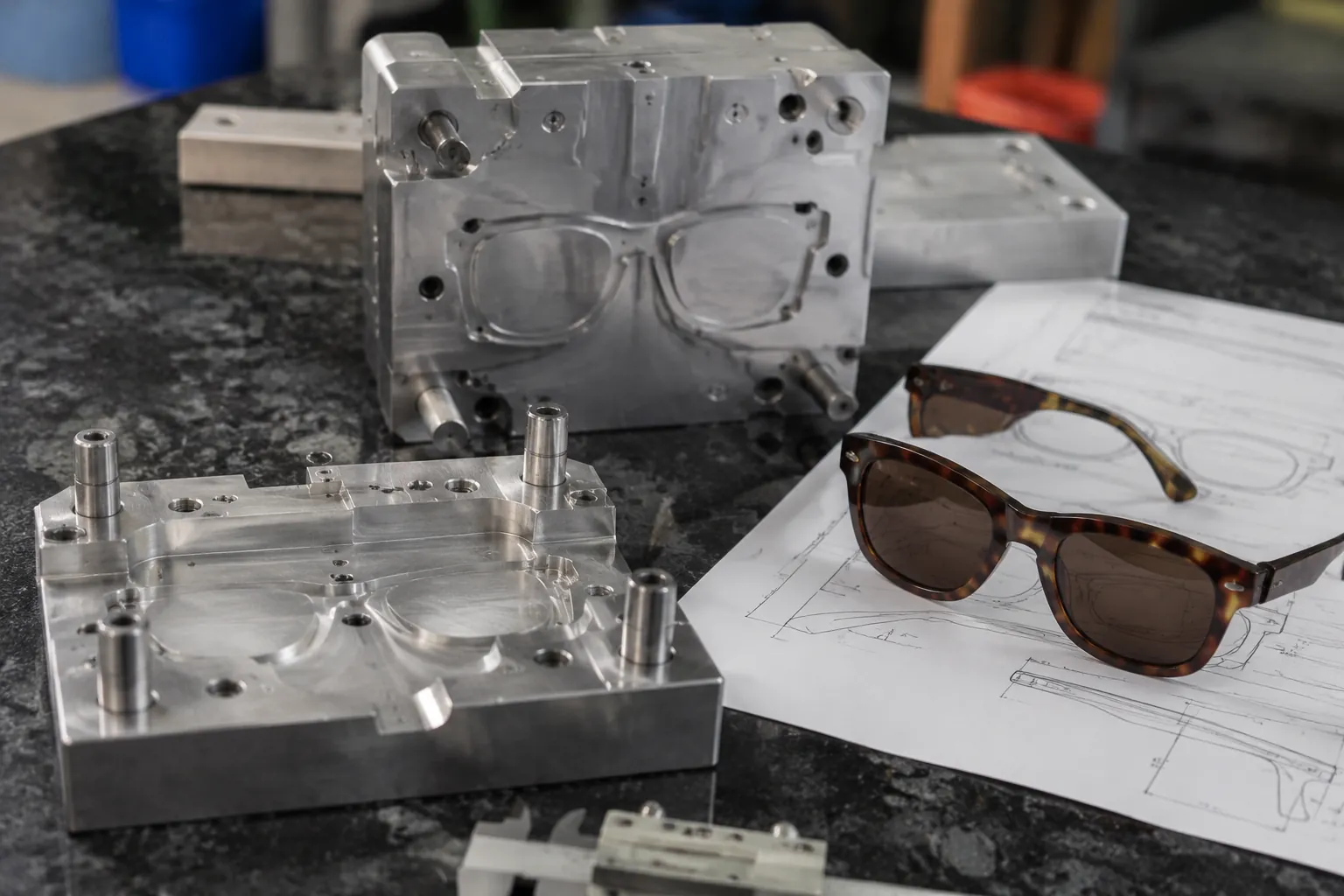
Tooling cost in custom sunglasses development is not a single number. It is a chain of decisions tied to design, manufacturing method, sampling route, revision control, and compliance needs. Buyers get into trouble when they compare only the opening quote instead of the full development path. A project can look cheap at RFQ stage, then become much more expensive once sample revisions, mold corrections, fixture changes, lens rework, or market-specific compliance updates begin. The practical way to budget eyewear development is simple: break tooling into stages, know which changes trigger real machining work, and confirm exactly what is included before approving the next step.
Start With The Right Cost Buckets
Many tooling disputes start with bad definitions. In eyewear sourcing, suppliers often use tooling to cover several different charges. Split development cost into three buckets from the start: prototype work, production tooling, and revision work. If a supplier gives one combined figure with no breakdown, you cannot tell whether the quote is complete, incomplete, or just pushing cost into a later stage.
Prototype work covers the first physical sample used to review shape, proportions, fit direction, and visual details. Depending on the construction, this may be a CNC-cut acetate sample, a hand-made concept sample, or an early molded sample from temporary tooling. Its purpose is clear: check design intent before committing to production tooling.
Production tooling is the cost required to make repeatable bulk units. For injected frames, this usually means molds for the front and temples, plus assembly or positioning fixtures. For acetate frames, the structure is different. CNC programs, cutting fixtures, polishing jigs, routing fixtures, and hardware-fitting tools may replace part of the mold cost, but they are still development expenses and should be quoted clearly.
Revision work covers changes after development starts. A supplier may need to modify inserts, re-machine cavities, adjust polishing, rework lens-routing paths, or remake fixtures. Even small dimensional changes can create real cost if they affect how the frame is machined, molded, assembled, or fitted with lenses.
The control point is basic. Ask each supplier to quote these three buckets separately and state what each includes. That makes quotes easier to compare and cuts the risk of hidden charges later.
What You Are Actually Paying For In A Mold
A sunglasses mold is not just shaped steel. Mold cost usually includes mold design, cavity layout, steel selection, CNC machining, EDM work where needed, polishing or texture work, fitting, trial shots, dimensional checks, and correction work after the first test run. The visible shape is only part of the bill. A lot of the cost sits in the unseen work that makes the part manufacturable and repeatable.
In practice, mold cost rises with geometry complexity and tolerance demands. Strong front curves, thin temple sections, sharp edges, undercuts, embedded metal details, and spring hinge areas all increase processing difficulty. The same goes for designs that require tighter control over lens seating, left-right symmetry, assembly alignment, or surface finish. A rendering may look simple. The tool path often is not.
Surface finish is another major cost driver. Transparent, translucent, and high-gloss finishes show processing and polishing defects more easily than opaque colors. If the brand wants a crystal frame or a very clean high-gloss finish, the mold surface standard and sample acceptance standard both tighten. That usually means more polishing, more inspection, and more correction work.
For injected sunglasses, a factory may need:
- 1 front mold
- 2 temple cavities or a left/right temple mold set
- hinge positioning or drilling fixtures
- logo placement or heat-transfer alignment fixtures
- lens-cutting data and mounting test fixtures
For acetate construction, a project may avoid a full injection mold, but it still needs technical preparation: CNC programming, sheet cutting nests, bevel and polishing jigs, hinge-routing fixtures, core-wire preparation, and finishing trials where needed. That is why two frames that look similar in a catalog can end up with very different development costs once the production method and finish standard are fixed.
CNC Samples, Soft Tools, And Full Molds Compared
The cheapest development route depends on what you need to validate. If the goal is to review size, styling, and basic fit direction, CNC or hand-made samples are often enough. If the goal is to check molded behavior, assembly repeatability, lens retention, hinge stability, or production consistency, you need a process closer to mass production.
| Method | Typical Use | Typical Cost Logic | Lead Time | Main Limitation |
|---|---|---|---|---|
| CNC acetate sample | Form, fit, size review, early approval | Often the lowest practical route for validating custom shape before production tooling | Supplier-dependent; commonly quoted as about 1-2 weeks | Does not reproduce injection shrinkage, gate effects, or molded surface behavior |
| Hand-made prototype | Visual concept sample or early presentation sample | Lower upfront cost, mainly useful for appearance review | Supplier-dependent; often similar to CNC sample timing | Limited value for tolerance, hinge repeatability, and lens-fit validation |
| Soft-tool molded sample | Early structure review on an injected concept | Intermediate spend when process-relevant confirmation is needed before full tooling | Varies by supplier and part complexity | Shorter tool life and less process stability than full production tooling |
| Full production mold | Bulk production and final process validation | Highest upfront spend; required for repeatable mass production | Varies widely by factory capacity, mold complexity, and approval speed | Costly to revise if the design is still changing |
For many custom programs, the most efficient sequence is to validate dimensions and styling with a prototype first, lock the drawing, and only then open the production mold. That reduces the chance of paying hardened-tool revision cost for problems that could have been solved earlier.
MOQ logic matters too. Low MOQ programs can make sense for platform customization, market testing, or limited launches, but low volume does not automatically make a fully custom molded frame economical. Ask whether the quotation is based on a new mold, a modified existing platform, or a cosmetic variation of an existing construction. That distinction changes the economics fast.
Where Revision Charges Usually Come From
Revision charges are one of the main reasons eyewear development budgets drift. Often the issue is not arbitrary billing. Structural changes after sampling starts can require new machining work, extra polishing, revised tooling inserts, updated fixtures, or another round of lens-fit testing.
The most common revision triggers are:
- Changing front curvature, which can affect lens shape, lens seating, wrap feel, and temple closing geometry
- Changing lens shape, which may require new cutting data, new demo lenses, and front rework
- Moving hinge position, which changes drilling, insert location, or assembly alignment
- Adding a metal logo plate, which requires a recess, attachment review, and alignment control
- Switching from opaque material to crystal or translucent material, which raises the cosmetic standard because defects become more visible
- Changing temple thickness around a core wire or hinge area, which can affect strength, routing, and finishing behavior
Some changes look minor on a drawing but are expensive in production terms because they change how a part is molded, machined, polished, or assembled. Ask the supplier to sort proposed changes into two groups: cosmetic updates that do not require tooling rework, and structural updates that do.
The lowest-cost revisions are usually artwork-only changes made before bulk production, such as pad print content, laser marking text, carton artwork, pouch graphics, or care-card layout. Structural changes are the expensive ones. Especially after production tooling starts. If the team is still deciding bridge fit, temple geometry, lens specification, or logo construction, it is usually too early to release tooling.
Compliance Work Adds Direct Cost
Compliance is not just paperwork. It can change development cost because lens specification, labeling, chemical compliance, and market-specific requirements all affect whether the finished sunglasses can be sold in the destination market.
In sunglasses, buyers often discuss standards and systems such as CE EN ISO 12312-1, ANSI Z80.3, AS/NZS 1067, REACH, FDA registration, ISO 9001, and BSCI. These references matter, but they do not mean a factory can automatically supply a compliant product for every market and every frame-lens combination. The actual specification still has to match the target market requirement.
Lens configuration is a common cost driver. Visible light transmission category, lens material, lens thickness, coatings, and colorants can all affect whether the product meets the intended requirement and how much testing or review is needed. Labeling and documentation can also vary by market. Handle these points late and you may end up paying for replacement lenses, updated labeling, revised technical files, or another sample cycle.
The practical step is blunt: define target markets early, align the lens specification before tooling is locked, and confirm what compliance support is included in the quote. Treating compliance as a last-stage admin check is a common way to create avoidable cost and delay.
A Simple Budget Framework Buyers Can Use
If the final drawing is not fully locked but you need an internal budget, use a staged model instead of one blended estimate. It gives purchasing, product, and sales teams a clearer view of where cost risk sits.
- Set the sample-stage budget: first prototype, fit review sample, and any planned revision round.
- Set the tooling-stage budget: frame molds, temple molds, fixtures, or acetate production jigs depending on the construction.
- Set the decoration-stage budget: pad print setup, laser engraving program, hot-stamp tooling, or metal logo preparation.
- Set the compliance-stage budget: testing, market-specific checks, labeling review, and supporting documentation where required.
- Add a revision reserve: enough to absorb at least one structural correction after the first technical review.
Decoration method matters more than many buyers expect. Pad printing is usually one of the simpler and lower-cost branding methods for standard applications. Laser engraving can be durable and clean, but the result depends on material contrast and placement. Metal logo plates can create a more premium look, but they also add recess tolerances, attachment steps, and alignment risk. If decoration is still undecided when sampling starts, the development budget already has an exposed variable.
MOQ and projected reorder volume should also be part of the calculation. The real question is not just the tooling charge itself, but how that cost will be absorbed across the first order and expected repeat orders. Buyers who run that math early usually make better sourcing decisions than buyers who focus only on the opening quote.
Questions To Settle Before You Approve Tooling
Most avoidable tooling waste comes from approving too early. Before releasing tooling, buyers should get explicit answers on the technical and commercial points that most often create downstream cost.
- Is the approved sample dimensionally representative of production, or only a visual sample?
- Are eye size, bridge, temple length, and frame wrap signed off by the people responsible for fit approval?
- Is the lens material, tint, and category already aligned with the target market requirement?
- Has the branding method been fixed as pad print, laser engraving, hot stamp, or metal plate?
- Does the quote include trial shots, correction work, and a defined number of sample rounds?
- Which changes trigger a new tooling charge, and which are treated as normal revision work?
These are routine sourcing questions. They still affect cost in a big way. Much of the delay in custom eyewear programs comes from late changes to structure, fit, finish, or compliance assumptions after tooling has already started. The lowest total development cost is rarely the lowest first quote. It is usually the program with fewer late-stage changes, cleaner approval gates, and clearer written assumptions.
A clean RFQ for custom sunglasses should state frame material, lens material, target market, decoration method, MOQ target, sample objective, and whether the first sample is for styling review or production validation.
That is the practical way to budget custom sunglasses development: define the cost buckets, lock the specification before mold opening, and document which assumptions are included in the quote.
Have a custom sunglasses project in mind?
Send us your styles, target market and quantities and we will return a detailed quote with MOQ, lead time and a sample plan.
Get a QuoteWhy source this from Wenzhou with LumiShades
Wenzhou in Zhejiang Province is widely regarded as China’s eyewear manufacturing capital, producing a large share of the world’s sunglasses. That concentration matters to buyers: a deep local supply chain for acetate sheet, hinges, lens blanks, plating and packaging means shorter component lead times, easier color and material matching, and a workforce with decades of eyewear-specific skill. LumiShades has manufactured in this ecosystem since 2009, and our vertical integration — in-house injection molding, acetate cutting, CNC milling, lens tinting, decoration and quality control — means no part of your order is quietly subcontracted to a workshop you cannot audit.
For international buyers, that vertical control translates into accountability. When a single factory owns every step, defects are traced and fixed at source rather than bounced between vendors, and your specifications survive intact from first sample to bulk. We back this with 15+ years of experience, shipments to 60+ countries, more than 5 million pairs produced per year and a 98.5% on-time delivery rate. Our certifications — CE EN ISO 12312-1, FDA registration, ANSI Z80.3, AS/NZS 1067, REACH, ISO 9001 and BSCI audit — mean the compliance documentation your market requires already exists. Explore our manufacturing capabilities and quality control process to see how this works in practice.
Frequently asked questions
Does a low MOQ mean I can get a fully custom mold cheaply? Usually not. A low MOQ can work for existing-platform customization, limited runs, or market testing, but a true from-scratch molded frame still carries development cost that must be recovered somewhere in the program. Ask the supplier directly whether the quote is based on a new mold, a modified existing mold, or only a cosmetic customization. Then calculate the tooling cost across the first order quantity and expected repeat orders before comparing suppliers.
When should I choose a CNC sample instead of opening a mold? Choose a CNC sample when the immediate decision is about shape, proportions, basic fit direction, or design approval. Open production tooling only after those points are stable and you need to validate molded behavior, assembly consistency, lens retention, or production repeatability. In RFQ terms, state clearly whether the first sample is for styling review or production validation, because those are different tasks and should not be priced or judged the same way.
What changes are most likely to trigger extra tooling charges? The highest-risk changes are structural ones made after tooling work has started: front curve, lens shape, hinge position, temple geometry, logo plate recesses, and any update that changes lens mounting or assembly alignment. Ask the supplier to mark proposed revisions as either cosmetic or structural before approving them. Also ask whether the original quote includes any correction round after the first trial, or whether all tooling changes are billed separately.
Can one certified factory setup cover EU, U.S., and Australia requirements automatically? No. A factory may be familiar with CE EN ISO 12312-1, ANSI Z80.3, AS/NZS 1067, REACH, FDA registration, ISO 9001, and BSCI, but that does not automatically make every frame and lens combination suitable for every market. Give the supplier the target market list at the start, confirm the intended lens specification, and ask what product-specific testing, labeling, and documentation are still required for your exact item.
How many sample rounds should I budget for? Budgeting should follow the maturity of the design, not a fixed rule. For a disciplined program with a clear drawing and defined lens and decoration choices, buyers often plan an initial sample plus a controlled revision cycle. If fit, branding method, lens category, or material choice is still open, budget for more time and more cost. The actionable step is to ask the supplier to quote the exact number of included sample rounds and to define what kind of changes are covered in each round.
Ready to start?
Explore our wayfarer sunglasses or request a quote — our sales team replies within 12 hours.
Request a Quote