
Sunglass Hard Coats: Limits, Testing, and Buyer Specs
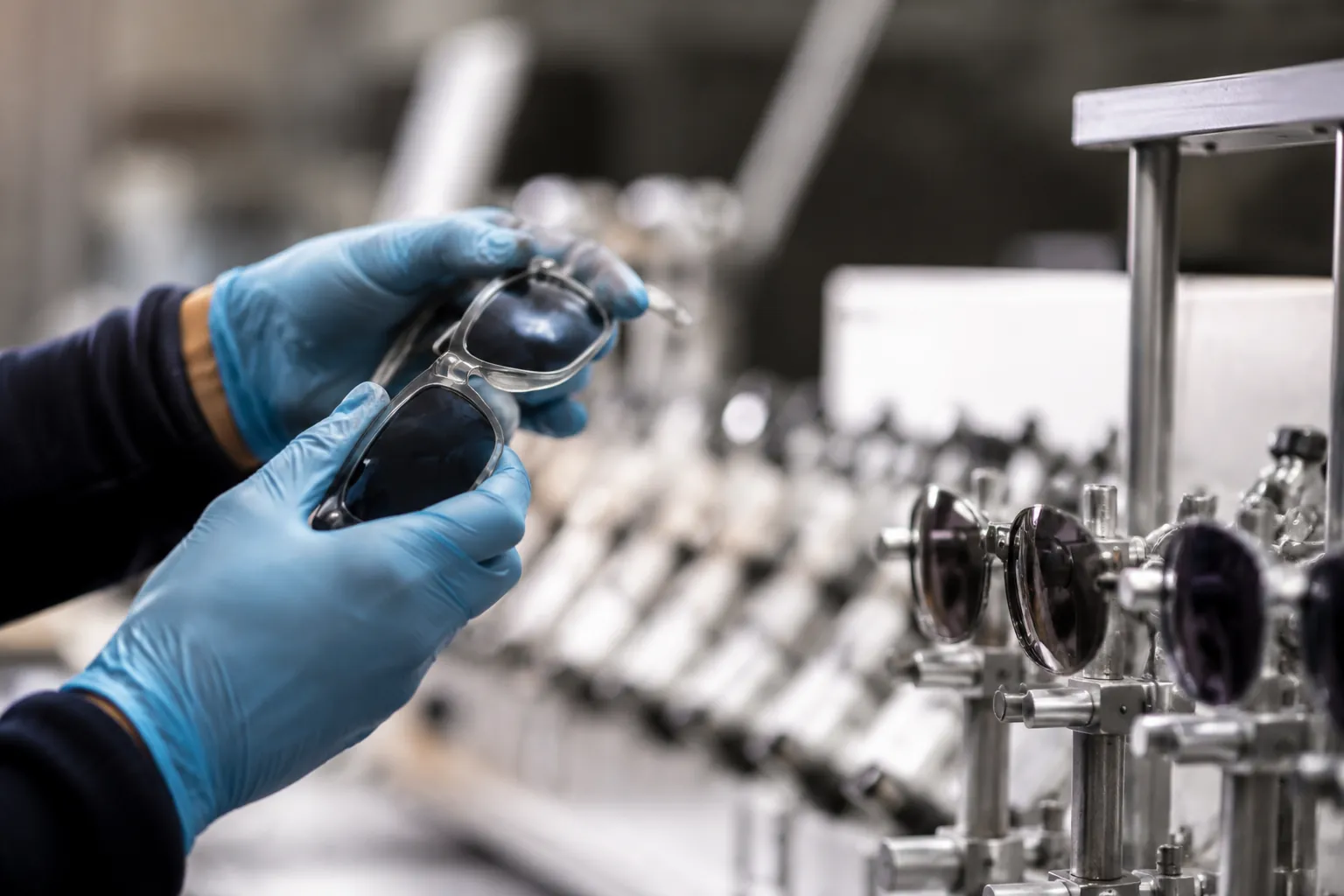
This guide is for brands, importers, distributors, and retailers sourcing custom sunglasses in volume. The main point is simple: a hard coat can improve abrasion resistance, but it does not make a lens scratch-proof. Performance depends on the lens substrate, coating chemistry, process control, curing, post-coating handling, and the test method used to judge the result. If the requirement is vague, buyers either pay for performance that was never defined or end up in disputes that were easy to prevent. The job is to specify hard-coated lenses in terms a factory can quote, produce, inspect, and support with records.
Set the Right Expectation: Hard Coat Helps. It Does Not Make Lenses Scratch-Proof
Buyers often ask for scratch-proof lenses. That is not a reliable production standard, and it is not a claim most suppliers can support. In sunglass manufacturing, hard coating is a surface treatment used to improve resistance to fine abrasion from wiping, normal handling, carton dust, and contact during assembly and packing. It does not stop visible damage from sand, keys, metal parts, rough surfaces, or bad storage.
That distinction matters. Scratch performance is not one feature by itself. It comes from the lens material, coating formula, coating thickness, curing discipline, adhesion, surface cleanliness before coating, and how the lens is handled after coating. A lens can pass an internal abrasion check and still reach the customer with marks if post-coating handling or packing is sloppy.
For most private-label sunglass programs, the practical question is narrower: can the lens get through production, assembly, shipment, store handling, try-ons, and first-use cleaning without early visible scratching? That is the level buyers should define and inspect.
In product specs and retail copy, safer language is scratch resistant or improved abrasion resistance. Promise more than that, and returns usually follow.
Start With the Material: PC, TAC, Acrylic, Nylon, and Glass Do Not Perform the Same
The hard coat sits on the surface, but the base material still shapes the result. Some substrates are naturally harder. Others are chosen for impact resistance, weight, flexibility, or cost. Buyers should treat hard coating as part of the lens system, not as a substitute for the right material choice.
| Lens material | Typical thickness range | Uncoated scratch behavior | With hard coat | Buyer notes |
|---|---|---|---|---|
| Polycarbonate (PC) | Varies by style and lens design | Relatively easy to mark compared with harder substrates | Noticeably improved when coating and curing are controlled | Common for sport, youth, and impact-focused styles; buyers should confirm hard coating is included |
| TAC polarized | Varies by construction and lamination design | Depends on outer layer quality and lamination structure | Can improve surface durability, but performance depends on the full laminated stack | Ask about lamination stability, edge quality, and heat performance in addition to coating |
| Acrylic (PMMA) | Varies by style and lens design | Generally better than bare PC for surface hardness, but still application-dependent | Can be improved further | Often used in lower-cost fashion programs; suitability depends on channel and handling conditions |
| Nylon | Varies by style and lens design | Application-dependent | Can perform well when paired with a suitable coating system | Often considered for sport applications where flexibility and performance matter |
| Glass | Varies by style and lens design | Generally strong surface scratch resistance | Can offer very good abrasion performance | Weight, breakage risk, and product positioning still need careful review |
Polycarbonate creates the most confusion. It is popular because it is lightweight and widely used where impact resistance matters, but its surface marks more easily than glass and some other substrates if left uncoated. Do not assume PC includes an adequate hard coat unless that requirement appears in the spec or sample record.
TAC polarized lenses need a different review. This is not one solid lens body. It is a laminated structure made from multiple layers. Surface durability depends on the outer layers, but also on how stable the whole stack remains during heat exposure, edging, assembly, and normal use. A decent coating cannot rescue poor lamination.
Glass still offers strong inherent scratch resistance, but many bulk programs avoid it because of weight, freight breakage risk, and market positioning. That is why coated PC and coated TAC remain common in custom sunglasses manufacturing.
What Hard Coating Means on a Production Line
In production terms, hard coating is usually a clear protective layer applied after lens forming or lamination and before final assembly. Common industrial methods include dip coating and flow coating. Depending on the coating system and lens material, curing may be thermal, UV-based, or another controlled process defined by the supplier.
A typical process sequence looks like this:
- Lens molding, cutting, or TAC lamination is completed.
- The lens surface is cleaned to remove dust, oils, fingerprints, and other contamination.
- Pre-coat inspection screens out lenses with surface defects that should not proceed.
- The hard coat is applied under defined process conditions.
- The coating is cured according to the supplier's process requirements.
- Appearance, adhesion, and abrasion checks are completed before further handling, assembly, or decoration.
Process control matters. Poor cleaning can cause adhesion problems or coating defects. Weak curing can reduce performance even when the lens looks acceptable at first glance. Rough post-cure handling can damage the surface before assembly starts. Buyers do not need proprietary chemical details, but they should ask whether the coating is controlled in-house or outsourced and what inspection records exist for the lot.
Decoration sequence matters too. Mirror finishes, tinting, pad printing, laser marking, and assembly all add handling risk. A good hard-coat process can still be undone if the coated lens moves through too many stations without proper trays, separators, clean wiping materials, and final cosmetic checks.
Write the Spec Properly: Use Case, Test Method, Acceptance Standard
If the purchase order only says anti-scratch, the supplier has too much room to interpret the requirement. A usable specification should define the product use case, lens material, coating requirement, test method, and visual acceptance standard.
- Entry fashion retail: define the lens material, require hard coating if surface durability matters to the channel, and state the cosmetic acceptance condition for normal viewing.
- Mid-market polarized: specify TAC construction requirements, polarization requirement if applicable, and how scratch-related appearance will be judged after normal handling.
- Sport or youth: identify the impact-oriented material choice, require hard coating, and tighten cosmetic inspection because these products often see heavier use.
- Premium line: compare material options such as upgraded nylon or glass against target price, weight, warranty exposure, and real field-use expectations.
Then define the test language. Ask the supplier which abrasion check is used internally: for example, a steel-wool rub test, cheesecloth rub test, pencil hardness check, Taber abrasion method, or a customer-defined comparison method. These methods are not interchangeable. A pass on one does not prove performance on another.
At the approval stage, clarify the following:
- Viewing condition for cosmetic acceptance: ambient daylight, controlled light box, or strong inspection lamp
- Viewing distance for judgment of visible scratching
- Failure threshold: minor marks visible only under inspection lighting versus scratches visible in ordinary wear
- Inspection stage: development sample only, in-process control, or pre-shipment AQL inspection
Keep regulatory compliance separate from scratch-resistance claims. CE EN ISO 12312-1, ANSI Z80.3, AS/NZS 1067, REACH, and FDA registration may matter for market access, product classification, or buyer due diligence, but they do not prove that one hard-coat system has better abrasion performance than another.
What the Coating Changes in Cost, MOQ, and Lead Time
Hard coating is usually not the biggest line item in a sunglass bill of materials, but it does affect process flow, yield risk, inspection effort, and rework exposure. The tighter the cosmetic standard, the more control the supplier will need at coating, assembly, and packing.
| Program type | Typical MOQ logic | Unit cost effect | Lead-time effect | Main sourcing risk |
|---|---|---|---|---|
| Low-cost fashion | Lower MOQs may be accepted for sampling or trial orders, but economics vary by supplier | Usually adds some cost compared with an uncoated lens | Often limited if specified early | Retail complaints if coating is omitted or handling and packing are weak |
| Standard polarized TAC | Moderate MOQs usually support more stable quoting and process planning | Cost impact depends on lens construction and quality target | Can add planning and inspection steps | Lamination disputes, heat-related complaints, or cosmetic disagreements |
| Sport PC | Moderate MOQs often help maintain consistency and inspection discipline | Added cost is common because coating is operationally important on PC | Usually manageable when built into the initial plan | Fast visible wear if the coating level is too basic for the channel |
| Premium nylon or glass | Higher volumes may improve cost efficiency, but requirements are supplier-specific | Higher material and quality-control exposure are common | Approval and quality review may take longer | Over-specifying performance beyond what the market will pay for |
Lead time is usually affected more by late spec changes than by the hard-coat step itself. Buyers create delays when they change lens material, tint category, mirror finish, polarization option, decoration details, or packing method after sampling starts. Freeze the lens plan early. Do not revise the cosmetic standard after approval unless you are ready to reset timing and cost.
MOQ also shapes coating economics. Small-volume orders still require setup, inspection, and handling discipline, so unit cost can rise quickly. Larger runs can justify more formal process checks and tighter sorting, but volume alone does not guarantee better scratch performance. The requirement still has to be written clearly and inspected consistently.
Cost discussions should stay tied to the supplier quote. Broad market price claims are usually misleading because frame material, lens material, tint, polarization, decoration, packaging, and compliance scope all change the real cost structure.
Where Buyers Get Burned: Five Common Failure Modes
Most scratch-related disputes come from a short list of avoidable failures in specification, handling, or expectation setting.
- Wrong substrate choice. The buyer chose a lens material for weight, impact resistance, or price, but did not define the hard-coat requirement needed for the actual use case.
- No agreed test method. The supplier described the lens as scratch resistant, while the buyer assumed a stronger or different benchmark than the factory used.
- Packing damage. Lenses are marked during shipment because units rub together, dust is trapped in the pack, or components contact the lens surface in transit.
- Post-coating handling damage. Mirror finishing, logo printing, assembly, or final wiping introduces marks after the coating process is complete.
- Exaggerated retail claims. Packaging or marketing language promises scratch-proof performance that normal consumer use will not support.
Packing is often underestimated. A lens with acceptable coating performance can still arrive scratched if products are packed face-to-face without protection, if temple components press against the lens during vibration, or if final cleaning materials are not suitable for coated surfaces. Buyers should ask how each unit is packed, whether lens protection is used, how products are arranged inside inner cartons, and whether dividers or separators are part of the standard pack-out.
Inspection should not stop at the coating stage. Check again after assembly and before carton sealing. Insertion pressure, hinge movement, wiping, and final packing can all introduce new marks.
Approve Samples Under Real Conditions, Not Lab Fantasy
Sample approval often fails for a simple reason: the buyer reviews a carefully cleaned development piece and assumes bulk production will look the same after normal assembly, packing, and shipping. That is a mistake. A better approval process checks the lens under realistic conditions and ties approval to records that can be referenced later.
Use this checklist during development:
- Confirm the exact lens material in writing: PC, TAC, acrylic, nylon, or glass.
- Confirm whether hard coating is standard for that lens or a specific upgrade in the quote.
- Ask the supplier to identify the abrasion test or internal rub test used for evaluation.
- Review the lens after all relevant finishing steps, including tinting, mirroring, logo application, and assembly.
- Define the viewing condition and distance for cosmetic acceptance.
- Approve the packing method at the same time as the product, not after bulk production begins.
- Retain a sealed reference sample linked to the approved specification and shipment records.
For importers and distributors, it also helps to connect the lens requirement to a pre-shipment inspection plan, especially on first orders, material changes, or supplier transitions. Scratch resistance is not only a development issue. It becomes a shipment acceptance issue once goods are packed and ready to move.
If the program requires compliance documentation, keep those files with the sample approvals and inspection records. Depending on market and buyer requirements, that may include CE EN ISO 12312-1, ANSI Z80.3, AS/NZS 1067, REACH, FDA registration, and factory system documents such as ISO 9001 or BSCI. Useful records. Different purpose. They support compliance and supplier qualification, but they do not replace a defined scratch-resistance specification.
Match the Claim to the Channel
The right hard-coat requirement depends on where the product will be sold and how that channel judges quality. Discount fashion retail, resort stores, online private label, sporting goods chains, and optical-adjacent channels do not look at lens durability the same way.
For lower-price fashion programs, focus on realistic daily-wear resistance, practical cosmetic limits, and disciplined packing. For a polarized lifestyle line, specify the TAC construction clearly, ask how the outer layers are protected, and keep marketing claims conservative. For sport or youth products, a coated impact-oriented material is usually the starting point, with tighter handling and inspection controls through assembly. For premium programs, compare higher-cost material options against actual return exposure instead of relying on generic quality language.
The buying rule is simple: hard coating creates value only when the requirement is written in a way the factory can build, inspect, and quote. If the market expects the lens to survive normal use without early visible scratching, that expectation needs to appear in the product specification, sample approval, inspection method, and packing standard. Otherwise, the buyer is not purchasing defined performance. The buyer is purchasing a vague promise.
Have a custom sunglasses project in mind?
Send us your styles, target market and quantities and we will return a detailed quote with MOQ, lead time and a sample plan.
Get a QuoteWhy source this from Wenzhou with LumiShades
Wenzhou in Zhejiang Province is widely regarded as China’s eyewear manufacturing capital, producing a large share of the world’s sunglasses. That concentration matters to buyers: a deep local supply chain for acetate sheet, hinges, lens blanks, plating and packaging means shorter component lead times, easier color and material matching, and a workforce with decades of eyewear-specific skill. LumiShades has manufactured in this ecosystem since 2009, and our vertical integration — in-house injection molding, acetate cutting, CNC milling, lens tinting, decoration and quality control — means no part of your order is quietly subcontracted to a workshop you cannot audit.
For international buyers, that vertical control translates into accountability. When a single factory owns every step, defects are traced and fixed at source rather than bounced between vendors, and your specifications survive intact from first sample to bulk. We back this with 15+ years of experience, shipments to 60+ countries, more than 5 million pairs produced per year and a 98.5% on-time delivery rate. Our certifications — CE EN ISO 12312-1, FDA registration, ANSI Z80.3, AS/NZS 1067, REACH, ISO 9001 and BSCI audit — mean the compliance documentation your market requires already exists. Explore our manufacturing capabilities and quality control process to see how this works in practice.
Frequently asked questions
Is hard coating standard on all sunglass lenses? No. Buyers should not assume hard coating is standard across all lens materials or all suppliers. On polycarbonate, it is commonly treated as important because the surface can mark more easily if left bare. On TAC, acrylic, nylon, or glass, the answer depends on the supplier's lens construction, target price, and product positioning. The practical step is to get written confirmation in the quote, sample approval, or specification sheet that hard coating is included and to identify the lens material by name rather than using generic terms such as polarized or anti-scratch.
Can I advertise hard-coated lenses as scratch-proof? That is risky and usually not defensible. A hard coat can improve abrasion resistance, but it does not stop scratching from sand, keys, rough cleaning materials, metal contact, or poor storage. Safer language is scratch resistant or improved abrasion resistance. Your packaging, online listings, and sales copy should match the level of performance the supplier actually agreed to deliver.
Which lens material gives the best scratch resistance for bulk custom sunglasses? Glass is usually the strongest option if surface scratch resistance is the only question, but it brings tradeoffs in weight, breakage risk, and product positioning. In mainstream bulk programs, coated PC and coated TAC are more common because they balance cost, weight, styling flexibility, and commercial practicality. Buyers should decide based on channel, use case, and claim risk, then compare approved samples under the same viewing condition and with the same abrasion test method.
Does CE, ANSI, AS/NZS, REACH, or FDA documentation prove a lens has a strong hard coat? No. CE EN ISO 12312-1, ANSI Z80.3, AS/NZS 1067, REACH, and FDA registration may matter for compliance, market access, chemical control, or supplier records, but they do not verify strong scratch or abrasion performance by themselves. Buyers still need a separate lens specification that defines the material, coating requirement, test method, and acceptance standard for visible scratching.
How much does hard coating add to lead time on a custom sunglass order? It varies by supplier and process flow, so buyers should ask for the coating step to be included in the formal sample and production timeline. In many cases, the bigger source of delay is not the coating itself but late changes to lens material, tint, mirror finish, polarization option, decoration, or packing. The practical move is to freeze the lens specification early, confirm whether coating is done in-house or outsourced, and require the supplier to flag any extra approval or inspection time tied to the coating process.
Ready to start?
Explore our wayfarer sunglasses or request a quote — our sales team replies within 12 hours.
Request a Quote