
Should One Collection Use Category 1, 2, or 3 Lenses?
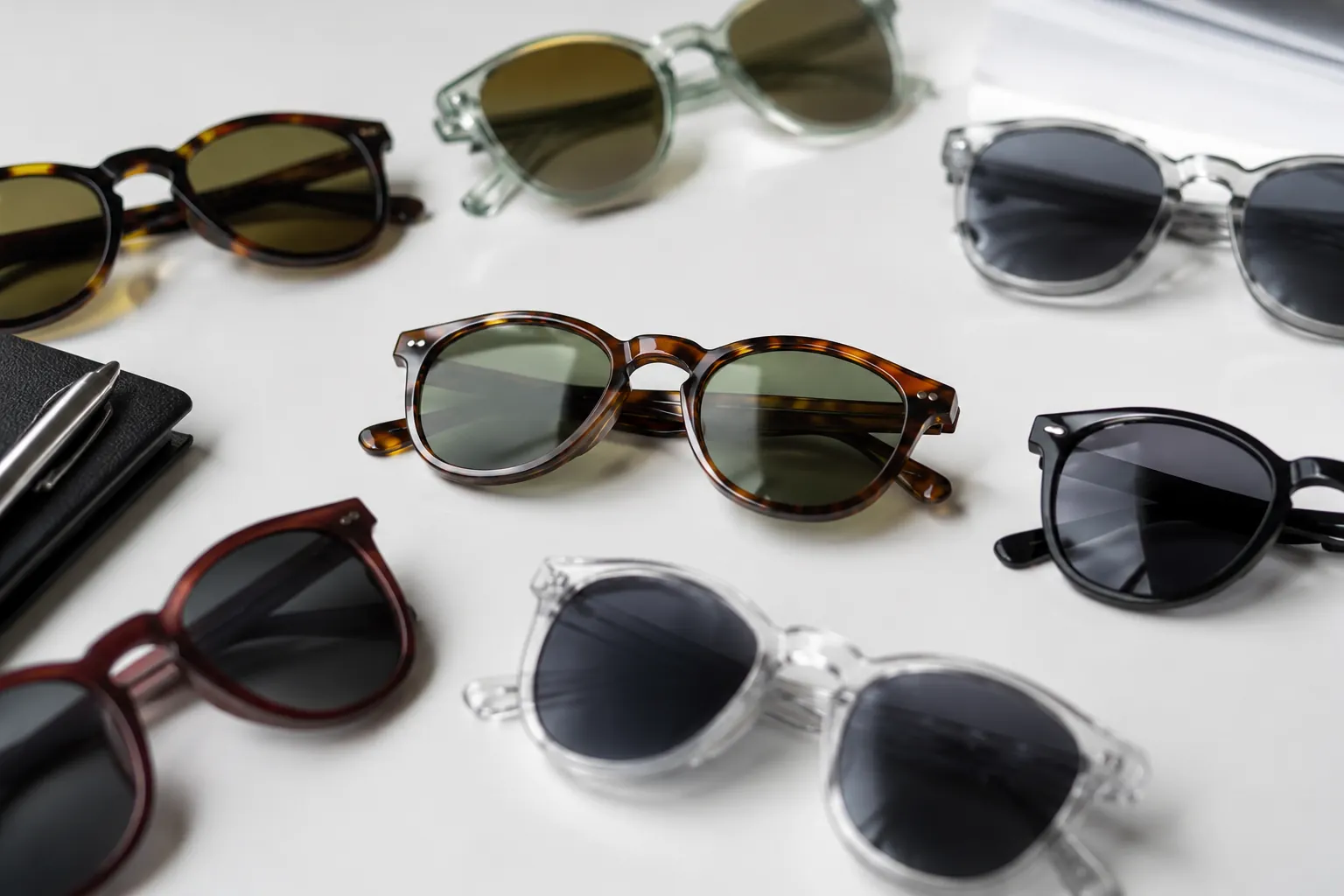
This guide is for brands, importers, distributors, and retail buyers building one sunglasses collection with more than one lens darkness option. The question is not which category is universally best. It is which mix fits the selling channel, end use, compliance scope, and order structure. Category 1, 2, and 3 can all sit in one range, but each one needs a clear commercial role and a separate, traceable specification. The strongest collections are usually the simplest ones: fewer weak SKUs, cleaner labeling, and lens choices that match how the product will actually be sold and worn.
Start with the end market, not the sample table
Set lens category by channel, climate, and expected use—not by whichever tinted sample looks nicest in the showroom. Buyers often approve the frame first and decide lens darkness later. That creates avoidable risk. Lens category affects positioning, customer expectation, labeling, and compliance from the start.
At a basic level, Category 1 is a light tint, Category 2 is a medium tint, and Category 3 is a dark tint commonly used for strong sunlight. That summary is not enough on its own. The real question is where the product will be sold and how buyers expect it to perform. A shopper in a fashion boutique may accept a lighter Category 1 gradient because style leads the purchase. A shopper in a resort store usually expects clear sun reduction the moment they step outside. That often points to Category 3.
So ask a better question. Not, "Which category looks best?" Ask, "Which category will feel right when the customer wears it in the conditions this product is sold for?" If your line spans online fashion, holiday retail, and optical-adjacent wholesale, one lens category may be too limiting. But putting three categories on every frame is usually too much for a first launch.
- Category 1: best for fashion-led offers, lighter visual styling, and product stories where appearance matters more than strong-sun positioning.
- Category 2: useful as a middle option for general outdoor wear, urban summer programs, and collections that balance style with practical wearability.
- Category 3: the standard choice for bright-light use, travel retail, beach programs, and mainstream sunglass expectations.
For many buyers, the safest starting point is simple: build around Category 3, then add Category 1 or 2 only where the frame design, channel, and product story clearly support them. That keeps the opening buy focused.
Use a three-filter model before adding categories
Use three filters: channel, climate, and collection role. This keeps the decision commercial instead of subjective.
- Channel: define whether the style is for boutiques, department store private label, travel retail, online fashion, outdoor lifestyle, marketplaces, or optical-adjacent wholesale.
- Climate: map the main market to lower-light urban use, mixed seasonal use, or consistently bright conditions such as coastal, resort, or high-sun regions.
- Collection role: decide whether the SKU is a volume driver, trend capsule, image piece, or bridge style between fashion and practical outdoor use.
Once those three points are clear, the category choice usually gets easier. A volume aviator for beach and travel retail will often fit Category 3. A translucent acetate fashion shape for boutique accounts may justify Category 1. A clean injected lifestyle frame sold into mixed-climate department stores may fit Category 2 or 3, depending on the intended use message.
For a first season, keep category variation tighter than frame-color variation. Four frame colors with one or two lens categories are often easier to manage than two frame colors with three categories each. Every extra category means another SKU, another approval reference, another labeling requirement, and another inventory line that may be too small to repeat well.
A practical launch rule is to test one hero frame in two categories rather than spread three categories across every design. That gives clearer sell-through feedback. It also gives the factory a cleaner production split and keeps more volume concentrated in fewer lens specifications.
Where each lens category fits commercially
| Lens category | Typical visible light feel | Best-fit channels | Main buyer risk |
|---|---|---|---|
| Category 1 | Light tint, often fashion-first, commonly used with gradients, tea, smoke, or light fashion colors | Boutiques, capsule drops, online fashion, indoor-heavy try-on environments, premium acetate stories | Customers may expect stronger glare reduction than the product is designed to provide |
| Category 2 | Noticeable tint that still feels relatively open and wearable for general outdoor use | Department store private label, urban summer programs, lifestyle retail, mixed-climate distribution | Can be harder to position if the market expects either a clearly light fashion tint or a clearly dark sun lens |
| Category 3 | Dark mainstream sunglass lens for bright light and strong outdoor expectation | Resort retail, beach stores, travel retail, outdoor lifestyle, mass-market sun programs | May look too heavy for fashion-light merchandising or pale translucent frame concepts |
Category 3 is often the easiest commercial base. It matches what many consumers expect sunglasses to do in bright conditions. It usually needs less explanation on the sales floor and reduces "too light" complaints when the product is sold for outdoor use.
Category 1 needs tighter positioning. It can work well in slim metal frames, crystal or honey acetate, or gradient concepts where the visual effect is part of the value. But the presentation must be exact. If packaging, online imagery, or sales copy suggests strong holiday-sun use, return risk goes up.
Category 2 is often underused. It should not be treated as a vague compromise. It can be a strong option when a brand wants a lighter look than Category 3 without moving fully into fashion-light territory. That makes it useful for urban summer programs, premium lifestyle assortments, and bridge collections sold through both fashion and general retail accounts.
How category choice affects MOQ, cost, and lead time
Lens category is not just a design call. It changes production efficiency, QC workload, sampling, labeling, and margin control. Different categories may need different tint references, separate approved control samples, separate packaging references, and tighter SKU management.
A factory may accept a low MOQ per design, but splitting one frame into three categories too early can weaken the order. Volume per SKU drops. Purchasing efficiency drops with it. A range that looks broad on paper can become inefficient in practice because each small tint run adds handling, approvals, and inventory complexity. This matters even more when gradients, mirrored finishes, or polarized lenses are involved, since those features usually add more control points.
The key question is not whether the factory can make multiple categories. In most cases, it can. The real question is whether the order structure supports them without creating slow movers or avoidable operating cost.
| Order structure | Commercial upside | Operational drawback | Typical planning implication |
|---|---|---|---|
| 1 frame, 1 category | Best MOQ efficiency, easiest repeat ordering, simplest labeling and QC | Narrower channel coverage | Strong choice for opening tests or price-sensitive programs |
| 1 frame, 2 categories | Good balance between style range and inventory discipline | Lower volume per SKU and more sample approvals | Often the most manageable launch structure for a new collection |
| 1 frame, 3 categories | Full ladder from fashion-light to sun-dark | Higher risk of slow sellers, more carton complexity, more approval controls | Usually more suitable after reorder data exists |
| Multiple frames, mixed categories | Broader merchandising story across channels | Harder forecasting, more approvals, weaker volume concentration | Needs clear category logic by account type |
Lead time follows the same pattern. The assembly process may stay similar, but each added category can mean more sample review, shade confirmation, SKU setup, packaging checks, and packing control. In many programs, the approval cycle gets harder before the factory floor does.
Compliance and labeling must match the exact lens setup
A common buying mistake is treating lens category as a styling choice and leaving compliance review until the end. That is risky. The category sold, the destination market, and the claims printed on packaging all need to match the tested product setup.
For sunglasses programs, buyers often review destination-market requirements such as CE EN ISO 12312-1, ANSI Z80.3, or AS/NZS 1067, depending on where the goods will be sold. Material and chemical documentation may also need review against REACH for relevant markets. Some importer setups also ask suppliers to confirm whether FDA registration or related documents apply to the importing party's process. The exact requirement depends on market, channel, and importer responsibility, so confirm documentation scope before artwork is finalized.
The working rule is simple. If one frame is sold in both Category 1 and Category 3, those are not just visual variants. They need separate SKU control, separate test traceability where required, and packaging language that matches the actual lens setup. That means separate item codes, distinct carton marks, and approval records that tie the tested specification to the shipped goods.
- Confirm the approved category on the sealed sample, specification sheet, and purchase order.
- Match standard references to the destination market before care cards, labels, or cartons are printed.
- Check transmittance-related labeling so category description, warnings, and usage presentation stay consistent.
- Separate SKUs physically in inners, master cartons, and warehouse records when one frame carries multiple categories.
This is also the point where buyers should verify supplier quality and social compliance documents if the account requires them. Depending on the program, that may include checks on ISO 9001 quality management or BSCI audit status. Those documents do not replace product compliance, but they are often reviewed as part of supplier qualification.
Material, tint process, and decoration affect the result
Not every frame and lens combination behaves the same in production. Standard injected sunglasses with stable, repeatable lens tints are usually the easiest place to run more than one category because the product is often built for broader commercial use. Acetate or CNC-finished styles can carry higher perceived value, but they are also more sensitive to lens color balance, especially when the concept depends on light tints or fashion shades.
Lens appearance is shaped by lens material, tint density, surface treatment, and frame color. A dark smoke Category 3 lens in a matte black injected frame reads clearly and commercially. A light tea gradient Category 1 lens in clear acetate is more exposed to small shade differences and overall balance issues. Same category. Very different result.
Process control matters. Buyers should ask how the supplier checks repeatability: whether lens shade is checked against an approved master sample, whether left-right lens matching is verified during QC, and whether gradient height, mirror color, or polarization is signed off against a confirmed reference. This matters even more when one collection carries multiple categories.
Decoration changes perception too. Pad printing, laser marking, metal logo plates, or foil details can make a lighter lens look intentional and premium—or simply too light for the frame concept. A pale Category 1 lens may work in a fashion metal shape but feel wrong in a wrap or sport-led frame where customers expect stronger sun performance.
In approvals, sign off on the full visual set: frame color, lens category, lens style, and logo treatment together. A loose lens chip is not enough when the sales argument depends on the finished product.
A practical first-order mix that avoids dead stock
If you are launching without sell-through data, keep the range narrow, commercial, and easy to reorder. The first purchase order does not need to cover every use case. It needs to show which frame-and-category combinations actually move in your channels.
A disciplined opening structure often looks like this:
- Core carryover styles: place mainly in Category 3 because outdoor expectation is clearest and replenishment is usually easiest to support.
- Fashion-first frames: test in Category 1 or Category 2, but avoid placing both unless the channel clearly supports a broader fashion offer.
- One bridge SKU: use Category 2 on a versatile shape if you sell to both urban and holiday accounts.
- Reorder strategy: deepen the winning category first before adding more complexity to the same frame.
Do not split every design evenly across all three categories. Keep most opening volume in the category with the clearest mainstream demand and reserve smaller quantities for one or two targeted tests. That improves inventory control, makes warehouse separation easier, and gives the next reorder a stronger factual base.
Operationally, fewer low-volume variants mean easier carton control, clearer replenishment, and less risk of leftover category-specific stock. Strong collections usually expand in this order: first depth, then color, then category complexity. Repeat the winner first.
Questions to settle before sample approval
Sample approval is where category confusion should end. Buying, design, sales, compliance, and logistics should be aligned before bulk production starts.
- What channel is this SKU for? Write one clear commercial use case, not several overlapping ones.
- Which lens category is approved? Put it on the sample card, tech sheet, and purchase order.
- Is the lens solid, gradient, mirrored, polarized, or another finish? Category alone does not define the full visual or technical brief.
- Which market standard and labeling set applies? Confirm before artwork and care-card printing.
- How will the goods be packed and identified? Make sure each category variant has separate SKU coding and carton references.
- What is the reorder plan if the style sells? Decide whether success means deeper volume in one category or expansion into another.
At factory level, the physical production steps are usually manageable. Problems usually come from vague briefs, mixed sample references, or poor SKU separation—not from assembly itself.
If you cannot explain in one sentence why a style is Category 1 instead of 2, or 2 instead of 3, you are probably adding complexity without adding sell-through.
That is a useful internal test. In a healthy assortment, every lens category earns its place through channel fit, customer expectation, and operating logic—not because the line sheet needed more options.
Have a custom sunglasses project in mind?
Send us your styles, target market and quantities and we will return a detailed quote with MOQ, lead time and a sample plan.
Get a QuoteWhy source this from Wenzhou with LumiShades
Wenzhou in Zhejiang Province is widely regarded as China’s eyewear manufacturing capital, producing a large share of the world’s sunglasses. That concentration matters to buyers: a deep local supply chain for acetate sheet, hinges, lens blanks, plating and packaging means shorter component lead times, easier color and material matching, and a workforce with decades of eyewear-specific skill. LumiShades has manufactured in this ecosystem since 2009, and our vertical integration — in-house injection molding, acetate cutting, CNC milling, lens tinting, decoration and quality control — means no part of your order is quietly subcontracted to a workshop you cannot audit.
For international buyers, that vertical control translates into accountability. When a single factory owns every step, defects are traced and fixed at source rather than bounced between vendors, and your specifications survive intact from first sample to bulk. We back this with 15+ years of experience, shipments to 60+ countries, more than 5 million pairs produced per year and a 98.5% on-time delivery rate. Our certifications — CE EN ISO 12312-1, FDA registration, ANSI Z80.3, AS/NZS 1067, REACH, ISO 9001 and BSCI audit — mean the compliance documentation your market requires already exists. Explore our manufacturing capabilities and quality control process to see how this works in practice.
Frequently asked questions
Should a new brand launch with all three lens categories? Usually not. Most new brands are better off launching core styles in Category 3, then testing Category 1 or Category 2 only on frames with a clear fashion or mixed-use role. Before adding all three, check three things: whether each category has a defined channel, whether each variant can meet MOQ efficiently, and whether your packaging and SKU system can keep the variants separate. If any of those points is unclear, reduce the launch mix.
Is Category 2 a real commercial option or just a compromise? Category 2 is a real commercial option when the product sits between fashion use and strong-sun positioning. It often works for department store private label, urban summer assortments, mixed-climate markets, and lifestyle collections where Category 1 feels too light and Category 3 looks too heavy. Ask your sales team which accounts want a lighter visual profile without losing general outdoor credibility. If that account list is clear, Category 2 is justified.
How do multiple lens categories affect lead time? The main impact is usually on approvals and control, not on basic frame assembly. Each added category can require extra sample confirmation, tint reference approval, SKU setup, packaging review, and packing separation. To manage timing, ask the supplier to confirm the approval path in writing: sample sequence, lens reference sign-off, labeling review, and final packing method for each category. That gives you a more realistic timeline than relying on one general factory lead-time estimate.
What should I ask a supplier to confirm before ordering Category 1, 2, and 3 together? Ask for five points by SKU: the approved lens category, the applicable test standard for the destination market, any required REACH-related material declarations, the exact packaging wording and warnings, and the packing plan showing how each category will be separated in inner packs and cartons. If your account also requires supplier qualification documents, ask separately for current ISO 9001 or BSCI records where relevant. Keep all confirmations tied to item codes, not only to the frame name.
Does offering Category 1 increase return risk? It can, especially in channels where customers expect strong sun reduction. To reduce that risk, use Category 1 only when the frame concept and channel support a fashion-led offer, make sure online and packaging language does not overstate outdoor performance, and keep the lighter variant clearly separated from darker sun versions. A simple check helps: review the product page, hangtag, and carton wording together before production. If the presentation suggests beach or high-sun use, Category 1 may be the wrong choice.
Ready to start?
Explore our square sunglasses or request a quote — our sales team replies within 12 hours.
Request a Quote