
Core Lens Colors That Sell in Private-Label Sunglasses
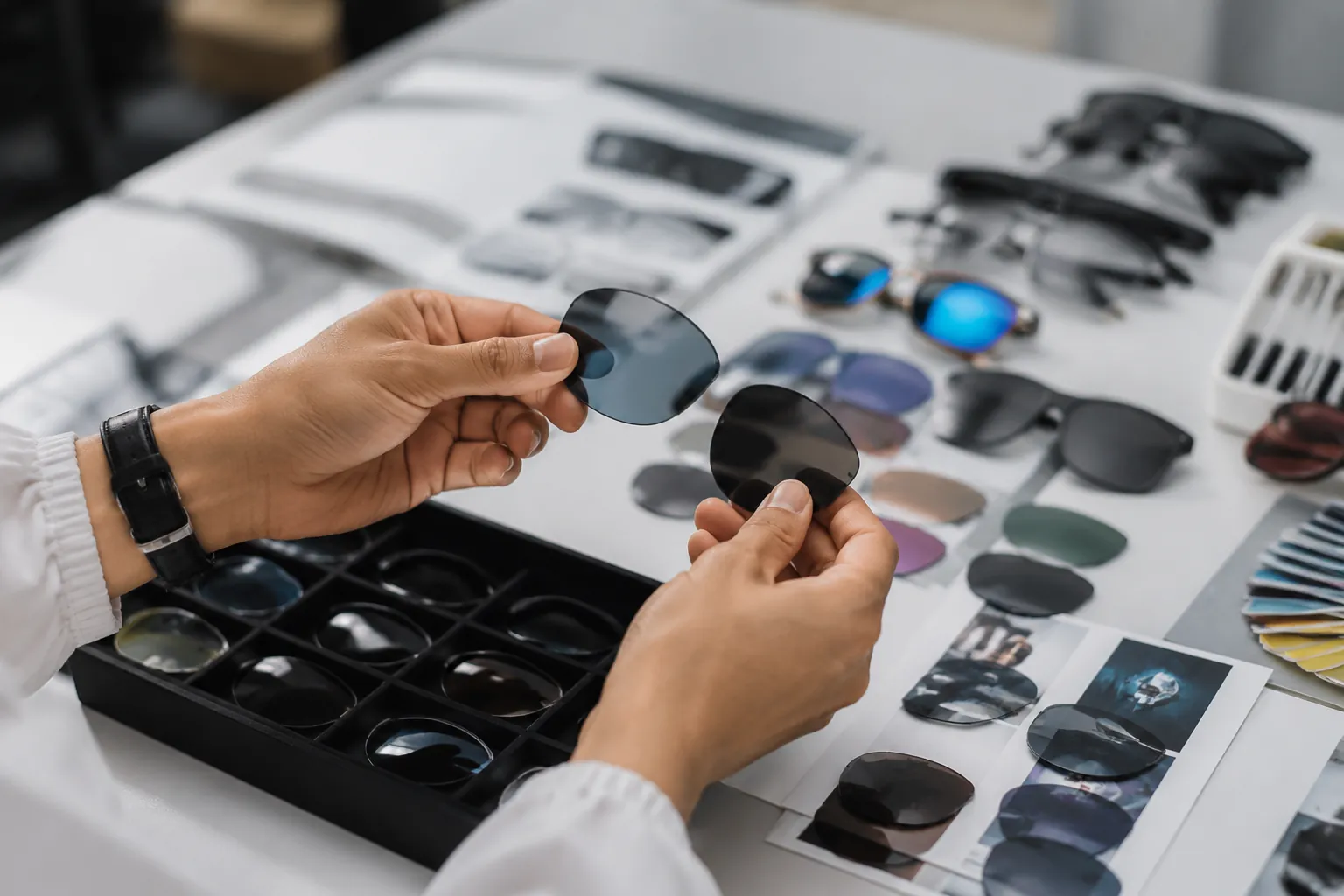
This guide is for brand owners, importers, distributors, and retailers building a private-label sunglass range at volume. The aim is simple: choose lens colors that sell, fit the frame plan, and do not create avoidable SKU drag. Do not start with trend colors. Start with a buying framework built around visual performance, merchandising role, compliance, and MOQ economics. Get the core palette right and sampling is quicker, bulk planning is cleaner, and reorders are easier.
Start with range architecture, not personal taste
Many buyers make the same early mistake: they choose lens colors by taste or mood board. That is backwards. Lens color should be assigned by the job each SKU must do, the channel it will sell in, and the reorder depth it can realistically support.
A stable sunglass range usually needs three layers:
- Volume core: the colors that carry the range and work across multiple frame shapes.
- Category support: colors added for specific use cases such as driving, outdoor leisure, or fashion-led assortments.
- Seasonal or trend test: lower-risk colors used to test demand without overloading stock.
For most private-label programs, smoke and brown belong in the volume core. Green often sits between core and support. Blue usually works better as support or fashion accent unless your customers already buy cool-toned product consistently.
Start with three questions: what frame materials are you using, how many SKUs can you support per color, and what sell-through window is acceptable for your channel? The first selling cycle often decides whether a color becomes a repeat or turns into a slow-moving tail. If a color cannot sell through in a reasonable time, it should not sit in the opening core.
If you are starting from zero, build the first buy around colors that cross the most frame materials and finishes. Black, crystal, tortoise, and gunmetal frames usually carry smoke easily. Warm acetates and gold hardware often work better with brown or green. Blue lenses can look strong in silver, crystal, and sport-led frames, but they are less forgiving if the frame-lens pairing is wrong.
That is the first filter. Not what looks interesting on a sample table. What survives reorder logic, margin pressure, and channel reality.
What each core lens color does at shelf level
Lens color is not just cosmetic. Each color sends a different commercial signal and creates a different visual experience for the wearer. At retail, that matters because the lens is often the first thing a customer notices after the frame shape.
| Lens color | Typical merchandising role | Visual character | Best frame matches | Main risk |
|---|---|---|---|---|
| Smoke/Grey | Primary core SKU | Neutral perception, easy everyday wear, low visual risk | Black, crystal, metal, sporty wraps, most acetates | Can feel generic if the range relies on it too heavily |
| Brown | Warm core or premium casual SKU | Warmer tone, often preferred in sun-heavy leisure settings | Tortoise, champagne, gold, warm translucent acetates | Can look too soft on very technical or sharp black frames |
| Green | Classic support SKU | Balanced look with a heritage feel and vintage credibility | Tortoise, matte black, vintage shapes, metal aviators | Less universal than smoke, so weaker if the assortment is too small |
| Blue | Fashion or sport support SKU | Cool appearance, stronger visual statement, higher contrast | Silver, crystal grey, sport frames, modern metals | Sell-through can be uneven if overbought in conservative channels |
Smoke is usually the safest anchor because it is neutral and easy to explain at retail. Brown is often the strongest number two because it gives clear visual separation without becoming polarizing. Green works well if your assortment has classic shapes such as aviators, P3s, and heritage acetate. Blue needs more care. It can add impact, but it usually should not dominate the opening order unless your market already proves demand.
Material and finish matter too. On glossy acetate, smoke reads cleaner and more modern. On matte frames, brown can look richer. Mirror coatings change the message again: a blue mirror on a blue-tinted base reads more aggressive and sporty than the same lens in a plain tint.
A simple framework for first orders
If you are setting the first production run, do not spread too wide. Concentrate demand. A tight color plan improves costing, simplifies sample approval, and gives you a clearer read on sell-through.
Use this framework:
- If your channel is broad retail or distributor-led, start with 50-60% smoke, 20-30% brown, 10-20% green, and use blue only in selected SKUs.
- If your range is fashion-led, keep smoke as the base but test blue on fewer frame fronts with stronger styling and cleaner packaging.
- If your customer is older and conservative, weight smoke and brown higher and keep blue minimal.
- If your range includes aviators and heritage acetate, give green more room. It reads familiar and intentional.
For a 1,200-pair opening order across four styles, many buyers are better off running two lens colors on hero styles and one color only on support styles. For example, a top aviator might carry smoke and green, while a fashion square carries smoke only. That keeps MOQ manageable and avoids slow color tails.
At the sample stage, ask for the exact frame-lens pairing you plan to buy, not a generic color chip. A small change in frame tint or front polish can make the same lens look darker, flatter, or more premium. In eyewear, perceived color is relative.
Keep the sales story simple. If your team cannot explain a lens color in one sentence, it is probably too risky to open in volume. "Smoke for everyday, brown for warm leisure, green for classic heritage, blue for statement styling" is enough.
How lens color affects production consistency and reorders
From the factory side, core colors are not equal in production risk. Buyers should know that because repeat-order disputes often come from shade drift, not frame defects.
The main controls are shade depth, left-right lens match, batch-to-batch repeatability, and final transmission against the required standard. A lens that looks right in one sample is not enough. The bulk lot has to hold.
Typical control points for development and production are:
- Left-right color deviation: visually matched within the same pair; obvious mismatch is rejected at QC.
- Shade tolerance: production should stay within the approved master sample, with minor drift acceptable only if it is not visible in direct comparison.
- Thickness effect: a change in lens thickness can make the same tint read darker.
- Base curve effect: more curvature can intensify perceived saturation at the edge.
- Coating effect: mirror, AR, or flash coatings can shift the perceived base color.
Smoke is usually the easiest color to standardize visually because neutrality hides minor perception shifts. Brown and green can also be stable, but the buyer should approve the exact tone, not just a broad color name. Blue needs tighter visual approval. Small hue shifts are easier to spot and can make a product look cheap very quickly.
Ask for a retained approval sample for each lens color and style combination. Not a lab dip. Not a loose lens chip. A built sample with the final frame color, lens thickness, and surface finish. Keep one sealed reference at the factory and one with the buyer. For repeat orders, compare against that retained sample under standardized light, ideally D65 and a second warm light source if the product is retail-facing.
Compliance still applies, regardless of color choice
Lens color is a sales decision, but it still sits inside a compliance framework. If you are shipping into multiple markets, the chosen lens category and final transmission must align with the applicable requirements.
Relevant standards and registrations to review include CE EN ISO 12312-1, ANSI Z80.3, AS/NZS 1067, FDA registration, and REACH. Factory system controls may also include ISO 9001 and BSCI. Those are the documents to verify. Do not assume a dark-looking lens automatically meets the requirement you need.
For buyers, the practical issue is straightforward: trend tints can drift into marginal territory if transmission is not controlled carefully. Core colors are usually easier to manage because the target ranges are more established and easier to repeat in production. During development, confirm:
- lens material and thickness
- target color and transmission range
- whether polarized construction changes final appearance
- market destination and test requirement
- marking and document package needed for import
If you are buying for more than one region, align compliance at sample approval stage, not after bulk starts. Rework on finished tinted lenses wastes time and increases shade variation risk. If a style needs different legal categories in different markets, it is usually better to create separate specifications than to force one universal tint.
Also note the difference between appearance and category. Two smoke lenses can look similar, but one may sit at a transmission level suited to fashion wear while another is set for a sun category required by the destination market. Check the measured range, not just the visual darkness.
Cost, MOQ, and lead time: where color strategy hits margin
Every extra lens color creates cost somewhere. Sometimes in direct material. Sometimes in setup time. Sometimes in slower stock turns. Color count is a margin decision.
In practice, the supplier's commercial structure should shape the lens plan. If samples are quick and MOQ is low, it is easier to test multiple colors. If MOQ is higher, color splits should be tighter. Use the supplier's actual quote, tooling requirements, and finishing steps as the basis for planning rather than assuming every color adds the same complexity.
| Order situation | Recommended lens color strategy | Why it works | Commercial effect |
|---|---|---|---|
| Small opening order | 1 lens color only, usually smoke or brown | Keeps MOQ clean and avoids micro-splits | Lower complexity, better chance of selling through fast |
| Mid-size test order | 2 colors on hero styles, 1 on support styles | Lets you test without fragmenting too far | Better visual range without major inventory drag |
| Large style family order | Build a real palette: smoke, brown, green, selective blue | Enough depth to support meaningful color ranking | Improves assortment quality and reorder planning |
| Mixed long-term program | Standardize 2-3 core lens recipes across many frames | Improves tint consistency and purchasing efficiency | Can help drive unit cost down through volume concentration |
Decoration method also affects cost and lead time. A plain tint is fastest. Mirror coating adds process steps and more QC risk. Gradient tint needs tighter visual acceptance because banding or uneven fade is easier to spot. Polarized lenses add construction complexity and usually need more careful alignment and inspection. If you add logo etching, silk-screen marks, or UV-print details, factor in extra setup and a stricter reject standard.
One blunt rule: if you cannot reorder a lens color with confidence, do not make it a core color. Sampling excitement is cheap. Dead inventory is not.
Four buyer scenarios and the color mix that fits each
Different channels need different color discipline. Here are four common cases.
- Department store private label: stay conservative. Smoke first, brown second, green on selected classics. Blue only where the frame and packaging story support it.
- Online fashion brand: use smoke for conversion reliability, then add blue to a few strong-image SKUs. Keep brown for warmer acetate stories. Do not spread every style across all four colors.
- Distributor serving mixed independent retailers: choose the lowest-objection palette. Smoke and brown usually carry the reorder business. Green is useful for aviators and heritage shapes.
- Outdoor or driving-led assortment: brown often deserves more weight because buyers already understand its functional position. Smoke still needs to be present as the universal option.
The pattern is consistent. Core range logic beats trend logic in opening buys. Once sales data comes back, you can widen or narrow the palette style by style.
A useful development tactic is to sample one frame in two lens colors before approving the whole line. If the visual gap between the colors does not create a meaningful merchandising story, the second color may not be worth the SKU. This matters even more if your frame assortment already has many variants in size, finish, or logo treatment.
If you need a practical shortlist, use this:
- Start with smoke if you need one color only.
- Add brown if you need a second color with broad commercial safety.
- Add green if the line includes aviators, heritage acetate, or classic metal shapes.
- Add blue selectively for fashion, sport, or cooler-toned frame stories.
That four-color structure covers most private-label needs without becoming messy. Even so, many buyers should stop at two or three colors in the first production run. More options do not automatically mean more sales. Often they mean weaker depth per SKU, more approvals, and slower replenishment.
The real question is not which lens color is trending. It is which lens colors deserve reorder dollars six months from now. Build around that. Approve production-intent samples. Lock compliance early. Let trend colors fight for a small number of test slots instead of taking over the line.
If you are building a long-term program, document each approved recipe: frame code, lens code, thickness, coating, transmission target, decoration method, and packing spec. That one page prevents a lot of future mismatch, especially when the same style is reordered in another season or for another region.
Have a custom sunglasses project in mind?
Send us your styles, target market and quantities and we will return a detailed quote with MOQ, lead time and a sample plan.
Get a QuoteWhy source this from Wenzhou with LumiShades
Wenzhou in Zhejiang Province is widely regarded as China’s eyewear manufacturing capital, producing a large share of the world’s sunglasses. That concentration matters to buyers: a deep local supply chain for acetate sheet, hinges, lens blanks, plating and packaging means shorter component lead times, easier color and material matching, and a workforce with decades of eyewear-specific skill. LumiShades has manufactured in this ecosystem since 2009, and our vertical integration — in-house injection molding, acetate cutting, CNC milling, lens tinting, decoration and quality control — means no part of your order is quietly subcontracted to a workshop you cannot audit.
For international buyers, that vertical control translates into accountability. When a single factory owns every step, defects are traced and fixed at source rather than bounced between vendors, and your specifications survive intact from first sample to bulk. We back this with 15+ years of experience, shipments to 60+ countries, more than 5 million pairs produced per year and a 98.5% on-time delivery rate. Our certifications — CE EN ISO 12312-1, FDA registration, ANSI Z80.3, AS/NZS 1067, REACH, ISO 9001 and BSCI audit — mean the compliance documentation your market requires already exists. Explore our manufacturing capabilities and quality control process to see how this works in practice.
Frequently asked questions
If I only launch one lens color, which should it be? Smoke is usually the safest single-color launch. It is neutral, easy to merchandise, and works across the widest mix of frame shapes and finishes. If your customer is strongly warm-toned or driving-focused, brown can be a valid alternative, but smoke is the better default for most programs.
Is brown a safer second color than blue for most markets? Yes. Brown generally has broader commercial acceptance than blue and pairs well with warm acetates, tortoise, and gold-tone hardware. Blue is better used selectively unless your customer base already buys it consistently. As a buying rule, add blue only when you can explain the visual or channel reason for it.
Can I split one design into four lens colors at 50 pairs MOQ? Usually not as a first move. At low quantities, too many color splits reduce depth per SKU and make sell-through harder to read. Start with one color, or two at most on your strongest style. If you need all four colors later, add them after sales data proves demand.
Do lens colors affect compliance testing? Yes. Final transmission, lens construction, and intended market all matter. Confirm the target standard early, such as CE EN ISO 12312-1, ANSI Z80.3, or AS/NZS 1067, and approve production-intent samples before bulk. Do not rely on appearance alone to judge compliance.
How do I reduce color mismatch risk on repeat orders? Approve a retained sealed sample for each exact style and lens combination. Keep lens thickness, material, and base curve consistent, because those factors can change perceived color even with the same tint target. For reorders, compare against the retained sample under the same light source and inspection method.
Ready to start?
Explore our wayfarer sunglasses or request a quote — our sales team replies within 12 hours.
Request a Quote