
Private Label Sunglasses: What Boutiques Customize First
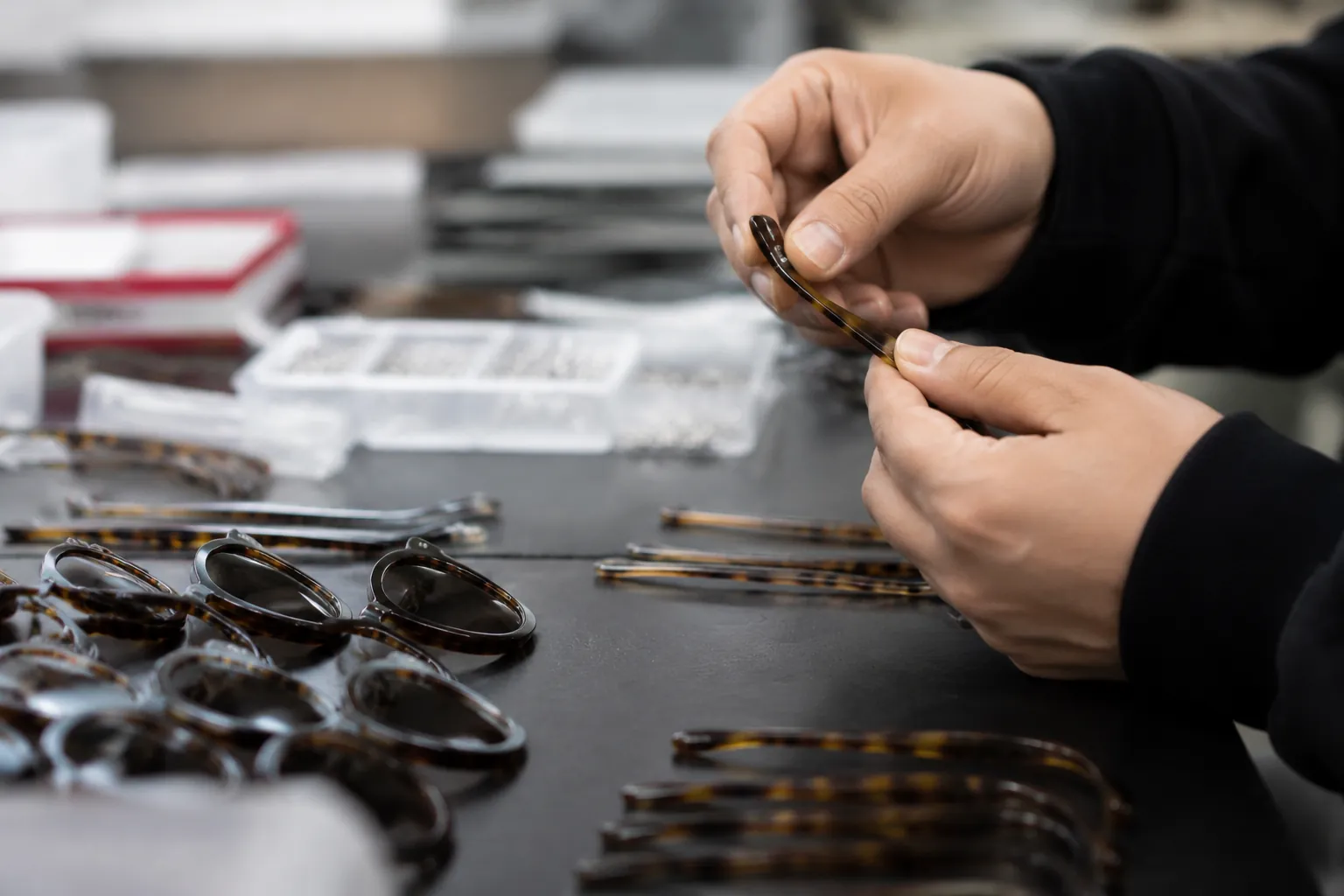
Boutique buyers do not need to customize everything at once. Start with a proven frame platform, then lock the details customers actually see: color, logo, lens tint, and packaging. That keeps the first run manageable, cuts sample revisions, and makes reorders easier to repeat. This article shows what to prioritize first, what to delay, and where costs usually rise.
Start with the frame platform, not the logo
If you sell to fashion boutiques, the frame platform decides whether a style belongs in the assortment. A logo cannot fix a frame that fits badly, feels weak, or misses the target price point. For the first private label run, a proven acetate, TR90, metal, or injected-plastic base is usually safer than a new mold.
New tooling adds cost, lead time, and approval risk. For a boutique test order, 50 pairs per design is a common starting point. It is enough to check demand without locking up too much cash. A custom mold can also add several weeks before bulk production starts, depending on the frame and the number of revisions. A stock or semi-custom platform lets the factory focus on the basics: fit, finish, and repeatability.
Choose the frame based on retail position, not aspiration. Premium acetate supports a higher retail price because it often has richer color and a heavier feel. TR90 is a practical choice when light weight matters. Injected frames are often easier to repeat across colorways and suit steady replenishment. Metal or mixed-material frames can look sharper, but they need tighter assembly control and more careful checks. Pick the platform that matches the price you want to sell at.
Measure the product on physical samples, not images. Check lens width, bridge width, temple length, total front width, and how the frame sits on face. Confirm that approved dimensions hold in production, with tolerances written down before bulk production starts. If the style is meant to reorder, keep the base structure simple. Save the special touches for what customers notice first.
Rule: if the style will reorder, keep the base structure simple. If it is a short fashion drop, you can customize more, but accept a longer approval cycle and more production risk.
The sequence is simple: choose the platform, verify fit, then add brand-visible details. That gives boutique buyers a product that feels custom without tying money into a one-off structure that may never repeat.
Custom order priority by risk and value
Not every customization matters the same way. Some changes are visible and low risk. Others look exciting on paper but create delays in tooling, color approval, or assembly. For a boutique launch, it helps to order the work in a practical sequence.
| Priority | What to customize | Why it matters | Typical risk |
|---|---|---|---|
| 1 | Frame shape and size | Drives fit, comfort, and sell-through | High if silhouette or proportions miss the target customer |
| 2 | Color and surface finish | Most visible brand cue without major tooling changes | Medium if sample approval is based only on screen images |
| 3 | Temple logo or metal plate | Strong branding with limited disruption to the base frame | Low to medium depending on method and placement |
| 4 | Lens tint and coating | Affects appearance, comfort, and compliance | Medium if tint, mirror, or UV claims are not locked early |
| 5 | Packaging and inserts | Supports retail presentation and the customer handoff | Low, unless the box size changes carton pack-out |
| 6 | Custom tooling | Only worth it after demand is proven | High cost and longer lead time |
The order matters because each step creates a different amount of approval work. A color change may need a physical chip match or an approved sample under the right lighting. A custom mold may require drawing revisions, tooling proofing, fit checks, and more than one revision before production starts. Buyers often want all of it at once: a new silhouette, engraved branding, a special hinge, and custom packaging. That can turn a 50-pair test into a slow project with too much cash tied up.
The rule is blunt: if the change affects fit, it belongs near the top. If it mainly affects how the glasses are perceived, it can usually wait. Keep the first order focused on visible value, not extra engineering.
Use branding where customers actually notice it
Branding should be visible in hand and on display. Boutique customers notice temples, front details, lens tint, and packaging before they study technical specs. The most useful first branding points are the temple logo, inside-temple text, lens marking where allowed, and packaging.
Different decoration methods have different production profiles. Pad printing is fast and economical for flat or gently curved surfaces, especially on acetate or injected temples. It is a strong first choice when you want low setup friction and repeatable results. Laser engraving works well on metal parts and some coated surfaces; it is durable, but the artwork needs to stay legible at the chosen size. Metal logo plates create a stronger premium cue, but they add assembly time and need control over adhesive, rivet, or press-fit consistency.
- Pad printing: best for simple logos, low cost, and short lead times; ideal when the mark is one color and the surface is stable.
- Laser engraving: best for metal or minimalist branding; works well when the logo can be simplified into readable lines.
- Metal logo plate: best when the brand needs a premium touch; adds assembly steps and more QC checkpoints.
- Inside-temple text: best for SKU, size, and model code; helps stores and warehouses receive, sort, and reorder accurately.
Keep the logo simple at the start. Fine lines, tiny type, and thin strokes can break up on curved temple surfaces or soft-touch coatings. Marks should stay readable at arm's length and hold up during handling without smearing or lifting. If the artwork is too complex, simplify it before production.
Packaging is part of the brand system too. A microfiber pouch, a folding box, and a barcode label usually do more for retail perception than an extra frame detail. Packaging also needs to work for receiving. Stores want clear SKUs, neat presentation, and easy counting on the shelf. If the box is too large, freight and storage costs can rise fast. A small packaging change can affect landed cost more than a logo upgrade.
Lens choices affect returns more than buyers expect
Lens color is not just style. It affects glare control, facial contrast, and whether the product feels consistent from pair to pair. For boutique buying, lens selection should be treated as merchandising, not as an afterthought. Decide the lens intent before you approve color chips or mirror effects.
For a fashion-led line, neutral tints such as gray, brown, or green are usually the safest core options because they are broadly wearable. Gray feels clean and modern, brown warms the face and softens contrast, and green suits a classic heritage look. For a statement-led drop, gradient or mirror lenses can increase visual impact, but they also narrow the approval window because small shifts in density or reflectivity can change the look a lot.
Keep the first assortment narrow. One core tint, one backup tint, and one frame family is enough to test the market without multiplying quality-control risk. Approve physical samples in daylight and under store lighting. Screen images do not show the real transmitted color. If the lens is too dark, the frame can feel heavy. If it is too light, it can look unfinished. For most boutique buyers, controlling the visible range matters more than chasing novelty.
There are process details too. Confirm that the sample and bulk batch match within a written tolerance for appearance. Lens color drift can happen during dyeing, coating, or mirror application, so the supplier should confirm how the match will be judged and what happens if a bulk batch falls outside the approved range. If the supplier controls lens tint in-house, sample-to-bulk matching is usually easier because fewer outside handoffs mean fewer chances for variation.
Compliance should be decided at the lens stage, not after the order is built. Depending on the market and product classification, the relevant requirements may include CE EN ISO 12312-1, ANSI Z80.3, AS/NZS 1067, REACH, or FDA registration-related obligations where applicable. A certificate or registration for one market does not automatically cover another. The lens category, UV claim, and product labeling should be fixed before mass production starts, because changing them later can trigger retesting or re-approval.
Materials that make sense for boutiques
The best material is the one that supports a repeat order. Fashion boutiques usually need a balance of appearance, comfort, price control, and replenishment speed. The material choice changes not only how the frame looks, but also how it machines, polishes, prints, and holds dimensions.
- Acetate: Best for depth of color, layered patterns, and a premium feel. It often allows richer visual effects and a more tactile finish, but it needs cutting, shaping, tumbling, and polishing. That means more finishing labor and more room for variation if the process is not controlled well.
- Injected plastic: Best for repeatability and price control. It is a strong choice for color programs or replenishment styles because the geometry is easier to reproduce and the unit economics are easier to manage at scale.
- TR90: Best for light weight and flexibility. It is useful when comfort matters, especially for all-day wear or travel-friendly collections.
- Metal or mixed-material builds: Best for sharper, more refined styling, but they require tighter assembly control and more careful QC because more components can shift during production.
Material choice also changes how decoration behaves. Laser engraving reads cleanly on metal, but not every coating accepts it equally. Pad printing is flexible and fast, but it depends on surface prep and ink adhesion. If the surface is too glossy, too soft, or poorly cleaned, the print can wear faster. Metal logo plates feel premium, but they add another sourcing point and another variable in alignment, adhesive strength, or rivet placement.
For boutiques, the safer path is usually to stay close to what the factory already runs well. Reorder flexibility improves when you use materials and finishes the supplier can produce repeatedly with low scrap rates. If a supplier already cuts acetate, molds TR90, handles metal work, and manages decoration in-house, the risk of schedule slip is lower because fewer handoffs can change color, fit, or finish.
Ask what the factory produces most often and how the material behaves at volume. A style that looks simple in a sample room can become expensive if it needs extra polishing, slower coating, or manual correction after the first 50 pairs. Stable materials are not just safer; they are easier to replenish at the same quality later.
MOQ, price breaks, and how to buy smarter
The economics are simple: the first order is a test, and reorders are where a style starts earning its place. A practical boutique MOQ is often 50 pairs per design, but the real question is not just quantity. It is whether the style can be repeated at the same spec, the same quality, and within a predictable lead time.
Many suppliers use price breaks to reward larger runs. The exact breakpoints vary by factory, material, decoration method, and packaging complexity. Lower unit prices usually come from spread-out setup costs, more efficient labor, and better material use. But a lower unit price only matters if the product still fits your target sell-through and margin.
Use a small launch ladder instead of going all in:
- First run: 50 pairs to test fit, merchandising, and customer response.
- Second run: 300 pairs if the style is moving and returns are low.
- Scale run: 1000 pairs or more once the product has repeat demand and a stable reorder pattern.
Lead time also changes with the order stage. Samples are usually faster when the base platform already exists and the changes are limited to visible details. Bulk production is commonly several weeks after sample approval, but that depends on how quickly the buyer approves artwork, materials, and packaging. A custom mold, a new lens color, or a special packaging structure can extend the schedule. The buyer controls part of the lead time by how fast decisions are made.
Ask three questions before placing the order: Can I sell 50 pairs? Can I reorder the same style within a normal production window? Can I keep the same packaging and marking without re-approving the whole line? If the answer to all three is yes, the style is commercially healthy.
Packaging and compliance should be locked early
Packaging affects retail presentation, freight, and reorder stability, so it needs to be set early. Choose the box structure before production begins, because a different box size can change carton pack-out, shipping efficiency, and storage cost. A box that looks good but wastes space can quietly hurt margin. For boutique orders, cubic efficiency matters almost as much as appearance.
Lock the packaging spec in the same review cycle as the frame and lens. That means confirming the pouch material, box dimensions, print method, barcode format, and whether the unit includes a cleaning cloth, care card, or insert. If a retailer expects shelf-ready packaging, the barcode and SKU layout should be legible and consistent. Even small changes in packaging can trigger a new label approval or change the master carton count.
Compliance should be part of product design, not paperwork afterward. If the market requires CE EN ISO 12312-1, the tested lens version and product claim need to match the exact production spec. If the target market needs ANSI Z80.3 or AS/NZS 1067, that should be confirmed before bulk production. REACH concerns restricted substances. FDA registration may matter for the supplier or establishment context in the United States, depending on the product and channel. The point is simple: compliance follows the exact spec, not a generic product name.
Ask for documentation that matches the exact ordered version: frame color, lens tint, decoration method, packaging code, and any labeling used on the product or carton. If any of those change later, check whether the earlier documentation still applies. Often it does not. This is a common way small brands get surprised. They think they changed only a cosmetic detail, but they changed the version that was validated.
A clean first-order workflow
The safest private label workflow is boring. Good. That means less rework, fewer sample loops, and fewer surprises in bulk production.
- Choose one frame platform and one customer segment.
- Approve size, temple length, bridge fit, and lens coverage on a physical sample.
- Lock logo placement, decoration method, and artwork thickness.
- Approve one packaging spec, one barcode format, and one carton count.
- Confirm the target compliance requirements for each selling market.
- Place the test order, then review sell-through before adding variants.
For most boutiques, that sequence gives the best balance of differentiation and inventory control. You get a product that looks custom without tying up cash in custom tooling. You also keep the ability to reorder quickly, which matters more than almost any other operational detail once a style starts moving.
The short version: customize the brand marks first, the frame second, the packaging third, and the tooling last. That order reduces mistakes, keeps lead times realistic, and helps you buy styles customers will actually pick up off the shelf.
What to remember before you place the order
If you are buying private label sunglasses for boutiques, your first job is not to maximize customization. Your first job is to avoid unnecessary complexity. Start with a proven platform, make the brand visible where customers can see it, and keep the spec tight enough that the supplier can repeat it without confusion.
When you buy this way, the numbers work better. A 50-pair test can tell you whether the frame belongs in your assortment. A 300-pair reorder can show whether the style deserves more inventory. A 1000-pair run can turn the design into a real program instead of a one-off experiment. That is the logic behind successful boutique eyewear buying: test small, learn fast, then scale only what performs.
The best customization strategy is not the most dramatic one. It is the one that supports margin, reorders, and clean execution from sample to shelf.
Have a custom sunglasses project in mind?
Send us your styles, target market and quantities and we will return a detailed quote with MOQ, lead time and a sample plan.
Get a QuoteWhy source this from Wenzhou with LumiShades
Wenzhou in Zhejiang Province is widely regarded as China’s eyewear manufacturing capital, producing a large share of the world’s sunglasses. That concentration matters to buyers: a deep local supply chain for acetate sheet, hinges, lens blanks, plating and packaging means shorter component lead times, easier color and material matching, and a workforce with decades of eyewear-specific skill. LumiShades has manufactured in this ecosystem since 2009, and our vertical integration — in-house injection molding, acetate cutting, CNC milling, lens tinting, decoration and quality control — means no part of your order is quietly subcontracted to a workshop you cannot audit.
For international buyers, that vertical control translates into accountability. When a single factory owns every step, defects are traced and fixed at source rather than bounced between vendors, and your specifications survive intact from first sample to bulk. For procurement review, buyers can request process records, approved samples, quality checkpoints and project-specific compliance files before placing a bulk order. Required testing and documentation are confirmed against the destination market and product specification rather than assumed from a generic certificate list. Explore our manufacturing capabilities and quality control process to see how this works in practice.
Frequently asked questions
What should a boutique customize first in private label sunglasses? Start with the frame platform and fit, then lock logo placement, lens tint, and packaging. Keep custom tooling for later unless the style is already proven or there is a clear reason to invest in a new mold.
What is a practical MOQ for a first private label run? A practical starting point is often 50 pairs per design for a test run. That gives you enough units to assess fit, feedback, and sell-through without overcommitting to inventory.
How should I judge sample quality before ordering bulk? Review a physical sample in daylight and store lighting, confirm size and fit on face, check logo clarity, and compare the sample to your approved color and packaging references. Ask the supplier to confirm the tolerance standard in writing before production.
Which branding method is easiest for small orders? Pad printing is usually the simplest option for small runs because it is fast and economical. Laser engraving is also efficient on metal parts, while metal logo plates add cost and another assembly step.
Which certifications or compliance documents should I ask for? Ask for documentation that matches the target market and the exact production spec. Common references include CE EN ISO 12312-1, ANSI Z80.3, AS/NZS 1067, REACH, and FDA registration-related obligations where applicable.
How do I keep reorder flexibility? Keep the base frame, lens spec, packaging, and barcode system consistent, and avoid changing the mold or structure after the first approval. If the style sells, repeat the same spec and vary only the colorway, lens tint, or logo placement within the agreed process.
Ready to start?
Explore our shield & oversized sunglasses or request a quote — our sales team replies within 12 hours.
Request a Quote