
Custom Sunglasses for Hotels, Resorts & Beach Clubs
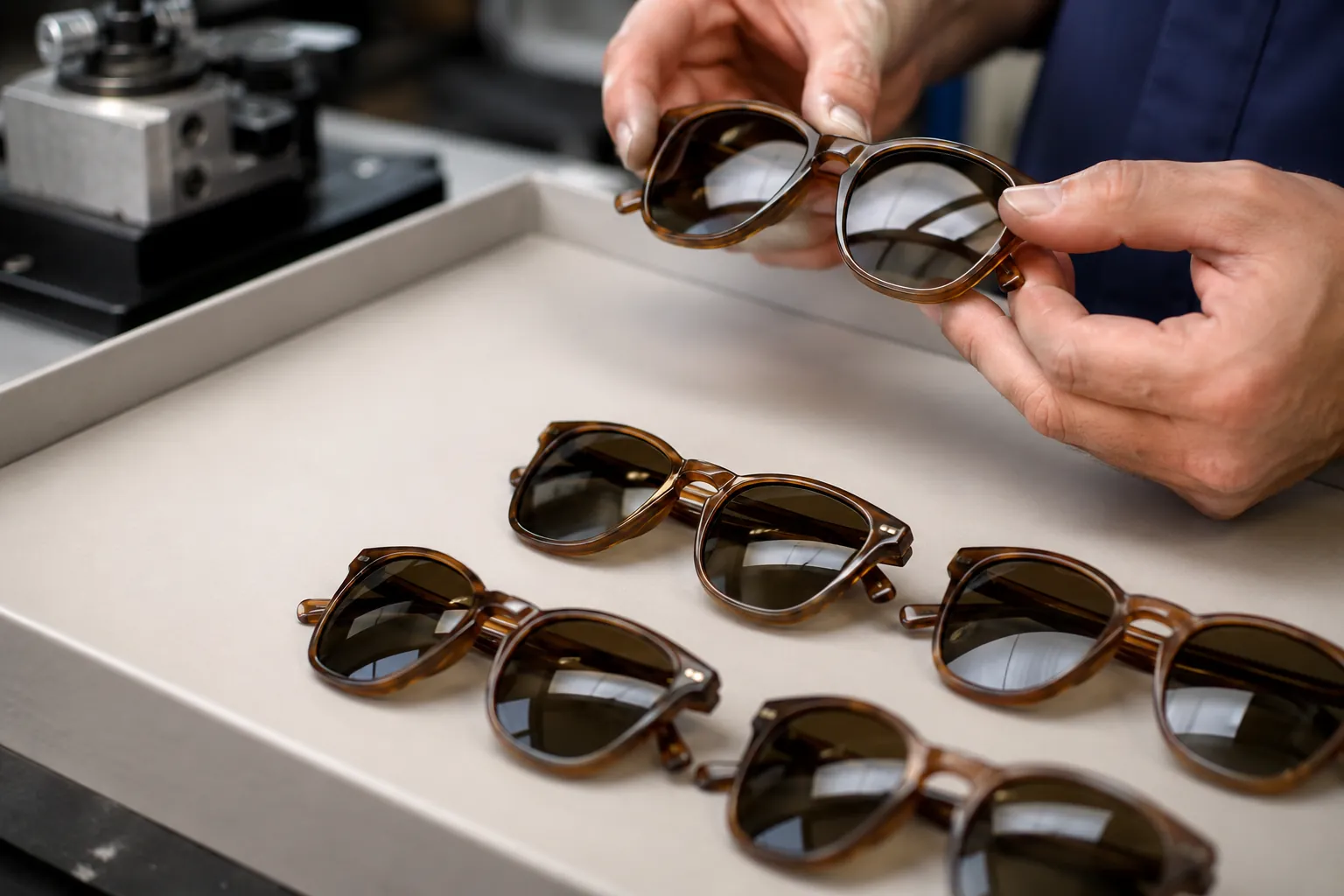
This guide is for hotel groups, resort buyers, beach clubs, destination retailers, tour operators, and event teams that need branded sunglasses without buying huge volumes. It covers frame choice, lenses, decoration, packaging, compliance documents, order quantities, and inspection points. The aim is simple: better-looking sunglasses, fewer quality problems, clearer landed costs, and a buying plan that fits hospitality calendars.
Where Branded Sunglasses Fit in Hospitality Buying
Hotels, resorts, and beach clubs usually buy branded sunglasses for four reasons: retail shop sales, guest welcome kits, pool or beach amenities, and event merchandise. Each use has a different cost ceiling. A pair sold in a resort boutique can support upgraded materials, a microfiber pouch, a barcode hang tag, and polarized lenses. A pair handed out at a pool party needs fast production, clean logo placement, and a price that fits the event budget.
Start with the product job, not the frame catalog. Is the guest expected to keep the sunglasses for a full season? Wear them in photos? Use them for one afternoon? Receive them as part of a premium room package? That answer should shape the frame material, lens category, decoration method, packaging, and inspection standard. It also prevents a common mistake: spending too much on a fancy logo treatment, then cutting back on the lens or packaging until the final product feels cheap.
A good supplier brief is specific. Include the target guest, destination country, order quantity, launch date, artwork files, packaging needs, and whether the sunglasses are for resale or giveaway. LumiShades supports low-MOQ custom sunglasses from 50 pairs per design, so buyers can test a seasonal style, property-specific logo, or event concept before scaling up.
Match the Frame to the Guest, Climate, and Channel
The best resort sunglass is not always the most expensive one. Humidity, salt air, sunscreen, heat, and rough handling all affect frame choice. Injection-molded plastic frames work well for giveaways and fast repeat orders. Flexible TR-style plastics can improve comfort for active use. Acetate has a heavier feel, richer color options, and stronger retail appeal, but it usually needs more time for cutting, tumbling, polishing, and fitting.
| Use Case | Recommended Frame | Typical MOQ Logic | Buyer Watch Point |
|---|---|---|---|
| Pool party giveaway | Injection-molded plastic frame | 50 to 300 pairs for event tests; higher volumes usually improve unit cost | Avoid very thin temples if the logo needs pad printing; narrow or flexible temples can reduce print consistency |
| Resort retail shop | Acetate or upgraded molded frame | 100 to 500 pairs per color for a seasonal shelf test | Allow extra time for color confirmation, polishing, hinge alignment, and packaging approval |
| VIP welcome gift | Acetate or premium molded frame with upgraded lenses | 50 to 200 pairs per property, room tier, or campaign | Packaging should match the room standard, not only the eyewear specification |
| Beach club staff merchandise | Durable molded plastic or flexible TR-style frame | 100 to 300 pairs for staff use and limited resale | Confirm fit across face widths and check temple pressure behind the ear |
For a first order, choose one proven unisex shape before building a full eyewear range. A medium adult fit is safer than an extreme fashion shape when guests cannot try several sizes. Oversized frames photograph well but can slide on narrower faces. Tiny frames may look sharp on a mood board and fail in a hotel shop. Fit sells. Especially during travel, when sunglasses are often bought on impulse.
Decoration Choices That Survive Real Use
Logo method is not just a design choice. It affects tooling, durability, placement tolerance, inspection, and rework risk. Pad printing is common for temples because it is clean, affordable, and works on many molded frames. The workable logo size depends on temple length, curve, surface texture, and print color. Thin strokes can fill in during printing, especially on curved or glossy surfaces. Long hotel names often work better on a pouch, sleeve, or hang tag than squeezed onto a temple.
- Pad printing: useful for simple resort names, one- or two-color event logos, and molded frames; request an adhesion check on the actual frame surface.
- Laser engraving: useful for subtle tone-on-tone branding on selected acetate or metal areas; it is durable but may be less visible from a distance.
- Metal logo plate: suitable for retail styles; it adds tooling, placement checks, assembly labor, and higher inspection requirements.
- Lens logo: useful for events and photo moments; keep it small and outside the central field of view.
Before bulk production, ask for a photo or physical sample of the logo on the actual frame color. A flat artwork proof is not enough. Dark print on black frames, metallic print on tortoise patterns, or white print on a curved glossy temple can change in real light. For beach use, define a basic rub-test expectation and inspect decoration with sunscreen, sweat, and saltwater exposure in mind. No decoration method can save poor surface preparation or bad placement. Keep the mark simple if the product will be used hard.
Lens Specifications Buyers Should Not Skip
Lenses are where cheap sunglasses can become risky. Confirm UV protection, lens category, tint consistency, optical clarity, and whether polarized lenses are worth the added cost. UV400 protection should be the baseline for outdoor resort use. Also confirm the destination requirement, such as CE EN ISO 12312-1 for Europe, ANSI Z80.3 for the United States, or AS/NZS 1067 for Australia and New Zealand.
Lens category affects guest comfort, labeling, and proper use. Category 3 lenses are common for bright beach conditions because they offer strong glare reduction and remain practical for most commercial programs. Category 2 works for lighter fashion tints, but it may feel too bright under strong tropical sun. Category 4 is very dark and not suitable for driving. Avoid it unless the use is controlled and the product is clearly labeled.
Polarized lenses reduce glare from water, sand, glass, and pool decks. Guests notice the benefit at beach clubs, marinas, island resorts, and yacht events. The trade-off is price. Polarized lenses are easier to justify for resort retail, VIP gifts, marina programs, and premium room packages. For a short event giveaway, standard UV400 tinted lenses may be enough if they meet the required safety and labeling rules for the destination market.
MOQ, Pricing, and Lead-Time Planning
Low MOQ only helps if the buyer understands the price curve. LumiShades can start from 50 pairs per design, which suits boutique hotels, single-location beach clubs, limited events, and test orders. Unit pricing usually improves as quantities rise because setup time, decoration preparation, QC sampling, packing labor, and export handling are spread across more units. The final price depends on frame material, lens type, decoration method, packaging, labeling, inspection requirements, and shipping terms.
Separate production time from the full door-to-door calendar. Sample timing depends on artwork readiness, frame availability, decoration method, and whether a physical sample is required. Bulk timing depends on approved specifications, material availability, production queue, packing requirements, freight booking, customs clearance, and delivery to the property or warehouse. For seasonal launches, plan 8 to 10 weeks from final brief to required selling date. Counting factory production days alone is risky.
- Confirm use case, destination market, target price, quantity, and delivery deadline.
- Select frame material, lens category, decoration method, packaging format, and labeling needs.
- Approve artwork with logo size, color reference, placement position, and tolerance notes.
- Review sample photos or physical samples before deposit and bulk launch.
- Start bulk production only after written approval of the sample and specification sheet.
- Inspect finished goods for frame quality, lens quality, logo placement, packaging, labeling, and carton marks.
For fixed-date events, add buffer. Air freight can rescue a late order, but it can also wipe out margin, especially when rigid cases increase carton volume. If sunglasses are tied to weddings, festivals, opening weekends, or high-season retail launches, confirm the final logo file and compliance requirements early. Hospitality seasons do not move because artwork arrived late.
Packaging for Retail, Rooms, and Events
Packaging should match the sales channel. Retail sunglasses need a barcode-ready setup, a pouch or case, a hang tag, and enough protection to survive handling by shop staff and guests. Room amenities need compact packaging that looks tidy on a tray or inside a welcome box. Event giveaways need speed. A beautiful rigid box becomes a problem if staff need too long to unpack and distribute each pair.
Common options include microfiber pouches, printed paper sleeves, kraft boxes, EVA cases, and hang tags. A microfiber pouch is often the best middle ground: it protects the lenses, carries the logo, and remains useful after purchase. EVA cases cost more and take more carton space, but they can support higher-price retail programs. Paper sleeves cost less and suit short events, but they provide limited lens protection. For retail, leave enough flat space for barcode labels, SKU stickers, or local price tags.
Ask for carton details before confirming freight. Sunglasses packed with rigid EVA cases can use much more shipping volume than pouch-packed pairs. For importers and distributors, carton size affects landed cost, warehouse space, and multi-property allocation. If the product ships to several resorts, label master cartons by design, frame color, lens color, logo, packaging, and destination. Basic work. Big payoff. It prevents the wrong property from receiving the wrong event or retail stock.
Compliance and QC for Overseas Buyers
Compliance should be defined by destination market, not vague supplier claims. For Europe, buyers should request documentation relevant to CE EN ISO 12312-1. For the United States, buyers should confirm FDA registration status where applicable and review ANSI Z80.3 expectations. For Australia and New Zealand, AS/NZS 1067 is relevant. REACH may apply to chemical safety for products entering the EU. ISO 9001 and BSCI can support factory-management and social-compliance review, but they do not replace eyewear performance testing.
A proper QC plan covers more than counting cartons. Check frame surface, hinge strength, screw tightness, lens scratches, lens fitting, temple alignment, logo position, print adhesion, packaging accuracy, warning labels, and carton marks. For logo placement, agree on a practical tolerance before production; the right tolerance depends on temple shape, print area, and decoration method. For tinted lenses, compare color under the same light source. For polarized lenses, verify polarization effect and consistency. For mixed-color programs, confirm assortment ratios before packing starts.
Write the specification before production starts. Include frame model, frame color, lens color, lens category, UV requirement, decoration method, logo size, logo position, packaging, barcode needs, destination compliance, carton labeling, and inspection standard in the purchase order or approved spec sheet. Clear specs reduce disputes. They also help the factory inspect the same details the buyer cares about.
A Practical Buying Plan for the First Order
For a first hospitality sunglasses project, keep the range tight. One frame, two colors, and one decoration method are easier to control than six shapes and four lens tints. If the property has a strong visual identity, use frame color, pouch printing, and a clean temple mark instead of overloading the sunglasses with copy. The product still needs to look wearable after the guest leaves the property.
A sensible test order might be 50 to 100 pairs for a boutique hotel retail shelf, around 300 pairs for a beach club seasonal promotion, or 1,000 pairs and above for a resort group with several properties. Larger programs give buyers more room to improve unit cost, packaging efficiency, freight planning, and reorder timing. For distributors, the cleaner approach is often to build one core frame that several properties can customize by temple logo, pouch print, or hang tag artwork.
Before approving bulk production, ask three blunt questions. Will a guest actually wear this frame? Does the lens meet the destination market requirement? Can the property receive, store, and distribute this packaging format? If the answer is yes, the order is on solid ground. If not, fix it before production. Factory changes after molding, printing, lens fitting, or packing are slower and more expensive than changes made at sample stage.
Buyer note: the cheapest quoted pair is not always the lowest-cost pair. Late delivery, weak lenses, poor fit, oversized packaging, or a logo that wears badly can cost more than saving a few cents at order stage.
Have a custom sunglasses project in mind?
Send us your styles, target market and quantities and we will return a detailed quote with MOQ, lead time and a sample plan.
Get a QuoteWhy source this from Wenzhou with LumiShades
Wenzhou in Zhejiang Province is widely regarded as China’s eyewear manufacturing capital, producing a large share of the world’s sunglasses. That concentration matters to buyers: a deep local supply chain for acetate sheet, hinges, lens blanks, plating and packaging means shorter component lead times, easier color and material matching, and a workforce with decades of eyewear-specific skill. LumiShades has manufactured in this ecosystem since 2009, and our vertical integration — in-house injection molding, acetate cutting, CNC milling, lens tinting, decoration and quality control — means no part of your order is quietly subcontracted to a workshop you cannot audit.
For international buyers, that vertical control translates into accountability. When a single factory owns every step, defects are traced and fixed at source rather than bounced between vendors, and your specifications survive intact from first sample to bulk. For procurement review, buyers can request process records, approved samples, quality checkpoints and project-specific compliance files before placing a bulk order. Required testing and documentation are confirmed against the destination market and product specification rather than assumed from a generic certificate list. Explore our manufacturing capabilities and quality control process to see how this works in practice.
Frequently asked questions
What is the minimum order for custom hotel or resort sunglasses? LumiShades starts from 50 pairs per design. Treat each frame, color, lens, logo, or packaging variation as a separate line item unless the supplier confirms it can be combined. If budget allows, ask for price breaks at 100, 300, 1,000, and 5,000 pairs so you can compare test-order flexibility with lower unit cost.
How long should we allow before a resort launch or event? Plan backward from the required in-hand date, not the event date. Allow time for artwork approval, sample review, production, packing, freight booking, customs clearance, and delivery to the property or warehouse. For seasonal launches, 8 to 10 weeks from final brief is a practical planning window. Fixed-date events should add extra buffer or confirm air-freight cost early.
Which lens is best for beach and pool use? For most beach and pool programs, UV400 Category 3 lenses are the practical choice because they suit bright outdoor conditions. Polarized lenses are better for glare from water, sand, glass, and pool decks, but they cost more and fit best with retail, marina, VIP, or premium gift programs. Always confirm the required standard for the destination market before ordering.
Can we order different logos for several properties? Yes, but each logo should be treated as its own approved artwork and production line item. To control cost and lead time, use the same frame, lens, and packaging structure, then customize temple printing, lens logo, pouch print, hang tag, or barcode label by property. Provide a clear allocation sheet so cartons are packed and marked by destination.
What compliance documents should overseas buyers request? Request documents based on where the sunglasses will be sold or distributed. For Europe, ask about CE EN ISO 12312-1 and REACH. For the United States, confirm FDA registration status where applicable and review ANSI Z80.3 expectations. For Australia and New Zealand, ask about AS/NZS 1067. ISO 9001 and BSCI can support supplier review, but they do not replace product-specific eyewear testing.
What artwork files are needed for logo production? Vector artwork is best, usually AI, PDF, or EPS. Include the exact logo size, color reference, placement position, and decoration method, such as pad printing, laser engraving, lens logo, pouch print, or metal logo plate. Ask the supplier to confirm whether thin lines, gradients, small text, or curved temple surfaces will affect production quality before sample approval.
Ready to start?
Explore our cat-eye sunglasses or request a quote — our sales team replies within 12 hours.
Request a Quote