
Best Logo Placement for Custom Sunglasses
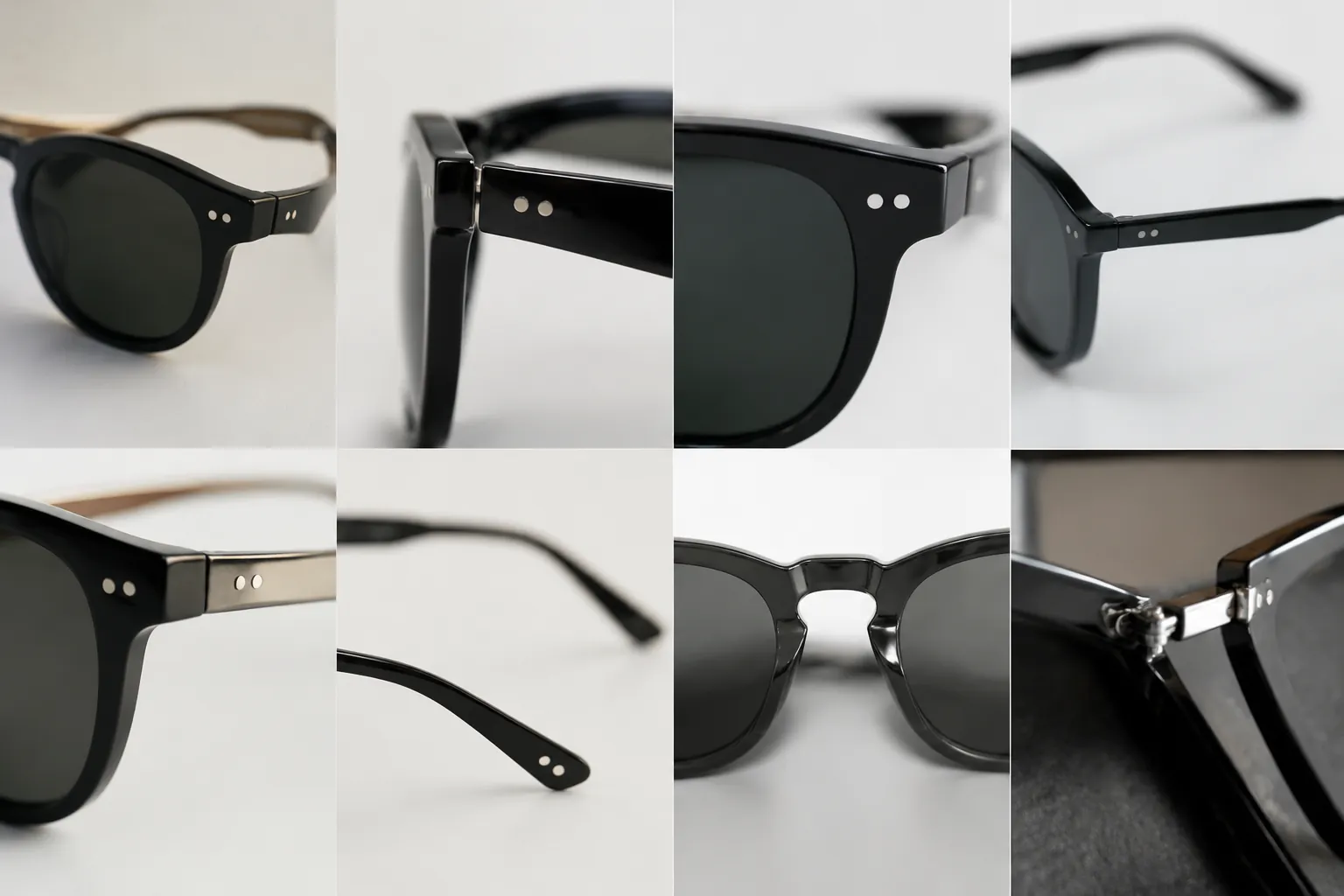
This guide is for brands, importers, distributors, and retailers buying custom sunglasses in volume. It explains how to choose logo placement based on visibility, durability, material fit, inspection risk, and real order economics. Branding is not just a styling choice. It can change the decoration process, the inspection standard, the chance of rework, and the production timeline. A good choice supports the frame design and the target price. A bad one creates rejects, shortens decoration life, or pushes a low-volume order into a process that does not make commercial sense.
Start with the product goal, then pick the branding method
Many buyers start with a request like "Put the logo on the side." That is not enough. It is not enough to quote well, and it is not enough to control quality in production. Logo placement should follow the selling job of the product, the frame material, and the order plan.
A fashion retail frame may need visible branding in wear shots and on shelf. A resort, event, or corporate giveaway may need clear decoration at the lowest practical unit cost. A premium acetate style may look better with quiet inner-temple branding and a small outside metal detail than with a large printed logo.
Ask these four questions before you approve artwork:
- How visible should the brand be at first glance? Outer temple branding is usually the most visible. Lens corner marks are visible but subtler. Inner arm printing is mainly for identification and private-label information, not instant recognition.
- How much abrasion will the mark take? Outer temple logos face hands, hair, cases, counters, and cleaning cloths. Inner arm printing is more protected. Lens branding has to work with the final lens material and coating stack.
- What material is the frame? Injection-molded plastics, TR90-type materials, and acetate do not take decoration the same way. Acetate can support milled recesses and metal inlays. Injection frames often suit print, foil, or molded details better, if volume supports tooling.
- What is the real MOQ and target ex-works cost? Low-MOQ programs usually favor simple printing because setup is limited and control is easier. More complex methods such as metal logo plates or custom lens marks are easier to justify when volume is high enough to absorb setup, labor, and inspection.
Decoration changes the production route. That matters. A metal logo plate on acetate is not just a logo choice. It may add CNC milling, fitting checks, adhesive or pinning steps, flushness inspection, and more chances for rejection. Fix branding early, before bulk approval. Do not treat it as a last-minute cosmetic edit.
Inner arm printing: the best default for low MOQ
Printing on the inside of the temple is usually the safest starting point for first orders. It gives space for the brand name, model code, size, country-of-origin text, and other identifiers without changing the visual balance of the frame. For low-MOQ private-label programs, inner arm pad print is often the most practical option. Setup is simple. No added hardware is needed.
The print sequence varies by factory and by frame construction. Some factories print before final assembly. Others print after assembly if the jig and access still allow consistent positioning. Artwork size depends on temple width, surface shape, and legibility. Very fine text or thin lines should always be tested on the actual production material and finish.
What affects print quality most:
- Surface finish: high-gloss surfaces usually produce sharper print edges than heavily matte or textured temples.
- Curvature: a flatter inside surface is generally easier to print consistently than a deeply curved or tapered temple.
- Ink system and curing: print life depends heavily on ink compatibility with the substrate and on correct curing.
- Flexing: repeated bending near the print area can reduce print life over time.
Durability is often acceptable for low- to mid-price programs because the logo is relatively protected. Still, inner arm print should not be treated as permanent marking unless the factory can document the process and performance standard. Alcohol-based cleaners, sunscreen, insect repellent, and repeated rubbing can damage weak print systems. Ask for a written decoration standard on the approval sheet, including print position, color reference, legibility requirement, and a basic adhesion or rub-check method.
Use inner arm print when the frame shape is doing the selling, when the order includes many SKUs with small opening quantities, or when the launch needs the lowest-risk branding route. Use it less as the main branding element if visible brand recognition is a core retail requirement.
Outer temple logos: most visible, most exposed to wear
If the brand needs to be recognized fast when the sunglasses are worn, displayed, or photographed, the outer temple is the standard position. It is also easy to overdo. And it is one of the first places to show wear.
Three common outer-temple methods are widely used:
- Pad print: simple to sample, relatively low setup burden, and suitable for visible branding, but exposed print will usually wear faster than a fitted metal part.
- Hot foil or hot stamp: can create a metallic look without separate hardware, but results depend on substrate, temperature, pressure, dwell time, and local surface flatness.
- Metal logo plate or inlay: often gives the strongest premium signal and better wear resistance, but it adds milling, fitting, and tighter inspection.
On acetate, a small metal plate often looks more integrated than a large print because acetate already has depth and polish. The plate is typically inserted into a milled recess and should sit flush or slightly below the surrounding surface. If an edge protrudes, it can catch on cloth or be felt by the user. That is a valid cosmetic complaint.
On injection-molded frames, pad print or a small molded feature is often more economical unless volume is high enough to support tooling changes. Scale matters too. A logo that works on a wide adult temple can look oversized on a slim temple or a youth frame. Check the logo against the real temple width, hinge position, and any visible rivets or screws.
Position must also be controlled left to right. A logo can be technically printed and still look defective if one side sits noticeably higher or farther back than the other. Ask the factory to define the position reference, the tolerance, and the inspection method. Pair-based symmetry inspection is more useful than checking each temple on its own.
Lens marks: refined if controlled, risky if added casually
Lens branding can look sharp, especially on fashion sunglasses, but it should not be added without checking optics, coatings, and consistency on the final lens build. Buyers often ask for a strong mark because they have seen one in the market. In production, that can create avoidable cosmetic and user-acceptance problems.
The most common methods are pad print on the lens surface and laser marking, depending on the lens material, coating structure, and intended appearance. In most commercial programs, a small corner mark is safer than a large central graphic. It stays outside the main viewing area and is easier to keep consistent across different tint and coating combinations.
Key technical constraints include:
- Vision area: branding should stay outside the main line of sight.
- Coating stack: hard coat, mirror coat, flash mirror, gradient tint, and polarized construction can all affect adhesion and appearance.
- Tint density: the same mark can read differently on different lens colors and densities.
- Alignment: even small height or angle differences between left and right lenses are obvious.
Because lenses are functional components, decoration must not reduce cosmetic quality or create confusion around compliance. If the product is intended to meet CE EN ISO 12312-1, ANSI Z80.3, or AS/NZS 1067, lens branding should be approved on the final production lens specification, not on a substitute sample. If chemical compliance is part of the buying requirement, the overall product and materials should also be reviewed against applicable standards such as REACH where relevant to the destination market.
Use lens marks when the brand position justifies the extra control and when the frame benefits from a cleaner side profile. For low-cost promotional sunglasses, lens branding often adds more inspection risk than value.
Compare branding placements by visibility, MOQ, tooling, and wear
| Placement / method | Visibility to end user | Relative wear resistance | Typical starting MOQ | Tooling / setup burden | Lead-time impact | Best fit |
|---|---|---|---|---|---|---|
| Inner arm pad print | Low | Medium | Low MOQ programs | Low | Low | Private label, compliance text, many SKUs |
| Outer temple pad print | High | Low to medium | Low MOQ programs | Low | Low | Promotional styles, fast launches, visible branding |
| Outer temple hot foil | High | Medium | Low to mid MOQ programs | Low to medium | Low to medium | Metallic look without separate hardware |
| Outer temple metal logo plate | High | High | Usually better suited to mid or higher volumes | Medium to high | Medium | Premium acetate collections, stronger retail value |
| Lens corner mark | Medium | Medium | Usually better suited to mid or higher volumes | Medium | Medium | Fashion sunglasses, cleaner side profile |
These are not fixed rules, but they are useful commercial filters. At lower quantity, methods with simple setup and lower rejection risk are usually safer. As volume rises, more durable or more refined logo treatments become easier to justify because setup and inspection cost are spread over more units.
The real question is not only "Which logo method looks best?" It is also "Which method still works at my volume, target margin, and reorder plan?"
Material affects the result more than most buyers expect
The same logo file can behave very differently on injection plastics, TR90-type materials, acetate, and finished lenses. Buyers who approve decoration on one substrate and then copy it across another often create avoidable quality issues.
Injection-molded frames: usually efficient for larger programs, but surface texture has a big effect on print quality. Smooth glossy sidewalls generally print more cleanly than grainy or matte ones. Molded-in logos are possible, but they need tooling planning early and usually make more sense when volume supports the cost.
Acetate frames: often support more premium decoration. CNC milling allows recesses, inlays, and controlled seating of metal plates. Acetate also polishes well, which can improve logo contrast. The tradeoff is process sensitivity: sheet pattern variation, thickness variation, and polishing differences can affect final appearance and alignment.
Lenses: lens material and coating stack control both appearance and process yield. A mark that looks clean on a standard tinted lens may not look the same on a mirrored, gradient, or polarized lens.
So approval should be based on final production material, final color, and final finish, not on a substitute that is only visually similar. If system control matters, ask whether the factory operates under ISO 9001 and how decoration approval is documented inside that system. If social compliance is part of supplier qualification, BSCI status may also matter, but it should not be confused with product quality or product compliance.
Lead time, QC checkpoints, and where rejects happen
Decoration is often added late in the production cycle. That means branding errors may appear after molding, cutting, polishing, assembly, or lens fitting have already added value. Then the cost goes up fast. A bad logo position on a finished frame can become rework or scrap.
Lead time depends on frame construction, lens specification, decoration method, and how quickly artwork is approved. Simple inner arm print usually has the least effect on schedule. Metal logos, multi-position decoration, and custom lens marks add more checkpoints and may extend sample approval if details are not fixed early.
Typical rejection points include:
- Print shifted from the approved position
- Left-right temple logo mismatch
- Ink rub-off during handling or packing
- Foil incomplete on curved or textured areas
- Metal plate not flush, tilted, or showing adhesive contamination
- Lens logo crooked or inconsistent between left and right lenses
Good QC for branding should include artwork size confirmation, position checks against an approved drawing or sealed sample, color comparison under controlled lighting, a defined rub or adhesion check, and pair-based symmetry inspection. For metal details, inspection should also cover edge feel, seating depth, burrs, and cosmetic cleanliness around the recess.
Ask direct questions. What drawing or sample controls position? What tolerance is allowed? How is left-right symmetry checked? At what stage is decoration inspected? If the supplier claims FDA registration, confirm what is actually registered and for which product category, because registration is not a substitute for sunglass product compliance.
Practical rules for real B2B orders
If you need a fast private-label launch at low MOQ, choose inner arm print with the required identification text. If you need visible branding on entry- to mid-priced frames, use a restrained outer temple print that fits the frame architecture. If you are building a premium acetate collection and the order volume supports added process cost, a fitted metal temple logo can give a better balance of perceived value and wear resistance. If you want a cleaner side profile but still need visible brand recognition, consider a small lens corner mark and keep the temple branding quiet.
Do not force one branding method across every frame in a collection. A chunky acetate square can carry a recessed metal plate well. A slim sport wrap or narrow fashion temple may look better with restrained print. Good branding follows the geometry of the frame. It does not ignore it.
Also reserve inner-temple space early. Depending on the market and product specification, you may need room for brand, model, size, country of origin, and other identifiers. If that area is filled first with oversized decorative branding, layout problems often appear late and delay approval.
Best default for first orders: use inner arm print for low-MOQ testing, choose outer temple branding when visibility matters, and move to metal logo plates only when the frame design, target retail position, and expected repeat volume justify the extra process and inspection.
That approach controls cost better, reduces late-stage decoration risk, and keeps the branding level in line with the product position.
Have a custom sunglasses project in mind?
Send us your styles, target market and quantities and we will return a detailed quote with MOQ, lead time and a sample plan.
Get a QuoteWhy source this from Wenzhou with LumiShades
Wenzhou in Zhejiang Province is widely regarded as China’s eyewear manufacturing capital, producing a large share of the world’s sunglasses. That concentration matters to buyers: a deep local supply chain for acetate sheet, hinges, lens blanks, plating and packaging means shorter component lead times, easier color and material matching, and a workforce with decades of eyewear-specific skill. LumiShades has manufactured in this ecosystem since 2009, and our vertical integration — in-house injection molding, acetate cutting, CNC milling, lens tinting, decoration and quality control — means no part of your order is quietly subcontracted to a workshop you cannot audit.
For international buyers, that vertical control translates into accountability. When a single factory owns every step, defects are traced and fixed at source rather than bounced between vendors, and your specifications survive intact from first sample to bulk. For procurement review, buyers can request process records, approved samples, quality checkpoints and project-specific compliance files before placing a bulk order. Required testing and documentation are confirmed against the destination market and product specification rather than assumed from a generic certificate list. Explore our manufacturing capabilities and quality control process to see how this works in practice.
Frequently asked questions
What is the safest branding option for a low-MOQ test order? Inner arm pad printing is usually the safest option because it requires the least process change, avoids added hardware, and keeps visual risk low. To make it actionable, ask the supplier for: 1) an artwork layout showing brand and mandatory text, 2) a signed position reference, 3) the ink color reference, and 4) the factory's rub or adhesion check method on the final frame material.
When do metal temple logos start to make commercial sense? Metal temple logos usually make more sense when the order volume is high enough to absorb extra milling, fitting, assembly, and inspection cost, and when the frame itself is positioned as a premium product. Instead of asking for a fixed universal quantity, ask the supplier to quote both options—print and metal plate—with separate tooling, unit cost, and reject-risk notes. That comparison will show whether the upgrade is commercially justified for your program.
Will a lens logo affect compliance to CE EN ISO 12312-1, ANSI Z80.3, or AS/NZS 1067? A lens logo does not automatically make the product non-compliant, but it must not interfere with the field of view, cosmetic quality, or the performance of the final lens construction. The practical step is to approve branding on the exact production lens specification, including tint, coating, and polarized construction if used. If compliance is required, ask the supplier to confirm testing or conformity against the target market standard on the final finished product, not on an undecorated or substitute lens.
Which lasts longer on the outside temple: pad print or a metal logo plate? A properly fitted metal logo plate will usually resist handling wear better than exposed pad print. Pad print remains the more economical option, but it is more vulnerable to rubbing and cleaners. To compare the two options properly, ask for samples made on the same frame material and request the factory's defined decoration durability check, rather than relying only on photos or a general assurance.
Can the same logo artwork be used across acetate and injection-molded frames without adjustment? Not always. The same artwork may need changes to size, line weight, or placement because temple width, curvature, surface finish, and decoration method affect both appearance and process stability. The buyer should request a separate artwork review for each material family and approve decoration on the final production substrate. If the order will cover multiple materials, do not assume one sample automatically validates all of them.
Ready to start?
Explore our aviator sunglasses or request a quote — our sales team replies within 12 hours.
Request a Quote