
Who Owns the Tooling? Terms to Lock Before You Pay
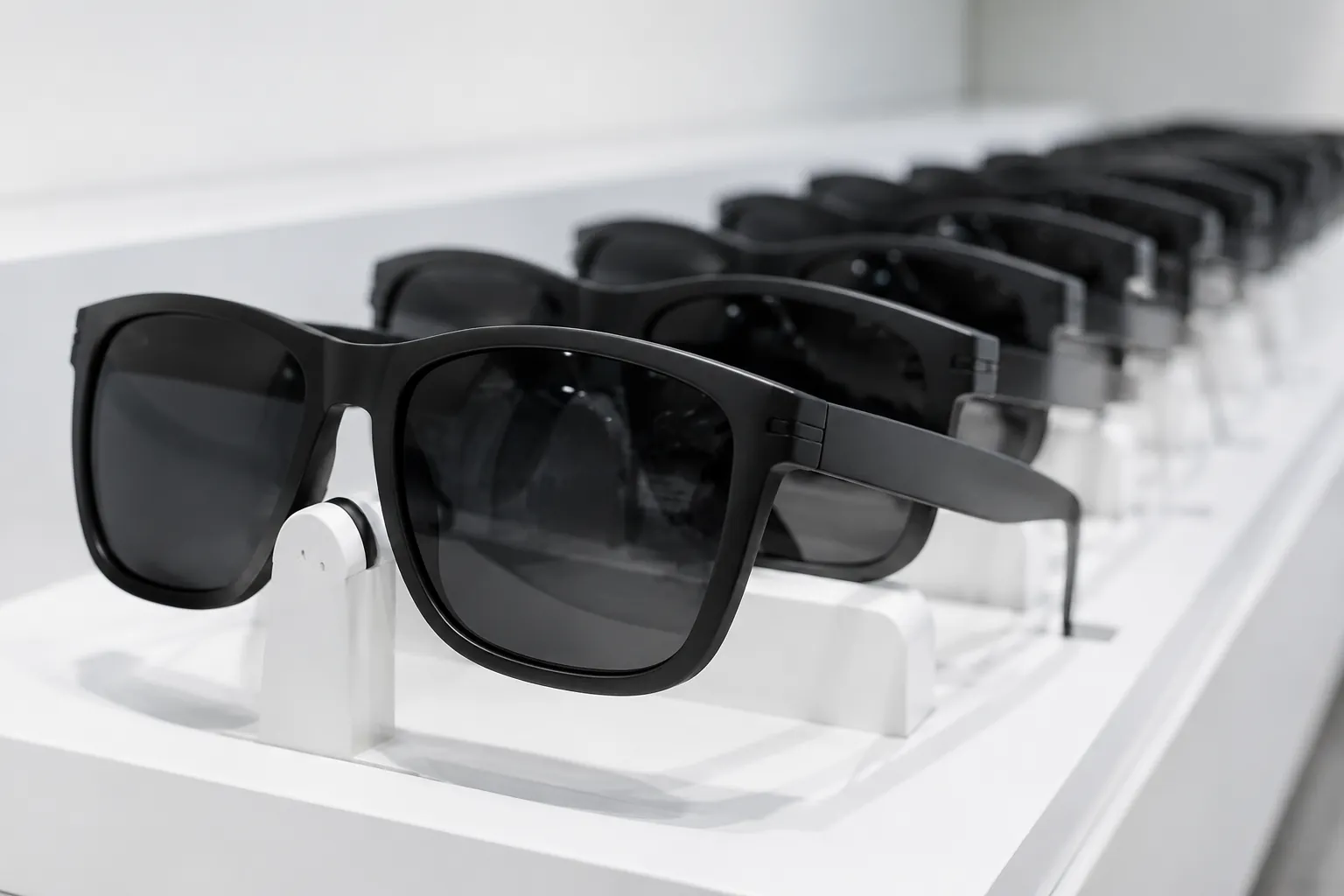
This guide is for eyewear brands, importers, distributors, and retailers buying custom sunglasses from OEM or private-label suppliers. Paying a tooling fee does not, by itself, give you title to the mold, spare inserts, CAD, CNC programs, logo dies, gauges, or approved reference samples needed to reproduce the style. That gap gets expensive fast. If those rights are not written down, a supplier change can trigger duplicate tooling charges, missing files, delays, and repeat validation work. Lock the terms before the tooling PO is paid and before sample approval, so price, lead time, and exit rights do not depend on memory or goodwill.
Separate design IP from tools and process files
Buyers often say the mold as if it were one asset. It rarely is. In sunglasses production, an injected style can involve a front mold, left and right temple tools, hinge-seat inserts, lens-groove inserts, texture plates, go/no-go gauges, and approved reference samples. An acetate style may rely less on classic steel tooling and more on CAD, CNC programs, wire-core templates, bevel settings, polishing fixtures, and heat-form jigs.
This is where disputes start. A factory may accept that the frame design is yours while claiming that the base mold, spare inserts, cutter paths, or setup sheets are part of its internal manufacturing know-how. If you change suppliers, you may own the design on paper but not the assets needed to hold lens fit, hinge alignment, decoration position, or repeatable cosmetic quality.
List each asset. Do not bundle everything into one vague line item. Separate product IP from physical tooling, process files, gauges, and approved masters. Also split design labor, prototype sampling, and production tooling into different commercial lines on the PO and the contract. If an invoice only says development fee, a supplier can later argue that your payment covered engineering time, not transfer-ready tooling.
Build a tool map before approving the invoice
Before any tooling payment, ask for an itemized tool map tied to one style code and one revision. It should show what exists, what is still being built, where each asset is stored, and whether a subcontractor or outside mold shop controls release. If a supplier cannot produce that record before payment, expect trouble later.
| Tool or file | Build or update timing | What it actually controls | What to lock in |
|---|---|---|---|
| Injection mold for front and temples | Usually the main critical-path item; confirm the quoted build time and spare-insert lead time in writing | Frame geometry, hinge seats, lens groove, cavity finish, ejection consistency | Ownership of base mold, inserts, cavity count, repair history, and spare components |
| Acetate fixtures and CNC programs | Often revised faster than steel tooling, but each revision still needs version control | Cutting path, bevel angle, polishing repeatability, wire-core placement, left-right symmetry | Ownership or perpetual use rights for 3D files, CNC programs, master templates, and replacement fixtures |
| Lens edging fixtures and tint standards | Timing depends on lens curve, material, and finish | Lens fit, base-curve match, tint reference, left-right appearance match | Control of edging data, tint masters, inspection samples, and revision records |
| Logo dies, print plates, and laser files | Commonly short-lead items, but easy to omit from transfer packs | Decoration position, artwork revision, finish, color consistency | Exclusive use of approved artwork, digital vectors, spare plates, and derivative decoration tools |
The schedule should also record tool ID, revision level, cavity count where relevant, base material such as P20 steel, H13 steel, or 7075 aluminum where applicable, the storage address, and the legal owner if an outside mold shop built the asset. For injected fronts, ask whether the quote covers a single-cavity tool, a family tool, or a tool with replaceable inserts. For outsourced lens tinting, coating, or decoration, name the third-party site now, not after a dispute.
Tie ownership to payment, approval, and exclusive use
The cleanest rule is simple: title passes when the agreed tooling fee is paid in full, the approved tool schedule is attached, and the acceptance event is defined. Do not leave acceptance vague. Many eyewear programs use T0, T1, and T2 sample rounds, but the naming varies by supplier. The contract should say which sample stage counts as tool acceptance and what documents prove it, such as approved drawings, measurements, and cosmetic standards.
- Define the acceptance point, such as signed pre-production samples with the drawing revision attached.
- State whether paid spare inserts, replacement cavities, repair-derived inserts, and duplicate gauges are buyer property.
- Give the supplier custodial possession only and production use only for buyer-authorized orders.
- Prohibit use of the same or confusingly similar geometry for third parties, including without-logo or relabeled runs.
- Limit any lien or retention right to specifically identified unpaid tooling charges or approved finished-goods invoices, not unrelated disputes.
- Keep MOQ, unit price, and title as separate clauses so commercial concessions do not blur ownership.
If some process files are not assignable under the supplier's software or licensing arrangement, say so directly. Then fix it. Require a perpetual, royalty-free, transferable use right plus the export formats, setup notes, and revision history another qualified factory would need.
Set storage, maintenance, and change control in measurable terms
Ownership means little if the tool degrades, gets modified without notice, or cannot be located quickly. Put storage, maintenance, and modification control in writing. Name the custodian, storage address, identification method, and minimum records to be kept for each tool or fixture.
For injection tools, require cleaning, corrosion protection, labeling by style code and revision, and a maintenance log that records dates, work performed, and any parts replaced. If the supplier tracks shot count, include that record in the tool file. For acetate fixtures, templates, and digital programs, require version control, protected storage of the approved master, and a rule that shop-floor edits cannot overwrite the released revision.
Do not rely on generic language such as normal wear and tear. It is too loose. Attach the critical drawing dimensions, fit points, and cosmetic criteria that define an acceptable tool. Any weld repair, insert replacement, EDM correction, polishing change, or program update that can alter geometry or appearance should require written buyer approval and renewed sample signoff. Tool life and responsibility for wear repairs should also be stated in the quote or contract, not left to assumption.
Define reuse rights before line extensions start
Most tooling disputes do not show up on the first PO. They show up on reorders, color changes, size extensions, and material changes. A color-only change on the same injected frame may not need new steel, but it can still require new approved color standards, new sample approval, or line-cleaning rules. A change to temple length, lens curve, hinge specification, sheet thickness, or material grade can require new inserts, revised edging data, new CNC programs, revised fixtures, or full retooling.
Write the reuse rules before those extensions begin. Define what counts as a color change, a size change, a material change, and a logo-only change. State which existing tools or files may be reused, who owns any new inserts or programs created from the original design, and whether the supplier may charge for partial retooling without prior written approval. If additional tooling is needed, require an updated tool schedule and a separately approved fee so old and new rights do not blur.
This applies to lenses and decoration too. A new lens material, coating, laser file, metal plaque, or print plate can create a new controlled asset even when the frame outline stays the same.
Write a real transfer and exit procedure
A transfer clause matters when the relationship is already strained, so the procedure has to work in practice. Do not stop at mold can be returned on request. State who replies, what is released, how condition is documented, which charges may hold release, and the exact business-day deadlines.
- Buyer gives written notice naming the receiving factory or forwarder, the ship-to address, and the requested shipping mode.
- Supplier confirms within the contract deadline, for example five business days, the tool list, revision level, current condition, last production date, maintenance status, and any open corrective work.
- Both sides verify which amounts, if any, are contractually allowed to hold release. Unrelated commercial disputes should not block a paid tool.
- Supplier cleans, protects, labels, photographs, and crates the tool set, then includes drawings, owned or licensed CAD/CAM files, setup sheets, the approved bill of materials, gauges, golden samples, and a signed packing list.
- Transfer takes place within the stated release deadline after agreed amounts are cleared, with the buyer allowed to appoint a third-party inspector to verify count, photos, and packing condition if needed.
If an external mold shop built the tool, secure a written acknowledgment at the start that the mold shop will release to the legal owner on instruction. For heavy tools, record weight, crate size, lifting points, and customs description. For smaller assets such as pad plates, logo dies, master templates, and gauges, count and photograph each item individually.
Do not assume compliance moves with the tool
Owning a tool does not freeze compliance in place. Compliance attaches to the finished sunglasses as actually produced, using a specific bill of materials, process, and manufacturing site. Move the tool, change the plant, or switch raw-material sources, and earlier test reports may no longer cover the product.
For EU programs, confirm the current conformity route and testing built around EN ISO 12312-1 to support CE marking. For the U.S., review the product against ANSI Z80.3. For Australia and New Zealand, review AS/NZS 1067. If frame material, lens material, tint, coating, paint, adhesive, metal trim, or markings change, review the chemical file as well, including any applicable REACH obligations. ISO 9001 and BSCI can be useful supplier-screening documents, but they do not prove product compliance or equivalence after a transfer.
Ask the supplier to keep the approved bill of materials with the tooling record: frame material grade, lens material, tint or transmittance specification, coating code, hinge specification, decoration method, markings, and approved reference sample. On transfer, compare the old and new build against that record and revalidate on a pilot lot before you assume continuity.
Use a short clause set and watch for red flags
Short contracts create long arguments. A workable tooling clause names the asset, the owner, the custodian, the permitted use, the approval trigger, and the release deadline. Keep the language plain. It leaves less room for improvisation after payment.
Upon full payment of the agreed tooling fee and acceptance under the attached tool schedule, buyer holds title to the listed molds, inserts, fixtures, logo dies, gauges, approved drawings, and any process files specifically identified as buyer-owned or buyer-licensed. Supplier stores them as custodian, uses them only for buyer's authorized orders, maintains them to the agreed standard, and releases them on written request under the contract transfer procedure and stated deadline.
- No itemized tool list tied to style code and revision.
- No distinction between buyer-owned assets and supplier know-how or licensed files.
- No statement on spare inserts, repairs, duplicate gauges, or derivative tools.
- No storage address or disclosure of outside mold shop or subcontractor.
- No approval threshold for geometry-changing repair, polishing, or program change.
- No release deadline, lien limitation, or inspection right.
- No link between the tooling record, approved bill of materials, golden sample, and compliance file.
If any of those points are missing, fix them before the tooling payment leaves your account. After that, your leverage drops.
Have a custom sunglasses project in mind?
Send us your styles, target market and quantities and we will return a detailed quote with MOQ, lead time and a sample plan.
Get a QuoteWhy source this from Wenzhou with LumiShades
Wenzhou in Zhejiang Province is widely regarded as China’s eyewear manufacturing capital, producing a large share of the world’s sunglasses. That concentration matters to buyers: a deep local supply chain for acetate sheet, hinges, lens blanks, plating and packaging means shorter component lead times, easier color and material matching, and a workforce with decades of eyewear-specific skill. LumiShades has manufactured in this ecosystem since 2009, and our vertical integration — in-house injection molding, acetate cutting, CNC milling, lens tinting, decoration and quality control — means no part of your order is quietly subcontracted to a workshop you cannot audit.
For international buyers, that vertical control translates into accountability. When a single factory owns every step, defects are traced and fixed at source rather than bounced between vendors, and your specifications survive intact from first sample to bulk. For procurement review, buyers can request process records, approved samples, quality checkpoints and project-specific compliance files before placing a bulk order. Required testing and documentation are confirmed against the destination market and product specification rather than assumed from a generic certificate list. Explore our manufacturing capabilities and quality control process to see how this works in practice.
Frequently asked questions
If I paid the tooling fee, can the factory still refuse to release the mold? Yes. Payment alone does not force release if the contract is vague, the tool sits with an outside mold shop, or the supplier claims a retention right. Before paying, require an itemized tool schedule, a title-transfer clause, a custodian clause, a release deadline, a rule that unrelated disputes cannot block release, and written acknowledgment from any third-party mold shop holding the asset. If a dispute already exists, send a written notice requesting the full tool register, proof of any unpaid amounts the supplier says justify withholding, and photos of every asset in storage.
Should I own the CAD files and CNC programs too? Usually yes, or at minimum you should hold a perpetual, royalty-free, transferable use right. Ask the contract to list each deliverable by name: native CAD if available, a neutral 3D format, 2D drawings, CNC or CAM outputs used for production, gauge drawings, artwork vectors, and revision history. If the supplier says some CAM data is proprietary, require enough files and setup information for another qualified factory to reproduce the approved part without reverse-engineering from scratch.
Can a factory reuse my mold for another buyer if they change the logo? Not if your contract defines exclusivity by geometry and tooling, not just by trademark. Prohibit production of the same or confusingly similar frame from the same tool, inserts, programs, or derivative tooling for any third party, whether the product is unbranded, relabeled, or decorated differently. Also require approval before any duplicate insert, spare cavity, or second tool is made from your paid design, and require those assets to be added to the tool schedule.
Do I need new compliance tests if the mold moves to another factory? Often yes, or at least a documented gap assessment. Compare the old and new site on frame material, lens material, tint or transmittance specification, coatings, adhesives, metal trim, markings, and process controls. If anything affecting performance or chemistry changes, revalidate to the standards for your market, such as EN ISO 12312-1 for EU programs supporting CE marking, ANSI Z80.3 for the U.S., AS/NZS 1067 for Australia and New Zealand, and REACH for applicable chemical requirements. Keep pilot-lot samples and test reports tied to the new site.
What document pack should I request with the tool? Ask for a transfer pack, not just the physical tool. Minimum contents are the itemized tool list, style code and revision, tool IDs, cavity count where relevant, tool material or specification where recorded, repair and maintenance log, last production date, approved drawings, owned or licensed CAD/CAM files, setup sheets, gauge list, approved bill of materials, golden sample or sealed reference sample, photos before shipment, packing list, and the contact details of any subcontractor that worked on the tool. Make that pack a condition of release in the contract so you do not negotiate it later.
Ready to start?
Explore our shield & oversized sunglasses or request a quote — our sales team replies within 12 hours.
Request a Quote