
Profitably Launch Custom Sunglasses at 50 Pairs
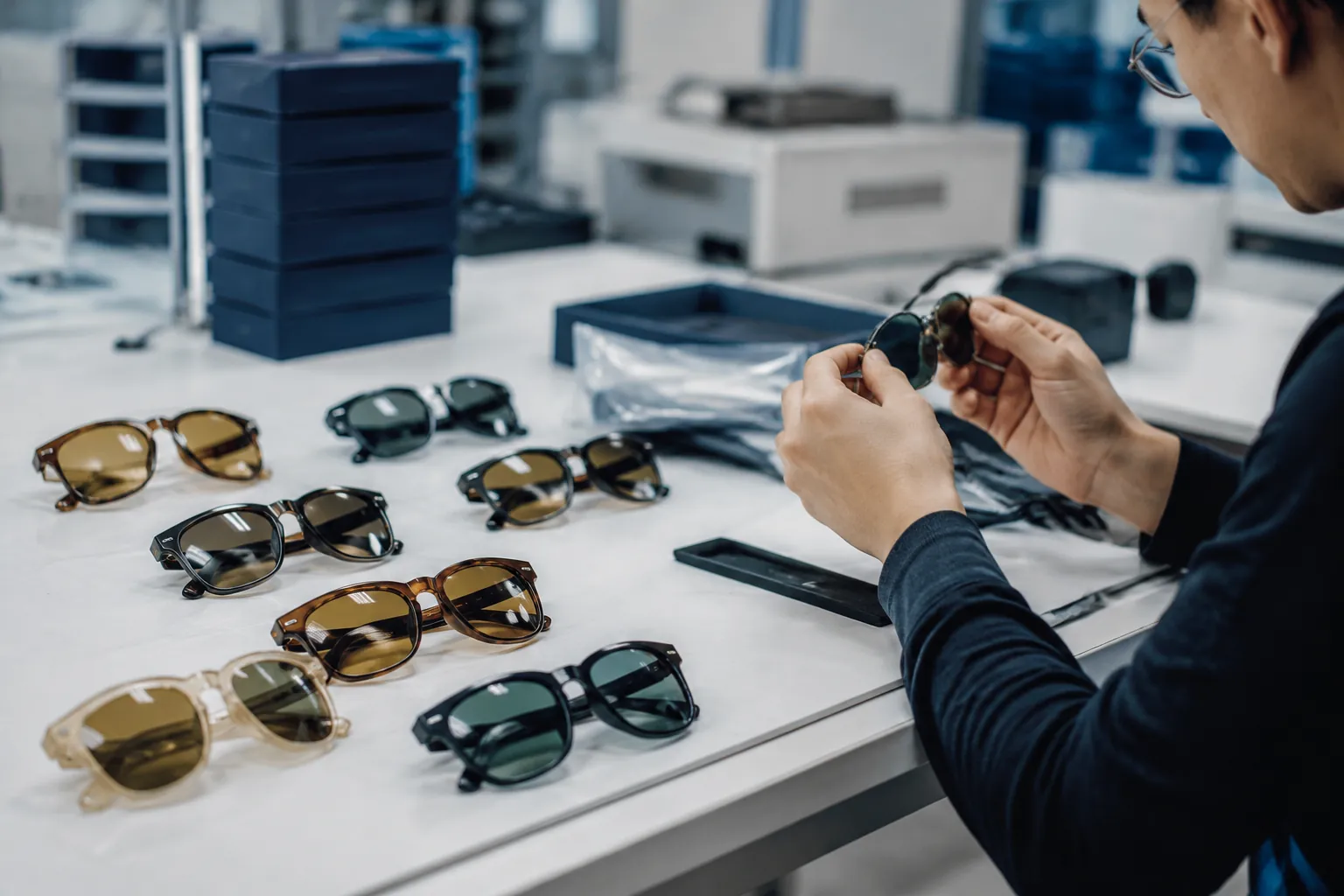
This guide is for brand owners, importers, retailers, and distributors that want to test custom sunglasses without tying up too much cash in a first production run. A 50-pair MOQ can work well, but only if you define the frame construction, branding method, compliance target, packaging scope, and reorder trigger before sampling starts. At this volume, avoidable complexity can wreck margin fast. A metal logo plate, a hard-to-match acetate pattern, a fully custom rigid box, or the wrong lens specification can push landed cost far higher than planned. A 50-pair run is not a cheap way to buy sunglasses. It is a controlled way to test a product with limited inventory exposure.
Why 50 pairs can be smart—and why small runs often lose money
A 50-pair minimum is usually a demand test, not a cost play. Unit pricing is higher because setup work, machine changeover, inspection time, and packaging prep are spread across a very small quantity. The same core production steps still happen whether the order is 50 pairs or 500.
That is why small runs often lose money. Buyers treat them like scaled-down bulk orders and miss the fixed costs. Decoration setup, tooling for some branding parts, carton marking prep, and manual packing do not shrink much. At low volume, every extra step hits harder on a per-pair basis.
Lead time matters too. Sampling and bulk production do not compress in direct proportion to quantity. Approvals, line scheduling, and QC still take time. If your launch plan is built around an ideal sales date instead of the real production calendar, the low MOQ does not save you. It just gives you late stock or a late reorder.
Low MOQ is a testing tool, not a long-term cost strategy.
Use 50 pairs for one job: validate one sellable frame, get real sell-through data, and move fast to the next price break if the style works.
Choose frame constructions that stay stable in low-volume production
Not every sunglass design behaves well at 50 pairs. For a first order, stick with materials and constructions that are repeatable, tolerant of normal process variation, and easier to match on reorder.
- Injection-molded plastic frames: Often the most practical low-MOQ starting point when an existing mold is used. Once color, lens fit, and decoration position are confirmed, repeatability is usually easier to control than with more labor-heavy builds.
- Acetate frames: Suitable for premium positioning, but they usually involve more handwork, including cutting, shaping, polishing, fitting, and final adjustment. Natural variation in acetate sheets can affect color consistency, especially in crystal, tortoise, and laminated patterns.
- Metal or mixed-material frames: These can look more premium, but alignment, plating appearance, solder quality, and lens retention usually need tighter process control. At very low volume, that is harder to maintain at a sensible cost.
For a low-risk launch, avoid very thin temples, oversized decorative parts, unusual hinge layouts, and highly complex multi-part builds unless the retail price can support more labor and a higher chance of rework. Simple wins here. A frame with a stable front curve, standard hinge construction, and moderate lens size is usually easier to produce consistently than a highly stylized shape.
Think about reorder stability as well. Acetate may show visible variation from one sheet batch to another, while injection-molded frames are generally more repeatable when the same approved color standard is followed. If you want to test multiple options, hold the frame structure steady and vary color, lens tint, or logo execution. That gives you cleaner commercial feedback and fewer manufacturing variables.
Understand where the money goes at 50, 300, 1,000, and 5,000 pairs
Margin mistakes usually start with the wrong comparison. Buyers focus on quoted unit price instead of landed cost. At low volume, fixed and semi-fixed costs matter more. At higher volume, material buying, line efficiency, and packing consistency usually improve.
| Order size | Typical use case | Cost behavior | Best strategy |
|---|---|---|---|
| 50 pairs/design | Market test, pilot launch, influencer drop | Highest unit cost; setup, QC, and pack-out have a strong effect on each pair | Use simple frames, one logo method, and standard packaging |
| 300 pairs/design | Validated style, regional rollout, wider ecommerce launch | Unit cost usually improves as setup cost is spread over more units | Add color options only after the best seller is clear |
| 1,000 pairs/design | Established SKU, distributor order, chain retail | Production planning and material use are usually more efficient | Negotiate the full specification package, not only frame price |
| 5,000+ pairs/design | Core program, repeat seasonal style, national volume | Best leverage for stable purchasing and repeat production efficiency | Lock specifications, forecast replenishment, and reduce variation |
At 50 pairs, common cost drivers include:
- Logo setup and position approval
- Lens tint matching and consistency checks
- Manual hinge adjustment and alignment
- Higher rejection sensitivity if cosmetic standards are strict
- Packaging labor that does not scale down efficiently
So do not compare 50 pairs with 1,000 pairs on unit cost alone. Compare 50 pairs of uncertain demand with a larger order that may sit in stock. If demand is real, margin usually improves on the reorder. Not on the test run.
Keep decoration and packaging proportional to the test order
Branding choices can kill the economics of a small run fast. On a 50-pair order, every added process matters: an extra pad-print pass, a metal logo plate, a custom pouch, a foil-stamped box, a barcode label, or a printed insert. Each one adds cost, handling time, and another approval point.
Three common decoration methods behave differently in production:
| Method | Best use | Cost impact at 50 pairs | Durability / process notes |
|---|---|---|---|
| Pad printing | Inside temple logos, simple exterior marks | Usually the lowest setup burden | Practical for tests; artwork, ink adhesion, and position tolerance should be approved |
| Laser engraving | Branding on suitable plastic or metal surfaces | Moderate | Permanent marking effect; visibility depends on surface contrast |
| Metal logo plate | Premium exterior branding | Usually the highest due to parts and assembly | Strong premium appearance, but adds attachment and QC steps |
For a test order, one branding method is usually enough. Pad printing or laser engraving often gives enough brand visibility without adding too many variables. Metal logo plates make more sense after a style has shown repeat demand and can support a higher retail price.
The same logic applies to packaging. A custom rigid box may look better, but it also adds material cost, carton volume, and approval complexity. For a 50-pair test, a standard pouch or case with a clean branded mark is often the better choice. Focus on what the customer notices first:
- Frame shape and comfort
- Lens appearance and tint consistency
- Hinge feel and opening tension
- Logo clarity and rub resistance
Premium packaging does not fix weak product execution. It just hides the margin problem until the landed-cost review.
Build compliance into sampling, labeling, and lens specification from day one
Compliance is part of development. It is not a last-minute document chase. Before the first sample is approved, fix the destination market because lens category, labeling, and supporting paperwork can change by market.
Common references and documents for export sunglasses may include CE EN ISO 12312-1, ANSI Z80.3, AS/NZS 1067, REACH-related material compliance, FDA registration status where relevant, and factory management or audit frameworks such as ISO 9001 and BSCI. Not every item applies to every order. But the right requirement set should be identified before bulk production starts.
- Define the destination market before sample production.
- Confirm lens tint, performance category, and labeling requirements for that market.
- Verify material compliance requirements for frames, coatings, inks, and accessories.
- Confirm what test reports, declarations, or registration support will be available before shipment.
Process control matters here. If the approved sample uses one lens specification but the shipment requires a different category, marking, or warning label, the factory may need to relabel packaging, change lenses, or hold dispatch while documents are corrected. That delay is avoidable.
Use one controlled specification sheet that ties together frame material, approved color reference, lens code, logo position, packaging method, carton marks, and compliance labeling. Keep one record. Not a trail of scattered emails.
Set reorder triggers before the first 50 pairs even ship
The worst time to think about replenishment is when the first batch is nearly gone. Small orders can sell through faster than the production calendar allows you to replace them, especially once approval time, freight booking, customs clearance, and local fulfillment are added to factory lead time.
| Sales result in first 30 days | What it usually means | Recommended next step |
|---|---|---|
| Less than 30% sold | Weak demand, wrong price point, or poor channel fit | Pause reorder; review pricing, imagery, channel fit, and customer feedback before committing more stock |
| 30% to 70% sold | Promising but not yet proven | Review returns, fit comments, top-selling color, and margin before moving to a larger batch |
| 70%+ sold | Strong validation | Open reorder planning immediately and target the next practical price break |
| Sold out in under 2 weeks | Underbought or strong product-market fit | Check whether demand is repeatable rather than purely promotional, then move to a larger order if the signal is consistent |
Also decide what stays frozen on reorder. If the frame sold well, do not change hinge type, temple thickness, lens curve, print method, and packaging all at once. Change one thing at a time. Otherwise you are no longer reordering the same SKU. You are launching a new version.
For retailers and distributors, one proven frame across multiple colorways is often easier to manage than too many shapes. Forecasting is cleaner. Replacement planning is easier. After-sales service is simpler too.
Questions to ask the factory before approving production
A good low-MOQ order starts with a complete specification sheet and direct process questions. Small runs leave less room for error because each mistake has a bigger per-unit cost effect.
- What exactly is included in the quoted price? Confirm frame, lens, logo method, pouch or case, insert, barcode label, export carton marking, and any extra accessories.
- What are the critical QC checkpoints? Ask how lens fitting, hinge alignment, logo position, opening tension, and cosmetic grading are checked before packing.
- Which processes are done in-house? Ask whether molding, acetate processing, decoration, lens fitting, and final QC are handled internally or subcontracted.
- What variation should be expected between sample and bulk? Ask specifically about acetate color variation, print position tolerance, lens tint tolerance, and logo placement tolerance.
- What event starts the lead time clock? Clarify whether production timing starts from artwork approval, sample approval, deposit receipt, packaging approval, or all of them together.
- What compliance support is available? Confirm whether the supplier can provide relevant reports or declarations tied to CE EN ISO 12312-1, ANSI Z80.3, AS/NZS 1067, REACH, FDA registration status, ISO 9001, or BSCI where applicable.
Short version: the factory should be able to explain the production path in concrete terms. A low quote does not protect margin. Repeatability, documentation, and clear approvals do.
A practical launch formula for protecting margin on a small first order
If you are launching from zero, keep the first program tight. Use 50 pairs per design only when each style tests a clearly different commercial idea, such as one safer bestseller profile, one trend-led shape, and one higher-ticket option. Do not order several near-identical frames just to make the line look bigger.
- Start with commercially stable constructions, ideally simple injection frames or uncomplicated acetate shapes with predictable lens fitting.
- Use one branding method only, usually pad printing or laser engraving.
- Approve a written specification covering frame material, color reference, lens specification, hinge, logo position, packaging, and destination market.
- Keep first-run packaging functional and light.
- Track sell-through by style and color in the first few weeks, not only total units sold.
- Prepare reorder artwork, carton marks, and purchasing terms before the first batch lands.
- Move to a larger order only after demand, margin, and replenishment timing are all confirmed.
Not glamorous. Effective. The first batch should answer three questions with real evidence: Does the style sell? Does the buyer accept the quality at the target retail price? Can you replenish fast enough to keep momentum?
If the answer to all three is yes, margin usually improves on the disciplined reorder that follows, not on the first 50 pairs.
Have a custom sunglasses project in mind?
Send us your styles, target market and quantities and we will return a detailed quote with MOQ, lead time and a sample plan.
Get a QuoteWhy source this from Wenzhou with LumiShades
Wenzhou in Zhejiang Province is widely regarded as China’s eyewear manufacturing capital, producing a large share of the world’s sunglasses. That concentration matters to buyers: a deep local supply chain for acetate sheet, hinges, lens blanks, plating and packaging means shorter component lead times, easier color and material matching, and a workforce with decades of eyewear-specific skill. LumiShades has manufactured in this ecosystem since 2009, and our vertical integration — in-house injection molding, acetate cutting, CNC milling, lens tinting, decoration and quality control — means no part of your order is quietly subcontracted to a workshop you cannot audit.
For international buyers, that vertical control translates into accountability. When a single factory owns every step, defects are traced and fixed at source rather than bounced between vendors, and your specifications survive intact from first sample to bulk. For procurement review, buyers can request process records, approved samples, quality checkpoints and project-specific compliance files before placing a bulk order. Required testing and documentation are confirmed against the destination market and product specification rather than assumed from a generic certificate list. Explore our manufacturing capabilities and quality control process to see how this works in practice.
Frequently asked questions
Is 50 pairs enough for a proper market test? Yes, if the test is narrow and measurable. Fifty pairs can be enough to assess sell-through, price acceptance, return reasons, and color preference in one defined channel, such as your ecommerce store, one retail location, or a distributor trial. Before ordering, decide exactly what you are measuring: target sell-through period, acceptable return rate, target gross margin, and the reorder point that will trigger the next batch. Without those metrics, the test gives you stock movement but not useful buying data.
What frame type is usually safest for a first low-MOQ order? Simple injection-molded frames made from an existing factory mold are usually the safest starting point because they often involve fewer manual steps and are easier to repeat. If your brand needs a more premium look, uncomplicated acetate shapes can still work, but you should approve a clear color standard and accept that natural sheet variation may occur. For a first order, avoid highly complex mixed-material constructions, very thin temples, and decorative parts that add assembly and alignment risk.
How quickly should I reorder if a style starts selling well? Start the reorder discussion as soon as the product shows a clear sales signal, not when stock is almost gone. A practical rule is to review reorder timing once roughly 70% of the first batch is sold or committed, then compare the remaining stock with realistic production and transit time. Before placing the first order, ask the factory what starts the lead time clock and what approvals are required so you know how early the reorder decision must be made to avoid a stock gap.
Which compliance documents matter for export sunglasses? The right document set depends on the destination market and the product specification. Common references include CE EN ISO 12312-1, ANSI Z80.3, AS/NZS 1067, REACH-related material compliance, and FDA registration status where relevant. Factory-side systems such as ISO 9001 and BSCI can also matter during supplier review, but they do not replace product-level compliance. The practical step is simple: confirm the target market first, then ask the supplier exactly which reports, declarations, labels, and registration details will support that market before bulk production begins.
How can I keep branding costs under control on a 50-pair run? Limit the order to one branding method and one packaging concept. In most low-volume tests, pad printing or laser engraving is enough to validate the product without adding too many setup and QC steps. Ask the supplier to quote branding as separate line items so you can see the cost effect of a second print pass, metal logo plate, custom pouch, or rigid box. That breakdown makes it easier to strip out nonessential features before they damage margin.
What should be fixed on the spec sheet before bulk production starts? At minimum, freeze the frame material, approved color reference, lens specification, logo method and position, hinge construction, packaging method, destination market, carton marks, and required compliance labeling. If acetate is used, record the approved sample reference clearly because pattern and shade matching are sensitive on reorder. Also confirm which sample approvals are final, what tolerances are accepted for print and tint, and what documents will ship with the order. A complete specification sheet reduces the risk that bulk production is built on assumptions instead of one approved record.
Ready to start?
Explore our sport wrap sunglasses or request a quote — our sales team replies within 12 hours.
Request a Quote