
Small Fit Tweaks That Improve Sunglass Sell-Through
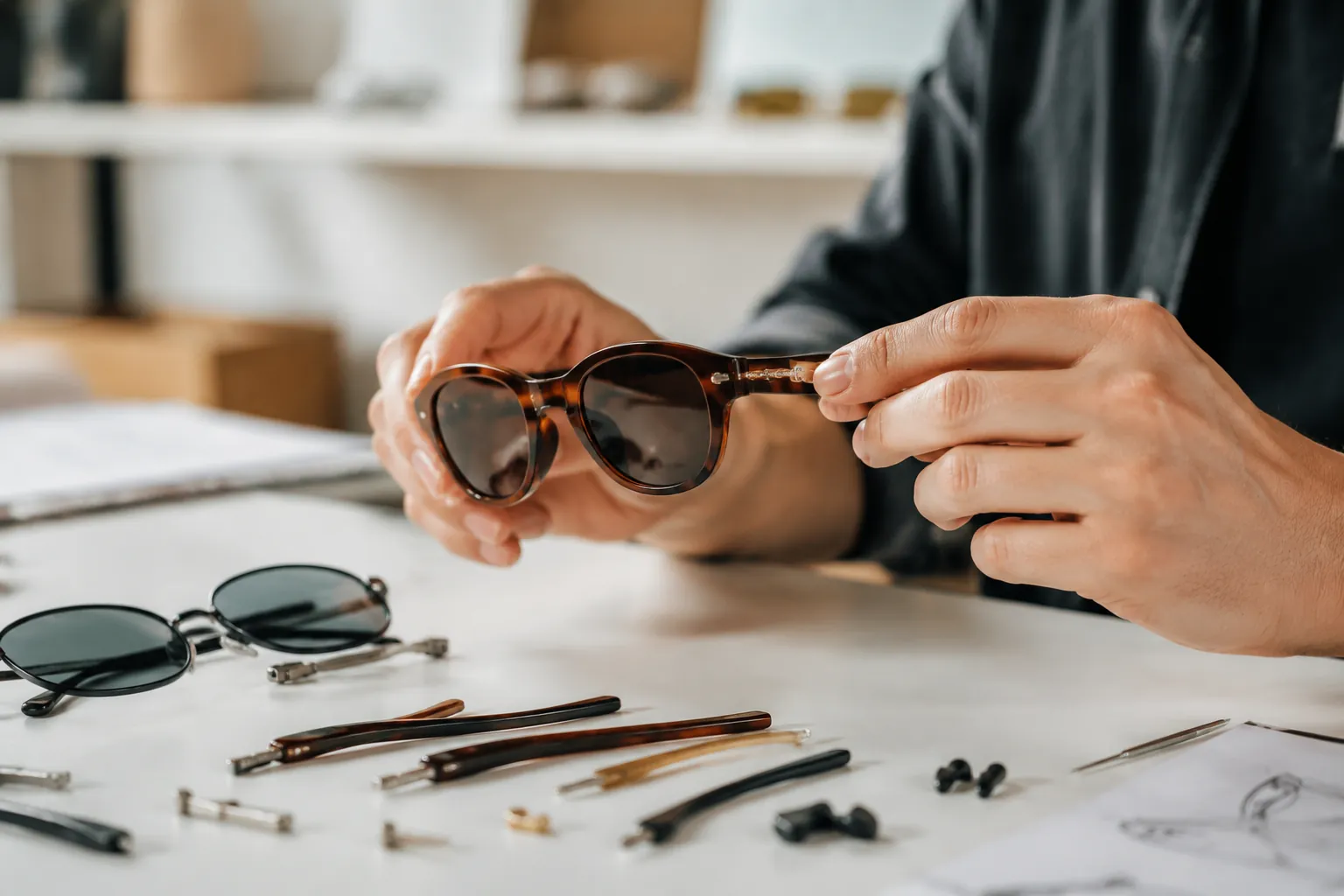
Most fit problems do not start with the front shape. They start where the frame touches the wearer: the nose area, the temple path, and the end tips. A sunglass can look right on shelf and online, then fail in use because it slides, pinches, or feels loose behind the ear. That hurts sell-through fast. Often, the fix is not a full redevelopment. It is a controlled change at one contact point. These edits are usually easier to sample, easier to price, and less disruptive than rebuilding the whole frame.
Why small fit changes matter more than many buyers expect
Buyer teams often approve styling first and assess wear comfort too late. Then the same complaints appear: the frame slides down, presses at the nose, feels tight behind the ear, or shifts when the wearer looks down. Most of these are contact-point problems, not front-shape problems.
Small fit changes can have a large effect because a few millimeters at the contact zones can change pressure distribution, retention, and long-wear comfort. Widen the nose contact area. Soften the temple bend. Extend the end tip slightly. Small moves. Real effect.
The commercial impact is direct. In store, a bad first try-on can kill the sale. Online, poor comfort shows up later as a return, a negative review, or lower retailer confidence on repeat orders.
There is also a cost argument. A new front mold or full acetate redevelopment usually means more tooling work, more approvals, and more risk. Smaller fit revisions can often be made within the existing frame architecture, depending on construction and factory capability.
The three contact points every buyer should review before sample approval
A sunglass sits on three functional zones: the nose area, the temple path, and the end tip. If one zone is wrong, the whole frame can feel wrong even if the styling is strong.
- Nose area: Controls front height, bridge clearance, pressure concentration, and slip resistance. On plastic frames this is mainly integrated nose geometry. On metal frames it includes pad arm position, pad size, pad shape, and pad material.
- Temple curve: Controls side stability and how force is distributed behind the ear. If the curve is too straight, the frame may move forward. If it is too aggressive, pressure builds quickly.
- End tip: Controls the final contact point at the ear. Tip length, contour, thickness, edge finishing, and material hardness all affect retention and comfort.
Review these zones against a defined wearer profile. "Unisex" is not enough. Use a target such as unisex average, narrower fit, wider fit, youth fit, or lower-bridge fit. The same front dimensions can behave very differently on different head widths and bridge shapes.
Ask the factory for measurable reference points, not only visual comments. Useful checkpoints include bridge width, nose contact width, temple spread at rest, tip drop position, and hinge feel. On repeat programs, those become practical control points for bulk consistency.
Nose area revisions: the fastest fix for slipping and pressure marks
Nose fit is often the first area to check, especially on glossy plastic frames, flatter-bridge fashion shapes, and styles aimed at lower-bridge markets. In many cases, nose-area changes improve wear without changing the visible front design.
On injection-molded frames, the main variables are pad height, pad angle, contact area, and bridge clearance. A larger contact area can spread load more evenly. A change in pad angle can improve how the frame sits and help reduce slipping. But buyers should confirm what kind of change is actually possible. Some factories can modify an insert or work within an existing tooling family. Others need new tooling. That difference matters.
On acetate frames, CNC refinement can allow limited changes to the nose pocket during machining and finishing, as long as wall thickness, appearance, and structural integrity remain acceptable. This is useful when the style sells but fit complaints cluster at the bridge.
For metal frames, nose pad selection is often the fastest first test. Material choice affects both feel and wear behavior:
| Nose pad option | Grip / comfort behavior | Cost impact | Best use case |
|---|---|---|---|
| PVC | Typically firmer with lower surface grip | Low | Entry-price styles where cost control is a priority |
| Silicone | Softer feel with higher grip | Low to moderate | General-use frames where improved comfort and reduced slipping are important |
| Air-cushion / soft premium pad | Softer contact with broader pressure distribution | Moderate | Premium frames or programs where comfort is part of the value proposition |
Do more than a mirror check during sample review. Ask wearers to bend forward, look down, and turn the head. Then confirm one more point: whether the nose adjustment changes front angle or lens position enough to affect appearance or wear.
Any revised sample should still be reviewed against the destination market's applicable requirements, including CE EN ISO 12312-1, ANSI Z80.3, AS/NZS 1067, REACH, and FDA registration status where relevant.
Temple curves and end tips: where retention is won or lost
Temple geometry is a common hidden cause of fit failure. Buyers sometimes expect hinge tension to compensate for a weak temple path. It rarely does. Strong hinge tension without the right curve usually feels like squeeze, not stability.
On injection-molded temples, the base curve is built into the part design and then influenced by production consistency and any post-forming process. On acetate, heat bending and jig control matter. Small left-right differences can make the frame feel unbalanced even when the front looks symmetrical on the table.
End tips need the same attention. A longer tip can move the contact point farther back on the ear. A softer material or overmold can reduce pressure concentration. A flatter inner contour can spread load, while a more wrapped sport contour can increase hold but may feel too restrictive on a fashion frame.
Hinge behavior must be judged together with temple geometry. If spring force is high and the curve is already aggressive, pressure builds fast behind the ear. If spring force is weak and the temple is too straight, the frame may still slide forward even if nose fit is acceptable. A simple rule helps: if the frame feels secure only because it squeezes, the fit setup still needs work.
Factories should control:
- Left-right symmetry of temple bend
- Consistent tip length after trimming and finishing
- Smooth finishing at the inner tip contact area
- Stable hinge feel across production lots
These are common drift points when shaping, polishing, and final adjustment are not tightly controlled.
What changes are easy, what costs more, and how MOQ affects the call
Not all fit changes carry the same cost or lead time. Buyers should separate low-disruption revisions from tooling-level changes. That is the practical line. It affects budget, timing, and how the sample plan should be managed.
| Adjustment | Typical cost impact | Lead-time effect | MOQ / decision logic |
|---|---|---|---|
| Nose pad material swap on metal frame | Low | Usually limited | Useful first test because tooling is unchanged |
| Temple bend or end tip revision using existing tooling family | Low to moderate | May require an extra sample review | Commercially sensible when the front shape is already proven |
| Acetate nose-area CNC refinement | Moderate | May extend sample preparation | Often more viable on premium styles where comfort supports positioning |
| New mold insert or new integrated nose tooling | Higher | Longer development and approval | Usually more justified when repeat volume is expected |
MOQ matters because fit work should follow demand evidence. For an unproven style, a smaller trial may be the right move. For a style with reorder potential, the economics change. Returns, markdowns, and lost retailer confidence can cost more than a controlled fit revision.
Judge the change against expected reorder value and complaint reduction, not only against margin on the first purchase order.
How to brief a factory so the sample comes back right
Weak briefs produce vague samples. "Make it more comfortable" is not a usable instruction. The factory needs a target wearer, a clear failure point, and a list of what can and cannot change.
- State the target wearer: for example, wider fit, narrower fit, youth fit, lower-bridge fit, or unisex average.
- Describe the actual failure: slides when looking down, pinches after several minutes, leaves bridge marks, presses behind the ear, or sits too low on the face.
- Request a specific edit: increase nose contact area, reduce wrap slightly, lengthen the tip, change pad material from PVC to silicone, reduce spring tension, or soften the inner tip edge.
- Protect the non-negotiables: eye size, lens shape, logo position, front profile, base curve, and decoration layout.
- Ask for paired samples: standard versus revised for direct wear comparison.
Photos help, but side-profile photos and marked returned samples help more. For decoration-heavy styles, note any finish that may affect feel or weight, such as rubber coating, spray coating, hydrographic decoration, laser logo work, foil application, or metal logo parts. Added material or front weight can change how a frame sits.
Always ask one operational question: can the change be made from existing tools, or does it require new tooling? That answer shapes cost, timing, and whether the revision fits a quick test or a larger redevelopment decision.
QC points that keep fit from drifting in bulk production
Fit is not only a development issue. It is a consistency issue. An approved sample means little if bulk units open wider, tips finish sharper, or nose pads sit at different angles.
Bulk QC should check both measurable dimensions and wearable feel. Useful controls include temple curve comparison against the approved reference, nose pad alignment on metal frames, tip length checks, and random wear tests during in-line and final inspection. On acetate, polishing can alter contact edges. On injected styles, process variation can affect temple spread and shape stability.
At a minimum, buyers should ask the factory to control:
- Left-right symmetry of temple bend against the approved reference
- Hinge opening and closing feel across sampled units
- Nose pad spacing, angle, and screw security on metal frames
- End tip length and thickness consistency after finishing
- Final confirmation that labeling, lenses, and finished goods remain aligned with applicable standards and process controls, including CE EN ISO 12312-1, ANSI Z80.3, AS/NZS 1067, REACH, ISO 9001, BSCI, and FDA registration status where relevant
Where possible, ask for the QC method, not just a promise of QC. A control checklist, approved reference sample, and a clear tolerance discussion are more useful than a general assurance that fit will be checked.
A practical buying strategy: improve fit without rebuilding the range
The most useful approach is usually not a full collection redesign. Start with a proven seller, identify the most common fit complaint, and revise only the contact point most likely to fix it.
For example, keep the same front, lens, and branding, but test two fit variants: standard temple path versus a softer temple path, or standard bridge setup versus a lower-bridge version. This gives clearer wear feedback without forcing a full SKU rebuild.
That approach works well for private-label and distributor programs. Trial the revised fit on a limited run, collect retailer and wearer comments in a structured format, and scale the better-performing version only after the improvement is confirmed. Save full tooling redevelopment for styles with clear demand and repeat potential.
Comfort is not secondary. It affects conversion, returns, and reorder confidence. If a targeted change to the nose area, temple curve, or end tip improves wear without reopening the full frame program, it is often the smarter buying decision.
Have a custom sunglasses project in mind?
Send us your styles, target market and quantities and we will return a detailed quote with MOQ, lead time and a sample plan.
Get a QuoteWhy source this from Wenzhou with LumiShades
Wenzhou in Zhejiang Province is widely regarded as China’s eyewear manufacturing capital, producing a large share of the world’s sunglasses. That concentration matters to buyers: a deep local supply chain for acetate sheet, hinges, lens blanks, plating and packaging means shorter component lead times, easier color and material matching, and a workforce with decades of eyewear-specific skill. LumiShades has manufactured in this ecosystem since 2009, and our vertical integration — in-house injection molding, acetate cutting, CNC milling, lens tinting, decoration and quality control — means no part of your order is quietly subcontracted to a workshop you cannot audit.
For international buyers, that vertical control translates into accountability. When a single factory owns every step, defects are traced and fixed at source rather than bounced between vendors, and your specifications survive intact from first sample to bulk. For procurement review, buyers can request process records, approved samples, quality checkpoints and project-specific compliance files before placing a bulk order. Required testing and documentation are confirmed against the destination market and product specification rather than assumed from a generic certificate list. Explore our manufacturing capabilities and quality control process to see how this works in practice.
Frequently asked questions
Can we improve fit without changing the front shape or lens size? Yes. In many cases, fit can be improved by changing the nose contact area, pad material, pad angle, temple bend, end tip length, or hinge-tension balance while keeping the same front and lens shape. Ask the factory to confirm which of these changes are possible within the existing construction and which would require tooling changes.
What is usually the fastest low-cost fit change to test first? On metal frames, a nose pad material or pad shape change is often the fastest first test because it usually does not require new tooling. On plastic frames, temple bend and end tip adjustments are often the first areas to review before changing integrated nose geometry. A practical first step is to request paired samples: the current version and one revised version with only one controlled change.
Will fit revisions affect compliance or testing? They can. Any physical change that affects how the product is built should be reviewed against the requirements for the target market. For sunglasses, buyers commonly check alignment with CE EN ISO 12312-1, ANSI Z80.3, AS/NZS 1067, REACH, and FDA registration status where relevant. If the revision changes lens positioning, construction details, labeling, or materials in contact with the wearer, ask the supplier whether retesting or document updates are needed.
What MOQ is realistic for trialing a revised fit version? There is no universal MOQ because it depends on the supplier, material, decoration, and whether tooling is involved. Ask two separate questions: first, the MOQ for a sample-level revision; second, the MOQ for bulk production of that revised version. If the change uses existing tools, suppliers are often more flexible. If new tooling is required, the MOQ or tooling commitment usually increases.
How much extra development time does a fit revision usually add? It depends on the type of change. A pad-material swap or a minor adjustment based on existing tools may add little or no extra development time beyond a normal sample update. A CNC refinement on acetate may require additional machining and review time. A new mold insert or revised integrated nose tooling usually takes longer because it involves tool work and a new approval cycle. Buyers should ask the supplier to separate sample lead time, tooling lead time, and bulk lead time in the quotation.
Ready to start?
Explore our wayfarer sunglasses or request a quote — our sales team replies within 12 hours.
Request a Quote