
Bulk Sunglasses for Events: Specs, Cost, QC, Delivery
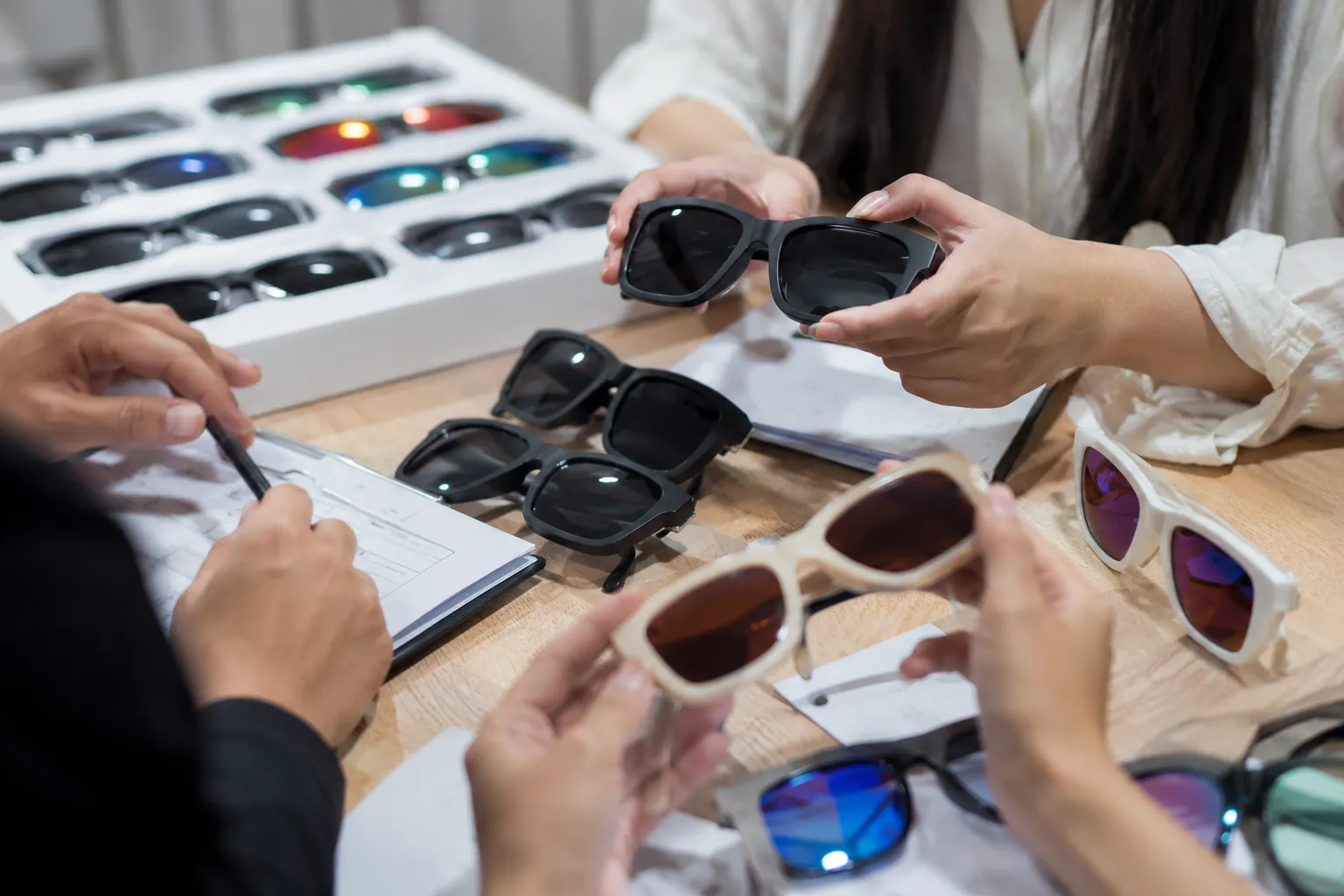
This guide is for promotional buyers, event agencies, importers, and brand teams sourcing sunglasses for concerts, festivals, conferences, sponsor activations, and giveaways. It shows how to write a factory-ready spec, choose decoration that survives real use, control unit cost, and protect the event date. The goal is simple: fewer rejected samples, fewer late artwork changes, cleaner compliance files, and a purchase order LumiShades or another qualified factory can build without guesswork.
Start With the Use Case, Not the Logo
Many failed event sunglasses orders start with a logo file and no product brief. That is backwards. First, define how the glasses will be used: one-day handout, paid merchandise, VIP kit, sponsor activation, staff uniform, or retail bundle. Each use case changes the frame material, lens category, logo size, packaging, and inspection level.
For a three-day outdoor music festival, comfort, UV performance, and hinge durability matter more than a large temple print. For a conference bag insert, scratch resistance during packing and compact cartons may matter more than polarized lenses. For paid merchandise, buyers should check hinge feel, lens clarity, color consistency, and whether the pouch or box supports the selling price.
- Giveaway: use an existing injected frame, one-color pad print, standard lens tint, and compact bulk packing.
- VIP or sponsor kit: add UV400 lenses, a microfiber pouch, tighter cosmetic inspection, and cleaner logo placement.
- Paid festival merch: specify stronger hinges, better lens tint control, individual packing, and a lower defect tolerance.
- Staff or security use: avoid novelty shapes; prioritize fit, comfort, temple alignment, and correct lens category marking.
LumiShades supports a 50 pairs per design MOQ, which helps buyers test sponsor versions or limited event colorways. Costs improve at 300, 1000, and 5000+ pairs because printing setup, color changeover, QC sampling, carton handling, and export paperwork are spread across more units. For high-volume simple promotional frames, pricing can move toward about $2.10 per pair when the spec uses an existing mold, efficient material, standard lenses, practical logo decoration, and simple packing.
Choose a Frame Platform That Fits Budget and Calendar
The frame platform is the biggest cost and schedule decision. A new mold can make sense for a national annual program or an owned retail design. It is usually the wrong choice for a 300-pair conference giveaway with a fixed date. Existing tooling is faster, cheaper, and easier to sample. Small color or logo changes can often be made without changing the frame structure.
LumiShades has in-house injection molding, acetate cutting, and CNC milling. That helps with color trials, cutting adjustments, and decoration placement because fewer changes need to move through outside subcontractors. Still, each process has different cost, timing, and risk.
| Frame option | Best use | Typical cost logic | Schedule risk |
|---|---|---|---|
| Injected PC frame | Giveaways, sponsor drops, high-volume festivals | Lowest unit cost; strong at 300 to 5000+ pairs | Low if mold and color are confirmed early |
| TR-style flexible frame | Comfort-focused event wear | Higher than basic PC but better fit and feel | Medium if special colors or lens fitting need adjustment |
| Acetate frame | Paid merch, VIP packs, boutique events | Higher material and labor cost; cutting, tumbling, polishing required | Medium to high because cosmetic checks are stricter |
| Existing mold with custom color | Low-MOQ branded programs | Best balance for 50 to 1000 pairs | Low to medium depending on color matching |
| New custom mold | Owned shape or large annual program | Tooling cost only works when volume or brand value justifies it | High because design approval, tooling, and fit testing add time |
Be direct about target landed cost. If the budget is tight, do not specify acetate, polarized lenses, metal plaques, individual rigid boxes, and air freight in the same brief. Something will have to move. For most event programs, the strongest route is an existing injected frame with a controlled color, approved lens tint, and one reliable decoration method.
Specify Lenses Like a Compliance Buyer
Sunglasses are regulated consumer products in many markets. They are not just tinted plastic. Overseas buyers should define lens requirements before quotation. LumiShades works with requirements such as CE EN ISO 12312-1, FDA registration, ANSI Z80.3, AS/NZS 1067, REACH, ISO 9001, and BSCI where applicable. Ask for documents that match the destination market and product. Do not request unrelated certificates just to fill a supplier form. It slows the order and creates paperwork noise.
For most event sunglasses, UV400 is the baseline claim. Lens category should match the use conditions. Category 3 is common for bright outdoor festivals and beach events. Category 2 can fit mixed daylight, cloudy weather, or casual conference use. Very dark lenses may look good in a rendering but feel awkward indoors, where guests try them on and judge comfort immediately.
- UV requirement: specify UV400 or the applicable standard, not only "UV protection."
- Lens category: define category 2 or 3 and confirm the marking or user information required by the market.
- Tint tolerance: approve a physical sample; screen color and AI mockups are not production standards.
- Optical check: view straight lines through the lens and reject obvious distortion, especially near the edge.
- Polarization: use it only when the audience notices the benefit and the budget supports the added cost.
In-house lens tinting helps control repeatability, but buyers still need to approve real lenses under normal daylight. Grey, smoke, brown, green, gradient, and mirror finishes behave differently under stage lighting and direct sun. Mirror lenses show rub marks and scratches more easily during bulk handling, especially without pouches or separators. That is not an excuse. It is material behavior the spec must handle.
Match Logo Method to Real Handling
A festival guest may throw the sunglasses into a backpack, wipe them with a shirt, wear them in sweat and dust, and drop them on concrete. Decoration choice should reflect that. The cheapest logo method can work for a one-day giveaway. It may fail the brief for merchandise sold at a booth.
| Decoration method | Best application | Practical tolerance | Cost and durability |
|---|---|---|---|
| Pad printing | Simple temple logos, one or two colors | Position often controlled within 1 to 2 mm on a stable surface | Low cost; good durability when ink, curing, and surface prep are controlled |
| Laser engraving | Subtle logos on suitable frame materials | Best for clean marks without tiny filled text | Moderate cost; very durable because there is no ink layer to rub off |
| Metal logo plate | Premium merch, VIP items, retail bundles | Requires consistent recess, adhesive, or mechanical fixing | Higher cost; strong premium effect but adds assembly time |
| Lens logo print | Photo moments and sponsor visibility | Keep outside the main viewing zone and approve size physically | Low to moderate cost; lower wear resistance and more visual risk |
LumiShades can handle pad printing, laser engraving, and metal logo plates in-house. That reduces color mismatch and late subcontractor delays. The buyer still must supply vector artwork, Pantone references where needed, logo size in millimeters, and exact placement. "Make it visible" is not a spec.
A practical temple logo is often 35 to 55 mm wide, depending on frame shape. Keep tiny sponsor taglines off curved temples. Fine text can fill with ink, distort over the curve, or become unreadable after curing. Test it on a sample. Do not rely on a digital mockup. For multi-sponsor programs, treat each sponsor artwork as a separate production line item with its own approved sample image or physical reference.
Understand MOQ, Price Breaks, and Cost Drivers
MOQ is not only about the frame. It is also affected by frame color, lens color, logo setup, packaging, inspection workload, and carton labeling. A 50-pair MOQ per design is useful. But splitting 500 pairs into ten colorways can make production slower and more expensive than one or two clean versions.
At LumiShades, buyers can start at 50 pairs per design. Price improves at 300, 1000, and 5000+ pairs because repeated setup becomes less painful. Larger simple runs can approach about $2.10 per pair, but only when the spec is built for volume: existing mold, efficient plastic, standard lens, practical logo, and compact packing. Premium lenses, acetate, metal parts, individual boxes, barcodes, hangtags, and rush freight all move the cost upward.
- Lock the frame model before asking for final price.
- Limit colorways unless sponsor tiers or ticket tiers truly require them.
- State whether the unit price includes pouch, hangtag, barcode, polybag, insert card, or retail box.
- Confirm whether test reports already exist for the selected frame and lens combination.
- Separate sample cost, bulk unit cost, freight, duty, and local kitting in the buying worksheet.
Packaging is a common budget leak. A microfiber pouch can improve perceived value while staying compact. A rigid box looks better but increases carton volume, handling time, and freight cost. For giveaways, carton efficiency can matter more than presentation. Air freight punishes bulky packaging, so decide early whether the product needs a strong unboxing moment or simply needs to arrive clean, counted, and wearable.
Build the Timeline Backward From the Event Date
Event orders have one unforgiving detail: the date does not move. A late shipment after the concert, conference, or sponsor activation becomes dead inventory. Work backward from the in-hand date, not the factory ship date.
LumiShades sample lead time is typically 7 to 10 days. Bulk production is usually 25 to 35 days after approval, depending on quantity and complexity. Add time for artwork correction, physical sample review, required testing, packing, export handling, customs clearance, and freight. If the sunglasses must be kitted with tickets, lanyards, wristbands, or sponsor materials in another warehouse, add that local handling time too.
| Stage | Typical timing | Common delay |
|---|---|---|
| Spec and quotation | 1 to 3 days if the brief is complete | Missing lens category, unclear logo size, unknown packing |
| Pre-production sample | 7 to 10 days | Custom color matching, logo revision, lens change |
| Bulk production | 25 to 35 days after approval | Many colorways, acetate processing, packaging changes |
| Final inspection and packing | 1 to 3 days | Rework, carton mark changes, missing labels |
| Freight buffer | Route and mode dependent | Customs holds, peak season congestion, bulky cartons |
For a fixed-date event, slow sample approval costs real money. Buyers sometimes spend ten days debating a 2 mm logo shift, then ask the factory to recover the calendar. That is how rush freight happens. Set decision deadlines for artwork, sample approval, packaging approval, and final shipping instructions.
Set Inspection Points Before Production Starts
QC should be defined before the purchase order, not after cartons are packed. LumiShades has in-house QC, but buyers still need to state what matters most: cosmetic grade, hinge tension, lens defects, logo position, color match, barcode accuracy, or carton labeling. Match inspection to risk. A free street-team giveaway does not need luxury eyewear standards. Paid merchandise cannot be treated like disposable promo stock.
Sensible checks include frame color consistency, lens tint, visible scratches, hinge opening and closing, temple alignment, sharp edges, logo adhesion, print position, packaging count, and carton marks. For regulated markets, compliance documents should tie to the exact lens and style, not only a similar model.
- Logo position: define acceptable shift, commonly within 1 to 2 mm for temple prints on stable surfaces.
- Color approval: use a signed physical sample, approved lens swatch, or production reference under daylight.
- Lens defects: reject visible scratches, bubbles, severe tint variation, or obvious optical distortion.
- Assembly checks: test hinge movement, temple balance, screw security, and sharp edges on random pieces.
- Packing checks: verify inner quantity, carton quantity, barcode, event labels, and carton marks before shipment.
For higher-risk orders, define an AQL inspection level or at least agree on the sampling method before production. If logo appearance matters most, inspect more pieces for logo position and ink adhesion. If the order is for retail resale, raise the cosmetic standard and check individual packaging more carefully.
Use a PO Checklist That Leaves No Guesswork
A good PO for bulk event sunglasses is boring. That is the point. It removes assumptions before material is molded, cut, printed, tinted, assembled, inspected, or packed. Production, decoration, QC, and packing teams should be able to work from it without chasing missing details.
Include the frame model, material, frame color, lens color, lens category, UV requirement, decoration method, logo size, logo position, artwork file reference, packing method, carton marks, compliance documents needed, sample approval record, quantity by design, delivery terms, target ship date, and final in-hand event date. If there are multiple sponsors, list each design as a separate line item with its own quantity and artwork reference.
Practical rule: if a detail affects cost, compliance, appearance, packing, or delivery, it belongs on the PO or approved spec sheet.
For low-MOQ programs, the cleanest route is usually an existing frame, one or two frame colors, one approved lens tint, pad printed or laser logo, and compact packing. For larger runs, add complexity only where the audience will notice it. Most buyers do not need a complicated sunglass. They need the right sunglass, built to the approved spec, delivered before the event.
Have a custom sunglasses project in mind?
Send us your styles, target market and quantities and we will return a detailed quote with MOQ, lead time and a sample plan.
Get a QuoteWhy source this from Wenzhou with LumiShades
Wenzhou in Zhejiang Province is widely regarded as China’s eyewear manufacturing capital, producing a large share of the world’s sunglasses. That concentration matters to buyers: a deep local supply chain for acetate sheet, hinges, lens blanks, plating and packaging means shorter component lead times, easier color and material matching, and a workforce with decades of eyewear-specific skill. LumiShades has manufactured in this ecosystem since 2009, and our vertical integration — in-house injection molding, acetate cutting, CNC milling, lens tinting, decoration and quality control — means no part of your order is quietly subcontracted to a workshop you cannot audit.
For international buyers, that vertical control translates into accountability. When a single factory owns every step, defects are traced and fixed at source rather than bounced between vendors, and your specifications survive intact from first sample to bulk. For procurement review, buyers can request process records, approved samples, quality checkpoints and project-specific compliance files before placing a bulk order. Required testing and documentation are confirmed against the destination market and product specification rather than assumed from a generic certificate list. Explore our manufacturing capabilities and quality control process to see how this works in practice.
Frequently asked questions
Can we order only 50 pairs for one sponsor design? Yes. LumiShades supports 50 pairs per design, which works for sponsor samples, VIP batches, small conference runs, or test colorways. Expect a higher unit cost than 300, 1000, or 5000+ pairs because logo setup, color control, QC, and packing work are spread over fewer units.
What is the safest logo method for low-cost event sunglasses? Pad printing is usually the most practical method for simple temple logos. For stronger wear resistance, use laser engraving where the frame material and surface allow it. Metal plates look more premium but add material cost, assembly time, and inspection requirements.
How early should we start before a festival or conference? Allow 7 to 10 days for samples and 25 to 35 days for bulk production after approval. Add time for artwork revision, physical sample review, inspection, freight, customs, and local kitting. For fixed events, start earlier than the minimum timeline.
Which compliance documents should overseas buyers ask for? Ask for documents relevant to the destination market and product, such as CE EN ISO 12312-1, FDA registration, ANSI Z80.3, AS/NZS 1067, REACH, ISO 9001, or BSCI where applicable. Avoid unrelated certification requests because they slow the order and confuse the file.
Can we use different lens colors for different ticket tiers? Yes, but each lens color adds approval, production control, and QC work. For small quantities, keep lens options limited. For larger runs, define the quantity, tint, lens category, logo version, and packaging for each tier on the PO.
What details most often cause late changes? Logo size, lens tint, packaging, carton marks, and compliance paperwork cause the most avoidable delays. Lock these before sample approval and avoid changing them once bulk production starts.
Ready to start?
Explore our rimless sunglasses or request a quote — our sales team replies within 12 hours.
Request a Quote