
Spec Sunglasses for Clip Strips and Displays
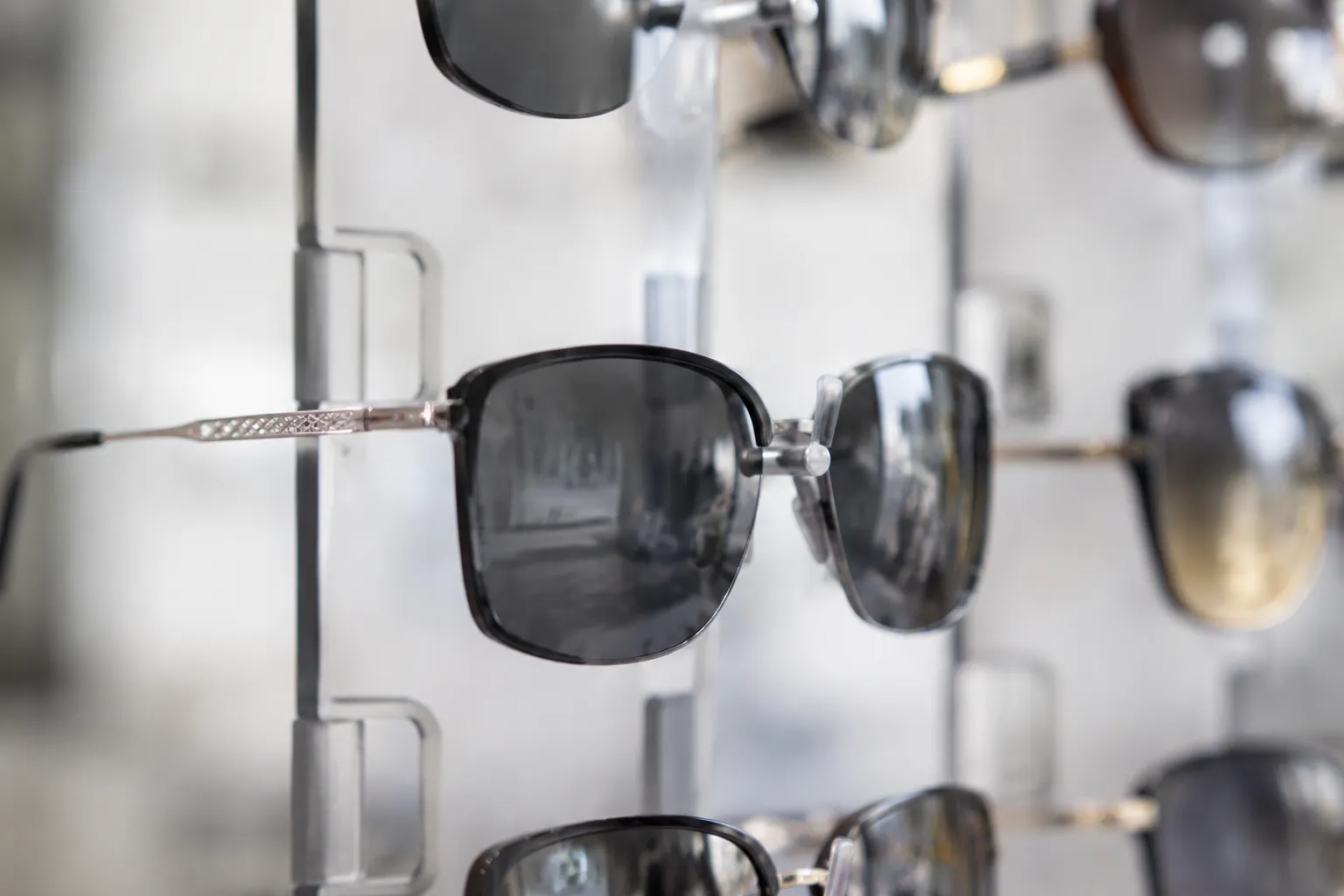
This guide is for brands, importers, distributors, and retail buyers planning sunglasses for peg hooks, counter displays, clip strips, dump bins, and other impulse retail formats. The job is bigger than choosing a frame that looks good. You need to approve a packed retail unit that hangs straight, scans fast, protects the lenses, matches the artwork, meets market requirements, and can be repeated at scale. Use the checkpoints below to control fixture fit, materials, lens claims, decoration, packaging strength, SKU setup, inspection, compliance documents, and approval timing before bulk production starts.
Start With the Fixture
Many sunglasses projects start with frame shape, lens color, and logo position. That can cause problems later. For retail merchandising, the first question should be simple: how will the packed pair sit in the store?
A counter tray, peg wall, clip strip, and dump bin each need different packaging. A tray program may use an open slot, pouch, or folded card. A peg hook needs a card or header that will not tear around the hole. A clip strip needs a light, narrow pack that will not twist, sag, or hide the product. A dump bin needs stronger scratch protection because units rub against each other during replenishment and customer handling.
Get fixture data before confirming the frame and pack. Useful details include peg hook diameter, hook length, clip spacing, strip width, tray slot width, display depth, shelf height, barcode viewing direction, and whether the product must face forward after hanging. For peg walls, the hang hole must clear the hook without giving the card so much play that it rotates. For clip strips, the packed unit must stay light and balanced enough for the strip design and load limit. A light frame with a small hang card behaves very differently from a heavier frame packed with a pouch, header, and several labels.
Confirm the merchandising direction early. Packaging affects sampling, artwork, carton packing, and inspection. If the approved sample hangs sideways, store staff should not have to fix it all day. The lens color, frame front, price label, barcode, and brand mark should be visible from the shopper's normal viewing angle.
- Peg wall: specify card thickness, euro slot or round hole, hole reinforcement, and card width.
- Clip strip: control total packed weight, pack width, hang angle, and temple tie strength.
- Counter display: confirm tray slot width, temple spread, display header size, and pickup direction.
- Dump bin: use stronger lens protection, abrasion-resistant labels, and carton packing that prevents crushing.
Build for Real Handling
Retail sunglasses get handled before they get bought. Store staff open cartons. Shoppers try pairs on. Children pull display strips. Peg hooks get loaded tightly. The frame spec needs to survive that reality.
For lower-price display programs, injected PC, TR90, and other plastic frames are common because they are light, scalable, and easier to repeat in color. PC is economical and impact-resistant, but it can feel stiff and may show molding stress if processing is poor. TR90 is lighter and more flexible, but material cost and molding control are usually higher. Acetate has a richer feel and a polished edge, but it is heavier and more labor-intensive. It usually fits counter displays, boutique assortments, or higher retail price points better than low-cost clip strip programs.
Write hardware choices clearly. A simple plastic hinge may work for short promotional use, but repeated try-on can loosen the temple faster. Standard metal hinges improve movement and shelf life. Spring hinges improve comfort and fit range, but they add parts, assembly time, and inspection points. For many impulse programs, a three-barrel or five-barrel metal hinge is a practical middle option when the target price allows it.
Agree practical tolerances before sample approval. Temple opening should be consistent enough for the pair to sit straight in a tray or packed card. Lens seating should be tight without stress whitening around the rim. Screw heads should sit flush and pass an open-close cycle check. A new-sample visual check is not enough.
On molded frames, review gate location, parting line cleanup, temple straightness, hinge alignment, and cooling deformation before decoration and packing are approved.
Factory note: if a retail display sample twists, rocks on the tray, or drops one temple lower than the other, do not release bulk production until the mold, cooling condition, lens fit, or assembly fixture is corrected.
Match Packaging to Channel
Packaging is not just presentation. It controls damage rate, hanging performance, barcode scanning, carton efficiency, and freight volume. The wrong format adds cost and can make the product harder to sell.
| Merchandising format | Typical packaging | Key spec to control | Main trade-off |
|---|---|---|---|
| Clip strip | Hang tag, small header card, temple tie | Packed weight, card width, tie position, hang balance | Limited space for branding, warnings, and barcode |
| Peg wall | Full hang card, polybag, barcode label | Card thickness, slot shape, hole tear resistance | More card area, but higher printing and carton volume |
| Counter tray | Open tray, pouch, lens sticker, temple tag | Tray slot width, temple spread, frame visibility | Premium presentation, but higher handling risk |
| Dump bin | Polybag, protective sleeve, strong barcode label | Lens scratch protection, bag seal, label adhesion | Low-cost selling format, but product can look messy |
For clip strips, keep the packed pair slim and balanced. Hard cases usually reduce units per strip, increase freight volume, and add weight. A microfiber pouch can work at a higher retail price, but it may hide the frame color. If the sale depends on visible lens tint or bright frame color, do not cover the product completely.
For peg hooks, test card stock under load. Do not judge it by hand feel only. A thin euro slot can tear during replenishment. For many mass retail programs, a stronger card, reinforced slot, or slightly taller header costs less than goods falling from hooks. If security hooks are used, confirm hole height, slot geometry, and card clearance before bulk printing.
Carton efficiency matters too. A larger retail pack may reduce pairs per inner carton or master carton, raising freight and warehouse handling costs. Before artwork is finalized, calculate units per inner carton, units per master carton, gross weight, carton dimensions, and crush risk under normal export handling.
Make Branding Easy to Read
Branding on display sunglasses has to work at arm's length. A tiny temple mark may satisfy a brand guide, but it may do little on a crowded rack. Treat the frame, lens sticker, hang card, barcode zone, warning text, and display header as one selling system.
Common eyewear decoration methods include laser engraving, pad printing, heat transfer, and metal logo plates. The right choice depends on material, artwork, order quantity, handling risk, and target price. Laser engraving is clean and durable on suitable surfaces, but contrast can be subtle. Pad printing gives a more visible logo and works on many curved temples, but artwork must be adjusted for surface radius and ink adhesion. Metal logo plates create a premium look, but they add part cost, tooling control, placement tolerance, and assembly inspection.
For most impulse merchandising, the strongest branding positions are the outer temple, upper hang-card area, lens sticker, and display header. The temple logo is seen during try-on. The hang card and lens sticker are seen before pickup. The barcode, price label, UV claim, lens category wording, importer information, and required warnings must stay readable. Do not let them fight the main brand mark.
- Confirm the retail viewing direction: front-facing, side-facing, vertical hanging, or tray presentation.
- Place the main brand mark where the shopper sees it first, not only where the CAD rendering looks clean.
- Keep barcode and compliance zones flat, open, and scannable after packing.
- Approve decoration samples under normal store lighting, not only in a photo booth.
Keep the card clean. A small sunglasses hang card usually has room for one clear brand mark, one short selling claim, correct UV or lens wording, barcode, and required warnings. Claims such as "UV400," "polarized," or "category 3" must match the tested lens and target market. If the lens color, coating, or supplier changes later, the claim risk can change too. Link artwork approval to lens approval.
Control Lens Claims
Lens color helps sell the pair. Compliance protects the shipment and the retailer. Specify lens material, lens category target, visible light transmission target, UV requirement, color, coating, applicable standard, and claim wording. Do not write only "UV400" and assume the same label fits every market.
Common references include CE EN ISO 12312-1 for many European programs, ANSI Z80.3 for non-prescription sunglasses in the United States, AS/NZS 1067 for Australia and New Zealand, REACH for restricted substances in materials and components, and FDA registration requirements where applicable to U.S. eyewear import handling. The importer or retailer should confirm the final label text because warning statements, category language, traceability, and selling-channel rules can vary.
Material choice affects cost, optical performance, and inspection. PC lenses are impact-resistant and widely used for mass retail. AC lenses are economical and common for fashion sunglasses, but scratch resistance and optical consistency must be controlled. TAC polarized lenses can support a higher retail price, but they need polarization direction checks, adhesive layer control, and accurate labeling. Mirror coatings create strong shelf impact, but they can show scratches more easily during handling. Gradient lenses look more premium, but left-right color consistency needs close checking.
Visible light transmission is a measured value, not a color impression. A dark smoke lens may fall into a different category from a lighter fashion tint, depending on the standard. Very dark or unusual colored lenses may have driving restrictions in some markets. If the program includes smoke, brown, green, mirror blue, and gradient pink lenses, review each lens option. Do not assume one report covers all versions.
- Budget retail: smoke, brown, and green solid lenses are practical, stable, and easier to repeat.
- Fashion display: mirror and gradient lenses create stronger color impact but need better scratch control.
- Outdoor channel: TAC polarized lenses can justify a higher price point but need clear labeling and QC.
- Kids or novelty: confirm market-specific requirements early because claims and restrictions may be stricter.
Lens stickers should peel cleanly without adhesive residue. Test removal after heat exposure. Cartons often sit in warm warehouses. Adhesive marks on the front lens can turn an acceptable shipment into a retail complaint.
Plan MOQ by SKU
The real cost driver is not only total order quantity. It is SKU count: frame colors, lens colors, packaging versions, barcode labels, display assortments, and carton labels. A 1,000-pair order split into ten colorways is very different from 1,000 pairs split into two.
Small test orders can work when the frame, lens, decoration, and packaging requirements are suitable. Buyers should still understand the setup logic. Decoration fixtures, lens preparation, card printing, barcode labels, packing instructions, and QC setup all take time whether the run is small or large. Unit price usually improves at higher quantities because material purchasing, machine setup, decoration setup, packing labor, and inspection time are spread across more units. Quote against the approved specification, not frame shape alone.
Sample lead time is shortest when the program uses existing tooling, standard lenses, available colors, and normal decoration methods. Bulk timing should start only after approval of the sample, packaging artwork, order details, barcode list, compliance text, and payment terms. New molds, special lens colors, polarized lens development, custom displays, reinforced hang cards, and metal logo plates can add time. Artwork delays are common. A finished frame cannot ship if the retail pack is not approved.
A practical purchase order should separate the eyewear SKU from the packing SKU. One black frame with smoke lenses may be sold in a peg-card version, clip-strip version, and counter-tray version. The glasses may be identical, but the barcode, hang card, carton count, and inspection method are different. Treat them as separate packing SKUs.
For a first program, limit the color range. Three to five strong combinations are usually easier to produce, inspect, replenish, and sell through than a wide range that splits inventory too thinly. If the buyer needs variety, change one variable at a time: one frame color with several lens colors, or one lens color across proven frame colors.
Inspect the Packed Unit
Many sunglasses inspections check frame appearance, lens scratches, logo position, and hinge function. Good. But that is not enough for retail displays. The store receives the packed unit, not loose glasses.
For clip strip programs, pull packed samples and hang them under load on the intended strip or a close equivalent. Check whether the card bends, the pair rotates, the temple tie slips, the barcode is blocked, or the lens sticker rubs against the card. For peg programs, test whether the card slot tears after repeated removal. For counter trays, check whether the pair sits straight and whether temple ends scratch the tray or neighboring pairs. For dump bins, shake-test a packed inner carton and inspect lens surfaces afterward.
Review issues by process step so the correction is targeted. Warped temples may point to molding conditions or fixture storage. Loose lenses may point to lens sizing or groove control. Fuzzy pad-printed logos may point to ink viscosity, print pressure, surface treatment, or fixture alignment. Poor hang performance may be a packaging engineering issue, not an eyewear production issue.
Inspection should also cover carton packing. If the master carton crushes the hang cards, the display looks damaged before the first pair is sold. Inner carton count, orientation, desiccant use when required, label placement, carton board strength, and drop handling all matter for export shipments. Check barcode readability on final packed goods with the label in its real position. An artwork PDF scan is not enough.
- Use AQL sampling for frame defects, hinge function, decoration, packing, and label accuracy.
- Define the acceptable level for visible lens scratches before production starts.
- Run open-close checks on hinges after decoration and packing, not only after frame assembly.
- Keep approved golden samples for frame color, lens color, logo, hang card, carton label, and packed unit.
Freeze a Buildable Spec
A good merchandising spec is short, visual, and complete. It should not depend on long email threads. Put the key decisions in one controlled document and freeze it before bulk production.
The spec sheet should include frame material, frame color code or physical color chip, lens material, lens color, lens category target, UV requirement, applicable standard, hinge type, screw color, logo method, logo size, packaging format, barcode position, warning text, display quantity, inner carton count, master carton count, and inspection requirements. Add drawings or photos with measurements. A small shift in a hang hole, logo, sticker, or barcode can affect how the product hangs or scans.
For overseas buyers, compliance text should be confirmed by the importer, retailer, or qualified compliance adviser for the destination market. The factory can manufacture to the requested specification and support production, but the importer controls the final market claim, selling channel, and documentation requirements.
When evaluating a supplier, ask for documents that match the order and market. Do not rely on a generic statement. Relevant documents may include CE EN ISO 12312-1 test reports, ANSI Z80.3 test reports, AS/NZS 1067 test reports, REACH-related material declarations or test reports, FDA registration information where applicable, ISO 9001 quality management certification, and BSCI social compliance documentation. Check document holder name, product scope, issue date, standard version, and whether the tested lens and frame materials match the planned order.
Before paying for bulk production, approve a full packed sample exactly as the store will receive it: frame, lenses, logo, hang card, sticker, barcode, warning text, inner carton, and master carton label. For retail displays, the packed unit is the product.
Have a custom sunglasses project in mind?
Send us your styles, target market and quantities and we will return a detailed quote with MOQ, lead time and a sample plan.
Get a QuoteWhy source this from Wenzhou with LumiShades
Wenzhou in Zhejiang Province is widely regarded as China’s eyewear manufacturing capital, producing a large share of the world’s sunglasses. That concentration matters to buyers: a deep local supply chain for acetate sheet, hinges, lens blanks, plating and packaging means shorter component lead times, easier color and material matching, and a workforce with decades of eyewear-specific skill. LumiShades has manufactured in this ecosystem since 2009, and our vertical integration — in-house injection molding, acetate cutting, CNC milling, lens tinting, decoration and quality control — means no part of your order is quietly subcontracted to a workshop you cannot audit.
For international buyers, that vertical control translates into accountability. When a single factory owns every step, defects are traced and fixed at source rather than bounced between vendors, and your specifications survive intact from first sample to bulk. For procurement review, buyers can request process records, approved samples, quality checkpoints and project-specific compliance files before placing a bulk order. Required testing and documentation are confirmed against the destination market and product specification rather than assumed from a generic certificate list. Explore our manufacturing capabilities and quality control process to see how this works in practice.
Frequently asked questions
What is the best packaging for sunglasses sold on clip strips? Use a light hang tag or small header card with a secure temple tie. Before bulk printing, test the packed sample on the intended clip strip for hang angle, rotation, barcode visibility, and strip load. Avoid hard cases unless the retailer confirms the strip can support the weight and the retail price supports the added packaging and freight cost.
Can I start with 50 pairs per design for a retail display test? Yes, if the design uses existing tooling, standard lenses, and simple decoration. Keep the test tight. Limit frame colors, lens colors, barcodes, and packaging versions. Ask the factory to quote each SKU separately so setup, printing, and packing costs are clear.
Which standards should I specify for sunglasses sold overseas? Specify the destination market and required standard on the purchase order. Common references include CE EN ISO 12312-1 for many European programs, ANSI Z80.3 for non-prescription sunglasses in the U.S., AS/NZS 1067 for Australia and New Zealand, REACH for restricted substances, and FDA registration requirements where applicable. Match the test report to the actual lens material, lens color, coating, and claim.
How long do samples and bulk production usually take? Timing depends on tooling, lens availability, decoration method, packaging, and approval speed. Existing frames with standard lenses and simple logos are faster than new molds, custom lens colors, polarized lenses, metal logo plates, or custom display packaging. Count bulk lead time only after the sample, artwork, barcode list, warning text, order details, and payment terms are approved.
Should the barcode go on the hang card or the sunglasses? For most retail display programs, place the barcode on the hang card or outer retail pack where scanners can read it without handling the frame. Confirm retailer rules for barcode size, quiet zone, label position, scan direction, and price-label placement. Then scan a final packed sample, not just the artwork file.
What logo method is safest for retail sunglasses? The safest method depends on material and handling risk. Laser engraving is durable on suitable surfaces but can be subtle. Pad printing gives stronger visible branding but needs ink adhesion and rub testing. Metal plates look premium but add part cost and assembly inspection. Approve the logo on the actual frame material and check it after packing and handling.
Ready to start?
Explore our cat-eye sunglasses or request a quote — our sales team replies within 12 hours.
Request a Quote